The echoes of revolution, often amplified by myth and legend, can sometimes obscure the granular realities of those who lived through them. In the case of Ernesto “Che” Guevara, the iconic figure emblazoned on countless t-shirts and posters, his revolutionary fervor and eventual martyrdom have become a potent symbol for global movements and counter-culture alike. However, beyond the familiar image and the broader strokes of his involvement in the Cuban Revolution, lies a lesser-known narrative: the harrowing escape of his final guerrilla comrades following his execution in Bolivia. Director Christophe Dimitri Réveille’s documentary, "Che Guevara: The Last Companions," attempts to illuminate this forgotten chapter, focusing on the extraordinary 2,400-kilometer journey undertaken by three surviving guerrilla fighters who, pursued by thousands of soldiers, navigated treacherous terrain for their very survival. The film, running at 98 minutes, draws upon rare archival footage, animation, and exclusive interviews with these last surviving comrades, alongside testimonies from some of those who hunted them, aiming to piece together a story of endurance, loyalty, and the profound impact of Cold War geopolitics on individual destinies.
The Shadow Warriors’ Exodus: A Perilous Journey
The narrative core of "Che Guevara: The Last Companions" revolves around the aftermath of Che Guevara’s capture and execution by Bolivian forces, with the alleged complicity of the CIA, in October 1967. Following the final battle that claimed Guevara’s life, three of his most loyal guerrilla fighters found themselves not only mourning their leader but also facing an immediate and overwhelming threat. Identified as Cuban nationals, they were considered high-priority targets by the Bolivian military, which was heavily supported by U.S. intelligence and counter-insurgency expertise. The prevailing geopolitical climate of the Cold War meant that any remnants of Guevara’s revolutionary crusade were viewed as a direct challenge to the established order in Latin America, a region rife with ideological struggle.
These three men, unnamed in the film’s initial synopsis but crucial to its narrative, were thrust into an unprecedented ordeal. Their objective was starkly simple: survival. This meant evading an estimated 4,000 Bolivian soldiers actively engaged in a relentless pursuit. The terrain of Bolivia, characterized by dense jungles, high-altitude plateaus, and remote, sparsely populated regions, presented its own formidable challenges. The journey, stretching an astonishing 2,400 kilometers, was not merely a physical trek but a psychological battle against exhaustion, hunger, constant fear of capture, and the gnawing uncertainty of their fate. The film seeks to portray this odyssey as a testament to human resilience, a desperate flight where individual lives were inextricably linked to the grand, often brutal, geopolitical chess game being played out on a global scale.
Unveiling a Forgotten Chapter: The Documentary’s Approach
Christophe Dimitri Réveille’s directorial effort positions itself as an exploration of a less-discussed aspect of Guevara’s legacy. Unlike numerous biographical accounts that focus on Guevara himself, "The Last Companions" deliberately shifts the spotlight to those who fought alongside him in his final campaign and, critically, survived his demise. The film’s methodology involves a multi-pronged approach to reconstructing this lost history.
Archival Material and Animated Recreations
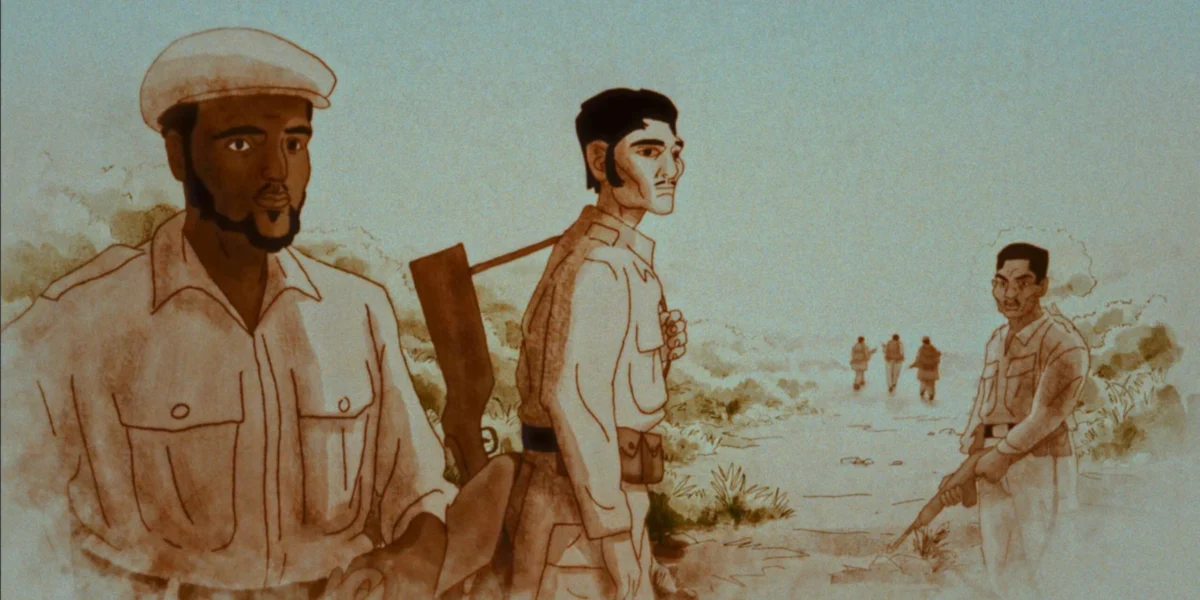
A significant portion of the documentary relies on the integration of rare archival footage and photographs. These visual artifacts, often grainy and bearing the patina of time, are intended to provide a direct link to the era and the events themselves. They serve as anchors, grounding the narrative in historical reality. To fill in the gaps where visual documentation is scarce or non-existent, the film employs animated sequences. These animated segments are crucial for visualizing the arduous journey, the clandestine movements, and perhaps the emotional states of the guerrilla fighters, bringing to life moments that cannot be captured by conventional means.
Exclusive Interviews: The Survivors and Their Pursuers
The heart of "Che Guevara: The Last Companions" lies in its exclusive interviews. The film features conversations with the surviving guerrilla comrades, offering firsthand accounts of their experiences. These testimonies are invaluable, providing intimate details of their struggles, their loyalty to Guevara, and their personal journeys of survival. The inclusion of interviews with some of the soldiers who were tasked with hunting the group adds a crucial layer of perspective. These individuals, likely involved in the counter-insurgency operations, can offer insights into the military strategies, the challenges faced by the pursuers, and the overall atmosphere of the manhunt. The juxtaposition of these two sets of voices—the hunted and the hunters—promises a complex and potentially revealing portrayal of the events.
The Role of Vincent Lindon
The film is narrated by French actor Vincent Lindon, an accomplished performer known for his roles in Palme d’Or winner "Titane." His involvement suggests an attempt to lend gravitas and a certain stylistic sensibility to the documentary. However, as noted in some critical assessments, the effectiveness of his narration in conveying the emotional weight and historical significance of the story remains a subject of interpretation.
Historical Context: The Cuban Revolution and its Global Reach
To fully appreciate the significance of Che Guevara’s Bolivian campaign and the subsequent escape of his comrades, it is essential to understand the broader historical context.
The Triumph of 1959
The Cuban Revolution, which culminated in the overthrow of the Batista dictatorship in 1959, was a watershed moment in 20th-century history. Led by Fidel Castro, Che Guevara, and other revolutionary figures, the movement gained international acclaim for its success against a U.S.-backed regime. Che Guevara, an Argentine-born doctor and Marxist theorist, played a pivotal role as a military commander and ideologue. His vision extended beyond Cuba’s borders; he believed in the global export of revolution, seeing Cuba as a potential springboard for socialist uprisings across Latin America and beyond.
Guevara’s "Foco" Theory
Guevara’s revolutionary strategy was largely based on the "foco" theory, which posited that a small, dedicated group of guerrilla fighters could ignite a popular revolution in rural areas, even without widespread prior popular organization. This theory was put into practice in Cuba with remarkable success.
The Bolivian Campaign: A Quixotic Quest?
Following his success in Cuba, Guevara grew restless with his administrative roles within the new Cuban government. He felt his revolutionary zeal was being stifled and sought to replicate the Cuban success elsewhere. After a brief stint in the Congo, he turned his attention to Bolivia. His choice of Bolivia was strategic; it was a country with a history of peasant uprisings and political instability, making it seem fertile ground for his revolutionary ambitions. However, his campaign in Bolivia, launched in 1966, was plagued by difficulties from the outset. He operated in a foreign land, unfamiliar with the terrain and local dynamics, and struggled to gain the support of the Bolivian Communist Party, which was wary of his adventurist approach. Furthermore, the U.S. government, under President Lyndon B. Johnson, was deeply invested in preventing the spread of communism in Latin America and provided significant support to the Bolivian government, including military advisors and intelligence. The CIA played a direct role in Guevara’s eventual capture and execution, a fact that underscores the high stakes of his Bolivian venture.
The Geopolitics of the Cold War
The events surrounding Che Guevara’s final days and the subsequent flight of his companions were deeply embedded in the Cold War conflict between the United States and the Soviet Union. Latin America was a key battleground for ideological influence. The U.S., through initiatives like the Alliance for Progress, sought to promote economic development and democratic reforms to counter communist appeal. Simultaneously, the CIA actively supported anti-communist regimes and covert operations to destabilize leftist movements.
Guevara’s presence in Bolivia was seen as a direct threat to U.S. interests and a potential catalyst for a wider communist insurgency. His capture and elimination were therefore a strategic victory for the U.S. and its allies in the region. The pursuit of his surviving comrades was not merely a matter of law enforcement; it was an effort to eradicate any lingering threat and to send a clear message that revolutionary ambitions would be met with decisive force. The international dimension of this pursuit, involving Bolivian forces, CIA operatives, and potentially other intelligence agencies, highlights the global reach of Cold War machinations.
Analysis of the Documentary’s Impact and Reception
While the synopsis highlights the potential for a compelling narrative, initial critical reception suggests that "Che Guevara: The Last Companions" may not fully realize its ambitious aims. The criticism often centers on the film’s execution rather than its subject matter.
Criticisms of Presentation and Narrative
Some reviewers have pointed to a perceived lack of cinematic polish, describing the film as "dreary" and "amateur-looking." The narration by Vincent Lindon, while potentially intended to add depth, has been described by some as "somnambulant" and indicative of a lack of engagement. The interviews with the former guerrilla fighters, while offering a window into their experiences, are sometimes characterized as rambling and lacking in a clear narrative arc, offering little insight beyond their connection to Guevara or serving as a form of personal absolution. The animated sequences, intended to clarify and enhance, have also been met with mixed reactions, with some finding them insufficient to overcome the murkiness of the oral testimonies.
The "French Connection" and Narrative Bias
A notable point of critique is the film’s apparent emphasis on its French production and personnel, leading to what some see as an artificial "French connection" in a story that is fundamentally rooted in Latin American history and U.S.-Soviet geopolitical rivalries. This perceived imposition of a French perspective on a story far removed from France’s direct historical influence is seen by some as an attempt to tailor the narrative for a specific audience, potentially at the expense of historical accuracy or objective representation.
The Enduring Legacy of Che Guevara
Despite the critical reception of this particular documentary, the enduring fascination with Che Guevara remains undeniable. His image has transcended his revolutionary actions to become a global icon of rebellion and anti-establishment sentiment. However, this popularization often risks overshadowing the complex realities of his life and the profound sacrifices made by those who followed him. Documentaries like "The Last Companions," even if flawed in their execution, serve as a reminder that behind the myth lie human stories of struggle, loyalty, and survival against the backdrop of immense historical forces. The question of whether this particular film successfully brings a forgotten chapter to the present, or merely rehashes familiar narratives with a less-than-stellar presentation, remains a point of contention. Nevertheless, the very attempt to chronicle the arduous journey of Che’s last companions highlights the continued interest in the multifaceted and often controversial legacy of one of the 20th century’s most iconic figures. The story of these men, their perilous escape, and their enduring loyalty offers a compelling, if sometimes challenging, exploration of the human cost of revolution and the enduring power of geopolitical currents to shape individual destinies.