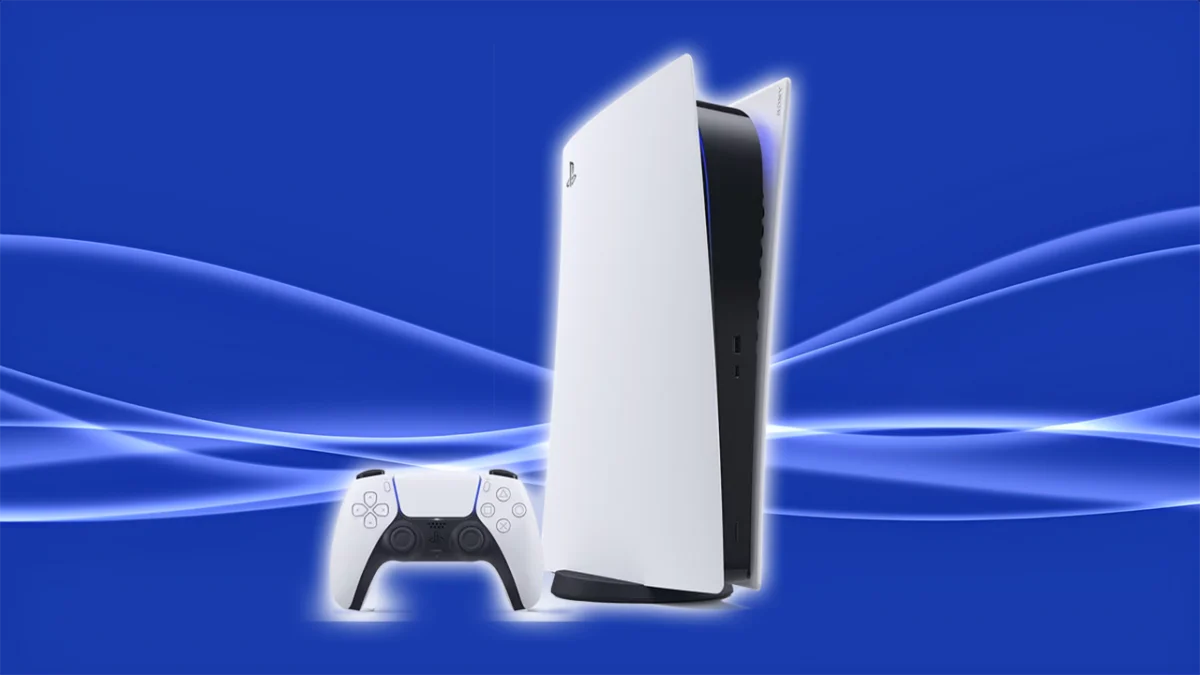
Sony Group Corporation’s latest fiscal year report and subsequent executive presentations have unveiled a complex strategic landscape for the PlayStation brand, characterized by a dual-front challenge: the meteoric rise of artificial intelligence and a tightening global supply chain. While the gaming giant remains a dominant force in the interactive entertainment industry, the intersection of hardware scarcity, shifting consumer habits, and the looming transition to a next-generation console has prompted a reevaluation of its long-term business model. According to internal data and expert analysis, the company is currently navigating a "transitionary phase" that will dictate the trajectory of the PlayStation 6 and the remaining lifecycle of the PlayStation 5.
The Silicon Paradox: How the AI Boom Constrains Console Supply
A central theme of Sony’s recent financial disclosures is the paradoxical impact of artificial intelligence. While Sony is aggressively integrating AI to streamline internal operations, the global "AI gold rush" has created a severe bottleneck in the production of high-performance memory. CEO Hiroki Totoki confirmed that the company anticipates a decrease in PlayStation 5 hardware sales, citing an AI-driven memory shortage as a primary culprit. As data center operators and AI developers outbid traditional consumer electronics manufacturers for limited supplies of high-bandwidth memory and advanced RAM, Sony finds itself in a precarious position regarding manufacturing costs.
Rhys Elliot, a lead video game analyst at Alinea Analytics, notes that this shortage is "bigger than the segment-level numbers suggest, but smaller than existential." The PlayStation 5 is currently entering the sixth year of its lifecycle, a period typically marked by a natural decline in hardware momentum. However, the external pressure on the Bill of Materials (BOM) prevents Sony from implementing the traditional mid-cycle price cuts that usually stimulate late-gen adoption. Instead, Totoki’s projections suggest that hardware shortages could persist through 2027. This timeline aligns with warnings from other tech leaders, including Apple CEO Tim Cook and Valve leadership, who have noted that the demand for memory in AI applications shows no signs of abating.
To mitigate these pressures, Sony’s reported strategy involves "flexibly adjusting" unit sales and promotional plans. In practical terms, analysts believe this indicates a willingness to underproduce consoles rather than absorb the increased manufacturing costs or risk inventory bloat at high price points. There is also the lingering possibility of further price increases in specific regions to protect profit margins, a move Sony has already executed in several international markets over the past 24 months.
A Chronology of Supply and Demand: 2020 to 2028
To understand the current state of PlayStation, one must examine the timeline of the ninth console generation. The PlayStation 5 launched in November 2020 amidst a global semiconductor shortage caused by the COVID-19 pandemic. This era was defined by "constrained supply," where demand far outstripped availability for nearly three years. By early 2023, Sony had finally resolved these issues, leading to a surge in sales that brought the PS5’s cumulative total to 93.7 million units as of the latest report.
However, the "recovery period" was short-lived. By late 2023 and early 2024, the narrative shifted from semiconductor shortages to the AI-driven memory crisis. This new obstacle arrives just as the industry prepares for the "GTA VI era." Grand Theft Auto VI, currently slated for a 2025/2026 release window, is viewed as the ultimate "system seller." Historically, Sony has captured approximately two-thirds of the multiplatform install base for the GTA franchise. Elliot suggests that if the supply of PS5 hardware is constrained by memory costs when Rockstar Games’ magnum opus arrives, Sony could miss a critical window to expand its ecosystem before the next generation begins.
The Road to PlayStation 6: Timing and Pricing Strategy
The fiscal report also shed light on the development of the PlayStation 6. Investment into next-generation hardware is expected to keep operating forecasts relatively flat through 2026. Crucially, Totoki stated that Sony has not yet finalized the launch timing for the PS6, suggesting that the memory crisis has forced a reevaluation of the traditional seven-year console cycle.
Industry analysts posit that a 2028 launch window is increasingly likely. This extra 12 to 18 months would allow for memory pricing to normalize and give Sony’s first-party studios—such as Naughty Dog, Santa Monica Studio, and Insomniac Games—more time to develop true next-generation experiences. Consequently, the industry should expect a "cross-generational" approach for upcoming flagship titles. Major releases originally envisioned as PS6 exclusives may now debut on the PS5 to leverage the existing 90-million-plus install base, especially as the technical "diminishing returns" between generations make exclusive hardware jumps less enticing for consumers.
Furthermore, Sony is exploring "changing business models" to address the rising cost of hardware. Two primary paths have emerged:
- Hardware Financing and Subscriptions: Similar to the "Xbox All Access" or "Apple iPhone Upgrade" programs, Sony may move toward a model where consumers pay a monthly fee (e.g., $25–$30) over 36 months rather than a $500–$700 upfront cost. This shifts the affordability hurdle and provides Sony with consistent, predictable revenue.
- Tiered Hardware Launches: Following the precedent set by Microsoft’s Xbox Series X and Series S, Sony could launch a premium PS6 alongside a lower-spec, more affordable version. Additionally, rumors of a dedicated PlayStation handheld could play into this tiered ecosystem strategy.
The AI Strategy: Beyond the Hype
While the generative AI boom has hindered hardware production, Sony is leveraging machine learning to enhance its software and financial infrastructure. The company reported $700 million in revenue gains specifically attributed to AI-powered payment routing, which optimizes transaction processing and reduces fraud.
On the gaming front, Sony’s focus remains on "invisible" AI—technologies that improve the user experience without the controversy associated with generative content. This includes PlayStation Spectral Super Resolution (PSSR), an AI-driven upscaling technology similar to Nvidia’s DLSS. PSSR allows games to run at higher resolutions and frame rates without requiring more expensive, power-hungry GPUs.
Sony’s partnership with Bandai Namco Holdings also points toward a collaborative future in AI. While some analysts view this as a move to appease shareholders interested in "AI buzzwords," the initiative focuses on "jointly developing entertainment-related technologies." This likely involves machine learning for visual fidelity and the implementation of Sony’s "AI support ghost" patent, which envisions an AI assistant capable of helping players navigate difficult sections of a game.
Market Expansion: The China Opportunity and PC Integration
A significant portion of Sony’s future growth lies in markets that have historically been difficult to penetrate. The recent success of Stellar Blade (selling 2.3 million copies) and the massive popularity of Black Myth: Wukong have highlighted the immense appetite for high-end gaming in China. Currently, the Chinese market is restricted to a curated selection of approved PS5 titles, yet players frequently acquire unrestricted consoles to access global releases.
Elliot identifies China as a "strategic blind spot" and an "untapped upside" for Sony. By leaning into PC ports via Steam and implementing more aggressive regional pricing and localization, Sony could unlock a massive audience that the PS5 hardware cannot structurally reach due to regulatory hurdles. This shift is already visible in Sony’s revised approach to PC, though recent internal reports suggest a "return to console-first" for major single-player narratives to preserve the value of the PlayStation ecosystem.
Financial Resilience and Competitive Standing
Despite the challenges of the late-cycle PS5 and the live-service setbacks—exemplified by the $765 million impairment loss related to Bungie and the underwhelming performance of titles like Concord—Sony remains in a stronger financial position than its primary competitor, Microsoft. The PlayStation gaming business is described as "profitable and mature."
The success of Helldivers 2 has provided a blueprint for how Sony can navigate the live-service market without compromising its brand identity. By focusing on smaller, high-quality partnerships rather than massive, internal live-service pivots, Sony aims to balance its portfolio between "legacy" single-player IPs and recurring revenue streams.
In conclusion, the next three years represent a critical "bridge" for Sony. The company’s ability to weather the memory shortage, capitalize on the release of GTA VI, and successfully transition to the PS6 will determine its dominance for the next decade. While the "pessimistic case" involves a simultaneous delay of major software and escalating hardware costs, the current data suggests Sony is taking a conservative, calculated approach to ensure the PlayStation brand remains the "healthier" of the two major console manufacturers. For the consumer, this likely means a future of more flexible payment options, more PC-integrated experiences, and a PlayStation 6 that prioritizes technological stability over a rushed market entry.