The documentary film "Diamond Diplomacy" (2025), a compelling exploration of the enduring relationship between Japan and the United States through the lens of baseball, has been making significant waves on the international film festival circuit. Following its world premiere at the Mill Valley Film Festival last year, the film has garnered critical attention on the AAPI (Asian American and Pacific Islander) film circuit, with successful screenings at the Los Angeles Asian Pacific Film Festival (LAPFF) and CAAMFest. The documentary’s journey continues as it prepares for its screening at HAAPIFest by the end of May.
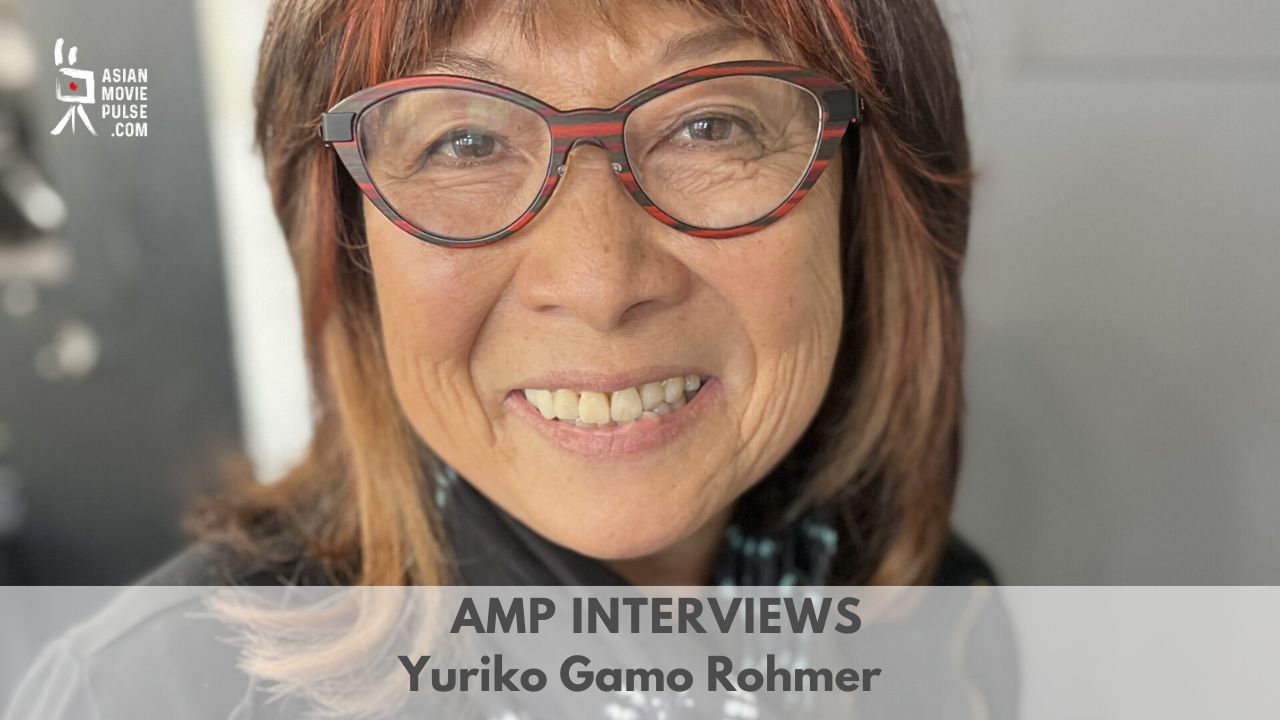
In a recent interview conducted in the Bay Area, filmmaker Yuriko Gamo Romer shared insights into the genesis and development of "Diamond Diplomacy." Her conversation offered a deep dive into the meticulous process of unearthing and weaving together over 150 years of archival material, the challenges of securing interviews with prominent figures in Major League Baseball (MLB), and the broader narrative of Japanese American baseball that extends far beyond contemporary stars like Shohei Ohtani. This interview has been edited and redacted for clarity and conciseness.
The Unforeseen Spark: From Museum Exhibit to Cinematic Endeavor
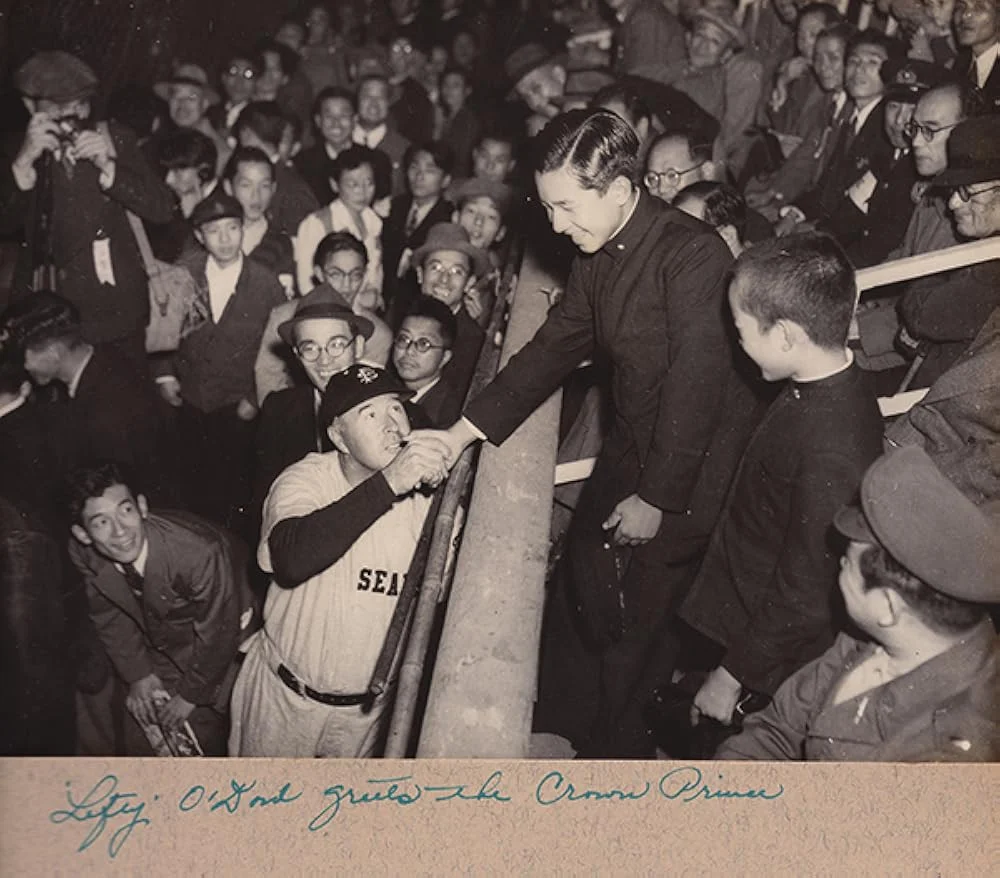
The genesis of "Diamond Diplomacy" can be traced back to a serendipitous encounter. "This particular film started when a friend of mine, Dave Dempsey, invited me to a museum exhibit many years ago in San Francisco," Romer explained. The exhibit focused on the post-World War II era, specifically the 1949 tour of Japan by the San Francisco Seals, a Minor League Baseball team. This tour was part of the Allied occupation of Japan, orchestrated under the direction of General Douglas MacArthur.
Dave Dempsey’s father, also named Dave, had been a pitcher for the San Francisco Seals. At the museum, Romer noticed a small television screen playing home movies. "Dave said, ‘Oh, my dad shot all those movies!’" she recalled. This revelation served as the catalyst, prompting Romer to encourage her friend to retrieve the valuable footage from his mother’s garage.
Beyond Fandom: A Deep Dive into a Neglected History
Contrary to assumptions that the film stemmed from a lifelong passion for baseball, Romer clarified that her involvement was driven by historical curiosity. "I had been working on this film for 11 years," she stated. "I’ve always liked baseball, but it all started because of that 1949 tour. I thought, ‘Wow, this is a wonderful piece of history that people don’t know about.’"
Her initial research quickly revealed that the connection between baseball and the U.S.-Japan relationship was far more extensive and deeply rooted than the 1949 tour alone suggested. "I started opening history books and doing research. I figured out pretty quickly that the history is much older and longer and deeper than I had kind of seen at the museum exhibit. So it turned into a much bigger film than just the 1949 tour."
A Chronicle Spanning Eras: From Commodore Perry to the Modern Ballpark
The historical scope of "Diamond Diplomacy" is vast, commencing with the arrival of Commodore Matthew C. Perry in Japan in 1853, an event that marked a pivotal moment in Japan’s engagement with the West. Baseball itself was formally introduced to Japan in 1872, just nineteen years later, by Horace Wilson, an American English teacher. This early introduction laid the groundwork for a cultural exchange that would evolve over more than a century.
Navigating the Archival Labyrinth: Crafting a Coherent Narrative
The challenge of constructing a compelling narrative from 150 years of historical data was considerable. Romer outlined her approach: "Generally, ‘Diamond Diplomacy’ is chronological, but there are parts where a straight chronology didn’t work. We ended up diverting certain things." She highlighted the difficulty of presenting historical figures from distant eras, noting, "For example, there is the mention of Horace Wilson in 1872. I don’t know anybody who was alive in 1872, so it’s just the historians, or actually, Mashi, who talks about young guys playing baseball with samurai top knots." This approach allowed for a more nuanced and engaging presentation of events, connecting distant past to more recent developments.
The Global Search for Footage: A Documentary Treasure Hunt
The research and shooting for "Diamond Diplomacy" spanned both the United States and Japan. Romer described the process as extensive, involving numerous interviews, capturing significant events, and documenting anniversary commemorations. A notable contribution was an exhibition organized by the U.S. Embassy in Tokyo.
The archival component of the film was particularly demanding. "The archival stuff is from literally all over the place," Romer remarked. "I think we have over 1000 pieces of archival footage in there." This footage was sourced from a diverse array of institutions and individuals, including archives in the U.S. and Japan, Major League Baseball, various Japanese television networks and organizations, and importantly, private family home movie collections. "It was a big treasure hunt," she confessed, underscoring the extensive effort required to locate and secure this material.
The Art of Selection: Distilling a Century of Baseball History
The monumental task of editing over 150 years of history and a vast quantity of material was a significant undertaking. Romer credits her editor, Ken Schneider, for his exceptional work. "Editing 150 plus years of history and that much material is a very big challenge, and my editor Ken Schneider did a really great job. We’re both baseball people and we’re also very much history people," she said, emphasizing their shared passion and expertise.
Unearthing Untold Anecdotes: The Humor of Cultural Misunderstanding
While many fascinating stories were integrated into the film, some compelling anecdotes, due to time constraints or narrative flow, did not make the final cut. Romer shared one such humorous incident involving a Japanese player named Mashi, who had limited English proficiency during his early pitching career in the United States.
"So Mashi has a great funny story," Romer recounted. "When he was pitching at 20 years old in the United States, he barely spoke English. The pitchers warm up in the bullpen, and there’s a catcher in there helping them warm up. And the catcher decided to tell him, ‘When the manager comes up to the mound, you tell him, ‘Go take a hike.’’"
Unaware of the colloquial meaning, Mashi followed the catcher’s advice. "So when the manager comes up to the mound, Mashi faces him and says, ‘Herman, go take a hike.’ He has no idea what he’s just said, but the manager turns around and goes back to the bench. The game goes on and they won the game that day." The incident even made its way into post-game interviews, with the manager humorously attributing the win to Mashi’s unexpected advice. Romer expressed a desire to share this anecdote, perhaps on the film’s website, due to its amusing nature.
Accessing the Legends: Building Bridges Through Connections
Securing interviews with notable figures, including the daughter of Babe Ruth and former professional baseball players, was a crucial aspect of "Diamond Diplomacy." Romer acknowledged the difficulty of reaching some individuals, humorously noting, "To this day, I’ve never gotten Shohei Ohtani to talk to me."
Her strategy for gaining access was grounded in persistence and the power of networking. "Everybody you meet opens doors. You just keep doing that until somebody, somebody says, ‘Oh, I know the manager.’ ‘I know this person.’ ‘Oh yeah, I know him.’ And then you pick up the phone." Major League Baseball proved to be an invaluable resource in facilitating these connections. "A lot of the introductions were done through Major League Baseball. They were a tremendous help."
Romer cited Warren Cromartie, who played in Japan during the 1980s, as an example. "For instance, you see Warren Cromartie playing in Japan during the 80s. I was introduced to him through the MLB. He was a fun guy to interview. The fun part about this is you get to know all these people and enjoy meeting them. They’re human beings."
Threads of Identity: Assimilation, Acculturation, and Belonging
"Diamond Diplomacy" delves into profound themes of Japanese American identity, specifically exploring the dynamics of assimilation, acculturation, and adoption within the community. Romer connected these themes to the broader experience of migration and cultural adaptation. "Anytime someone goes from their home to a foreign land, they have to learn things very quickly and learn to adapt to the culture there."
She elaborated on the difficulties faced by early Japanese immigrants, who lacked the readily available cultural resources of today. "For Japanese Americans in the early 1900s, they didn’t have TV shows, movies, and the Internet to show them what things are like in the United States. They had to go to a place completely blind. With Internet and television, we can peer into other cultures." This contrast highlights the unique challenges and resilience of those who navigated cultural frontiers in a pre-digital age.
The Evolving Landscape of Broadcast Media and Baseball’s Narrative
The film also touches upon the evolution of how baseball is consumed, from its early days to the era of streaming. Romer reflected on the shift in media consumption: "We have to be nimble about it, if we’re hellbent on watching some kind of game. It’s not as easy as it used to be. When I was a kid, there were three TV stations. There’s a lot of distraction in the world today." This observation points to the fragmentation of media and the changing habits of audiences, impacting how stories like those in "Diamond Diplomacy" reach viewers.
Beyond Borders: Baseball as a Global Unifier
While "Diamond Diplomacy" centers on the U.S.-Japan relationship, the film also acknowledges the broader internationalization of baseball. Romer was asked if non-Japanese international players were considered during the film’s production. She highlighted the shared experiences of many international players, drawing an analogy to the story of Filipe Alou.
"He explained to me that he traveled during spring training, and eventually had to switch teams because they wouldn’t let him stay in hotels or eat in restaurants [for being dark-skinned]," Romer shared. "If you’re in the dugout with the guys, you notice there are a lot of Spanish speakers." This anecdote underscores the universal challenges of discrimination and adaptation faced by many athletes of color in professional baseball, transcending national origins.
The film embraces the idea of baseball as both a global and local phenomenon. "Right. Baseball is a communion of different cultures in one location," Romer stated. She quoted Robert Whiting, a noted author on Japanese baseball, who eloquently described how "the people of Seattle became global citizens without ever leaving the city," encapsulating the power of baseball to foster a sense of global connection within local communities.
A New Horizon: Exploring Uncharted Histories
When asked about lessons learned from the extensive project, Romer humorously responded, "Well, I certainly know a lot more about baseball now." She indicated that her next project would venture into a different historical narrative, one that resonates with her passion for uncovering lesser-known stories.
"No. I once made a little tiny short animation. It’s a piece of history about Manjiro and Captain Whitfield, a whaling captain from Massachusetts. It’s a history that everybody in Japan knows, but hardly anybody in the United States knows. And I would love to flesh out that story and make something about it." This indicates Romer’s continued commitment to exploring transcultural historical connections through her filmmaking.