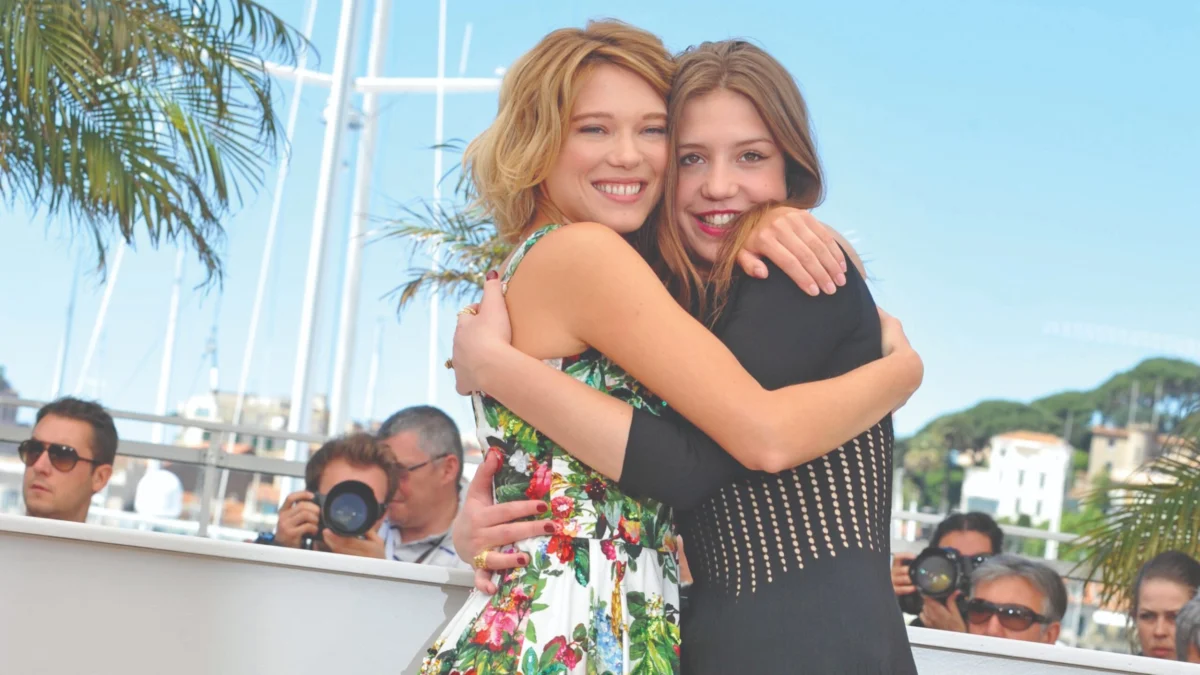
The names of French actresses Léa Seydoux and Adèle Exarchopoulos will be forever intertwined in the Cannes record book, a distinction forged in 2013, making their simultaneous return to this year’s festival a serendipitous and highly anticipated event. A decade ago, they captivated the world in director Abdellatif Kechiche’s Blue Is the Warmest Color, portraying young women whose passionate and sexually charged relationship became the focal point of a groundbreaking cinematic experience. The film, originally titled La Vie d’Adèle – Chapitres 1 & 2 in French, premiered at the 66th Cannes Film Festival and immediately ignited a global sensation, provoking both fervent praise and considerable controversy for its unflinching depiction of intimacy.
The Unprecedented Triumph of 2013
Blue Is the Warmest Color was a cinematic earthquake at Cannes, a festival renowned for showcasing bold and provocative artistry. Upon its premiere, The Hollywood Reporter critic Jordan Mintzer astutely observed, "Sure to raise eyebrows with its showstopping scenes of unsimulated female copulation, the film is actually much more than that: It’s a passionate, poignantly handled love story." This sentiment encapsulated the delicate balance the film struck, navigating explicit content while grounding its narrative in profound emotional depth. The three-hour epic chronicles Adèle’s journey of self-discovery, from her initial heterosexual experiences to her transformative relationship with Emma, an art student with distinctive blue hair. The film’s raw honesty and extended, unsimulated sex scenes were unprecedented for a film vying for the Palme d’Or, leading many festival handicappers to speculate that its risqué nature might prove too challenging for that year’s jury.
The 2013 jury, a distinguished panel chaired by legendary American director Steven Spielberg and including esteemed figures such as Ang Lee, Nicole Kidman, and Christoph Waltz, faced a significant decision. Against expectations, the jury delivered a stunning pronouncement at the closing night ceremony. Not only did they award the coveted Palme d’Or, the festival’s highest honor, to Blue Is the Warmest Color, but they also took the exceptional step of declaring that the honor should be shared by the director, Abdellatif Kechiche, and his two lead actresses, Léa Seydoux and Adèle Exarchopoulos. This unprecedented decision marked a pivotal moment in the festival’s history, recognizing the profound and indispensable contributions of the performers to the film’s artistic success. Never before had the Palme d’Or been explicitly shared with actors, underscoring the jury’s acknowledgment of their extraordinary commitment and raw vulnerability.
At the press conference following their historic win, the actresses reflected on the film’s profound impact. Adèle Exarchopoulos, whose performance was widely lauded for its visceral authenticity, articulated the film’s universal appeal: "It’s universal. It’s a love story. If it’s also a hymn to tolerance, then that’s all the more gratifying." Léa Seydoux added a personal touch to their collaboration, remarking, "What brought us together was the love that existed between us, and perhaps our sense of humor." Their statements highlighted the emotional core of the film, transcending its controversial elements to speak to broader themes of love, identity, and acceptance.
Behind the Scenes and Beyond the Screen: Production and Controversy
While Blue Is the Warmest Color garnered immense critical acclaim and cemented its place in cinematic history, its production was not without significant challenges and subsequent controversies. Director Abdellatif Kechiche’s rigorous and demanding filmmaking style became a subject of intense discussion following the Palme d’Or win. Both Seydoux and Exarchopoulos openly spoke about the arduous nature of the shoot, which spanned several months and often involved numerous takes for highly emotional and physically demanding scenes, particularly the extended intimate sequences.
In interviews conducted shortly after Cannes, the actresses detailed their experiences. Seydoux described the filming as "horrible," recounting long, grueling days and a sense of being exploited, particularly regarding the sex scenes, which she stated were "humiliating" to shoot. Exarchopoulos echoed these sentiments, revealing that they had spent ten days filming the explicit lovemaking scenes, sometimes for up to 16 hours a day. These revelations sparked a broader debate within the film industry about directorial ethics, actor welfare, and the boundaries of artistic pursuit, especially when dealing with sensitive and vulnerable content. Kechiche, in turn, expressed his disappointment with the actresses’ public statements, suggesting they had betrayed the trust established during the creative process. This post-Cannes friction between the director and his stars added another layer of complexity to the film’s legacy, forcing a re-evaluation of the human cost behind critically acclaimed art.
Despite these behind-the-scenes tensions, the film’s artistic merits remained undeniable for many. It went on to achieve significant international success, grossing over $19 million worldwide on a budget of €4 million. Critically, it received widespread praise, holding a 90% approval rating on Rotten Tomatoes based on 195 reviews, with an average rating of 8.1/10. The consensus noted: "Powerful, provocative, and passionately acted, Blue Is the Warmest Color is an uncommonly intimate epic about young love and sexual awakening." The film also garnered numerous accolades, including the Louis Delluc Prize, and nominations for the Golden Globe for Best Foreign Language Film and the BAFTA Award for Best Film Not in the English Language. Its impact extended beyond awards, sparking conversations about LGBTQ+ representation, female sexuality, and the responsibilities of filmmakers and actors alike.
The Enduring Legacy of Blue Is the Warmest Color
Blue Is the Warmest Color left an indelible mark on contemporary cinema, particularly in its portrayal of lesbian relationships. At a time when mainstream cinema often sanitized or tokenized queer narratives, Kechiche’s film presented a raw, unvarnished, and deeply human story of love, desire, and heartbreak. It pushed boundaries, not just with its explicit content, but by anchoring that content within a richly drawn emotional landscape. The film’s daring approach contributed to a growing discourse about authenticity in queer cinema, challenging preconceived notions and opening doors for more diverse and nuanced storytelling.
The shared Palme d’Or itself set an extraordinary precedent. It acknowledged that the director’s vision, no matter how singular, is often brought to life through the transformative performances of actors. This recognition elevated the status of performance within the festival’s highest honor, signaling a potential shift in how cinematic contributions are valued. While it hasn’t become a regular occurrence, the 2013 decision remains a powerful testament to the collaborative nature of filmmaking and the profound impact actors can have on a film’s ultimate resonance.
Post-Palme d’Or Trajectories: Seydoux and Exarchopoulos’ Evolving Careers
The Palme d’Or win served as a launchpad for both Léa Seydoux and Adèle Exarchopoulos, catapulting them onto the global stage and solidifying their positions as two of French cinema’s most compelling talents. Their careers have since flourished, marked by diverse roles in both independent and major international productions.
Léa Seydoux, already an established actress with roles in films like Mission: Impossible – Ghost Protocol and Midnight in Paris before Blue, saw her international profile soar. She became a sought-after presence in Hollywood blockbusters and prestige dramas. Notably, she joined the iconic James Bond franchise, first as Madeleine Swann in Spectre (2015) and reprising the role in No Time to Die (2021). Her work in these films brought her global recognition, showcasing her versatility beyond the intense, character-driven roles for which she first gained acclaim. Seydoux has also continued to collaborate with esteemed European directors, appearing in films like Yorgos Lanthimos’s The Lobster (2015), Xavier Dolan’s It’s Only the End of the World (2016), and Wes Anderson’s The French Dispatch (2021). Her career trajectory exemplifies a successful balance between commercial appeal and artistic integrity, cementing her status as a bona fide international star.
Adèle Exarchopoulos, who was less known internationally prior to Blue Is the Warmest Color, experienced a meteoric rise. Her raw, naturalistic performance as Adèle earned her the César Award for Most Promising Actress, solidifying her standing in French cinema. Post-Palme, Exarchopoulos has consistently chosen challenging and diverse roles, demonstrating a preference for gritty realism and complex characters. She has worked with a range of acclaimed directors, including Sean Penn in The Last Face (2016), and has garnered further critical acclaim for her performances in films like Sibyl (2019), Mandibles (2020), and Zero Fucks Given (2021). Her career has been marked by a commitment to authenticity and a willingness to explore the depths of human experience, proving that her Cannes triumph was not a fluke but a testament to her profound talent. She has largely remained within the European film circuit, cultivating a reputation for fearless and nuanced portrayals.
A Full Circle Moment: Their Return to Cannes
A decade after their historic joint triumph, the 2023 Cannes Film Festival marks a significant full-circle moment for both actresses. Their simultaneous return with new, highly anticipated projects underscores their enduring relevance and continued artistic growth within the industry. The festival provides a unique platform for reflection on their past achievements and anticipation for their future contributions.
Adèle Exarchopoulos is set to star in Jeanne Herry’s French drama Another Day (original title Je verrai toujours vos visages), which is screening in competition. This film, a poignant exploration of restorative justice, sees Exarchopoulos in a powerful ensemble cast, further showcasing her dramatic range and her ability to portray deeply empathetic characters. Her participation in a competition title indicates her continued prominence in the most prestigious section of the festival, directly competing for the Palme d’Or once again.
Léa Seydoux is making an even more substantial presence at this year’s festival, appearing in two distinct competition titles. Her first film is Marie Kreutzer’s Gentle Monster (original title Le monstre doux), a French-Austrian co-production that also features the legendary Catherine Deneuve. This collaboration between two generations of French cinematic royalty is sure to draw significant attention. Seydoux’s second competition entry is Arthur Harari’s The Unknown (original title L’Inconnu), a Neon pickup. This intriguing premise follows a man who, after a one-night stand, wakes up in the body of the woman he seduced, promising a thought-provoking exploration of identity and gender. Having two films in competition is a rare feat for any actor, highlighting Seydoux’s prolific output and her sustained appeal to top-tier filmmakers.
The possibility of the two actresses encountering each other on the red carpet, a decade after sharing one of cinema’s most prestigious honors, adds a layer of nostalgic charm to this year’s festival. It will undoubtedly evoke memories of their shared journey and the groundbreaking film that forever linked their careers. Their return signifies not just their individual successes but also the lasting impact of Blue Is the Warmest Color on their artistic trajectories and on the broader landscape of world cinema.
Cannes Film Festival: A Platform for Artistic Expression and Dialogue
The Cannes Film Festival, established in 1946, has long been a bastion of cinematic artistry and a global stage for artistic expression. Its history is replete with moments of controversy, innovation, and celebration, from the French New Wave in the 1960s to groundbreaking international features. The festival’s commitment to showcasing diverse voices and challenging narratives is precisely what allowed a film like Blue Is the Warmest Color to achieve its unprecedented recognition. The Palme d’Or, in particular, carries immense weight, often propelling films and their creators to international acclaim and securing their place in cinematic canons.
The return of Seydoux and Exarchopoulos to this hallowed ground reinforces Cannes’ role not just as a showcase for new films, but as a living archive of cinematic history. It allows for a re-engagement with past triumphs and a celebration of enduring talent. Their presence underscores the festival’s ability to foster careers, ignite discussions, and continually redefine the boundaries of filmmaking.
Looking Ahead: The Future of French Cinema at Cannes
The strong presence of French cinema, exemplified by Seydoux and Exarchopoulos’ multiple competition entries, highlights the continued vitality and influence of the nation’s film industry on the global stage. France consistently produces a diverse array of films, from arthouse dramas to genre-bending narratives, and Cannes remains its most prominent shop window. The festival’s enduring commitment to showcasing both established masters and emerging talents ensures that French cinema continues to evolve and innovate.
As the 2023 Cannes Film Festival unfolds, the simultaneous presence of Léa Seydoux and Adèle Exarchopoulos is more than just a reunion; it is a powerful narrative thread connecting past and present. It is a testament to the enduring power of a film that dared to challenge, to the resilience of artists who endured intense scrutiny, and to the unwavering prestige of a festival that continues to shape the course of world cinema. Their journey, from a controversial, shared Palme d’Or to individual, thriving careers, serves as an inspiring chapter in the rich tapestry of cinematic history, promising further captivating performances and significant contributions to the art form.