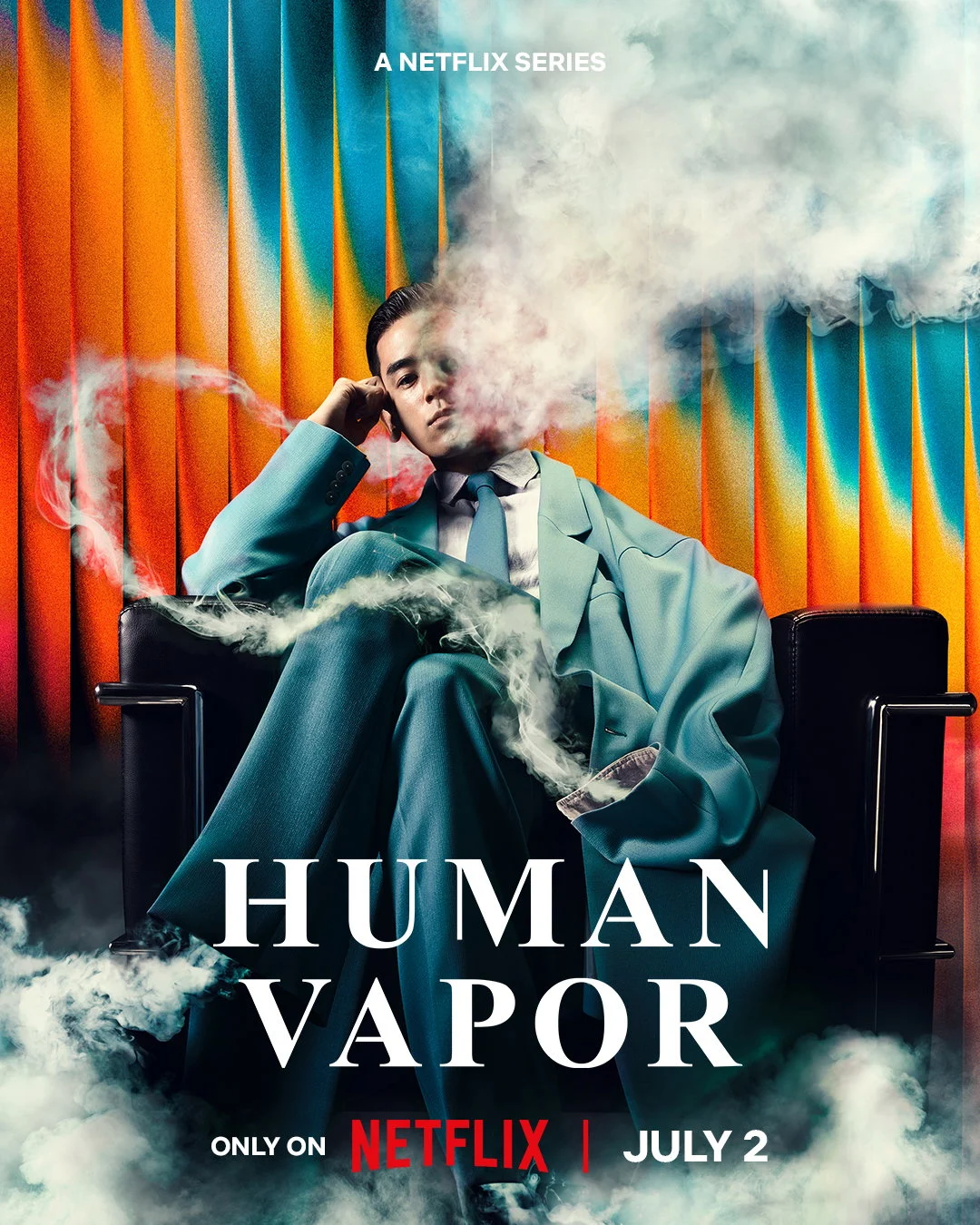
Netflix has officially released the first teaser trailer for "Human Vapor," a highly anticipated sci-fi thriller series poised to deliver a contemporary and unsettling reimagining of Toho Studios’ classic 1960 film, "The Human Vapor." Slated for a global release on July 2nd, 2026, the series is generating significant buzz, particularly due to the involvement of acclaimed creative forces behind critically lauded productions such as "Train to Busan" and the recent "Gannibal" series. This modern update promises a darker, more grounded narrative, shifting from the original’s science-fiction superhero undertones to a chilling serial killer thriller. The initial footage provided in the teaser trailer showcases a macabre and intense atmosphere, hinting at a meticulously crafted world of suspense and terror.
The series centers on a mysterious antagonist known as the "Human Vapor," an individual with the uncanny ability to transform into gas, allowing him to bypass any physical barrier. This supernatural power enables him to execute a series of seemingly impossible killings, which he often announces in advance, thereby mocking authorities and plunging society into a state of pervasive fear. As this formless dread spreads, a determined detective and a relentless reporter embark on a desperate race against time to apprehend this seemingly unstoppable force, whose very existence challenges the limits of human comprehension and control. The ensemble cast features prominent Japanese talents, including Shun Oguri, Yu Aoi, Suzu Hirose, Kento Hayashi, UTA, and Yutaka Takenouchi, signaling a high-caliber production that aims to captivate audiences worldwide.
The Legacy of Toho and Ishirō Honda’s Original Vision
To fully appreciate the scope and ambition of Netflix’s "Human Vapor," it is essential to contextualize it within the rich history of Japanese cinema, particularly the legacy of Toho Studios and the visionary director Ishirō Honda. Toho Studios, established in 1932, has been a cornerstone of Japanese filmmaking, renowned globally for its contributions to the kaiju (monster) genre, most notably with the creation of Godzilla. Beyond giant monsters, Toho has produced a diverse range of films, including dramas, comedies, and science fiction, often pushing the boundaries of special effects and storytelling.
The original "The Human Vapor" (Gas Ningen Daiichigo), released in 1960, stands as a testament to Toho’s versatility and Ishirō Honda’s directorial prowess. Honda, celebrated for helming the original 1954 "Godzilla" and numerous other kaiju classics like "Mothra" and "Rodan," possessed a unique ability to blend fantastical elements with social commentary. In "The Human Vapor," he presented a narrative that, while firmly rooted in science fiction, explored themes of scientific experimentation gone awry and the moral implications of unchecked ambition. The film tells the story of a brilliant but unhinged scientist named Dr. Kamata, who, after an experiment transforms him into a being capable of turning into gas, uses his newfound power to commit a series of revenge-driven crimes against those who wronged him. Unlike the upcoming Netflix series’ emphasis on a serial killer thriller, Honda’s original leaned more into the "mad scientist" trope and the tragic figure of a man transformed, often viewed as a precursor to superhero narratives or a dark twist on human potential.
The 1960 film, while not as iconic as "Godzilla," contributed to the evolving landscape of Japanese genre cinema. Its blend of police procedural elements, scientific horror, and a unique antagonist resonated with audiences and demonstrated the creative depth of Toho’s sci-fi offerings beyond the kaiju genre. Honda’s direction infused the film with a sense of urgency and suspense, establishing a benchmark for human transformation narratives in Japanese film. The original film’s influence can be seen in subsequent works exploring human mutation and the ethical dilemmas of scientific advancement, cementing its place as a cult classic within the Toho canon.
A Modern Reimagining: Shifting Tones and Creative Minds
The Netflix series "Human Vapor" marks a significant departure from its predecessor in tone and narrative focus. While honoring the core concept of a gas-transforming antagonist, this iteration is explicitly framed as a "grounded reimagining" and a "serial killer thriller," moving away from the more fantastical or tragic elements of the 1960 film. This shift reflects contemporary storytelling trends that favor psychological depth, gritty realism, and a heightened sense of dread over traditional sci-fi spectacle.

At the helm of this modern update is Japanese filmmaker Shinzo Katayama, whose directorial portfolio demonstrates a clear inclination towards dark, suspenseful, and often disturbing narratives. Katayama’s previous works, such as "Siblings of the Cape" (2018), "Missing" (2021), "The Hovering Blade" (2024), and most recently, the critically acclaimed series "Gannibal" (2022), have established his reputation for crafting intense psychological thrillers that delve into the darker aspects of human nature and societal decay. "Missing," for instance, garnered international attention for its unsettling atmosphere and exploration of grief and obsession. His work on "Gannibal," a horror-thriller series known for its disturbing imagery and deep dive into rural Japanese folklore and violence, further solidifies his suitability for a project like "Human Vapor." Katayama’s ability to create palpable tension and explore the macabre makes him an ideal choice to steer this reimagining towards a chilling and visceral experience.
The screenplay for "Human Vapor" is co-written by the celebrated Yeon Sang-ho and Ryu Yong-jae, a collaboration that brings a formidable blend of Korean and Japanese creative talent to the project. Yeon Sang-ho is widely recognized as the visionary director and writer behind the global zombie phenomenon "Train to Busan" (2016) and its sequel, "Peninsula" (2020), as well as the dystopian series "Hellbound" (2021). His mastery of high-stakes suspense, character-driven horror, and social commentary has earned him international acclaim. Ryu Yong-jae, another prominent Korean screenwriter, has contributed to successful projects like "Money Heist: Korea – Joint Economic Area" (2022) and "The Call" (2020), showcasing his expertise in crafting intricate thrillers. The fusion of Katayama’s distinct directorial style with the narrative sensibilities of Yeon Sang-ho and Ryu Yong-jae suggests a series that will be rich in suspense, character complexity, and potentially, profound social commentary. Their collective experience in crafting high-tension narratives with strong emotional cores is expected to elevate "Human Vapor" beyond a mere genre exercise, transforming it into a thought-provoking exploration of fear and control in modern society.
The series is produced by Sokichi Onoda and Yoomin Hailey Yang, with Toho Studios once again involved in association with WowPoint, ensuring a continuity of legacy while embracing new creative directions. Netflix Japan’s direct involvement underscores the platform’s commitment to investing in high-quality local productions with global appeal.
An Ensemble Cast of Japanese Stars
The success of any compelling thriller hinges not only on its plot and direction but also on the strength of its cast. "Human Vapor" boasts an impressive lineup of established and rising Japanese actors, each bringing significant talent and gravitas to their roles.
Leading the cast is Shun Oguri, one of Japan’s most recognizable and versatile actors. With a career spanning over two decades, Oguri has starred in numerous acclaimed films and television dramas, including "Crows Zero" (2007), "Gintama" (2017), and the Hollywood blockbuster "Godzilla vs. Kong" (2021). His ability to portray complex characters, from charismatic leaders to tormented individuals, makes him a compelling choice for a series exploring the psychological impact of an elusive killer. While his specific role has not been fully detailed, the intensity he brings to his performances suggests he could either be the eponymous Human Vapor, imbuing the antagonist with a terrifying mystique, or a key figure in the pursuit, such as the detective, providing a grounded anchor to the escalating horror.
Joining Oguri are other distinguished actors:
- Yu Aoi: An acclaimed actress known for her roles in films like "Hana and Alice" (2004), "All About Lily Chou-Chou" (2001), and "Killing" (2018). Her nuanced performances often convey deep emotional resonance, which would be vital in portraying characters grappling with widespread fear and uncertainty.
- Suzu Hirose: A popular and highly sought-after actress, Hirose has starred in diverse projects such as "Our Little Sister" (2015), "Chihayafuru" trilogy, and "The Third Murder" (2017). Her presence typically adds a dynamic and youthful energy to her roles, potentially as the relentless reporter or another pivotal character.
- Kento Hayashi: Known for his roles in "Love for Beginners" (2012), "High & Low: The Worst" (2019), and "Erased" (2016), Hayashi has demonstrated a range that spans from romantic leads to intense dramatic characters, fitting well into the thriller genre.
- UTA: A rising star whose recent work is generating significant attention. His involvement suggests a commitment to featuring fresh talent alongside established veterans.
- Yutaka Takenouchi: A veteran actor with a long and distinguished career in Japanese television and film, Takenouchi brings a wealth of experience and a commanding presence to any role, potentially playing a high-ranking official or a seasoned investigator.
The combined talent of this ensemble promises a compelling and emotionally resonant viewing experience, where the human drama unfolds against the backdrop of an extraordinary and terrifying threat. Their performances will be crucial in conveying the "formless, pervasive fear" that the Human Vapor inflicts upon society.

Teaser Analysis and Visual Storytelling
The first teaser trailer for "Human Vapor," released via Netflix’s YouTube channel, offers a tantalizing glimpse into the series’ dark aesthetic and terrifying premise. The phrase, "From now on, people will call me… the Human Vapor," delivered with a chilling resonance, immediately sets an ominous tone. This declaration, coupled with the reveal that "Fear has no form," underscores the antagonist’s elusive nature and the psychological impact he has on the populace.
The teaser reportedly includes "solid footage," highlighting the series’ commitment to visual storytelling. Descriptions of "creepy methods of killing people" and "quite macabre" elements suggest a focus on visceral horror and psychological distress rather than mere jump scares. A particularly striking image mentioned is that of "a person suddenly swells and explodes on live TV," a shocking visual that instantly establishes the Human Vapor’s brutality and his ability to weaponize fear through public displays of violence. This scene alone indicates a willingness to push boundaries and deliver genuinely disturbing content.
The visual representation of the Human Vapor transforming into gas and slipping through barriers is crucial for establishing his supernatural capabilities. The teaser likely uses sophisticated visual effects to make this transformation believable and unsettling, further emphasizing his unstoppable nature. The imagery of widespread fear across society, possibly depicted through frantic news reports, panicked crowds, or scenes of authorities struggling to cope, will be essential in conveying the societal impact of the Vapor’s reign of terror. The teaser’s effectiveness lies in its ability to quickly convey the core concept, establish the series’ dark tone, and build significant anticipation without revealing too much of the plot. It positions "Human Vapor" as a high-stakes, visually striking, and emotionally charged thriller.
Netflix’s Global Strategy and the Rise of Asian Content
The production and global distribution of "Human Vapor" by Netflix is indicative of the streaming giant’s expansive and highly successful strategy of investing in local-language content, particularly in Asia. Over the past decade, Netflix has significantly ramped up its production of original series and films in various countries, recognizing the immense talent pool and diverse storytelling traditions outside of traditional Western markets. This strategy has not only led to a surge in subscribers but also to a global appreciation for non-English language productions.
Japan, with its rich cinematic history and vibrant entertainment industry, is a key market for Netflix. The platform has actively sought to collaborate with Japanese creators, studios, and talent to produce a wide array of content, from anime to live-action dramas and films. Successful Japanese Netflix originals like "Alice in Borderland," "House of Ninjas," and numerous anime series have demonstrated the global appeal of Japanese storytelling when given a worldwide distribution platform. By investing in projects like "Human Vapor," Netflix not only caters to its Japanese subscriber base but also introduces unique Japanese narratives and artistic sensibilities to a global audience, fostering cultural exchange and breaking down linguistic barriers in entertainment.
The involvement of Korean talents like Yeon Sang-ho and Ryu Yong-jae further highlights Netflix’s cross-regional collaboration efforts within Asia. The unprecedented global success of South Korean productions such as "Squid Game," "Kingdom," and "The Glory" has proven the immense appetite for high-quality Asian dramas and thrillers worldwide. This collaborative approach, blending Japanese directorial vision with Korean screenwriting expertise, positions "Human Vapor" to potentially tap into the fanbases of both industries, creating a unique hybrid that could resonate broadly. Netflix’s commitment to these local productions is not just about quantity; it’s about quality, providing significant budgets and creative freedom that allow ambitious projects like "Human Vapor" to come to fruition and reach their full potential on a global stage. This strategic investment underscores the company’s belief in the universal power of compelling storytelling, regardless of its origin language.
Thematic Resonance and Contemporary Relevance
"Human Vapor" is poised to explore themes that resonate deeply with contemporary anxieties, making its reimagining particularly timely. The core premise of a mysterious killer who can transform into gas and spread "formless, pervasive fear" speaks directly to modern societal concerns. In an era marked by invisible threats—from global pandemics and cyber warfare to the insidious spread of misinformation—the idea of an antagonist who is literally ungraspable and whose presence instills a diffuse, omnipresent dread is powerfully evocative.

The series’ shift to a "serial killer thriller" rather than a "superhero story" implies a deeper psychological exploration of evil and its impact. The Human Vapor as a serial killer mocks authority, preys on societal vulnerabilities, and corrodes trust, reflecting fears about the erosion of order and the limits of state control in a complex world. This could lead to a narrative that delves into the psychological toll on both the investigators and the public, examining how individuals and institutions react when faced with an existential threat that defies conventional understanding and containment.
Moreover, the show could implicitly touch upon modern technological anxieties. While the original was born from a period of atomic age fears and scientific experimentation, the new series might subtly incorporate themes related to digital surveillance, the anonymity of the internet, or even biological threats, all of which contribute to a sense of vulnerability in contemporary society. The idea of a killer who announces his actions in advance and carries them out, seemingly mocking the authorities, could also be interpreted as a commentary on the spectacle of crime in the digital age, where villains seek notoriety and manipulate public perception through media.
Ultimately, "Human Vapor" has the potential to be more than just a thrilling genre piece. By grounding its fantastical premise in a realistic and chilling portrayal of fear, control, and societal breakdown, it could offer a poignant reflection on the human condition in an increasingly uncertain world. The series’ exploration of how individuals and society cope with an "unstoppable force" that challenges their very understanding of reality promises to be both entertaining and thought-provoking.
Anticipation and Global Impact
With its July 2nd, 2026, release date, "Human Vapor" is strategically positioned as a major summer offering from Netflix. This timing often indicates a strong push for a series expected to capture significant global attention during a period when viewership is typically high. The combination of a respected legacy property, acclaimed creative talent, and a stellar cast has generated considerable anticipation among fans of Japanese cinema, sci-fi thrillers, and international Netflix originals.
The series is expected to appeal to a broad demographic, from those familiar with Toho’s classic films to new audiences drawn by the contemporary thriller elements and the involvement of creators like Yeon Sang-ho. Its global availability on Netflix means it has the potential to replicate the success of other non-English language series that have transcended cultural barriers to become worldwide phenomena. Should "Human Vapor" resonate with audiences, it could further cement Japan’s position as a powerhouse of diverse and innovative storytelling within the global entertainment landscape, encouraging more cross-cultural collaborations and investments in local content.
The initial teaser has successfully laid the groundwork for a dark, compelling, and utterly unique viewing experience. As the release date approaches, further marketing materials and insights into the series’ narrative will likely heighten the excitement. "Human Vapor" stands as a testament to the enduring power of classic narratives, reimagined for a new era with modern sensibilities and global reach, promising a thrilling and unforgettable journey into the heart of pervasive fear.