


The long-standing corporate philosophy at Netflix has historically been defined by a steadfast commitment to internal development over external acquisition, a strategy the company’s leadership frequently summarized with the phrase "builders, not buyers." However, following a tumultuous first quarter in 2026 and a high-profile, multi-billion-dollar flirtation with one of Hollywood’s most storied assets, that foundational sentiment appears to be undergoing a significant transformation. As the global streaming market reaches a point of peak saturation and intense consolidation, Netflix is signaling a newfound openness to large-scale mergers and acquisitions (M&A) to fortify its competitive position against emerging media behemoths.
On Thursday, Netflix released its first-quarter earnings report, a document that typically serves as a barometer for the health of the streaming industry. While the call touched upon traditional performance indicators—such as subscriber engagement, content expenditure, and the efficacy of recent price increases—the conversation was dominated by the company’s failed bid for Warner Bros. Discovery (WBD). Analysts and investors, once accustomed to Netflix dismissing the idea of legacy media acquisitions, are now questioning the company’s long-term roadmap in an era where intellectual property (IP) libraries and studio infrastructure are becoming the primary weapons of the "streaming wars."
The $72 Billion Gambit: A Strategic Pivot
The industry was sent into a frenzy late last year when Netflix emerged as a serious bidder for Warner Bros. Discovery. The move was a stark departure from the company’s historical aversion to the complexities of legacy media, which often include declining linear television networks and massive debt loads. In December, the market was stunned by the announcement that Netflix had reached a tentative agreement to acquire WBD’s film studios and streaming assets in a landmark $72 billion deal.
The logic behind the pursuit was rooted in a desire to solve Netflix’s most persistent long-term challenge: the need for "evergreen" franchises. Despite boasting a massive global footprint—reaching a staggering 325 million paid members as of January 2026—Netflix has struggled to build a library of intellectual property that matches the depth of rivals like Disney or Warner Bros. By acquiring WBD, Netflix sought to bring iconic brands such as DC Comics, Harry Potter, and HBO’s prestige catalog under its umbrella, effectively transforming from a tech-centric distribution platform into a traditional Hollywood powerhouse.
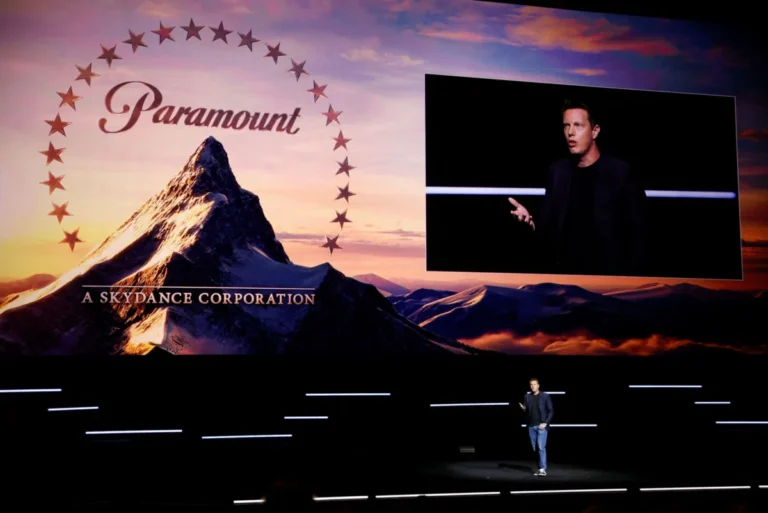
However, the deal was not meant to be. In February, the transaction was upended by a superior bid from Paramount-Skydance, which sought to acquire the entirety of WBD, including its cable networks. Netflix ultimately walked away from the negotiating table, but not without a consolation prize: a $2.8 billion breakup fee that was collected shortly after the deal dissolved.
Developing the "M&A Muscle"
During Thursday’s earnings call, Netflix co-CEO Ted Sarandos addressed the WBD saga with a tone of tactical optimism. While the deal failed to cross the finish line, Sarandos argued that the process itself was an invaluable evolutionary step for the company. He noted that the exercise allowed Netflix to test its internal capabilities regarding large-scale deal execution and early-stage integration.
"What we did learn, though, was that our teams were more than up to the task," Sarandos told analysts. "We’ve learned so much about deal execution, about early integration. Mostly, we really built our M&A muscle. And the most important benefit of this entire exercise, though, was that we tested our investment discipline."
This "M&A muscle" is a new addition to the Netflix corporate physique. For years, the company focused exclusively on its proprietary algorithm and the production of original content. The willingness to engage in a $72 billion bidding war suggests that Netflix recognizes it can no longer rely solely on organic growth to maintain its dominance. The admission of "newfound openness" has led market spectators to wonder if other targets—such as Sony Pictures, Lionsgate, or even gaming giants—could be in the streamer’s sights.
Q1 Financial Performance and Investor Skepticism
Despite the bravado regarding its strategic evolution, Netflix’s Q1 financial results painted a more complex picture. On the surface, the numbers were strong: the company reported a revenue beat for the quarter, fueled by the continued success of its ad-supported tier and a global crackdown on password sharing. However, the market’s reaction was decidedly cold.

Netflix shares tumbled approximately 10% in extended trading following the report. The primary driver of this decline was the company’s forward-looking guidance. Investors were reportedly disappointed that Netflix maintained its full-year margin guidance despite the termination of the WBD deal and the subsequent influx of the $2.8 billion breakup fee.
Robert Fishman, an analyst at MoffettNathanson, highlighted this discrepancy in a research note. "The bigger surprise this quarter was the unchanged full-year margin guidance despite walking away from the Warner Bros. deal and related M&A costs," Fishman wrote. The lack of an upward revision suggested to some that Netflix’s core operating costs might be rising faster than anticipated, or that the company intends to aggressively reinvest its capital into content and technology rather than returning it to shareholders.
A Changing Competitive Landscape
The urgency behind Netflix’s interest in M&A is underscored by the shifting tectonic plates of the media industry. If the Paramount-Skydance takeover of Warner Bros. Discovery is approved by regulators, it will create a formidable competitor. A combined entity featuring the assets of Paramount+, HBO Max, and the Warner Bros. film studio would represent a concentration of content that Netflix has never had to contend with in its history.
Mike Proulx, vice president and research director at Forrester, noted that the fallout of the WBD deal significantly alters the competitive math. "The way the WBD cards fell matters a lot," Proulx stated. "A probable combination of Paramount+ and HBO Max changes the streaming landscape in ways Netflix hasn’t really had to confront before."
In response to these pressures, Netflix management spent much of the earnings call reiterating their commitment to the "tried-and-true" playbook of engagement and monetization. The company remains on track to double its advertising revenue this year, a feat that would provide a crucial secondary revenue stream as subscriber growth in mature markets like North America begins to plateau. Furthermore, Netflix recently implemented price hikes across all streaming plans, a move that management claims has not significantly impacted subscriber retention.
Chronology of Netflix’s Strategic Evolution
To understand the current pivot toward M&A, it is essential to look at the timeline of Netflix’s growth and the external pressures that have shaped its trajectory:
- 2013–2020: The Era of Originality. Netflix invests tens of billions of dollars into original programming (e.g., House of Cards, Stranger Things), successfully transitioning from a licensed content aggregator to a primary producer.
- 2021: Entry into Gaming. Recognizing the limits of video streaming, Netflix begins acquiring small gaming studios (e.g., Night School Studio), marking its first tentative steps into the M&A space.
- 2022: The Subscriber Correction. For the first time in a decade, Netflix reports a loss in subscribers, leading to a massive stock sell-off and the introduction of an ad-supported tier.
- Late 2023: The WBD Bid. Netflix shocks the industry by bidding $72 billion for Warner Bros. Discovery’s core assets, signaling a total reversal of its "builders, not buyers" stance.
- February 2026: The Deal Collapses. Paramount-Skydance offers a superior bid for the entirety of WBD. Netflix exits the process with a $2.8 billion breakup fee.
- April 2026: Q1 Earnings. Netflix reports 325 million subscribers but sees its stock drop 10% due to cautious guidance and lingering questions about its future acquisition strategy.
Implications for the Future of Streaming
The broader implication of Netflix’s "M&A muscle" is that the era of the independent, pure-play streamer may be coming to an end. As content costs continue to spiral and the cost of customer acquisition rises, scale is the only remaining defense. Netflix’s failed bid for WBD was not a sign of weakness, but rather a recognition of the new reality: to stay at the top, the company may eventually need to buy the legacy it once sought to replace.
For now, Ted Sarandos and the Netflix leadership team are attempting to balance two conflicting narratives. On one hand, they are reassuring investors that the WBD deal was a "nice to have, not a need to have," and that the core business remains robust. On the other hand, they are signaling to the market that they are now a disciplined, capable buyer ready to pounce on the next major opportunity.
The central challenge for Netflix in the coming quarters will be proving that it can maintain its "relentless focus" on revenue and profit growth while simultaneously navigating a more crowded and consolidated market. As Mike Proulx of Forrester observed, "Pricing power has to be earned quarter by quarter, and holding engagement as prices rise remains the central challenge across the streaming market."
Whether Netflix chooses to remain a standalone giant or eventually successfully executes a megadeal will likely define the next decade of digital entertainment. For the moment, the company is back to its core playbook, but the "M&A muscle" it developed during the WBD pursuit remains ready for the next round of industry consolidation. Investors will be watching closely to see if the $2.8 billion breakup fee is used to buy back shares, or if it serves as the down payment for Netflix’s next attempt to buy a piece of Hollywood history.