The entertainment industry is currently navigating a period of profound transformation, caught between the existential threat of automation and the urgent economic necessity of cost reduction. At this critical juncture, a new venture titled Innovative Dreams has emerged as a pioneer of the "hybrid" production model. This specialized production services company, backed by the technological infrastructure of Amazon Web Services (AWS) and the generative capabilities of the artificial intelligence startup Luma, represents a significant shift in how content is conceived, captured, and finalized. By integrating physical soundstages, giant LED walls, and advanced AI-driven tools, Innovative Dreams aims to redefine the workflow of modern filmmaking from pre-production through post-production.
A New Model for Production Efficiency
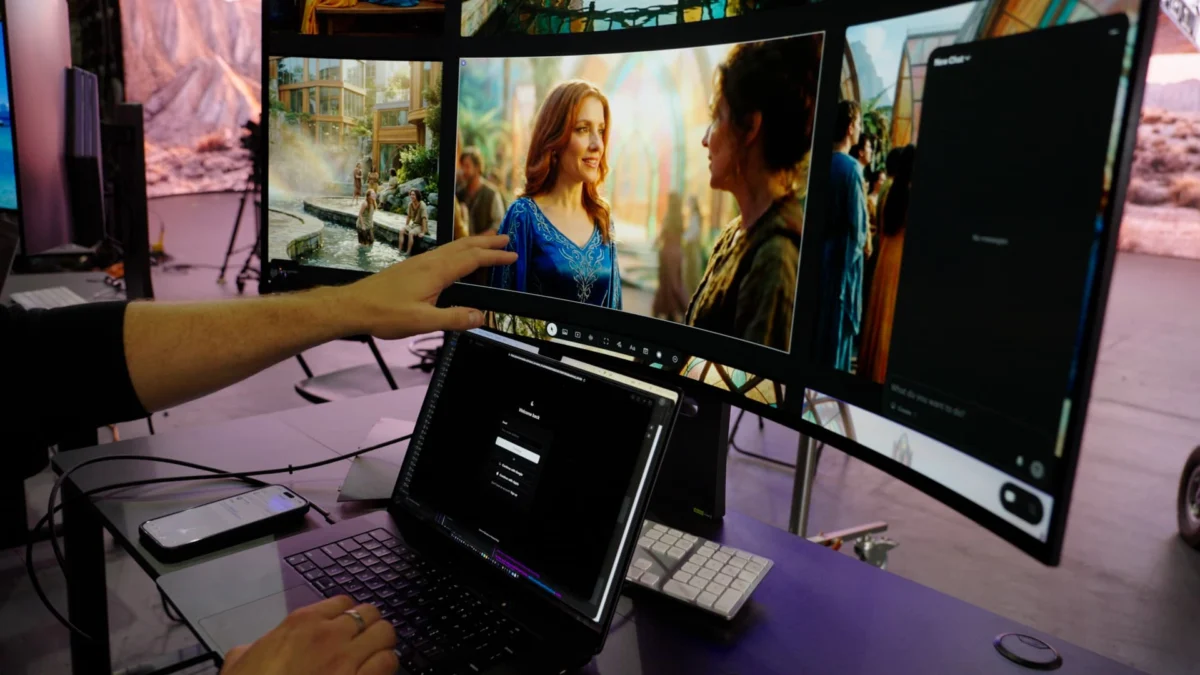
Innovative Dreams is not a traditional studio, nor is it a purely digital animation house. Instead, it functions as a bridge between the physical and digital realms. The company utilizes a combination of virtual production—a technique popularized by series such as The Mandalorian—motion capture, and a suite of generative AI tools. These include Luma’s high-fidelity 3D modeling, Google’s Nano Banana, and Bytedance’s SeeDream. The objective is to significantly compress the time and financial investment required for high-end cinematic output.
According to CEO Jon Erwin, the process is designed to enhance rather than replace the human element of storytelling. The workflow involves visually designing environments before filming begins, then mapping performance capture data directly onto digital assets. This allows for a fusion of a real actor’s nuanced performance with digital wardrobes, sets, and lighting. Unlike fully synthetic AI video generation, which relies on text-to-video prompts, this hybrid approach preserves the director’s choice of lens, the cinematographer’s framing, and the actor’s emotional delivery, while leveraging AI to handle the labor-intensive aspects of world-building and visual effects.
The Technological Backbone: AWS and Generative AI
The reliance on real-time rendering and massive data processing necessitates a robust computational infrastructure. This is why Innovative Dreams has partnered with AWS as both an investor and a primary infrastructure provider. AWS offers the cloud computing power and AI architecture required to run these real-time hybrid tools on set. This partnership is part of a broader strategic move by Amazon to deepen its roots in the entertainment sector, moving beyond content delivery (via Prime Video) into the foundational tech that powers production.
Samira Bakhtiar, General Manager of Media, Entertainment, Games, and Sports at AWS, noted that the goal is to provide tools that allow filmmakers to collaborate in ways previously impossible. The acceleration of production cycles at scale is a primary objective, enabling content to be produced faster and at a lower price point without sacrificing the visual quality expected by global audiences.
Furthermore, the involvement of Luma—an AI company recently valued at over $4 billion—brings a sophisticated "agent tool" into the mix. This tool serves as a collaborative workspace that synchronizes multiple AI generation services. By having a direct line of communication with Luma’s developers, Innovative Dreams is actively shaping the evolution of these tools to meet the specific, high-pressure demands of a professional film set.
Case Study: Achieving Massive Scale on a Soundstage
The practical applications of this technology were first tested during the production of House of David, a large-scale historical drama for Amazon Prime Video. During production, Erwin utilized AI to recreate complex historical settings and far-flung geographic locations without leaving the controlled environment of a soundstage. The success of this pilot led to the formalization of Innovative Dreams.
The company’s first standalone project under this new workflow is a three-part series titled The Old Stories: Moses, starring Academy Award winner Ben Kingsley. The production metrics for this project provide a stark contrast to traditional filmmaking methods. The series, scheduled for a spring release, was filmed in just one week on a virtual soundstage. Despite the short shooting schedule, the series features actors in 40 distinct global locations.
Erwin estimates that a traditional production would have required five to six weeks of filming and a massive travel budget to achieve the same result. By projecting high-resolution footage from around the world onto LED screens and using AI to harmonize the lighting and assets, the production was able to maintain a "global" scale within a single facility in Southern California.
The Economic Imperative: Hollywood’s Content Contraction
The emergence of Innovative Dreams comes at a time when the Los Angeles entertainment industry is facing an economic crisis. The industry has been hit by a "triple threat" of disruptions: the COVID-19 pandemic, the 2023 writers and actors strikes, and a general contraction in streaming spend as companies prioritize profitability over subscriber growth.

Data indicates that Los Angeles County has lost more than 40,000 entertainment-related jobs since 2022. Production activity in the city has plummeted to its lowest level since 1995. According to entertainment attorney Jonathan Handel, the industry is down by 25% to 35% across almost all metrics compared to pre-pandemic levels. Consolidation among major studios and aggressive cost-cutting measures have led to an "alarming lack of green lights," leaving a large portion of the creative workforce unemployed.
In this climate, the "runaway production" problem has worsened, with filmmakers moving projects to regions with more aggressive tax incentives or lower labor costs, such as Georgia, the United Kingdom, or Eastern Europe. Erwin argues that the AI-powered hybrid model is the only way to make production in Southern California financially sustainable again. By reducing the need for massive on-location crews and lengthy post-production schedules, he believes the technology can keep projects—and the core creative jobs associated with them—in Los Angeles.
The Labor Paradox: Job Displacement versus Retention
Despite the potential for economic revitalization, the integration of AI remains a flashpoint for labor unions. The SAG-AFTRA and WGA strikes of 2023 were largely defined by the fight for protections against AI, specifically regarding the use of digital replicas and the replacement of human writers.
The hybrid model introduced by Innovative Dreams raises specific concerns for "below-the-line" workers, including set designers, costume makers, and makeup artists. If an actor’s wardrobe and environment can be digitally mapped and modified in real-time, the demand for physical sets and practical effects may diminish. Jonathan Handel points out that while the technology might "augment" the roles of top-tier creators, it could simultaneously destroy the "on-ramps" for entry-level workers. The traditional path of starting as a production assistant or a junior artisan is threatened if those tasks are automated or handled by a small team of AI technicians.
Erwin, however, maintains a bullish outlook, suggesting that the industry’s best workers will adapt. He frames the technology as a necessary evolution to "fix something that’s become unsustainable." From his perspective, the choice is not between traditional jobs and AI jobs, but between having production in Los Angeles or losing it entirely to international markets.
The Strategy to Save Southern California Production
A central tenet of the Innovative Dreams mission is the preservation of the Southern California production ecosystem. For decades, Los Angeles has been the global epicenter of filmmaking, but that status is currently under siege. By leveraging AWS’s infrastructure and Luma’s generative tools, Erwin hopes to create a "tech-forward" hub that attracts studios looking for high production value at a fraction of the cost.
This strategy aligns with broader efforts by California lawmakers and industry leaders to modernize the state’s film tax credit programs and invest in soundstage infrastructure. However, the Innovative Dreams approach suggests that policy alone may not be enough; a fundamental shift in the "method" of filmmaking is required to compete in a globalized, budget-conscious market.
Navigating the Ethical and Creative Frontier
As Innovative Dreams prepares for the launch of The Old Stories: Moses, the film industry will be watching closely. The success or failure of this project will likely serve as a bellwether for the adoption of generative AI in mainstream entertainment. If the series achieves high viewership and critical acclaim while maintaining its low-cost profile, other studios will almost certainly follow suit.
The broader implications extend beyond just cost. This technology democratizes the ability to create "spectacle." Historically, only the largest studios with nine-figure budgets could afford to depict 40 global locations or complex historical epics. Hybrid AI tools could theoretically allow independent filmmakers to achieve a level of scale previously reserved for summer blockbusters.
However, the ethical questions remain. The industry must still determine how to fairly compensate those whose work is used to train AI models and how to ensure that the "digital wardrobe" and "digital sets" do not infringe on the intellectual property of human designers. As the boundary between the physical and the digital continues to blur, Innovative Dreams stands at the forefront of a movement that could either save Hollywood or fundamentally unmake it. For now, the company is betting that the fusion of human performance and machine intelligence is the only viable path forward for the city of dreams.