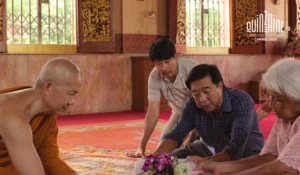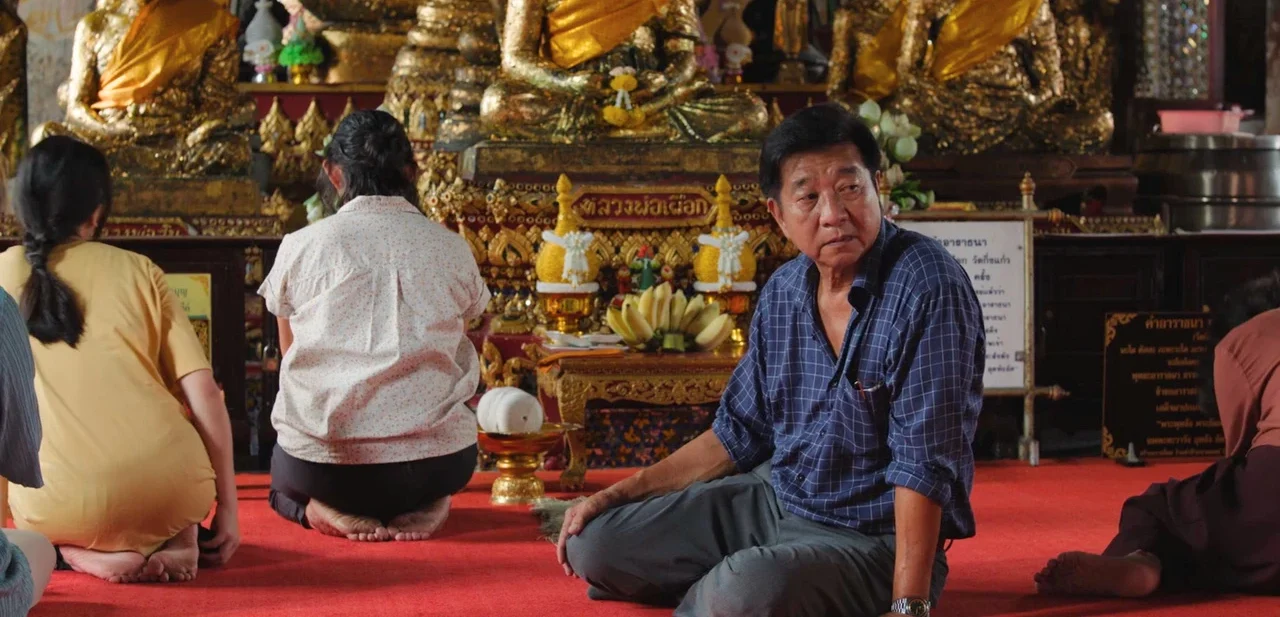
In the hushed reverence of a single day, a profound act of filial devotion unfolds as a man embarks on an extraordinary pilgrimage, gathering nine family members in a desperate bid to defy a grim prophecy and seek solace for his ailing mother. This deeply personal journey, captured with introspective grace in Sompot Chidgasornpongse’s directorial fiction debut, “9 Temples to Heaven,” transcends a mere cinematic narrative, offering a poignant meditation on faith, family, and the ephemeral nature of life. The film, running 140 minutes, features a notable ensemble cast including Amara Ramnarong as the matriarch, Surachai Ningsanond as her son Sakol, and supporting performances from Jirawut Chiwaruck, Yaneenan Jiraphatjittrin, Klaichan Phunman, Sompop Songkampol, Poon Sirapob, Yada Karnjanisakorn, and Nichmon Shintadapong.
The genesis of this cinematic undertaking lies in a deeply unsettling prediction. The catalyst for Sakol’s fervent quest is a stark pronouncement from his employer, who foresees the imminent passing of his elderly mother, a matriarch whose life force seems to be ebbing away mere weeks before her own birthday. This chilling forecast ignites a desperate hope within Sakol, a conviction that a concentrated spiritual intervention might alter the course of destiny. He conceives of an ambitious one-day itinerary, a whirlwind tour of nine sacred temples across Thailand, each stop intended to be imbued with prayers, rituals, and the collective goodwill of his extended family. The underlying philosophy is one of shared energy and unified intent; by physically bringing his closest kin together in a continuous, sacred pursuit, Sakol believes they can generate a powerful, restorative force. This concentrated effort, he hopes, will serve as a potent antidote to the grim prognosis, a collective plea for more time.
The Chronology of a Day of Faith
The narrative unfolds with a deliberate pacing, mirroring the slow, deliberate rhythm of spiritual contemplation. The film opens with the unsettling news, setting a somber yet determined tone. Sakol’s immediate reaction is to mobilize his family. The logistical challenge of gathering a diverse group – including his wife, siblings, and children – for an all-encompassing day trip is presented not as an inconvenience, but as an essential component of the healing ritual. The film meticulously charts their progress through the day, interweaving moments of serene prayer with the burgeoning anxieties and subtle tensions that arise within the family unit.
As the day progresses, the matriarch’s health becomes an increasingly fragile focal point. Each temple visit, intended as a step towards recovery, also brings the family closer to the precipice of loss. This escalating fragility compels them to confront difficult ethical and philosophical questions in real-time. The narrative arc grapples with the dilemma of whether to persevere with the pilgrimage, clinging to the hope of a miraculous recovery, or to retreat, prioritizing comfort and immediate care for their weakening matriarch. This internal conflict forms the emotional core of the film, as differing perspectives on faith, family obligation, and the acceptance of mortality clash.
The film’s visual language is as crucial as its dialogue in conveying this complex emotional landscape. Director Sompot Chidgasornpongse employs a gentle, observational camerawork that invites the audience into the quiet spaces between words and actions. Long, uninterrupted shots capture the subtle nuances of family deliberations and the unspoken emotional currents that flow between them. The emphasis on the physical journey, the movement between temples, becomes a metaphor for the family’s navigation of grief and hope.
Contextualizing Generational Healing and Spirituality
“9 Temples to Heaven” arrives at a time when the practice of mindfulness and deliberate self-reflection is increasingly challenged by the pervasive influence of technology and social media, particularly among younger generations. The film’s deliberate pacing and focus on inner contemplation serve as a direct counterpoint to this trend, offering a cinematic space for audiences to pause and engage with deeper questions. The concept of generational healing, a theme subtly woven into the narrative, is particularly relevant. The matriarch’s life, represented through fragmented glimpses and familial perspectives, provides a lens through which the younger generations can understand their heritage and the enduring impact of their ancestors.
The spiritual backdrop of Thailand, with its rich tapestry of Buddhist traditions and sacred sites, provides an inherently resonant setting for the story. The film highlights the architectural grandeur and historical significance of the temples visited, drawing parallels between the enduring nature of these sacred spaces and the enduring bonds of family. The contemplation of transient lives that have passed through these ancient sites serves as a subtle reminder of mortality, even as the family strives to prolong it. This juxtaposition of the eternal and the ephemeral is a recurring motif, underscoring the film’s philosophical depth.
Performances That Resonate
The ensemble cast delivers performances that are characterized by their subtlety and emotional authenticity. Amara Ramnarong, as the ailing matriarch, commands a powerful presence despite her physical frailty. Her facial expressions and subtle body language convey a lifetime of experiences, inviting speculation about her inner world and her feelings about the approaching end. Her character, though not provided with an exhaustive backstory, remains the gravitational center of the film, her spiritual and physical state profoundly impacting every decision and interaction.
A standout performance comes from Sompop Songkampol as Tor, the grandson. His portrayal of brooding vulnerability and insightful observation of his grandmother’s declining health provides some of the film’s most memorable moments. One particularly poignant sequence illustrates the seamless transition between the matriarch gazing out of a car window and Tor recounting a deeply personal dream of her death. This moment, described as a “magic trick,” masterfully captures the agonizing paradox of witnessing a loved one’s life fade while they remain physically present. Tor’s act of knocking on the car window, a gesture directed towards the camera, serves as a profound breaking of the fourth wall, questioning the nature of reality and what truly anchors us when our foundations feel unstable.
The film’s dialogue, while often sparse, is rich with spiritual undertones and philosophical inquiry. The interactions between family members, particularly during moments of differing opinions on their matriarch’s care, reveal relatable conflicts inherent in caregiving. The tension between what family members believe is best for their loved one and the desire to honor that individual’s personal journey is palpable. This nuanced exploration of familial dynamics adds a layer of realism to the spiritual quest.
Broader Implications and Artistic Vision
The film’s narrative structure, anchored by its mindful approach to storytelling, effectively utilizes its setting to enhance the emotional resonance. The serene Thai landscapes serve as a fitting backdrop, complementing the film’s contemplative themes. The emphasis on the ancient history embedded within the temple architecture invites viewers to ponder the passage of time and the cyclical nature of life.
The director’s vision, as evidenced by the film’s deliberate pacing and focus on interiority, aligns with the philosophy articulated by a monk encountered during one of the temple visits. The monk’s description of free meditation camps for restless youth, where endurance and stillness are rewarded, mirrors the film’s own approach. “Whoever can sit still and endure the longest will be rewarded,” he states, a mantra that “9 Temples to Heaven” embodies. The film rewards patient viewing with moments of profound truth and clarity, emerging from lingering glances, ritualistic gestures, and the quiet intimacy of long car rides.
The implications of “9 Temples to Heaven” extend beyond its narrative. In an era often characterized by immediate gratification and superficial engagement, the film champions the value of slow cinema and introspective contemplation. It suggests that true enlightenment and self-reflection are not always found in grand gestures, but often in the quietude of shared experience and the diligent observation of life’s subtle currents. The film’s ability to evoke a sense of gentle enticement and build towards a satisfying, curiosity-rewarding conclusion underscores its artistic merit and its capacity to connect with audiences on a deeply emotional and philosophical level. The collective act of pilgrimage, while ostensibly aimed at averting death, ultimately serves as a profound exploration of what it means to truly live and to be present for those we love, even in the face of inevitable loss. The film’s enduring impact lies in its ability to inspire reflection on our own relationships with family, faith, and the passage of time, prompting us to consider what we choose to hold onto when the ground beneath us feels uncertain.