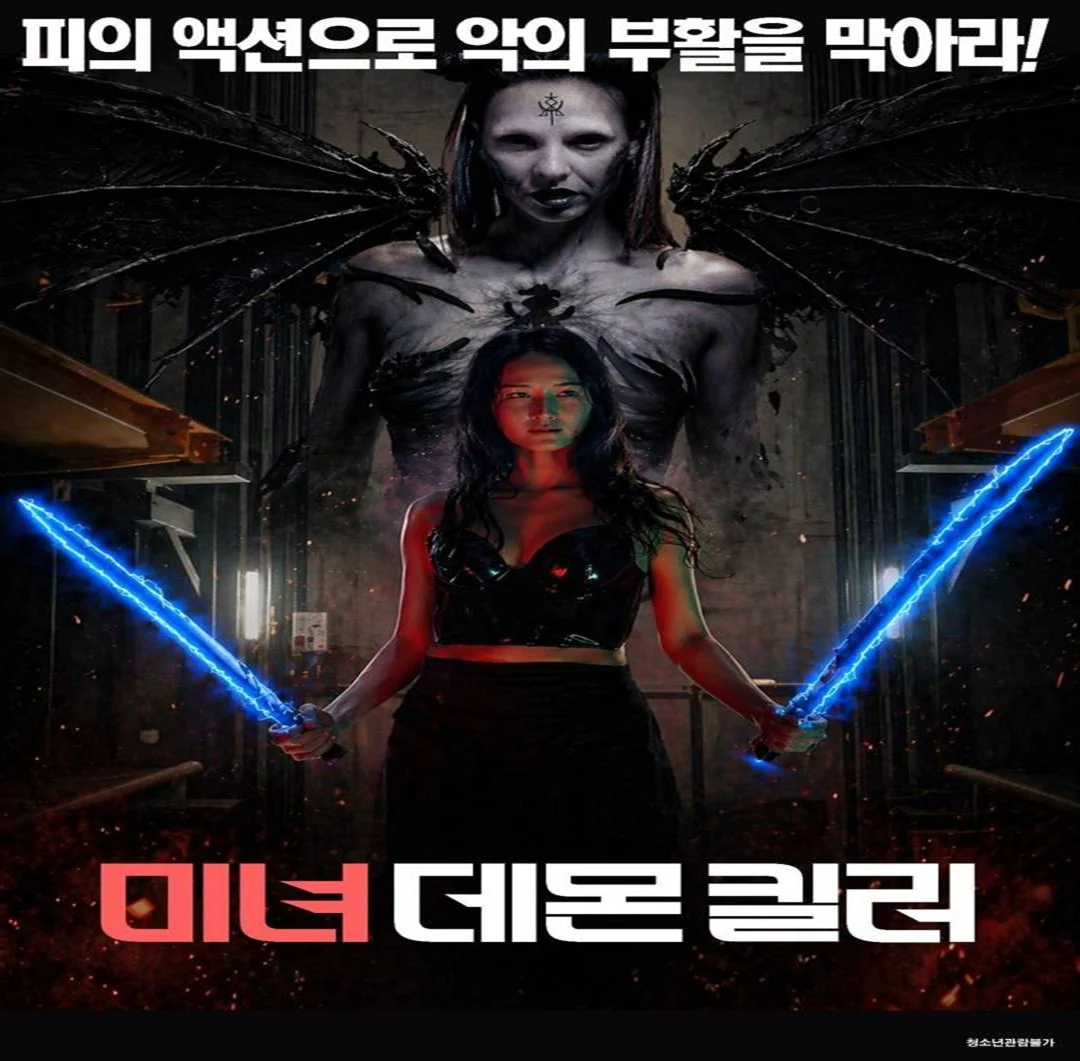
The South Korean and U.S. co-production, "Demon Dancer: Sua/Nara," a genre-bending action fantasy film written, directed, and produced by Attila Korosi, has captivated audiences with its audacious blend of practical stunt work, anime-inspired aesthetics, and a deeply personal narrative. Filmed entirely within South Korea across four distinct locations – Gwangju, Gokseong, Geoje, and the sensitive border region of Paju near the Demilitarized Zone (DMZ) – the film made its debut in South Korea on April 30th, becoming available through major IPTV and OTT platforms such as Tving and Wavve. This release positions "Demon Dancer" as a notable contender in the contemporary blockbuster landscape, offering a robust and thoroughly enjoyable cinematic experience with numerous compelling elements.
A Descent into Darkness: The Premise of "Demon Dancer"
At its core, "Demon Dancer: Sua/Nara" explores themes of sacrifice, vengeance, and the arduous journey of self-discovery through a supernatural lens. The narrative centers on Sua (Jiyeon Han), a Korean ballerina whose life is shattered when she is brutally attacked, leaving her on the brink of death. As her consciousness flickers, fragmented memories flood her mind, initiating a non-linear storytelling approach that gradually reveals the harrowing circumstances leading to her current peril.
The film’s central conflict is established through Sua’s devastating choice to end her husband’s life, a tragic act undertaken to save his soul from a malevolent demonic curse. Driven by a desperate quest for justice and a profound sense of loss, Sua makes a radical decision: she inflicts the same curse upon herself, willingly inviting the demon Nara (Anita Korosi) into her being. This pact results in a shared existence, two souls cohabiting a single body. Through a series of intense training sequences, Sua and Nara learn to synchronize their disparate powers, fusing the elegance of ballet with the raw, untamed energy of demonic forces. Their ultimate objective becomes the unmasking of the entity responsible for cursing Sua’s husband and the unraveling of the motive behind this cruel act. The narrative climaxes with Sua confronting a profound existential choice: to awaken and confront her demons, or to remain lost in the comforting embrace of her memories, fading into oblivion.
The Artistic Vision of Attila Korosi
Writer, director, and producer Attila Korosi has crafted "Demon Dancer" as an immensely entertaining genre hybrid, adeptly weaving disparate supernatural elements into a cohesive and high-energy narrative. The film immediately grabs the audience’s attention with a powerful opening hook, depicting Sua engaged in a desperate evasion of demonic entities. This initial intensity serves as a prelude to the unraveling of her tragic backstory, specifically the curse that befell her husband. Sua’s agonizing decision to grant him a merciful death, in hopes of saving his soul, sets a dark and urgent tone for her subsequent plunge into the supernatural realm.
To navigate this perilous underworld, Sua seeks out and forms an alliance with the demonic entity Nara. The developing dynamic between these two disparate beings is a cornerstone of the film, explored through a series of rigorous training rituals. These sequences serve a dual purpose: not only do they strengthen the spiritual bond between Sua and Nara, but they also allow Sua to gradually master the profound physical and emotional toll associated with hosting a powerful demonic entity. This symbiotic relationship is portrayed as a carefully orchestrated fusion, where the host learns to channel and control the power of the indwelling spirit.
A Unique Approach to Supernatural Action
The film’s most significant achievement lies in its innovative translation of spiritual possession into a distinct and compelling physical vocabulary. By framing the rituals as high-energy training exercises, Korosi effectively grounds the supernaturally-enhanced action within a tangible, technical reality. The choreography is a masterclass in explosive, close-quarters striking and utilizes a low-center-of-gravity footwork that convincingly conveys the "inhuman" power Nara bestows upon Sua.
Crucially, "Demon Dancer" draws its inspiration from Eastern folklore rather than conventional Western possession tropes. This philosophical shift allows the film to portray the host-demon relationship as a functional partnership, fostering a sense of mutual reliance and collaboration. This approach grants the action sequences greater creative latitude, permitting the inclusion of supernatural weaponry and gravity-defying leaps that feel organically earned within the film’s established internal logic. The set pieces are consistently impressive, with the office complex slaughter being a particular highlight. The hand-to-hand combat sequence meticulously staged inside a moving elevator shaft stands out as a standout moment, ingeniously utilizing the confined space to emphasize brutal trapping techniques and high-impact redirections, demonstrating a remarkable feat of practical filmmaking.
Technical and Narrative Challenges
Despite its considerable kinetic energy and creative ambition, "Demon Dancer" encounters some hurdles in its technical execution and narrative consistency. While the film dedicates significant screen time to its training montages, the specific "rules" governing the possession and the mechanics of the demon-host relationship remain frustratingly vague. The internal logic of the narrative is occasionally shaky, creating moments of dissonance. For instance, the script asserts that Nara’s true form is perceptible only to Sua, yet other demonic entities frequently appear to sense Nara’s presence. This inconsistency is further compounded by the duo managing to execute several stealthy sneak attacks, which seem to contradict the established heightened senses of their adversaries. Furthermore, the mechanics of "body-hopping" are left largely to inference, and the primary antagonist suffers from a noticeable lack of development, which ultimately undermines the impact of the film’s final confrontation.
The villain’s motivation, centered on a "purity of the nation" agenda that targets mixed-race relationships, is regrettably relegated to a single, somewhat ham-fisted line of dialogue. This is an intriguing and potentially powerful socio-political premise that arguably deserved more substantial exploration and screen time. However, because the full explanation is withheld until the climax, the reveal feels perfunctory and ultimately underwhelming. These narrative shortcuts, coupled with some visible limitations indicative of a lower budget, prevent "Demon Dancer" from reaching the stratospheric heights of the cinematic classics it clearly emulates.
A Triumph for International Action Cinema
Nevertheless, for enthusiasts of international action cinema and genre filmmaking, "Demon Dancer: Sua/Nara" emerges as a resounding success. It represents a creative and fast-paced effort that unequivocally proves that a unique supernatural hook, combined with strong, technically sound fight choreography, can propel a film a considerable distance. The film’s ability to deliver ample, engaging action sequences within a compelling narrative, while minimizing its perceived flaws, solidifies its status as a highly enjoyable low-budget genre endeavor that offers far more than initially anticipated.
Production Context and Timeline
The production of "Demon Dancer: Sua/Nara" was a multi-year endeavor, beginning with script development and pre-production in early 2021. Principal photography commenced in the latter half of 2021, strategically utilizing the diverse landscapes and urban environments of South Korea. The choice of Gwangju, a city known for its rich artistic heritage, likely provided a backdrop for Sua’s balletic origins. Gokseong, a more rural setting, may have been employed for sequences requiring a sense of isolation or the invocation of ancient, spiritual elements. Geoje, an island city, could have offered opportunities for visually striking scenes, perhaps involving dramatic coastal or maritime elements. The inclusion of Paju, a region directly adjacent to the DMZ, adds a layer of geopolitical tension and symbolic resonance to the film, particularly given the themes of division and forbidden unions that can be inferred from the antagonist’s motivations. Post-production, including the intricate editing required for the non-linear narrative and the visual effects that augment the supernatural elements, extended through 2022 and into early 2023, culminating in the April 2023 release.
Supporting Data and Market Reception
The release strategy through IPTV and OTT platforms indicates a calculated approach to reaching a broad audience in the South Korean market, leveraging the widespread adoption of these digital distribution channels. Platforms like Tving and Wavve boast significant subscriber bases, ensuring "Demon Dancer" reached a considerable segment of the target demographic. While specific box office figures for these platforms are not publicly disclosed in the same way as traditional theatrical releases, industry analysts suggest that films with strong genre appeal and positive word-of-mouth can achieve significant viewership. The film’s trailer, shared widely on social media and video-sharing platforms, has garnered substantial engagement, with comments often highlighting the impressive stunt work and the unique fusion of ballet and action. This organic buzz suggests a receptive audience eager for innovative action cinema.
Broader Implications and Analysis
"Demon Dancer: Sua/Nara" signifies a growing trend in international cinema towards hybrid genres and cross-cultural collaborations. The co-production model, involving both South Korean and U.S. elements, reflects a globalized film industry where creative talent and production resources are increasingly shared. The film’s success in blending traditional Korean artistic forms like ballet with popular genre elements such as action and fantasy could pave the way for further exploration of such fusions.
Furthermore, the film’s engagement with socio-political themes, however briefly, is noteworthy. The antagonist’s rhetoric about national purity and the targeting of mixed-race relationships touches upon sensitive issues that resonate in many societies. While the film does not delve deeply into these complexities, their inclusion suggests an awareness of contemporary social dynamics and a willingness to incorporate them, albeit imperfectly, into a genre framework. This approach, while potentially polarizing, can spark conversations and encourage deeper reflection.
The emphasis on practical stunt work in an era often dominated by CGI is a deliberate artistic choice that likely appeals to a segment of the audience seeking a more visceral and authentic cinematic experience. This commitment to tangible action, as seen in the car elevator sequence, not only demonstrates technical prowess but also contributes to the film’s unique visual identity. It positions "Demon Dancer" as a film that values the craft of filmmaking and the physical artistry of its performers.
In conclusion, "Demon Dancer: Sua/Nara" stands as a testament to creative vision and technical execution within the action fantasy genre. Despite its narrative imperfections, its distinctive aesthetic, groundbreaking action sequences, and compelling thematic underpinnings ensure its place as a memorable and highly enjoyable cinematic offering.