

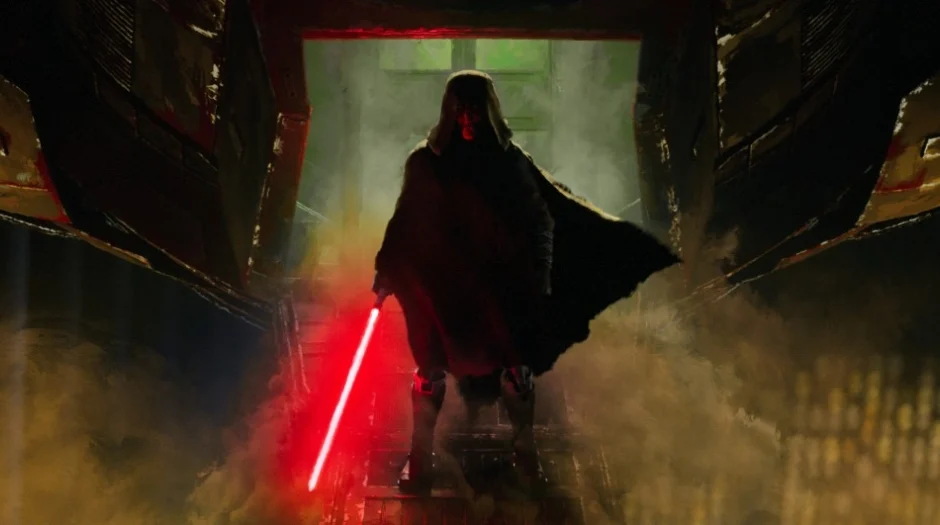
Lucasfilm Animation has boldly ventured into uncharted territory with the debut of Star Wars: Maul – Shadow Lord, a 10-episode Disney+ series that plunges the iconic villain into a profound and emotionally resonant chapter of the saga. Premiering on April 6, 2026, with a two-episode launch, followed by weekly installments culminating in a grand finale on Star Wars Day, May 4, the series marks a significant expansion of the studio’s animated universe, both in its visual ambition and narrative depth. Set in the tumultuous period following the events of Star Wars: The Clone Wars, Shadow Lord chronicles Maul’s determined efforts to resurrect his criminal empire on a planet deliberately shielded from the burgeoning Galactic Empire’s influence. This solitary quest takes an unexpected turn when he encounters a disillusioned young Jedi Padawan, hinting at the possibility of a new, albeit unconventional, apprentice.

The genesis of Maul – Shadow Lord can be traced back to a clear creative mandate from executive producer Dave Filoni, known for his pivotal role in shaping the modern Star Wars animated landscape. Filoni, alongside producer Athena Yvette Portillo, challenged the Lucasfilm Animation team to push the boundaries of their established production methodologies. "Honestly, story is the story, and at every phase of this project, we were challenged by our buddy Dave Filoni, in concert with Athena Portillo, the best producer in the world, to push everything—not just the look and feel, not just the way things move, but the story, the scripts, the casting, and how we shot it," stated supervising director Brad Rau. "Dave would say, ‘Brad, that was cinematic. Great. Good for you. Make it more cinematic.’ Everything was pushed all the way along the way." This philosophy of relentless improvement, a hallmark of Filoni’s approach, permeated every facet of the production, from the initial story concepts to the final rendered frames.
The series reunites a core creative team deeply familiar with the intricacies of the Star Wars animated universe. Brad Rau returns as supervising director, bringing his vision to the forefront. Keith Kellog, animation supervisor, and Joel Aron, visual effects supervisor, reprise their roles, contributing significantly to the series’ technical prowess. Athena Yvette Portillo, a seasoned producer, oversees the project’s execution, ensuring a cohesive and high-quality output. The much-loved voice of Maul, Sam Witwer, returns to embody the complex character, lending his considerable talent to the role. The executive producer team is formidable, featuring Filoni, Portillo, Matt Michnovetz (who also developed the series), Rau, Carrie Beck, and Josh Rimes, with Alex Spotswood serving as co-executive producer.

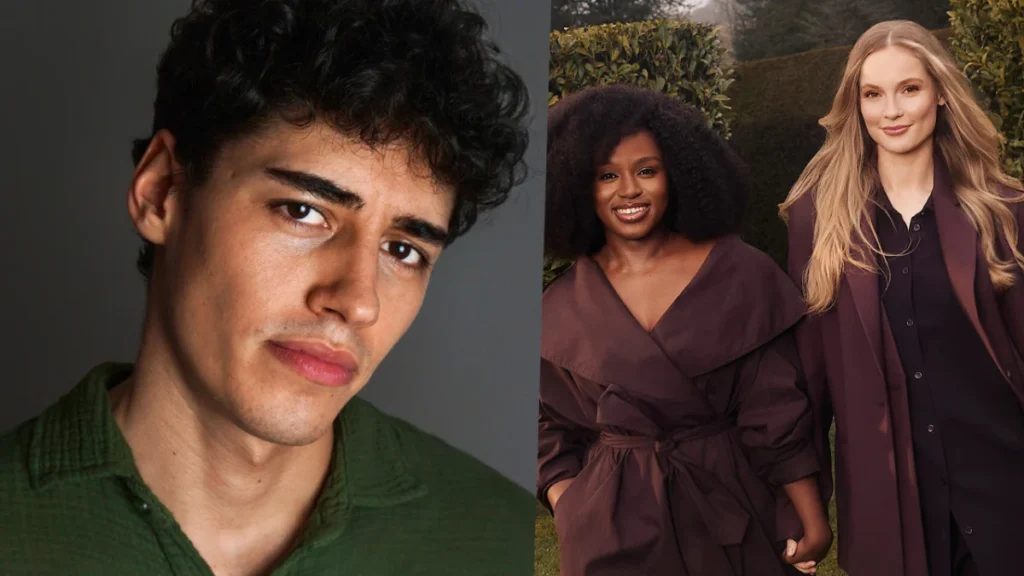
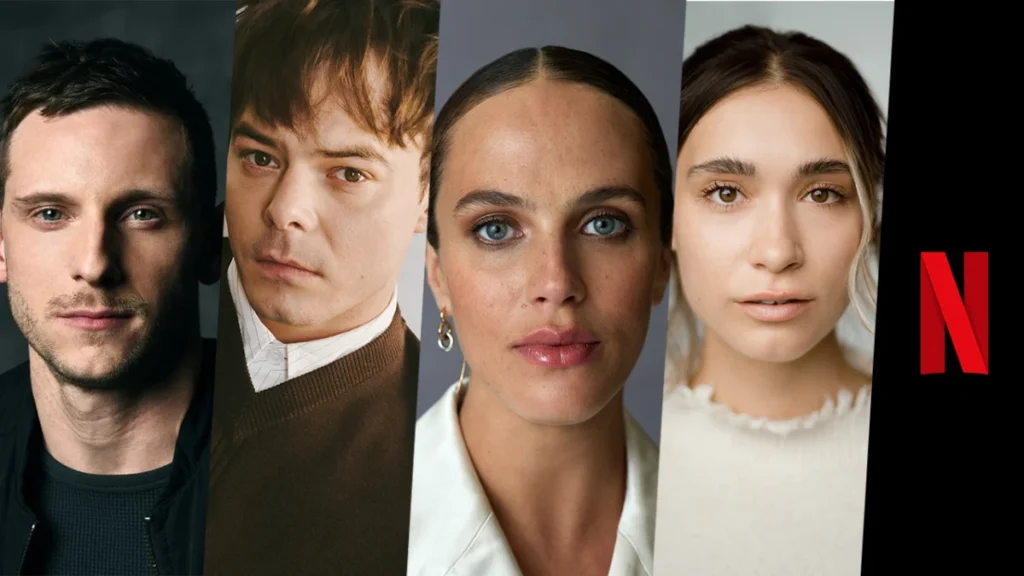
The ensemble voice cast further bolsters the series’ appeal. Joining Witwer are Gideon Adlon as Devon Izara, Wagner Moura as Brander Lawson, Richard Ayoade as Two-Boots, Dennis Haysbert as Master Eeko-Dio-Daki, Chris Diamantopoulos as Looti Vario, Charlie Bushnell as Rylee Lawson, Vanessa Marshall as Rook Kast, David C. Collins as Spybot, A.J. LoCascio as Marrok, and Steve Blum as Icarus.
A Bold New Visual and Narrative Direction
Star Wars: Maul – Shadow Lord represents a deliberate departure from the visual and narrative norms previously established by Lucasfilm Animation in series such as Star Wars: Rebels, Star Wars: Resistance, Star Wars: Tales of the Jedi, and Star Wars: The Bad Batch. The project evolved into a studio-wide endeavor to innovate and re-evaluate virtually every production technique that had been honed over years of delivering beloved animated content.

Supervising director Brad Rau recalled the immediate impact of Filoni’s initial pitch. "When I heard what it was, I thought, ‘Oh my goodness, I just want to watch that.’ And Dave said, ‘Brad, get over here and help us make it.’ Oh my gosh. Okay, cool. In those early meetings, Dave was so sharp, so smart. He had very clear ideas for what he wanted the story to be and how he wanted to introduce new characters." This collaborative spirit extended to the very inception of key narrative moments. Rau highlighted the development of the series’ opening sequence: "He started spitballing what became our cold open for the first episode, the heist that led to Maul literally striking his lightsaber into the camera, then going to logos. That all came out of the first meeting."
Maintaining Canon Integrity Amidst Innovation
Despite the ambitious pursuit of a more pulpy adventure tone and the exploration of Maul’s deeper emotional landscape, Lucasfilm’s stringent internal continuity standards remained paramount. Matt Martin, a member of the Lucasfilm story group, provided crucial consultation throughout the development process, ensuring that every element of Shadow Lord aligned precisely with established Star Wars canon. "The canon is very, very critical, down to [how you draw] the line," revealed visual effects supervisor Joel Aron. "Sometimes even the tense of a verb is discussed because it has to do with canon." This meticulous attention to detail underscores the franchise’s commitment to a cohesive and interconnected universe, even as the creative team pushed the envelope of visual storytelling.

Technical Demands and Creative Challenges
The production team described Maul – Shadow Lord as one of Lucasfilm Animation’s most technically demanding projects to date. A significant part of this challenge stemmed from the mandate to "do more with less," or at least to achieve greater artistic and technical heights without a commensurate increase in resources. "This is definitely the most difficult undertaking we’ve had," stated animation supervisor Keith Kellog. "Mainly it’s because Dave mandated that we improve every aspect of the production process while not really changing our actual parameters or budgets."
This directive fostered an environment of intense experimentation and artistic risk-taking, a philosophy championed by Filoni from the outset. "When Dave started to do Ahsoka and we had just started at the beginning of Maul, he said something to all of us: question everything," Aron explained. "He’s like, ‘I’m not going to be here all the time. I’m not going to be in there to tell you to question everything.’ And that is how we went into this whole Maul project, questioning everything, and making sure that it was doable."

A Painterly Aesthetic Rooted in Illustration
Filoni’s vision extended beyond technical advancements to a broader artistic philosophy that embraced illustration and painterly textures. Aron elaborated on this direction: "Another thing Dave said to us was, ‘I just want it to look like an artist touched it. That’s why I used to do the Dark Horse comic books.’ He did covers for them. And he said, ‘I want it to look like my Dark Horse comic cover with Darth Maul. I want it to look like it was drawn.’ And that was like, ‘Challenge accepted!’"
This mandate significantly influenced the series’ visual identity. The production team adopted hand-crafted matte painting workflows, stylized animation posing, custom lens simulations, and practical cinematography concepts. Lighting techniques were heavily manipulated to imbue the series with a cinematic quality, diverging from traditional television animation. "We were trying to break that and really push what a frame looks like, whether it’s an arm that’s a little more distorted—how you would draw it—or a limb that comes out more at the camera, things we hadn’t done before," Kellog noted.

To support these more dynamic and exaggerated visual compositions, the team developed a proprietary animation system internally referred to as the "power rig." Kellog described its function: "We came up with something we like to call the power rig, which kind of allowed us to do a faked force perspective in certain key areas, especially when Maul’s fighting, where we tried to make sure you didn’t necessarily think about it, but if you went frame by frame, you would see it and feel it more than anything."
Embracing Live-Action Filmmaking Principles
The production also integrated live-action filmmaking principles in innovative ways. Lucasfilm Animation meticulously blocked scenes digitally, simulating the presence of physical cameras and operators within the animated environments. "Dave always wants us to approach this from a live-action standpoint," Rau emphasized. "So even though it’s animation, all of our sets are digital. We set it up and we block it like live-action, as weird as that sounds." He further elaborated on this methodology: "We think about where the cameraman is, even though we have space wizards with laser swords and spaceships and all kinds of crazy stuff. Where would the cameraman be standing to capture this?"

This commitment to cinematic language extended to the series’ lens simulations and camera effects. The production maintained a 2.35:1 widescreen aspect ratio, incorporating anamorphic lens behaviors inspired by Panavision C-series lenses from the 1970s. "With all of our depth of field, our rack focuses, everything is anamorphic," explained Aron. "We’re optically distorting the edges of frame too to give it that look, as if you’re really shooting on an anamorphic lens."
To further enhance the cinematic feel and avoid overly pristine digital visuals, the team layered in analog imperfections. "Everything has gate weave," Aron stated. "So, gate weave is when the image just kind of dances in frame. Nothing ever sits still. Everything is as cinema as possible." Aron drew a direct parallel to George Lucas’s original filmmaking philosophy: "George always said, ‘We’re making this to be seen as if you’re going to watch it on a big screen. This shouldn’t feel like you’re making it for your phone or a video game.’"

Redefining Environments with Matte Paintings
A significant shift in the production involved moving away from traditional CG environment-building pipelines in favor of matte paintings and physical artwork. This decision allowed the team to prioritize character density and performance fidelity. "One of the biggest jumps we did was we had to look at how many characters we wanted," Aron explained. "Dave always wants scenes to look populated. Full. He didn’t want it to look like other animated shows where the characters go to fight and all of a sudden, the streets are empty."
This approach enabled the asset team to dedicate more resources to character development and fidelity. "The asset team was able to build more characters and spend more time on the fidelity of the characters," Aron continued. "With a lot of the backgrounds that you see, we handled with old school matte painting." The process became remarkably tactile, with Aron and the art team physically painting textures and environments using traditional materials before scanning them into the digital pipeline. "Even Kyra was painting oil on wood," Aron shared. "So, we would actually go and paint on wood, photograph that, scan that, and then add effects, just as we would in the 80s and 90s at ILM."

The series’ textures also originated from similar hands-on experiments. Aron demonstrated this by holding up a small, hand-painted plastic sheet, explaining, "These are the brush strokes that are used on the show. I had the whole team do a set of single brush strokes. Some with gouache. Then I scanned them like I scanned 35-millimeter film and then brought that in." He confirmed, "It’s actually when you’re seeing the rack focuses or any sort of the effects or textures, that’s this. It started with that."
Navigating International Collaboration
The production team collaborated closely with their partner studio, the Japanese animation studio CGCG, to build a more stylized and expressive performance approach. Language barriers necessitated that Lucasfilm Animation’s internal artists devise innovative ways to communicate visual intent and acting nuance. "My animators, I would say 85 to 90% of them don’t even speak English," Kellog noted. "So, as we were working with their team, my internal team really helped drive what we were going for."

Lucasfilm Animation developed extensive internal reference materials, including key poses, facial expression guides, and animation cycles, specifically designed to convey the production’s painterly and cinematic aesthetic. "We really taught them how to think like us… [feel comfortable] being creative," Aron added. "Even for some of those matte paintings, we told them, ‘Paint your hometown in the background.’ Let it be from the artists."
Redefining Darth Maul’s Character
Despite the extensive technical experimentation, the creative team consistently emphasized that the show’s core focus was on redefining Darth Maul himself. Sam Witwer’s reprisal of the role was integral to this process, as he actively participated in creative discussions with the writing and production teams. This collaboration allowed for the exploration of a more emotionally vulnerable version of the character, a significant departure from his previous on-screen portrayals.

"Sam Witwer is a really great collaborator," Rau stated. "He knows a lot about this character. So, we would have regular meetings with Matt, our head writer, and Athena, our producer, just to get into discussions about Maul, making sure that we were creating something that was as authentically true to this character as possible."
Kellog elaborated on the necessity of rethinking Maul’s physical acting and facial animation from the ground up. "This wasn’t the same Maul," he explained. "We had to find who this Maul was." The production team developed a new facial rig for Maul, specifically designed to capture subtler expressions and restrained emotional behaviors that had rarely been associated with the character in previous Star Wars projects. "We really tried to look at how we could get those subtleties into his facial performance," Kellog said. "Like the little sneers that he has. We all smile. With Maul, it’s the smallest inkling of something."

The emotional expansion of the character extended into territory that filmmakers indicated had never been explored onscreen before. "Maul’s crying at one point," Kellog revealed. "We’ve never seen Maul cry before. It’s like, what does that even look like?"
Color and Lighting as Narrative Tools
Color and lighting design became crucial storytelling devices throughout the series. Aron explained how Maul’s physical presence actively influenced the palette of the scenes around him. "Whenever Maul was around, the color red would never be missing," he stated. "If you look, the color red has actually shifted into the oranges or the yellows when he’s not there. So, whenever Maul was around, you’d have that red and we keyed it off of his red."

Maul’s iconic facial markings were also integrated directly into the lighting system. "Most of the gobos that we use are actually Maul’s tattoos," Aron added. "We’ll use those periodically to break up the light on the ground or do stuff like that."
Star Wars: Maul – Shadow Lord stands as a testament to Lucasfilm Animation’s evolving creative and production capabilities, while simultaneously honoring the foundational principles that have guided the studio for decades. "We are obsessed with the details," Rau concluded. This obsession is evident in every aspect of the production, from the painterly matte paintings and simulated gate weave to the live-action camera blocking and nuanced facial acting. For Lucasfilm Animation, this series is more than just the latest animated episodic offering in the Star Wars franchise; it represents a deliberate effort to redefine the potential of animation in captivating and thrilling audiences, even within one of entertainment’s most iconic and fan-revered universes.