The 2026 Cannes Film Festival has witnessed a profound moment for animation with the premiere of Leah Nelson’s feature directorial debut, ‘Tangles’. Hailed by critics as a significant highlight of the festival, the black and white animated film, an adaptation of Sarah Leavitt’s acclaimed graphic novel "A Story About Alzheimer’s, My Mother and Me," has resonated deeply with audiences and industry professionals alike, cementing its status as an animation sensation. The film’s premiere on May 14, 2026, marked a pivotal moment, further validating the growing sentiment, as articulated by visionary filmmaker Guillermo del Toro, that "Animation is cinema. Animation is not a genre for kids. It’s a medium for art, it’s a medium for film." Nelson’s ‘Tangles’ stands as a powerful testament to this philosophy, delivering an emotionally devastating yet profoundly compassionate exploration of Alzheimer’s disease and its far-reaching impact on families.
The Ascendance of Animation at Cannes 2026
Cannes, historically renowned for showcasing live-action cinematic masterpieces, has progressively embraced animation as a legitimate and powerful storytelling medium. The 79th edition of the festival in 2026 continued this trend, with ‘Tangles’ emerging as a standout. This recognition is part of a broader industry shift, where animated features are increasingly targeting adult audiences with complex narratives and sophisticated artistic styles. In the past decade, major film festivals, including Cannes, Venice, and Berlin, have seen a surge in critically acclaimed animated films competing in main categories, moving beyond the traditional "children’s film" classification. ‘Tangles’ arrives at a time when the global animation market is experiencing robust growth, projected to exceed $500 billion by the end of the decade, driven by technological advancements and a growing demand for diverse content. Nelson’s film, with its mature themes and distinctive visual approach, perfectly embodies this evolution, challenging preconceived notions about the medium’s scope and potential. Its selection and enthusiastic reception at Cannes underscore the festival’s commitment to championing innovative and impactful storytelling, regardless of the artistic technique employed.
From Graphic Novel to Animated Masterpiece: The Genesis of ‘Tangles’
The journey of ‘Tangles’ from page to screen began with Sarah Leavitt’s powerful 2010 graphic novel. Leavitt’s autobiographical work offered a raw and honest portrayal of her mother’s descent into Alzheimer’s disease, meticulously documenting the emotional toll on her family through poignant illustrations and heartfelt prose. The graphic novel garnered critical acclaim upon its release for its candidness and unique artistic style, becoming a vital resource for families grappling with similar challenges.
Leah Nelson, an emerging talent in the animation landscape, recognized the profound cinematic potential within Leavitt’s narrative. Her vision for the animated adaptation was not merely to translate the story but to amplify its emotional resonance through the dynamic capabilities of animation. Working alongside co-writer Trev Renney, Nelson meticulously crafted a screenplay that retained the core integrity of Leavitt’s experiences while introducing cinematic elements that deepen the audience’s engagement. The adaptation process involved a delicate balance: preserving the graphic novel’s intimate, hand-drawn feel while exploring the more surreal and abstract possibilities unique to animation. This thoughtful approach ensured that the film would honor its source material while forging its own distinct artistic identity. Nelson’s commitment to the project, spanning several years of development and production, underscores the passion and dedication required to bring such a sensitive and challenging story to life.
Artistic Choices: Black & White and the Subtlety of Color
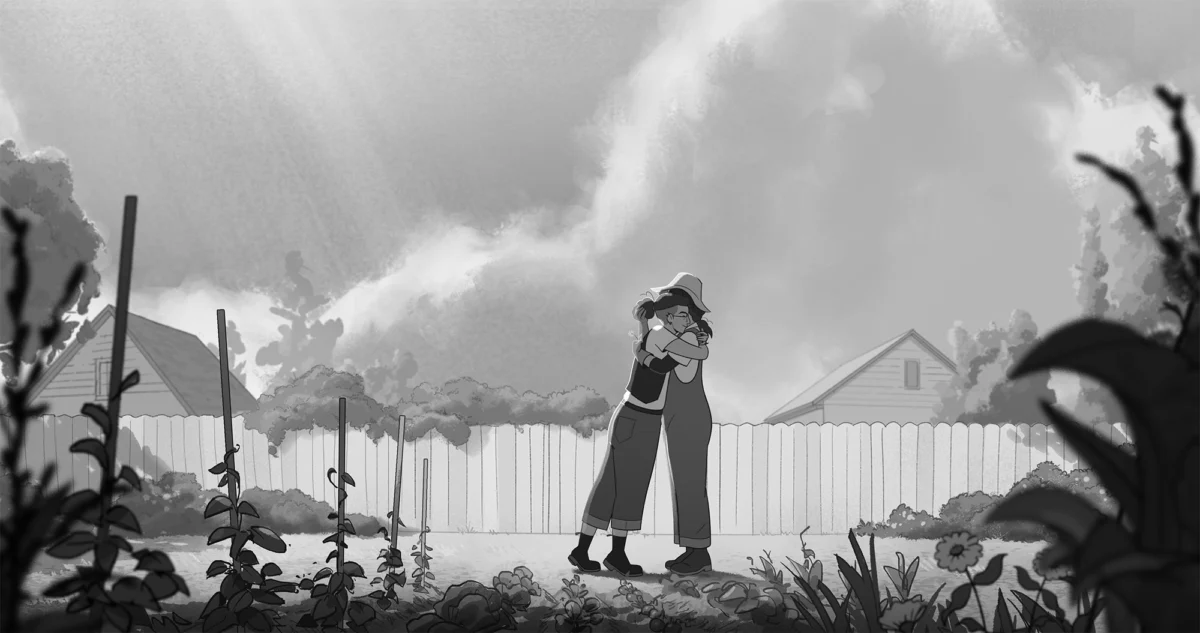
One of the most striking aspects of ‘Tangles’ is its decision to predominantly utilize a black and white aesthetic, directly mirroring the visual style of Sarah Leavitt’s original graphic novel. This choice is far from arbitrary; it serves as a powerful artistic tool, enhancing the film’s emotional depth and thematic focus. In a cinematic landscape often dominated by vibrant, hyper-realistic color, the starkness of black and white forces the audience to concentrate on character expression, narrative nuance, and the emotional landscape of the story, unburdened by chromatic distractions.
Film history is replete with examples of black and white cinema that have achieved timeless status precisely because of this aesthetic, from classic dramas to modern independent features. For ‘Tangles’, the absence of color creates an atmosphere of introspection and vulnerability, perfectly aligning with the film’s exploration of memory loss and the gradual fading of a loved one’s vibrant personality. The monochrome palette accentuates the shadows and light of human emotion, making moments of joy and despair feel even more visceral.
However, Nelson and her team made a deliberate and impactful choice to introduce "glimmers of color" at select, pivotal moments throughout the film. These infrequent splashes of color are not merely decorative; they act as profound visual metaphors, highlighting moments of intense emotion, clarity, memory, or significant narrative shifts. A sudden burst of crimson, a flash of sapphire, or a gentle wash of amber serves to underscore a character’s internal state or a fleeting moment of connection. For instance, a reviewer noted that while the initial use of these color splashes was impactful, their frequency seemed to diminish in the latter half of the film, leading to a desire for more of these visually arresting moments to further emphasize the narrative’s emotional peaks. This observation, while minor, points to the profound effect these artistic choices had on the viewing experience, demonstrating how even subtle variations in an established visual language can significantly alter perception and heighten engagement. The judicious use of color in a predominantly monochrome world becomes a powerful symbol of memory’s fragility, the fleeting nature of joy, and the preciousness of moments that defy the encroaching shadow of Alzheimer’s.
Beyond the color palette, ‘Tangles’ also impressed with its truly outstanding animation sequences that ventured beyond realism into surreal territory. These moments, where the visual language breaks free from conventional depiction to express internal turmoil or abstract concepts related to memory and identity, were cited as major contributors to the film’s "animation sensation" status. Such sequences leverage the unique power of animation to visualize the intangible, portraying the disorienting and often dreamlike experience of a mind grappling with dementia. These imaginative excursions not only add an artistic layer but also serve to deepen the audience’s empathy and understanding of the characters’ psychological states, illustrating the boundless creative potential of the medium.
A Stellar Ensemble: The Voices Behind the Emotion
The emotional depth and authenticity of ‘Tangles’ are significantly amplified by its meticulously cast voice ensemble, featuring a roster of acclaimed actors who bring nuanced performances to their animated counterparts. The film’s narrative centers on Sarah, a young lesbian activist and artist, voiced by Abbi Jacobson. Jacobson delivers an understated lead performance that subtly builds in intensity, conveying Sarah’s internal turmoil and unwavering compassion as she navigates the complexities of her mother’s illness and her own life. Her portrayal captures the delicate balance between Sarah’s vibrant independent life in 90s San Francisco and her familial responsibilities.
The heart of the film, however, lies in the portrayal of Midge, Sarah’s mother, voiced by the incomparable Julia Louis-Dreyfus. Critics have singled out Louis-Dreyfus’s performance as the standout of the entire film, praising her ability to convey the gradual erosion of Midge’s once-vibrant personality with heartbreaking precision and dignity. Her vocal work masterfully traverses the spectrum of Midge’s condition, from moments of lucid connection to the poignant confusion characteristic of Alzheimer’s. Louis-Dreyfus’s portrayal is a powerful reminder of the profound impact of the disease, yet it also celebrates the enduring spirit of a loving mother.

Rounding out the core family unit is Bryan Cranston as Rob, Sarah’s father. Cranston, known for his versatility and dramatic prowess, imbues Rob with a quiet strength and palpable sense of enduring love, depicting the challenges faced by a partner witnessing their loved one’s decline. The ensemble is further enriched by the contributions of Seth Rogen, whose role adds another layer of familial dynamics, and Samira Wiley as Donimo, Sarah’s girlfriend. Wiley’s performance as Donimo provides a crucial anchor for Sarah, illustrating the support and love found within her queer relationship amidst the escalating family crisis.
The collective strength of this voice cast ensures that each character, even in animated form, feels fully realized and deeply human. Their performances are instrumental in translating the graphic novel’s intimate narrative into a cinematic experience that resonates with profound emotional authenticity. The synergy among these actors contributes significantly to the film’s ability to tackle such a sensitive subject matter with both brutal honesty and unwavering compassion, making the characters’ struggles and triumphs profoundly relatable to audiences worldwide.
Exploring Profound Themes: Alzheimer’s, Family, and Identity
‘Tangles’ delves into a multitude of profound themes, weaving together a narrative that is both deeply personal and universally resonant. At its core, the film is an unflinching portrayal of Alzheimer’s disease, meticulously depicting its devastating progression and the immense challenges it poses for both the individual afflicted and their surrounding family. It pulls no punches in showcasing the harsh realities of memory degradation, personality shifts, and the emotional toll on caregivers. However, beyond the brutal honesty, the film maintains an unashamedly compassionate lens, emphasizing the enduring power of love and connection even in the face of profound loss.
The narrative skillfully balances the story of Sarah’s life as a queer woman with her experiences returning home to care for her mother. Sarah’s identity as an activist and artist in 90s San Francisco, along with her relationship with her girlfriend Donimo, is seamlessly integrated into the broader family drama. This nuanced portrayal of a lesbian protagonist and her loving relationship contributes significantly to LGBTQ+ representation in animation, presenting a multifaceted character whose identity is integral but not solely defined by her sexuality. The film normalizes queer relationships within the context of a universal family struggle, fostering inclusivity and relatability for a diverse audience.
The film meticulously explores the complex dynamics of family life, particularly under the strain of a chronic illness. It captures the often-contradictory emotions that arise: frustration, grief, guilt, but also immense joy, laughter, and profound appreciation for shared moments. The narrative highlights the lesson Sarah learns—that even through hardship, there is much to appreciate about life and the enduring bonds of family. This emphasis on finding joy amidst sorrow, and the profound wisdom gained through vulnerability, makes ‘Tangles’ an emotionally invigorating experience despite its heavy subject matter. It underscores the idea that life’s most vital lessons are often learned during its most challenging periods, demonstrating the resilience of the human spirit and the transformative power of unconditional love.
Critical Acclaim and Broader Implications
The initial reception at the Cannes Film Festival confirms ‘Tangles’ as a significant cinematic achievement. Critics have universally lauded the film for its emotional depth, artistic courage, and the powerful performances of its voice cast. Its ability to handle such a sensitive topic with grace and honesty has been particularly praised, setting it apart as a unique and essential contribution to contemporary cinema. The film’s compelling narrative structure, balancing personal struggle with universal themes, ensures its appeal to a broad demographic, transcending the typical boundaries of animated features.
‘Tangles’ carries several important implications for the animation industry and broader storytelling landscape. Firstly, it further solidifies the movement towards adult-oriented animation, demonstrating the medium’s capacity for sophisticated dramatic storytelling that rivals live-action cinema. By tackling complex themes like Alzheimer’s and LGBTQ+ identity, the film pushes the boundaries of what is traditionally expected from animation, opening doors for more diverse and challenging projects. This success at Cannes will undoubtedly encourage more filmmakers to explore animation as a viable and powerful tool for narratives previously considered exclusive to live-action.
Secondly, the film serves as a powerful advocate for Alzheimer’s awareness. By humanizing the experience of the disease through Sarah and Midge’s story, ‘Tangles’ offers a poignant and accessible entry point for audiences to understand the profound impact of Alzheimer’s on individuals and families. Such artistic representations play a crucial role in destigmatizing the illness and fostering empathy, potentially encouraging greater support for research and care initiatives. The film’s reach is global, and its message will resonate with countless families grappling with similar circumstances, providing both solace and understanding.
Finally, Leah Nelson’s impressive directorial debut positions her as a formidable new voice in filmmaking. Her ability to adapt a beloved graphic novel with such artistic integrity and emotional resonance signals a promising career ahead. ‘Tangles’ is not just a film; it is a testament to the power of animation as an art form capable of delivering profound, thought-provoking, and deeply moving stories that resonate with the human condition on a universal level. Its presence and impact at Cannes 2026 mark a significant moment for the festival, the animation community, and cinema as a whole, ensuring that Midge’s legacy, and Sarah’s journey, will live on in cinematic history.
Looking Ahead: Distribution and Future Impact
Following its acclaimed premiere at Cannes 2026, ‘Tangles’ is poised for a significant global distribution. Industry insiders are already anticipating fierce competition among major studios and streaming platforms to acquire the rights, given its critical success and the widespread appeal of its themes and star-studded voice cast. A theatrical release, potentially followed by a robust streaming presence, would allow ‘Tangles’ to reach the widest possible audience, further amplifying its message and cementing its place in the cultural zeitgeist.
The film’s strong showing at Cannes also places it firmly in contention for various awards season accolades. Nominations and wins in categories such as Best Animated Feature, and even potentially for Julia Louis-Dreyfus’s voice performance, are well within reach. Such recognition would not only honor the film’s artistic merit but also provide additional momentum for its broader impact, bringing increased attention to the issues it addresses. For Leah Nelson, ‘Tangles’ marks a triumphant entry into the world of feature filmmaking. Her innovative vision and compassionate storytelling have established her as a director to watch, and the success of ‘Tangles’ will undoubtedly pave the way for future projects that continue to push the boundaries of animation and explore compelling human stories. The film is more than just an animated sensation; it is a vital piece of cinema that speaks to the heart of the human experience.