


In a poignant cinematic adaptation that masterfully translates the raw emotional landscape of a graphic novel memoir into a visually stunning animated experience, "Tangles" delves into the profound complexities of familial love, artistic expression, and the devastating impact of Alzheimer’s disease. Directed and written by Leah Nelson, and based on Sarah Leavitt’s celebrated graphic novel of the same name, the film offers a deeply personal yet universally resonant narrative. The 102-minute feature meticulously chronicles Sarah’s return to her conservative small-town roots to care for her mother, Midge, whose vibrant personality is gradually being eroded by the onset of Alzheimer’s. This difficult journey forces Sarah, a fiercely independent activist and artist who had recently fled her hometown for the vibrant, progressive milieu of 1990s San Francisco, to confront the harsh realities of her mother’s illness and redefine her role within her eccentric family.
The ensemble voice cast is a veritable constellation of talent, lending their voices to this intimate portrayal of family and loss. Julia Louis-Dreyfus embodies the matriarch, Midge, with a performance that navigates the delicate balance between the woman Midge once was and the person she is becoming. Abbi Jacobson brings to life Sarah, capturing her initial confidence, her eventual disillusionment, and her unwavering commitment to her family. The supporting cast includes Bryan Cranston, Samira Wiley, Beanie Feldstein, Seth Rogen, Wanda Sykes, Bowen Yang, Pamela Adlon, and Sarah Silverman, each contributing to the rich tapestry of characters that populate Sarah’s world. The screenplay, co-written by Leah Nelson, Sarah Leavitt, and Trev Renney, successfully distills the essence of Leavitt’s memoir, translating its visual language into a compelling narrative arc.
The Genesis of "Tangles": A Personal Chronicle
"Tangles" is rooted in the lived experience of Sarah Leavitt, whose graphic novel memoir served as the blueprint for this animated feature. Leavitt’s decision to share her family’s intimate struggle with Alzheimer’s through her distinctive art form resonated deeply with readers, offering a unique perspective on a disease that touches countless lives. The graphic novel, published to critical acclaim, was lauded for its unflinching honesty, its moments of unexpected humor, and its profound emotional depth. It captured the disorienting and often heartbreaking journey of watching a loved one’s cognitive abilities decline, while simultaneously celebrating the enduring bonds of family.
The decision to adapt this deeply personal story into an animated film was a deliberate one, aimed at preserving the visual identity that was so integral to Leavitt’s original work. Director Leah Nelson embraced this challenge, aiming to translate the line-drawing style of the graphic novel into a cinematic medium that felt both faithful and innovative. The film’s narrative unfolds in a manner that mirrors the gradual unfolding of the disease, allowing the audience to experience Sarah’s emotional journey alongside her.
A Return to Roots: The Narrative Arc
The core of "Tangles" lies in Sarah’s reluctant but necessary return to her conservative hometown. Having recently established a life for herself in San Francisco, a hub of artistic and political activism, Sarah found herself drawn back by the escalating needs of her mother, Midge. This return is not merely geographical; it represents a significant personal sacrifice. Sarah, a self-described activist and artist, leaves behind a life she had painstakingly built, including her work at a queer magazine and her burgeoning relationship with her girlfriend, Donimo, voiced by Samira Wiley. Her departure from San Francisco, a city known for its progressive ethos and vibrant LGBTQ+ community, into the more insular and traditional environment of her hometown, creates an immediate contrast that underscores the magnitude of her decision.
The film meticulously charts Sarah’s initial optimism that she can manage the situation, a confidence that is soon challenged by the unpredictable and disorienting nature of Alzheimer’s. The narrative skillfully depicts the subtle yet profound shifts in Midge’s behavior and cognitive abilities, forcing Sarah to confront the stark reality of her mother’s deteriorating condition. This realization necessitates a profound internal shift for Sarah, moving from a place of denial and a desire to control the situation to one of acceptance and a deeper understanding of the daughter her family truly needs. This emotional evolution is central to the film’s poignant exploration of caregiving and the sacrifices it entails.
Visualizing the Unseen: Animation as a Narrative Tool
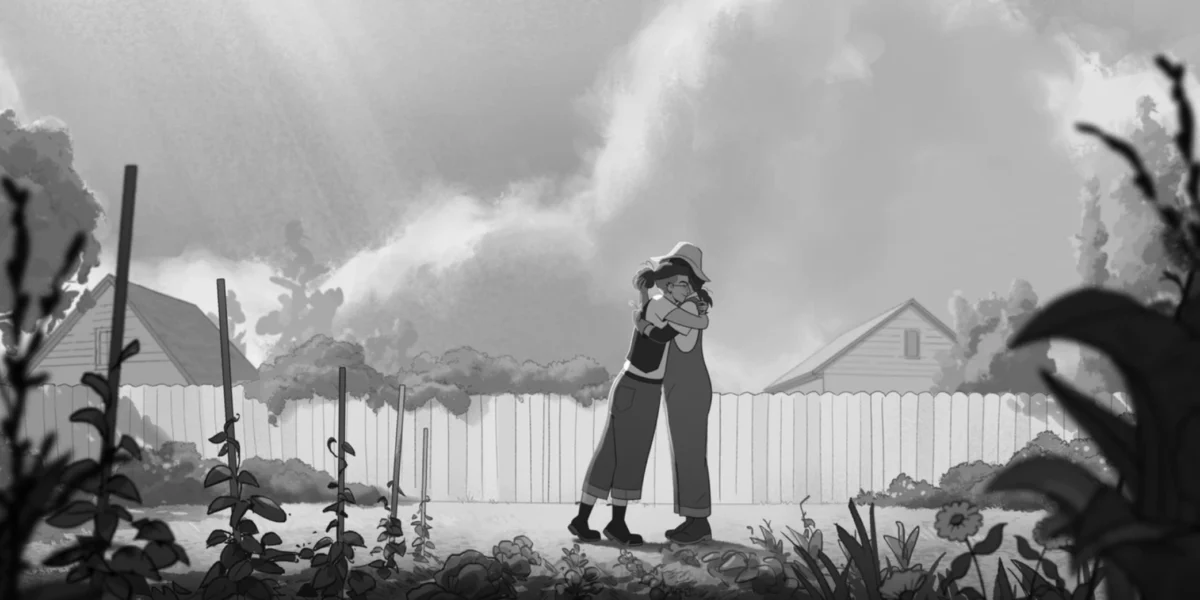
One of the most striking aspects of "Tangles" is its innovative use of animation. The film eschews photorealism in favor of a distinctive black-and-white, line-drawing style that directly evokes Sarah Leavitt’s original illustrations. This stylistic choice is not merely aesthetic; it serves as a powerful narrative device, visually representing Sarah’s internal world and the subjective experience of living with Alzheimer’s.
Director Leah Nelson and her team have masterfully animated Leavitt’s illustrations, infusing them with cinematic dynamism while retaining their raw, artistic essence. The stark black-and-white palette lends the film a documentary-like feel, grounding the emotional narrative in a sense of authenticity. However, the animation also possesses a remarkable capacity for the surreal. As Sarah’s personal and family life becomes increasingly fragmented, the visual style expands into more abstract and dreamlike territories.
Key Animated Sequences and Their Significance:
- The Mexican Street Parade Nightmare: In a particularly vivid sequence, a joyous Mexican street parade morphs into a nightmarish vision when Sarah realizes Midge has become lost in the crowd. This visual descent into chaos reflects Sarah’s rising panic and her profound fear of losing her mother not just physically, but also in terms of her identity.
- The "Draw a Clock" Test: The film visualizes Midge’s attempt to complete the neurological "draw a clock" test, a common diagnostic tool for cognitive impairment. The abstract expansion of this simple task in the animation powerfully illustrates the internal struggle and confusion Midge experiences as her cognitive functions falter.
- Wading Through Deteriorating Waters: Upon returning home to care for her mother, Sarah is depicted literally wading through murky, deteriorating waters as she approaches her family home. This potent visual metaphor encapsulates the overwhelming nature of her responsibilities and the emotional toll of her homecoming.
These sequences, alongside countless others, demonstrate how the animation in "Tangles" goes beyond mere illustration, becoming an active participant in conveying the emotional and psychological weight of the narrative.
The Soundtrack of Memory and Resilience
The film’s soundtrack, meticulously curated by Nelson, plays a crucial role in immersing the audience in Sarah’s world. Consisting entirely of female-fronted rock groups and singers from the era, the music serves as a personal soundtrack to Sarah’s life, mirroring her tastes and offering moments of solace and reflection. This sonic landscape further anchors the film in the 1990s setting, while also providing an emotional counterpoint to the often somber subject matter. The music underscores Sarah’s independent spirit and her connection to a particular cultural moment, highlighting what she leaves behind as she embraces her new responsibilities.
A Family Unconventional and Unwavering
Sarah’s family is depicted as endearingly "crunchy," a term that hints at their unconventional nature and their embrace of a less mainstream lifestyle. Early scenes show Midge and her sisters engaging in repetitive, almost meditative chanting, an activity that Sarah nonchalantly explains as normal to her new girlfriend, Donimo. This familial eccentricity is further highlighted by a pivotal flashback to a young Sarah attending a gay pride parade with Midge, underscoring the family’s inherent acceptance of diversity and their progressive outlook, even within a conservative community. This openness is crucial to the film’s portrayal of a queer narrative taking place nearly three decades ago, a period when such stories were less prevalent in mainstream media.
The film’s depiction of Sarah’s sexuality and her relationship with Donimo is handled with a refreshingly direct and humorous touch. A montage illustrating Sarah’s discovery of her sexuality, aided by a series of phone calls with her mother, exemplifies the family’s supportive and open communication. This aspect of the narrative contributes to "Tangles" being a noteworthy queer story, offering a nuanced portrayal of identity formation within a loving, albeit unconventional, family unit.
A Stellar Voice Ensemble: Bringing Characters to Life
The casting of "Tangles" is a significant factor in its emotional impact. The ensemble of well-known actors brings a depth and authenticity to their respective roles, enhancing the film’s ability to connect with audiences.
- Julia Louis-Dreyfus as Midge: Louis-Dreyfus delivers a tour-de-force performance as Midge. Her casting taps into the audience’s pre-existing affection for her, using her established persona as a shortcut to emotional resonance. However, she transcends these expectations, delving into a role that is both challenging and deeply moving. She portrays Midge with a palpable sense of pathos, capturing the subtle yet devastating stiltedness that accompanies the loss of mental faculties. Louis-Dreyfus’s performance is a testament to her versatility as an actress, showcasing her ability to explore new dramatic territory.
- Abbi Jacobson as Sarah: Jacobson imbues Sarah with a charming awkwardness that belies her inner strength and determination. She effectively conveys Sarah’s frustration and her sense of responsibility, particularly when she feels she is the only one truly grasping the gravity of her mother’s illness. Jacobson’s portrayal captures Sarah’s vulnerability and her resilience as she navigates the complexities of caregiving.
The seamless integration of these performances within the animated framework allows the characters to feel remarkably real, even within the stylized visual world of the film. The actors’ nuanced vocal deliveries breathe life into the drawn figures, making their emotional journeys palpable.
The Broader Implications: Animation’s Potential and Alzheimer’s Awareness
"Tangles" stands as a powerful testament to the potential of animation as a medium for profound emotional storytelling. By choosing animation over a live-action adaptation, the filmmakers honored the artistic roots of Sarah Leavitt’s memoir and embraced the unique visual language that could best convey the subjective experience of memory loss and familial strain. The film demonstrates how animation can conjure up stories through human artistry, transforming our feelings and impressions of the world into a visualized reality. It is a masterpiece of emotional storytelling, adeptly weaving humor and heartbreak to address a subject that resonates with a vast audience.
The film’s narrative also contributes to a broader cultural conversation about Alzheimer’s disease. By humanizing the experience of patients and their families, "Tangles" fosters empathy and understanding. According to the Alzheimer’s Association, over six million Americans are living with Alzheimer’s, and this number is projected to rise significantly in the coming years. Films like "Tangles" play a crucial role in raising awareness, demystifying the disease, and highlighting the immense challenges faced by caregivers. The film’s nuanced portrayal of Midge’s decline and Sarah’s journey underscores the emotional, psychological, and practical burdens associated with long-term care, prompting viewers to consider the societal implications of this growing health crisis.
The film’s success lies in its ability to strike a delicate balance. It is a deeply personal story that transcends its individual circumstances to speak to universal themes of love, loss, and the enduring strength of the human spirit. "Tangles" is not simply a film about Alzheimer’s; it is a profound exploration of family dynamics under immense pressure, a celebration of artistic expression, and a poignant reminder of the complexities of love in the face of life’s most formidable challenges. Its 102-minute runtime is densely packed with emotional resonance, offering a cathartic and deeply moving cinematic experience that will linger long after the credits roll.