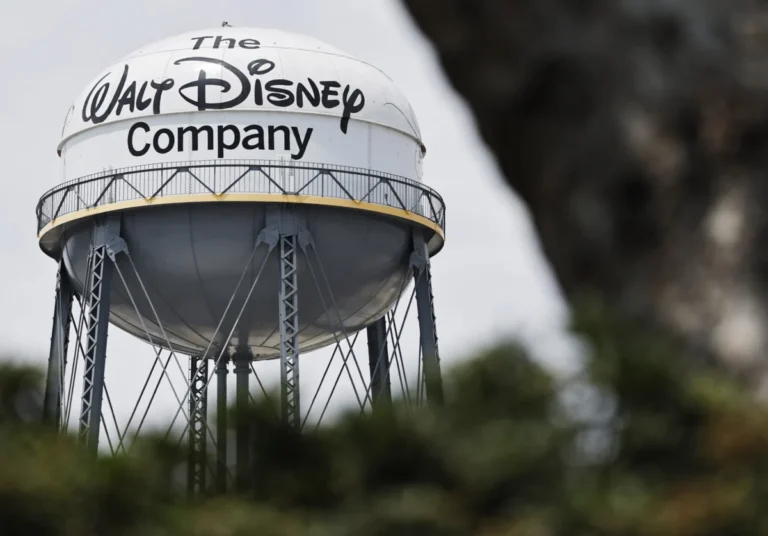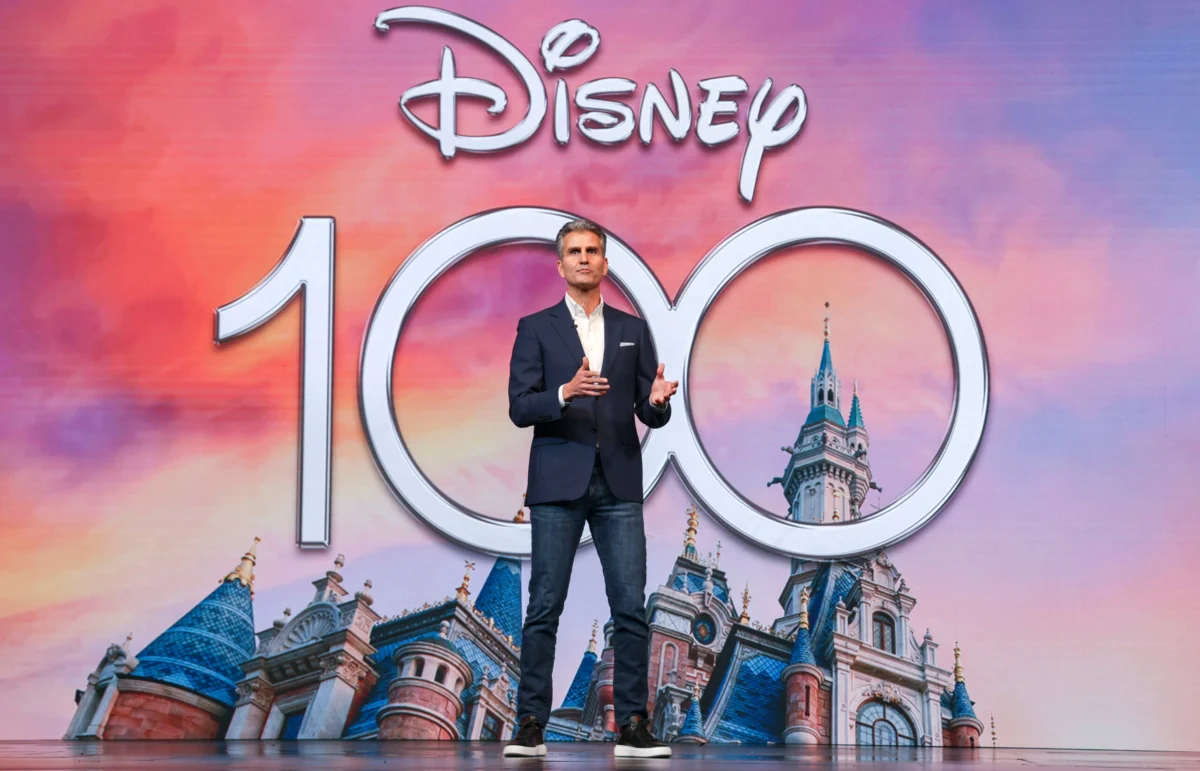
The Walt Disney Company reported fiscal second-quarter earnings on Wednesday that outperformed Wall Street’s expectations, fueled by a robust performance in its direct-to-consumer streaming business and its sprawling experiences division. The results, which covered the period ending March 28, represent a critical milestone for the entertainment giant as it navigates its first full quarter under the leadership of CEO Josh D’Amaro. Following the announcement, Disney shares rose approximately 7% in after-hours trading, signaling investor confidence in the company’s strategic pivot toward profitability in digital media and continued dominance in the global theme park industry.
Overall revenue for the quarter reached $25.17 billion, a 7% increase compared to the same period in the previous fiscal year. While net income for the quarter stood at $2.47 billion, or $1.27 per share—a decrease from the $3.4 billion, or $1.81 per share, reported a year earlier—the decline was largely attributed to one-time costs associated with significant acquisitions and restructuring. When adjusting for these items, including the high-profile acquisition of the NFL Network and other media assets by ESPN, Disney reported adjusted earnings of $1.57 per share.
The Experiences Segment: Balancing Domestic Softness with Global Growth
Disney’s Experiences segment, a massive division encompassing its worldwide theme parks, resorts, and cruise lines, remained a primary engine of financial health. The unit reported nearly $9.5 billion in revenue, marking a 7% year-over-year increase. This growth occurred despite a complex mix of attendance data that highlights shifting consumer travel patterns.
While global guest attendance across all properties grew by 2%, domestic park visitation—specifically at Walt Disney World in Florida and Disneyland Resort in California—saw a slight decline of 1% compared to the previous year. Company executives noted that international visitation to domestic parks remained "soft," a trend that has persisted for two consecutive quarters. This softening is often attributed to the lingering effects of a strong U.S. dollar, which makes domestic travel more expensive for overseas visitors, and a post-pandemic normalization of travel demand.
Despite these headwinds, Disney reported an increase in guest spending during the quarter. This was driven by higher per-capita spending on food, beverage, and merchandise, as well as the continued adoption of premium services like Genie+ and Lightning Lane. CFO Hugh Johnston addressed concerns regarding the broader economy, noting that despite fluctuations in fuel prices and geopolitical uncertainty—including the impact of regional conflicts on global oil markets—the domestic consumer remains resilient.
"We continue to see a strong consumer," Johnston told CNBC. "While there may be some concerns around the macros and specifically around the price of fuel, we have not seen any evidence of that in our booking data. Bookings for the second half of the year are quite strong."
Entertainment and the Streaming Pivot
The Entertainment segment, which includes Disney’s traditional television networks, its streaming platforms (Disney+, Hulu), and theatrical film releases, saw revenue climb 10% to $11.72 billion. This sector has been the focus of intense investor scrutiny as Disney attempts to transition from the declining lucrative era of linear television to a sustainable, profitable streaming model.
A significant portion of this revenue growth was attributed to a 14% increase in subscription and affiliate fees, which reached $7.8 billion. This surge was primarily the result of aggressive price hikes implemented across Disney+ and Hulu over the past year. Additionally, advertising revenue within the streaming unit rose by 5%, bolstered by higher impressions on the company’s ad-supported tiers.
The theatrical division also provided a much-needed lift. After a period of inconsistent box-office performance, Disney saw success with the releases of "Avatar: Fire and Ash" and "Zootopia 2." These titles not only generated significant ticket sales but also reinforced the value of Disney’s core intellectual property (IP), which D’Amaro identified as the central pillar of his long-term strategy.
Notably, Disney has shifted its reporting methodology, moving away from providing granular details on linear TV network operating income and quarterly streaming subscriber counts. This move aligns with a broader industry trend where media companies prioritize total revenue and profitability over "vanity metrics" like raw subscriber growth.
Sports and the Evolution of ESPN
Disney’s Sports segment, dominated by ESPN, reported a 2% revenue increase to $4.61 billion. The modest growth reflects a period of significant transition for the sports broadcaster. The quarter’s figures were bolstered by the integration of the NFL Network and other assets acquired in a major deal earlier this fiscal year.
However, the segment also faced increased operating costs. The price of broadcasting live sports continues to escalate as leagues like the NFL, NBA, and MLB demand higher rights fees. Disney noted that these contract rate increases, combined with the costs of securing new sports rights, weighed on the segment’s margins.
A bright spot for the division was the performance of the ESPN direct-to-consumer (DTC) streaming app, which launched in August. Disney reported that revenue from digital subscribers is now beginning to offset the losses incurred by the steady decline of traditional cable "cord-cutting."
The company is also looking toward future negotiations with the NFL. Reports have surfaced that the league may seek to renegotiate its media rights deals earlier than the scheduled 2029-30 season opt-out. CFO Hugh Johnston indicated that Disney is open to these discussions, emphasizing a disciplined approach to shareholder value. "We expect to be in business with the league for years to come," Johnston said, "and we’ll evaluate any deal with a focus on driving value."
Strategic Leadership and the D’Amaro Era
This earnings report serves as the first major scorecard for CEO Josh D’Amaro, who took the helm in March following the second retirement of Bob Iger. D’Amaro, formerly the head of the Parks division, inherited a company in the midst of a massive structural overhaul.
Under his brief tenure, Disney has already executed a significant round of layoffs aimed at trimming $7.5 billion in costs. He has also had to manage external pressures, including political scrutiny surrounding the company’s content and its late-night television talent, such as Jimmy Kimmel.
During the earnings call, D’Amaro outlined a vision centered on "technological storytelling." He emphasized that the company’s future growth would be predicated on deeper integration of its IP across all platforms. This includes using advanced data analytics to personalize the guest experience in theme parks and enhancing the user interface of its streaming apps to drive engagement.
"It’s a competitive streaming marketplace," D’Amaro admitted. "Despite that, we saw an increase in engagement in the quarter. Our key drivers for growth include content and product enhancements that make our IP more accessible and immersive."
Macroeconomic Outlook and Fiscal Guidance
Disney’s leadership remains cautiously optimistic about the remainder of fiscal 2026 and beyond. The company updated its full-year guidance, projecting adjusted earnings growth of approximately 12%. Furthermore, Disney increased its target for share repurchases to at least $8 billion, up from a previous estimate of $7 billion, a move designed to return capital to shareholders and signal confidence in the company’s cash flow.
For the third quarter, Disney anticipates total segment income of roughly $5.3 billion. Looking even further ahead, the company issued a rare long-term projection, stating it expects double-digit growth in adjusted earnings for the 2027 fiscal year.
However, the shadow of macroeconomic volatility remains. While Johnston insisted that gas prices have not yet impacted park attendance, he acknowledged that the company is "not immune" to the impacts of a significant further rise in fuel costs. "If that possibility were to occur, each business has levers in place to make adjustments in order to offset those kinds of macro pressures," Johnston explained. These "levers" likely include dynamic pricing models, operational efficiencies, and targeted promotional offers to maintain demand.
Analysis: The Path Forward
The Q2 2026 results suggest that Disney is successfully navigating the "middle-age" of the streaming revolution. The era of growth-at-all-costs has been replaced by a focus on average revenue per user (ARPU) and cost discipline. The 7% revenue jump in the Experiences segment, even with a slight dip in domestic attendance, proves that Disney’s brand loyalty allows it to maintain pricing power even in a fluctuating economy.
The acquisition of NFL assets and the push for a standalone ESPN DTC service represent Disney’s realization that live sports are the final frontier of the traditional media bundle. By securing these assets now, Disney is positioning itself as the primary destination for sports fans in a post-cable world.
As Josh D’Amaro continues to mold the company in his image, the focus will likely remain on three pillars: the profitability of streaming, the expansion of the cruise line and international parks, and the aggressive monetization of core franchises like Marvel, Star Wars, and Pixar. While challenges such as rising sports rights costs and global economic uncertainty persist, Disney’s diverse portfolio of assets appears to be providing the necessary stability to weather the transition into a new era of digital entertainment.