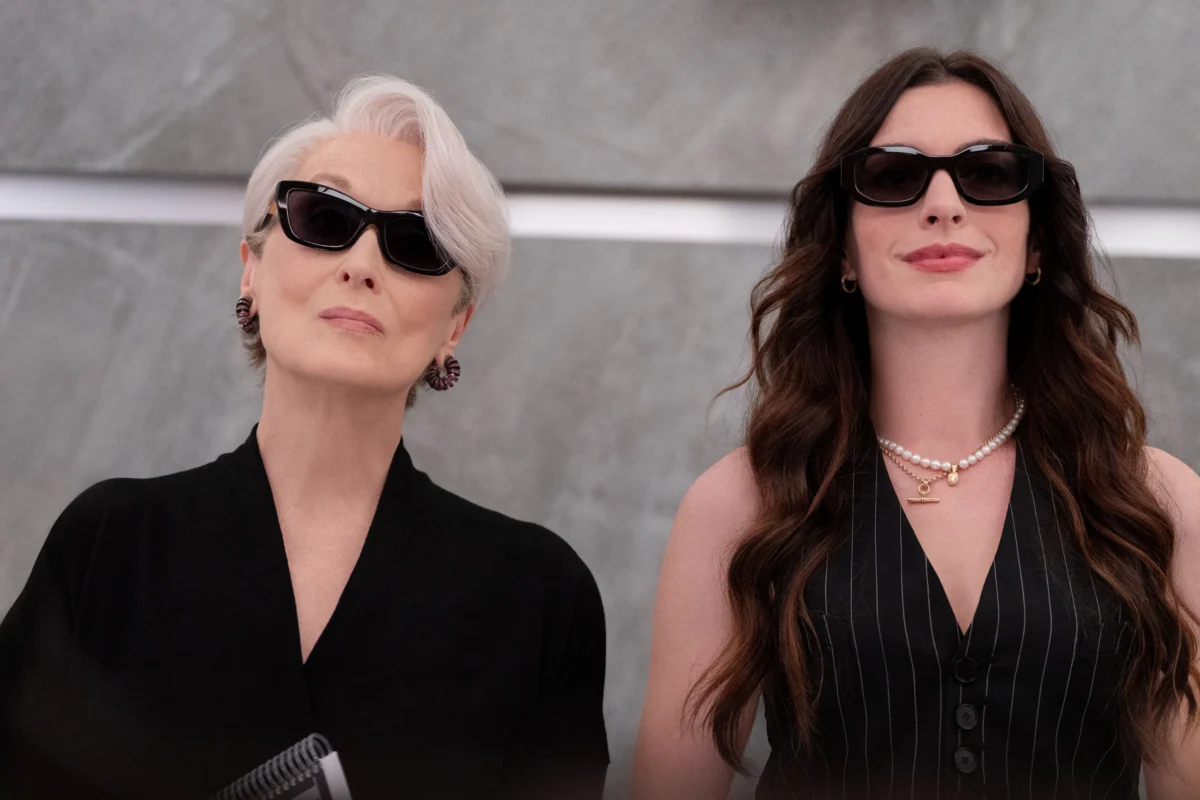
The release of The Devil Wears Prada 2 has solidified its status as a commercial juggernaut, proving that the appetite for the high-fashion world of Miranda Priestly has not waned in the two decades since the original film captivated global audiences. Since its premiere on April 29, the sequel has outperformed industry expectations, generating a staggering $77 million in domestic US theaters and an additional $157 million across international markets. With a total global cume exceeding $234 million in its opening weeks, the film has successfully navigated the treacherous waters of producing a follow-up to a cult classic after a 20-year hiatus. However, while the financial figures paint a picture of universal triumph, the film’s reception in specific international markets—most notably Italy—has sparked a complex discourse regarding the intersection of nostalgia, vocal performance, and the evolving standards of localized media.
In Italy, the conversation has shifted away from the glitz of the runway and toward the recording booth. The controversy centers on the decision to retain the original Italian voice cast for the sequel, a move intended to provide continuity for a generation of viewers who grew up with specific voices attached to the faces of Meryl Streep and Anne Hathaway. While the return of these legendary "doppiatori" (voice actors) was initially met with enthusiasm, the actual viewing experience has led to a heated debate among critics and audiences alike. The central point of contention is whether the physical aging of the voice actors has created a cognitive dissonance for the audience, particularly when the actors they are dubbing appear significantly younger on screen due to the magic of Hollywood cinematography and lighting.
A Legacy of Vocal Continuity in Italian Cinema
To understand the weight of the current debate, one must look at the historical context of the Italian dubbing industry. Italy possesses one of the most sophisticated and prestigious dubbing traditions in the world, a legacy born out of post-World War II cultural policies and a linguistic history that favored localized versions over subtitles. For decades, Italian audiences have identified Hollywood stars not just by their faces, but by their specific Italian voices.
Maria Pia Di Meo, born in 1939, is the cornerstone of this tradition. As the definitive Italian voice for Meryl Streep, Di Meo has voiced the Academy Award winner in nearly all her major roles, including the original 2006 portrayal of Miranda Priestly. Her filmography is a catalog of cinematic history, having provided the Italian dialogue for icons such as Jane Fonda, Julie Andrews, Mia Farrow, and Barbra Streisand. For the sequel, the production opted for continuity, bringing back Di Meo alongside the original cast: Connie Bismuto for Anne Hathaway’s Andy Sachs, Francesca Manicone for Emily Blunt’s Emily Charlton, and Gabriele Lavia for Stanley Tucci’s Nigel.
The decision was rooted in the industry standard of "vocal pairing," where a specific voice actor becomes the permanent proxy for a foreign star. However, with Di Meo now 87 years old, some viewers have pointed to a disconnect between her voice and the 76-year-old Streep. While an eleven-year gap might seem negligible in other contexts, the physiological changes in vocal timbre and projection have led some critics to argue that the fierce, sharp-edged energy of Miranda Priestly—a character defined by her commanding presence—is undermined by a voice that betrays a different stage of life.
The Financial Trajectory: From Cult Classic to Global Powerhouse
The box office success of The Devil Wears Prada 2 provides essential context for why the dubbing debate has become so prominent. High-earning blockbusters naturally invite higher levels of scrutiny. The original 2006 film was a surprise hit, earning $326 million worldwide against a $35 million budget. The sequel’s current trajectory suggests it could surpass those figures, especially given the increased ticket prices and the expanded global theatrical footprint available in 2024.
The $157 million international haul underscores the film’s reliance on non-English speaking markets. In Italy, where the film has been a top performer, the vast majority of screenings are the dubbed versions. According to industry data, despite the rise of streaming services offering original language options, over 80% of Italian cinema-goers still prefer dubbed content. This high level of consumption means that the quality of the dubbing is not merely a matter of artistic preference but a critical component of the product’s commercial viability in the region.
Analyzing the Technical Disconnect: Age and Adaptation
The criticism leveled against the Italian version of The Devil Wears Prada 2 extends beyond the age of the actors to the technical and linguistic execution of the adaptation. Observers have noted that the "frenetic pace" of modern film dialogue often clashes with the traditional methods of dubbing. In the sequel, the speed of the lines, particularly in high-stress office scenes, has reportedly made some of the dubbed dialogue difficult to follow.
Furthermore, the script’s localization has come under fire for failing to bridge cultural gaps. One notable example involves a line where Miranda’s assistant mentions drinking a "venti," a reference to Starbucks’ specific sizing. In the United States, this is a ubiquitous term; in Italy, a country with a deeply entrenched and distinct coffee culture, the reference does not translate with the same immediacy. Similarly, the term "features editor" carries specific connotations in American journalism that may not have direct equivalents in the Italian labor market, leading to confusion among viewers who are not familiar with the inner workings of international magazine publishing.
Gabriele Lavia’s return as the voice of Nigel (Stanley Tucci) has also been scrutinized. Critics have noted that his performance occasionally sounds "forced," suggesting that the effort to replicate the wit and cadence of the 2006 original is hampered by the natural evolution of the actor’s vocal range over twenty years. This raises a broader question for the industry: at what point does the value of continuity become a detriment to the character’s integrity?
The Impact of Digital Streaming and Changing Audience Habits
The controversy arrives at a time when the dubbing industry is already facing an existential crisis due to the "streaming revolution." For decades, the lag time between a US theatrical release and its international debut allowed dubbing studios months to perfect their craft. Today, the demand for simultaneous global releases and the immediate availability of content on platforms like Netflix and Disney+ has compressed production schedules.
In the case of The Devil Wears Prada 2, the "frenetic pace" mentioned by critics is a direct result of these market pressures. When content is produced and distributed at high velocity, the nuanced work of cultural adaptation—ensuring that jokes about Starbucks or specific job titles land correctly—often takes a backseat to literal translation.
Moreover, younger audiences in Italy and elsewhere are increasingly accustomed to hearing the original voices of actors through social media, interviews, and subtitled streaming. This has created a "dual-reality" for many viewers: they know what Meryl Streep actually sounds like, making any perceived mismatch in the dubbed version more glaring than it would have been in 2006.
Future Implications for International Distribution
The debate surrounding The Devil Wears Prada 2 serves as a case study for major studios planning long-delayed sequels. While the financial success of the film is undeniable, the "vocal aging" issue highlights a logistical challenge that will only become more common as Hollywood leans further into nostalgia-driven franchises.
Industry analysts suggest that studios may need to consider "vocal transitions" for long-running characters, much like how iconic roles are eventually recast with younger actors. However, in a market like Italy, where the relationship between a voice actor and a Hollywood star is seen as a "sacred bond," such a shift could alienate the very fans the sequel aims to attract.
The controversy also points to a need for more robust "transcreation"—a process that goes beyond translation to reinvent dialogue for a local context. If "venti" doesn’t work in Rome, the adaptation must find a local equivalent that conveys the same meaning of "excess" or "corporate coffee culture" without losing the audience.
Conclusion: A Success with Asterisks
The Devil Wears Prada 2 is, by all traditional metrics, a resounding success. It has reunited a beloved cast, captured the zeitgeist of the fashion world once again, and generated significant revenue for its distributors. Yet, the discourse in Italy reminds us that cinema is a global medium with local sensitivities.
The aging of Maria Pia Di Meo’s voice is not a failure of talent—she remains a master of her craft—but rather a symptom of a system struggling to balance the honor of tradition with the realities of time. As the film continues its theatrical run and moves toward its eventual streaming debut, the lessons learned from the Italian "doppiaggio" debate will likely influence how the next generation of cult classics is translated for the world stage. For now, Miranda Priestly remains the queen of the box office, even if her voice, in some corners of the world, is showing the inevitable passage of the twenty years that have passed since she first told us that "everyone wants to be us."