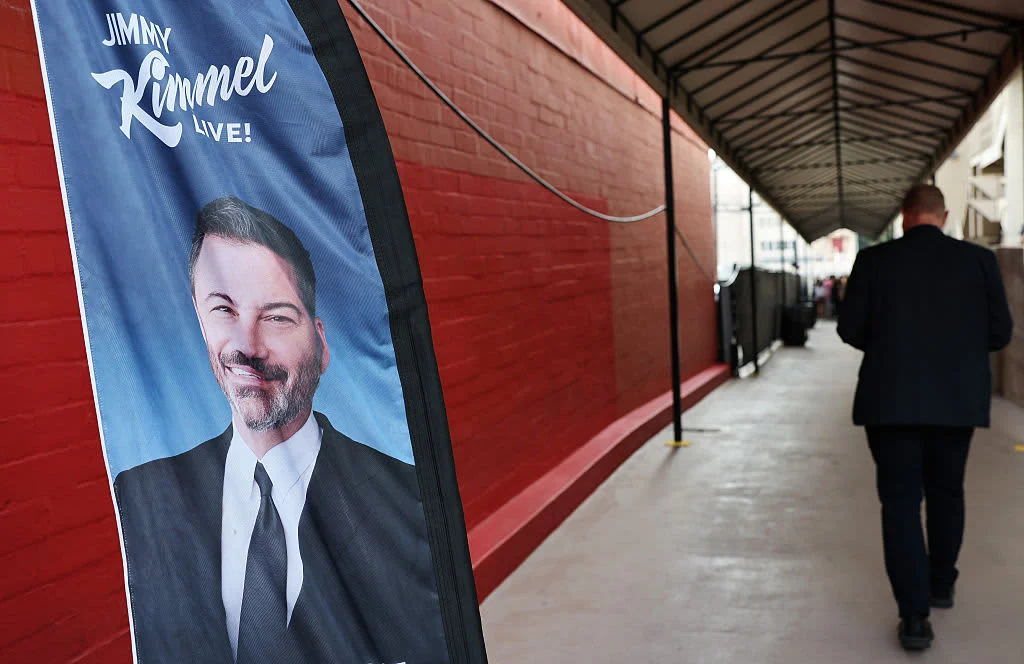
The intersection of entertainment, national politics, and federal regulation has reached a new flashpoint as President Donald Trump intensifies his campaign against ABC’s late-night host Jimmy Kimmel. This week, the President and First Lady Melania Trump issued a series of public demands for the Disney-owned network to terminate Kimmel’s employment, marking a significant escalation in the ongoing friction between the White House and legacy media institutions. The confrontation serves as a critical litmus test for late-night television’s survival and editorial independence during the Republican president’s second term, particularly as the administration signals a willingness to use regulatory levers to influence broadcast content.
The current controversy centers on a monologue delivered by Kimmel last week, in which he referred to First Lady Melania Trump as an "expectant widow" during a comedy sketch. The remark, made just days before an alleged assassination attempt at the White House Correspondents’ Dinner, was immediately condemned by the administration as a dangerous incitement to violence. Melania Trump, breaking her typical silence on media commentary, took to the social media platform X to denounce the host, stating that Kimmel’s comments constituted "hateful and violent rhetoric" intended to "divide our country." President Trump followed shortly after on Truth Social, characterizing the sketch as a "call to violence" that went "far beyond the pale" of acceptable political satire.
A New Era of Leadership at Disney
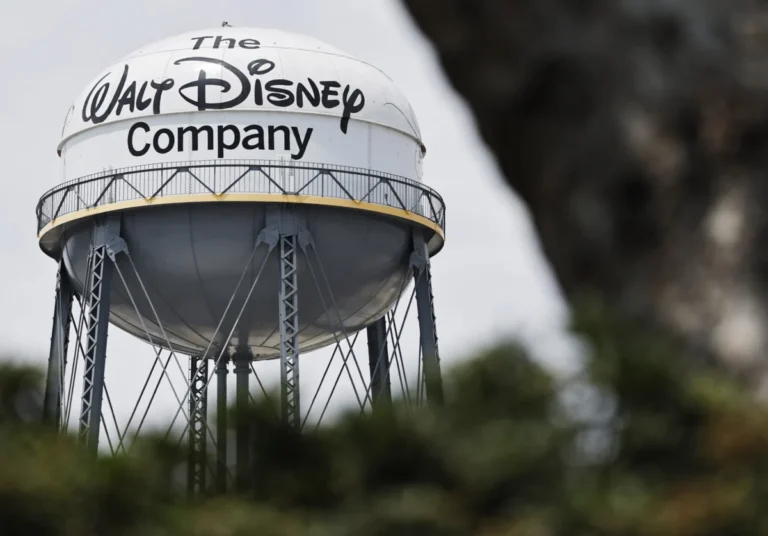
This renewed pressure falls squarely on the shoulders of Josh D’Amaro, who assumed the role of Disney CEO just last month. D’Amaro, a long-time Disney executive known for his successful tenure leading the Parks division, inherited a media empire grappling with declining linear television ratings, a volatile advertising market, and a highly polarized political environment. Unlike his predecessors, Bob Iger and Bob Chapek, who both navigated various public feuds with political figures, D’Amaro now faces a direct challenge to the network’s flagship late-night program within his first 100 days in office.
The administration’s focus on Kimmel is not an isolated incident but part of a broader strategy of holding media conglomerates accountable for the content they broadcast. For Disney, the stakes are exceptionally high. The company’s broadcast licenses, which allow ABC to operate its owned-and-operated stations across the United States, are subject to periodic review by the Federal Communications Commission (FCC). Recent reports suggest that the FCC may be preparing a review of these licenses, a move that, while potentially routine, carries significant weight given the current political climate.
The September Precedent and the Role of Station Owners
The current demand for Kimmel’s firing follows a turbulent period in September when the host was briefly suspended. That disciplinary action was triggered by comments Kimmel made regarding the death of conservative activist Charlie Kirk. The fallout from those remarks revealed a significant vulnerability in the traditional network-affiliate relationship. Broadcast station giants such as Nexstar Media Group and Sinclair Broadcast Group, which carry ABC programming in hundreds of markets across the country, threatened to preempt "Jimmy Kimmel Live!" in favor of alternative content.
The involvement of Federal Communications Commission Chairman Brendan Carr at that time added a layer of federal scrutiny to the dispute. Carr, a Trump appointee known for his assertive stance on broadcast standards, raised concerns about whether Kimmel’s rhetoric violated public interest obligations. The pressure from both the FCC and major station owners forced Disney’s hand, leading to a multi-day suspension of the program. Kimmel eventually returned to the air with a public apology, but the incident established a precedent: the administration and its allies could successfully disrupt network programming by targeting the underlying infrastructure of broadcast television.
Chronology of Escalation: Late-Night TV Under Scrutiny
To understand the gravity of the current standoff, it is essential to trace the timeline of events that have reshaped the relationship between the Trump administration and late-night television over the past year:
- December 2024: ABC News settles a high-profile defamation lawsuit brought by Donald Trump against the network and anchor George Stephanopoulos. As part of the settlement, ABC News agrees to pay $15 million toward the President’s future presidential library, a move seen by many industry analysts as a tactical retreat by the network.
- Early 2025: ABC News dismisses national correspondent Terry Moran following a social media post in which he criticized the President and senior advisor Stephen Miller. The dismissal signals a tightening of internal social media policies and a lower tolerance for partisan commentary from news personnel.
- September 2025: Jimmy Kimmel’s comments regarding Charlie Kirk lead to a standoff with the FCC and major broadcast affiliates. The show is suspended for several days, highlighting the influence of Sinclair and Nexstar over network content.
- Early 2026: Paramount-owned CBS announces the cancellation of "The Late Show with Stephen Colbert." The move occurs as Paramount seeks FCC approval for its merger with Skydance Media. While the company cited financial reasons, industry observers noted the timing coincided with intense regulatory scrutiny.
- March 2026: Josh D’Amaro officially takes the helm as CEO of Disney, promising a "new chapter" for the company.
- April 2026: Kimmel delivers the "expectant widow" joke, sparking the current calls for his termination and reports of an impending FCC license review for Disney.
The Regulatory Framework: Licenses and the First Amendment
The threat of a broadcast license review is one of the most potent tools available to the executive branch in its dealings with media companies. Unlike cable networks or streaming services, broadcast stations operate on public airwaves and are required by law to serve the "public interest, convenience, and necessity." While the First Amendment provides broad protections for speech and satire, the FCC maintains the authority to regulate "indecent" or "profane" content and to evaluate whether a licensee has demonstrated the character qualifications necessary to hold a broadcast permit.

Legal experts remain divided on whether a comedy monologue, even one perceived as offensive, could legally justify the revocation of a multi-billion-dollar broadcast license. However, the mere threat of a review can have a chilling effect on corporate decision-making. For a company like Disney, which relies on a stable regulatory environment to maintain its market valuation and investor confidence, the prospect of a prolonged legal battle with the FCC is a significant risk.
Economic and Cultural Implications for Late-Night Media
The pressure on Jimmy Kimmel arrives at a time when the late-night television format is already in a state of transition. Once the crown jewels of network television, shows hosted by Kimmel, Colbert, and Jimmy Fallon have seen their linear viewership decline as audiences migrate to digital platforms and social media. This shift has made these programs more dependent on "viral" moments—often political in nature—to maintain relevance and advertising revenue.
However, the polarization of the American audience has turned this strategy into a double-edged sword. While political satire drives engagement among certain demographics, it also alienates a substantial portion of the country and invites retaliation from political figures. The recent cancellation of Stephen Colbert’s show at CBS serves as a cautionary tale for the industry. If the most successful hosts are seen as liabilities to their parent companies’ broader business interests—such as mergers, acquisitions, or license renewals—the era of the highly political late-night host may be drawing to a close.
Official Responses and Defensive Postures
In the wake of the latest controversy, the White House has maintained a firm stance. Communications Director Steven Cheung stated on Tuesday that Kimmel should be "shunned" by the industry, accusing the host of "doubling down" on his rhetoric rather than offering a sincere apology. The administration’s rhetoric suggests that they no longer view Kimmel as a mere comedian, but as a political operative using a corporate platform to incite hostility.
Kimmel, for his part, used his Monday night monologue to address the situation directly. He defended the "expectant widow" comment as a standard joke regarding the age difference between the President and the First Lady, denying any intent to call for violence. "It was not, by any stretch of the definition, a call to assassination," Kimmel told his audience. "And they know that."
Disney has remained largely silent as the situation develops. Representatives for the company and the FCC did not respond to requests for comment regarding the Semafor report on the license review. This silence likely reflects a strategic effort by D’Amaro and his leadership team to assess the political landscape before committing to a course of action.
Analysis: The Future of Satire in a Polarized Environment
The battle over Jimmy Kimmel’s future at ABC is about more than a single joke or a single host. It represents a fundamental shift in the power dynamic between the government and the media. For decades, the "gentleman’s agreement" of political satire allowed late-night hosts to lampoon presidents with relative impunity. That era appears to be ending, replaced by a climate where humor is scrutinized for its potential to incite, and where corporate owners are held responsible for the political leanings of their talent.
As Disney weighs its options, the company must balance the value of Kimmel’s brand and the principles of creative freedom against the very real threat of regulatory and economic retaliation. Should ABC decide to part ways with Kimmel, it would signal a major retreat for legacy media in the face of executive pressure. Conversely, if the network stands by its host, it may find itself at the center of a landmark legal and regulatory battle that could redefine the boundaries of broadcast television for decades to come.
In the coming weeks, the industry will be watching closely to see if the FCC moves forward with a formal review of Disney’s licenses and whether other broadcast affiliates follow the lead of Nexstar and Sinclair in distancing themselves from controversial national content. For now, the future of Jimmy Kimmel—and the tradition of late-night political satire—remains in a state of high-stakes uncertainty.