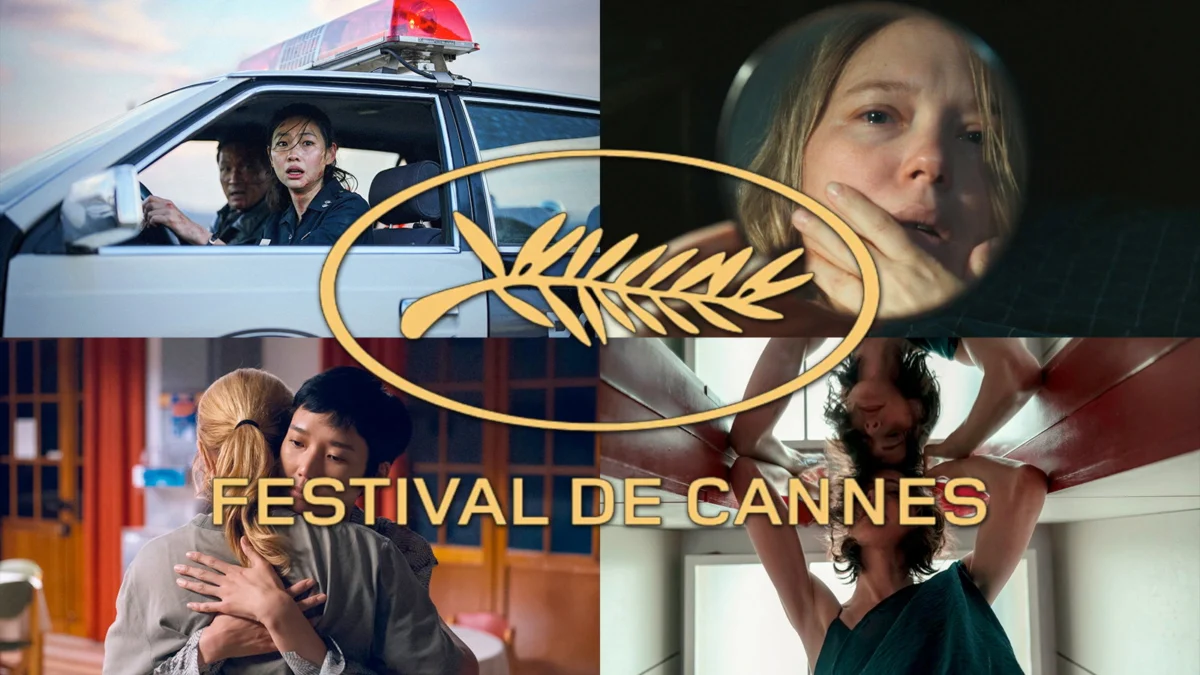
The French Riviera is once again the epicenter of the global film industry as the 79th Festival du Film de Cannes officially commences on May 12, 2026. For twelve days, through May 23, the iconic city will host a confluence of filmmakers, critics, industry professionals, and cinephiles, all drawn by the promise of cinematic discovery and robust discussion. This year’s edition continues Cannes’ storied tradition of celebrating diverse storytelling and artistic innovation on the Mediterranean coast.
Cannes: A Legacy of Cinematic Excellence
Established in 1946, the Cannes Film Festival has evolved into arguably the most prestigious film festival worldwide, renowned for its rigorous selection process and its pivotal role in launching the careers of countless auteurs. The festival’s primary objective has always been to champion cinema as an art form, providing an international platform for films that push boundaries and reflect the complexities of the human experience. The 79th edition follows a rich chronology of cinematic milestones, from the groundbreaking works of the French New Wave to contemporary masterpieces that have shaped global film discourse. Beyond the glittering red carpet and celebrity appearances, Cannes serves as a vital marketplace—the Marché du Film—where distribution deals are forged, and the future of cinema is often charted. The economic impact of the festival on the region is substantial, generating millions in revenue and supporting numerous local businesses annually.

This year’s lineup, curated by Artistic Director Thierry Frémaux and his team, reflects a continued commitment to this ethos. While some industry observers have noted the relative absence of major Hollywood studio productions in the main competition, this trend is consistent with Cannes’ increasing focus on international independent and auteur-driven cinema. Festival organizers have consistently emphasized that their selection prioritizes artistic merit and originality, regardless of budget or origin. This approach allows for a broader spectrum of voices and narratives to emerge, fostering a dynamic environment for global cinema.
The Main Competition and Beyond: A Glimpse at the 2026 Selection
The Official Selection encompasses several key sections, including the highly coveted Main Competition for the Palme d’Or, Un Certain Regard, Cannes Premiere, Special Screenings, and Out of Competition. Parallel sections like the Semaine de la Critique (Critics’ Week) and the Quinzaine des Cinéastes (Directors’ Fortnight) also provide crucial platforms for emerging talent and distinctive cinematic visions. The breadth of the 2026 program promises a rich tapestry of genres, styles, and national cinemas, reinforcing Cannes’ reputation as a global cinematic melting pot.
Among the numerous films vying for attention and critical acclaim, several have already generated significant buzz. Beyond the six detailed below, other highly anticipated titles include Valeska Grisebach’s The Dreamed Adventure, Quentin Dupieux’s Full Phil, and Cristian Mungiu’s Fjord, starring Sebastian Stan and Renate Reinsve. Pawel Pawlikowski’s Fatherland, featuring the acclaimed Sandra Hüller, is already being discussed as a strong contender for the Palme d’Or. Ira Sachs brings The Man I Love with Rami Malek and Rebecca Hall, while Jane Schoenbrun presents Teenage Sex and Death at Camp Miasma. James Gray’s Paper Tiger and Yukiko Sode’s All the Lovers in the Night, based on Mieko Kawakami’s novel, also stand out.

A notable trend in 2026 is the robust presence of animated features. This year’s selection includes Tangles by Leah Nelson, Jim Queen and the Quest for Chloroqueer by Marco Nguyen & Nicolas Athané, Lucy Lost by Oliver Clert, In Waves by Phuong Mai Nguyen, We Are Aliens by Kohei Kadowaki, Iron Boy by Louis Clichy, and Viva Carmen! by Sébastien Laudenbach. Quentin Dupieux also contributes a unique animated work titled Vertiginous (Le Vertige). The increasing inclusion of diverse animated works underscores the festival’s recognition of animation as a sophisticated and versatile storytelling medium, moving beyond its traditional family-film perception.
Six Highly Anticipated Films at Cannes 2026
The following six films represent a cross-section of the festival’s most intriguing offerings, spanning genres, nationalities, and directorial visions. Their selection at Cannes highlights their potential to shape cinematic conversations in the coming year.
Hope – Directed by Na Hong-jin
Korean director Na Hong-jin, a name synonymous with gripping thrillers and dark genre explorations, makes a highly anticipated return with Hope. Known for his visceral and atmospheric works like The Chaser (2008), The Yellow Sea (2010), and the critically acclaimed horror-thriller The Wailing (2016), Hong-jin now ventures into the realm of science fiction. The mystery surrounding Hope has only intensified the anticipation, with scarce details preceding its premiere.

The film boasts an intriguing international cast, featuring prominent Western actors Alicia Vikander, Michael Fassbender, and Taylor Russell alongside celebrated Korean talents Hwang Jung-min (a frequent collaborator with Hong-jin), Zo In-sung, and Jung Ho-yeon. This blend of international and Korean stars suggests a narrative with broad appeal, possibly exploring themes relevant to a global audience while retaining Hong-jin’s distinctive directorial voice. The tantalizingly brief synopsis sets the stage: in the remote village of Hope Harbor, adjacent to the heavily fortified DMZ in Korea, the suspected appearance of a tiger throws the community into disarray. What begins as a local emergency soon escalates into a profound and terrifying mystery, compelling the residents to confront the unknown. The shift to sci-fi promises a fresh perspective from a director celebrated for his command of tension and suspense, making Hope a must-see for genre enthusiasts and fans of sophisticated world cinema alike.
All of a Sudden – Directed by Ryûsuke Hamaguchi
Ryûsuke Hamaguchi, widely regarded as one of Japan’s most significant contemporary filmmakers, returns to Cannes with All of a Sudden (French Soudain). Following his international breakthroughs like the Oscar-winning Drive My Car (2021) and the critically lauded Evil Does Not Exist (2023), Hamaguchi has established a reputation for profound, character-driven narratives, often exploring human connection, communication, and the intricate dance of fate. While he has previously garnered significant acclaim at Cannes, including the Best Screenplay award for Drive My Car, the Palme d’Or has remained elusive. Many believe All of a Sudden could be his crowning achievement.
The film’s gargantuan runtime of 3 hours and 16 minutes is a testament to Hamaguchi’s meticulous approach to storytelling, promising an immersive experience. Shot and set in Paris, the film centers on the intellectual and emotional correspondence between two scholars who exchange letters discussing chance and risk. As one of the philosophers falls ill, their dialogue deepens, evolving into intimate discussions on mortality and forging a profound connection between them. Co-written by Hamaguchi and Léa Le Dimna, the narrative is loosely inspired by Makiko Miyano and Maho Isono’s book, You and I – The Illness Suddenly Get Worse. The cast features two distinguished actresses, Virginie Efira and Tao Okamoto, whose performances are expected to anchor this philosophical exploration. Hamaguchi’s unique lens on life, death, and human connection, set against the backdrop of Paris, is poised to deliver a truly memorable cinematic experience.
The Unknown – Directed by Arthur Harari
French writer and filmmaker Arthur Harari, who co-wrote the Oscar-winning screenplay for Justine Triet’s Anatomy of a Fall, presents his third feature, The Unknown (French L’Inconnue). This film has quickly climbed the ranks of anticipated titles due to its provocative premise and the early insights shared by its lead actress. Harari’s previous directorial work, while not as widely distributed, has demonstrated a keen narrative intelligence and a willingness to explore complex psychological landscapes.

The Unknown delves into a compelling body-switch narrative with a significant twist. The story follows David Zimmerman, a reclusive photographer played by Niels Schneider, who, after a one-night stand, awakens to find himself inexplicably inhabiting the body of the woman he was with. This premise immediately evokes comparisons to genre classics like Your Name but promises a more mature and perhaps unsettling exploration of sexual identity and the self. Léa Seydoux, who portrays the woman, has expressed immense enthusiasm for the role, stating, "It’s the first time a director has decided to write a role specifically for me, after seeing me in a film. I play a man trapped in a woman’s body. It’s exhilarating as an actor to be so deeply immersed in invention." Her statement underscores the film’s potential for both intellectual discourse and powerful performance. The Unknown is poised to be one of the most discussed and debated films at Cannes, challenging perceptions and sparking conversations about identity, gender, and the human psyche.
Coward – Directed by Lukas Dhont
Belgian filmmaker Lukas Dhont, known for his emotionally resonant and visually striking dramas, brings Coward to the Main Competition. Dhont’s previous works, such as Girl (2018), which won the Caméra d’Or at Cannes for best first feature, and the critically acclaimed Close (2022), a Grand Prix winner, have established his distinctive eye for intimate human stories and a gorgeously cinematic style. Despite some polarizing reactions to the emotional intensity of his films, Dhont’s unique voice in contemporary cinema is undeniable.
Coward takes on the challenging subject of World War I, promising a fresh perspective on the well-trodden genre of war films. The narrative follows Pierre, a newly arrived soldier at the front, eager to prove himself amidst the relentless brutality of the Great War. Behind the lines, he encounters Francis, who endeavors to uplift his comrades’ spirits by organizing a theatre show. The film explores their parallel quests to find moments of escape and humanity amidst the omnipresent violence. Featuring a cast of largely unknown young actors, Coward is expected to deliver an authentic and poignant portrayal of youth in conflict. A particularly anticipated element is the return of composer Valentin Hadjadj, whose score for Close was widely praised for its evocative power. Hadjadj’s collaboration with Dhont once again suggests a film where musical narrative will play a crucial role in enhancing the emotional depth and thematic resonance.
The End Of It – Directed by Maria Martínez Bayona
Spanish filmmaker Maria Martínez Bayona makes her feature directorial debut with The End Of It, an independent sci-fi drama that quickly captured attention for its intriguing premise and strong cast. Following her award-winning short film Mia (2017), Bayona steps into a near-future world with philosophical and ethical implications. The film’s inclusion in the Cannes Premiere section, while not in the main competition, signifies its artistic merit and potential for significant impact.

The End Of It is set in a future where aging can be cured, and death has become an optional choice. The protagonist, Claire (played by Rebecca Hall), is a former provocative artist approaching her 250th birthday who decides she has lived enough and wishes to die. This decision ignites conflicts with her husband, her daughter, and even an AI assistant, revealing the complex and often humorous dynamics of their relationships in a world without natural mortality. As Claire reclaims her role as an artist by embracing her impending death, she is forced to confront the true meanings of living, dying, and the inherent absurdity of existence itself. The film boasts an impressive ensemble cast, including Noomi Rapace, Gael Garcia Bernal, and Beanie Feldstein, whose collective talents promise a nuanced exploration of these profound themes. The End Of It stands out as a compelling original sci-fi offering, poised to stimulate debate on humanity’s relationship with mortality and technological advancement.
Flesh and Fuel – Directed by Pierre Le Gall
Making its debut in the Critics’ Week (Semaine de la Critique) sidebar section, Pierre Le Gall’s Flesh and Fuel (French Du Fioul dans les artères, literally "Fuel Oil in the Arteries") is generating significant interest as a potential indie gem. The Critics’ Week has historically been a launchpad for distinctive voices and intimate narratives, often uncovering some of the festival’s most impactful discoveries. Le Gall’s first feature film promises a tender and compelling story rooted in a unique setting.
Flesh and Fuel explores the burgeoning romance between two middle-aged gay truck drivers who meet on the road. The film centers on Étienne (Alexis Manenti), a shy and quiet French truck driver, whose journey intertwines with Bartosz (Julian Świeżewski), a more effervescent Polish counterpart. The original French title, with its poetic and evocative imagery, hints at the deep emotional and physical connection that forms between the characters, adding a layer of romanticism to their rugged profession. Cannes has a strong tradition of showcasing superb LGBTQ+ films, from Carol and Portrait of a Lady on Fire to more recent acclaimed works like Joyland and The Blue Caftan. Flesh and Fuel is poised to join this lineage, offering a nuanced portrayal of love, companionship, and identity within an underrepresented demographic. Its selection in Critics’ Week suggests a film that combines artistic sensibility with a powerful human story, making it a noteworthy entry in the 2026 lineup.
Cannes: A Nexus for Global Cinematic Discourse

As the 79th Cannes Film Festival unfolds, it reaffirms its indispensable role as a nexus for global cinematic discourse. The festival is not merely a showcase of films but a vibrant forum where diverse voices, critical perspectives, and artistic interpretations converge. The discussions sparked by new films, from heated debates to profound agreements, are an integral part of the Cannes experience, shaping the narrative of cinema for the year ahead. This vivacious discourse, happening in screening rooms, along the Croisette, and in countless cafes, fosters a collective exploration of what film can be and what it can achieve.
The implications of Cannes extend far beyond the festival’s twelve-day run. Films premiering here often gain significant momentum, influencing distribution deals, securing international attention, and frequently embarking on successful awards campaigns, including the Academy Awards. The festival also provides a crucial platform for emerging filmmakers, offering unparalleled visibility and networking opportunities that can define the trajectory of their careers.
As critics and journalists from around the world document their experiences and share their insights, the global conversation around cinema intensifies. The 79th Cannes Film Festival promises to be another landmark event, enriching the cinematic landscape and inspiring audiences and creators alike with its dedication to the art of film. All eyes are now on the Riviera, awaiting the discoveries and debates that will define Cannes 2026.