


Thirty-six years have passed since the last major cinematic adaptation of William Golding’s seminal novel, "Lord of the Flies." This significant temporal gap raises an immediate question for contemporary audiences: was another retelling of this enduring story truly necessary? The surprising answer, as revealed by Jack Thorne’s latest adaptation, is a resounding yes. Even for those whose acquaintance with the novel dates back to their formative school years, the core narrative—a group of British schoolboys stranded on a remote tropical island after a plane crash, their attempts at self-governance devolving into primal chaos—remains deeply ingrained in the cultural consciousness. This narrative can be seen as a stark, albeit fictional, parallel to the infamous Stanford Prison Experiment, translated through the lens of youthful innocence corrupted. Revisiting this classic narrative today proves to be an experience that is both profoundly eye-opening and unexpectedly terrifying, offering a compelling, albeit unsettling, journey that viewers may not be eager to embark upon repeatedly.
Jack Thorne, the acclaimed writer behind the critically lauded Netflix series "Adolescence," which garnered significant attention and Emmy recognition, has approached "Lord of the Flies" with a remarkable fidelity to the source material, while simultaneously infusing it with considerable new texture, both visually and thematically. Thorne’s established talent for exploring the psychological complexities of young protagonists makes his gravitation towards the unraveling of these children’s minds unsurprising. The adaptation is structured into four distinct episodes, each meticulously dedicated to a central character: Piggy, Jack, Simon, and Ralph. This deliberate choice allows for an in-depth exploration of each boy’s perspective, granting them an extended platform to narrate their experiences, often quite literally.
The Descent into Savage Instincts: Episode by Episode
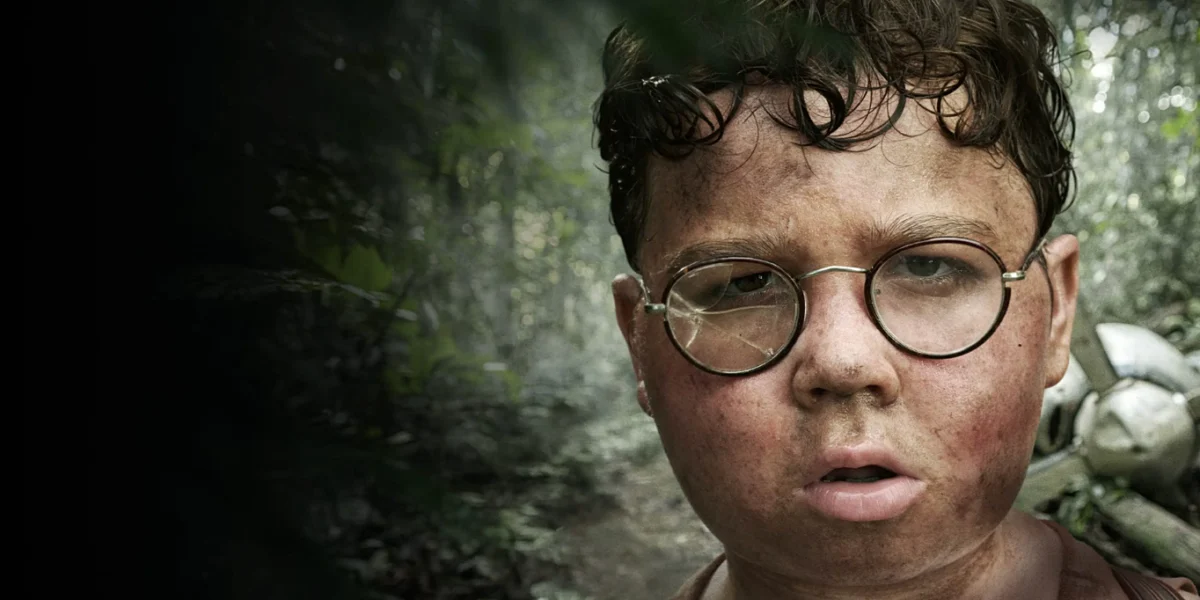
The series commences with Piggy, portrayed by David McKenna, a character defined by his intellectual prowess, inherent timidity, and physical vulnerability. By placing Piggy’s narrative at the forefront, Thorne and director Marc Munden adeptly emphasize the boys’ initial survival instincts and the fragile semblance of unity they strive to maintain. For viewers unfamiliar with the story, or perhaps harboring a hope for a different, more optimistic outcome, Piggy’s introductory episode effectively establishes a sense of camaraderie amongst the survivors. However, this initial portrayal is subtly laced with foreshadowing, hinting at the inevitable fractures and escalating violence that are to come. This strategic setup is crucial for the unfolding of the infamous narrative, offering a haunting glimpse into what many survival narratives might entail if the corrosive influence of power were absent from the equation.
The subsequent episode pivots to Jack, embodied by Lox Pratt. This shift naturally ushers in themes of tribalism, positioning Jack as the ideological antithesis to Piggy’s reliance on intellect and logic. Pratt’s portrayal of Jack is one of unbridled arrogance and an insatiable hunger for power. From the outset, Jack perceives leadership as a prize ripe for the taking, an opportunity he is determined not to relinquish. Pratt, alongside the entire young ensemble cast, delivers a performance of remarkable depth and maturity. The young actors demonstrate an instinctive grasp of their characters’ psyches and motivations. Several sequences within Jack’s narrative arc are particularly visceral and emotionally taxing, compelling audience engagement through sheer, unvarnished intensity, even when the content proves difficult to witness.
Simon’s storyline, helmed by Ike Talbut, introduces one of the adaptation’s more significant departures from Golding’s original text. Thorne bestows upon Simon a diary, enabling Talbut to weave narrative threads through voiceover, offering intimate access to the character’s innermost thoughts. While this stylistic choice proves surprisingly effective in conveying Simon’s internal world, it is judiciously employed, appearing only once. Rather than functioning as a mere narrative contrivance, the diary serves to illuminate the emotional richness of the boys’ lives prior to their island ordeal, adding a layer of poignant humanity to their pre-crisis existence.
The series culminates through the perspective of Ralph, played by Winston Sawyers. Ralph emerges as the group’s initial beacon of heroic leadership, steadfastly committed to democratic order and the preservation of civilized societal standards. He represents the democratically elected president to Jack’s emerging dictator. In another notable deviation from the novel, the adaptation provides the audience with crucial insights into Ralph’s motivations through a series of poignant flashbacks. Munden and Thorne leverage these glimpses into the boys’ former lives to flesh out the pervasive nature-versus-nurture themes that lie at the heart of the narrative. This approach proves highly effective in exploring the underlying "why" behind the boys’ increasingly destructive actions, a thematic preoccupation that Thorne consistently emphasizes throughout the adaptation. A further alteration grants one character’s death a significantly expanded screen presence. While this decision amplifies the emotional impact, it arguably sacrifices some of the shocking abruptness that rendered the original moment so profoundly unsettling.
Technical Prowess and Thematic Resonance
Technically, the series is a visual tour de force. The cinematography employs distorted, slightly blurred camerawork, generating an overwhelming sense of intensity that permeates both the visual and auditory landscapes. At times, the fisheye-like perspective can become a distraction, yet it undeniably contributes to an immersive experience. The camera itself often assumes a character-like presence, adopting a documentary-style gaze that fixates on images that viewers may desperately wish to avert their eyes from, but are unable to. Prolonged close-ups draw the viewer’s attention directly to the boys’ faces and eyes, creating a visual tapestry that is simultaneously mesmerizing, captivating, and deeply tragic. The color grading mirrors the characters’ descent into madness. Fiery reds dominate the frame, evocative of spilled blood. Lush greens signify the vibrant, untamed natural environment. Blues convey a profound sense of despair, reflecting both the breathtaking beauty and the crushing isolation of the surrounding ocean. Filmed on location in Malaysia, the island setting is rendered with a palpable texture and an uncompromising rawness, standing in stark contrast to the bleak, desaturated flashback sequences set in Britain.
However, not all technical elements achieve the same level of success. The visual effects occasionally falter, appearing artificial and disconnected from the otherwise grounded atmosphere. A few instances of conspicuously fake wild boars momentarily disrupt the viewer’s immersion. The musical score, on the other hand, is nothing short of exceptional. Composed by industry titans Hans Zimmer and Kara Talve, alongside Cristobal Tapia de Veer, the series masterfully blends traditional orchestral arrangements with cutting-edge electronic synthesizers to craft expansive, atmospheric soundscapes. Yet, some of the most unsettling moments are achieved not through sonic grandeur, but through its deliberate absence, allowing silence to descend and consume the screen with unnerving power.
A Timeless Warning for a Modern Age
Thorne’s adaptation, while polished and undeniably gritty, does not attempt to reinvent the narrative wheel. Instead, it demonstrates a profound understanding of why "Lord of the Flies" has continued to resonate across generations. Its freshness is derived from its visceral, colorful, and almost animalistic presentation, remaining faithful to the core tenets of the source material while delving even deeper into the emotional nuances of its young characters. Tragically, this story’s relevance may feel amplified in the current sociopolitical climate, perhaps even more so than in 2026. The pervasive anxieties surrounding boyhood, the burgeoning complexities of toxic masculinity, and the fragility of societal structures are brought to the forefront. The adaptation employs aggressive camerawork and vivid visual design, at times evoking the dreamlike intensity of Francis Ford Coppola’s "Apocalypse Now." However, despite its unique strengths and brutal power, the question arises: after four distinct film and television adaptations of the same novel, has this story finally exhausted its potential? It is plausible that another revisit will not be necessary for a considerable period.

Supporting Data and Context
William Golding’s "Lord of the Flies" was first published in 1954. The novel’s genesis is often attributed to Golding’s experiences as a teacher and his observations of human behavior during wartime. He reportedly sought to counter the optimistic view of human nature prevalent in children’s adventure stories, arguing that civilization was merely a veneer that could easily be stripped away under duress. The novel has sold tens of millions of copies worldwide and has been translated into numerous languages, solidifying its status as a literary touchstone.
The most recent film adaptation prior to this series was directed by Harry Hook in 1990. Prior to that, Peter Brook directed a black-and-white version in 1963, which is widely considered a classic. A television adaptation also aired in 1977. Thorne’s series, by extending the narrative over four episodes, allows for a more nuanced exploration of character development and the gradual erosion of civil order than previous adaptations could achieve within the confines of a single film.
Broader Impact and Implications
The adaptation’s emphasis on the psychological unraveling of its young characters and its stark portrayal of the descent into primal urges carry significant implications. In an era marked by heightened global anxieties, political polarization, and a re-examination of societal norms, the story’s exploration of the inherent tension between civilization and savagery feels particularly resonant. The series implicitly asks audiences to confront uncomfortable truths about human nature, the fragility of societal constructs, and the ease with which individuals, particularly those in positions of power, can succumb to their basest instincts.
The explicit focus on themes of toxic masculinity and the pressures faced by young men in navigating societal expectations adds another layer of contemporary relevance. By delving into the "why" behind the boys’ actions, Thorne’s adaptation encourages a more profound understanding of the complex interplay of individual psychology and environmental factors that contribute to destructive behavior. This approach moves beyond a simple cautionary tale to a more introspective examination of the societal forces that shape young minds and their capacity for both great good and profound evil.
While the series has garnered praise for its artistic merit and thematic depth, its deviations from the source material may prove contentious for some purists. Furthermore, the intensely visceral direction and cinematography, while effective in conveying the story’s psychological horror, may prove too overwhelming for certain viewers. The series is expected to be a strong contender in Emmy discussions, with potential nominations in categories such as Outstanding Limited or Anthology Series, Outstanding Directing for a Limited or Anthology Series, and Outstanding Writing for a Limited or Anthology Series.
The Good:
- Thorne’s adaptation delves deeply into the psyche of the young characters, offering a fresh and compelling interpretation of this classic tale.
- The use of visceral and primitive storytelling techniques creates an intense and immersive viewing experience.
- The direction, cinematography, and musical score are all striking and contribute significantly to the narrative’s impact.
- The performances of the four main young actors are exceptional, hinting at promising future careers.
The Bad:
- Deviations from the original novel may not appeal to all readers.
- The intensity of the direction and cinematography, while effective, may be too overwhelming for some viewers.
- Minor inconsistencies in visual effects can occasionally detract from the otherwise grounded atmosphere.
Emmy Prospects:
- Outstanding Limited or Anthology Series
- Outstanding Directing for a Limited or Anthology Series
- Outstanding Writing for a Limited or Anthology Series
Final Score: 8/10