A California man accused of a meticulously planned attempt to assassinate then-President Donald Trump during the annual White House Correspondents’ Association (WHCA) dinner in Washington, D.C., formally pleaded not guilty on Monday morning to all four charges leveled against him. The arraignment, held in Federal District Court in the capital, marked a critical juncture in a case that has sent shockwaves through the nation’s security apparatus and political landscape, raising profound questions about the vulnerability of high-profile events and the mechanisms in place to protect national leaders.
The Arraignment: A Formal Plea and Defense Challenge
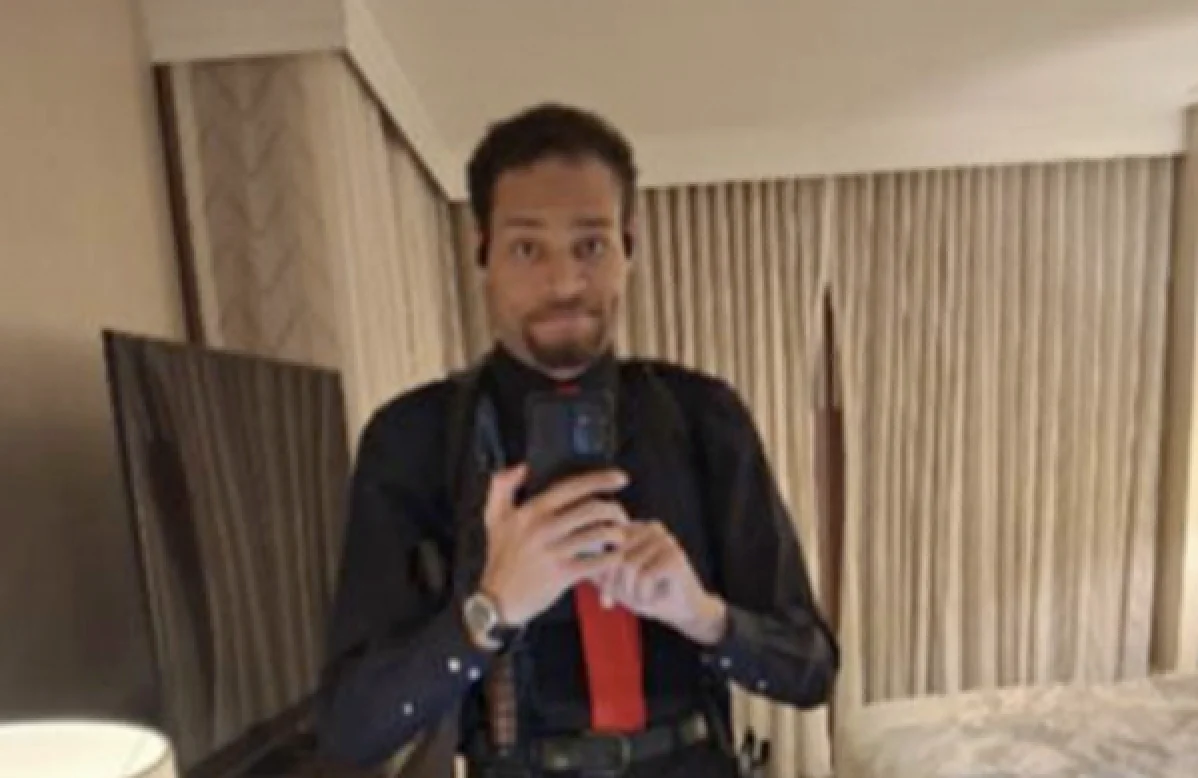
Cole Tomas Allen, 31, appeared before a judge in Washington, D.C., for his formal arraignment. Bound by both hands and ankles and clad in an orange jumpsuit, Allen presented an exhausted demeanor during his second court appearance. The proceedings formally presented him with four serious federal charges stemming from the April 25 incident, where he allegedly breached security at the Washington Hilton, the venue for the WHCA dinner, and fired shots as he attempted to gain entry around 8:30 p.m., just as the prestigious event was commencing. The charges include attempting to assassinate the President of the United States, assaulting a federal officer with a deadly weapon, transportation of a firearm and ammunition in interstate commerce with intent to commit a felony, and discharging a firearm during a crime of violence. The most severe of these, the assassination attempt count, carries a potential sentence of life imprisonment, underscoring the gravity of the allegations.
During the Monday court session, Eugene Ohm, Allen’s federal public defender, made a significant motion, requesting that Judge McFadden mandate the removal of acting Attorney General Todd Blanche and U.S. Attorney Jeanine Pirro from the case in their professional capacities. Ohm’s argument hinged on the premise that both Blanche and Pirro were attendees at the dinner that night. He contended that the notion of them prosecuting a case in which they could potentially consider themselves victims was "wholly inappropriate," citing concerns over potential conflicts of interest and the appearance of impartiality, which are fundamental tenets of the American judicial system. This challenge highlights the complex ethical considerations that can arise in high-profile criminal cases, particularly when prosecuting attorneys have a personal connection to the events.
The Alleged Plot: A Detailed Account of Premeditation
According to documents presented by the Department of Justice (DOJ) in court, Allen’s alleged plot was not a spontaneous act but a calculated and premeditated endeavor. In late April, Allen reportedly embarked on a cross-country journey from California to Washington, D.C., with the specific intent of targeting the White House Correspondents’ Dinner. His plan, as detailed by federal prosecutors, involved booking a room on the 10th floor of the Washington Hilton. This choice of venue carries a chilling historical resonance, as the same hotel was the site of the 1981 assassination attempt on President Ronald Reagan by John Hinckley Jr., an event that dramatically reshaped presidential security protocols.
The DOJ further alleged that Allen intended to storm through the venue’s security checkpoints, armed with both a shotgun and a pistol, with the express goal of killing "as many Trump Administration officials as possible." His elaborate scheme was reportedly thwarted by alert security personnel who intervened and apprehended him before he could penetrate the banquet hall where hundreds of high-ranking officials, journalists, and dignitaries were gathered. However, the confrontation was not without violence. Prosecutors stated that Allen opened fire, striking a Secret Service agent. Fortunately, the agent’s ballistic vest absorbed the impact, preventing a fatal injury, a testament to the protective measures employed by the agency. The incident, though contained, immediately triggered a high-level security response and initiated an intensive federal investigation.
The White House Correspondents’ Dinner: A Nexus of Power and Press
The White House Correspondents’ Association Dinner is an annual event of immense significance in Washington, D.C. Established in 1914, the WHCA is an organization of journalists who cover the White House and the President of the United States. The dinner, typically held on the last Saturday of April, serves multiple purposes: it celebrates quality journalism, raises money for scholarships for aspiring journalists, and often features a comedic address from the sitting President and a celebrity host. It is a unique confluence of political power, media influence, and Hollywood glamour, drawing an exclusive guest list that includes the President, the First Lady, members of the Cabinet, senior White House staff, members of Congress, foreign dignitaries, prominent journalists, and numerous celebrities.
The Washington Hilton, a prominent hotel in the nation’s capital, has been the traditional venue for the dinner for many years, largely due to its capacity to host such a large and prestigious gathering. Its selection, however, is not without its historical shadows. The 1981 assassination attempt on President Reagan outside the hotel’s T Street exit served as a stark reminder of the persistent threats faced by national leaders, even in ostensibly secure environments. That incident led to a significant overhaul of Secret Service procedures, including stricter control over public access to presidential movements and enhanced protective details. The fact that Allen allegedly chose the same venue, and even considered a similar approach (operating from a hotel room overlooking the scene), underscores a disturbing historical echo and highlights the ongoing challenge of securing such open, public-facing events.
Evidence of Intent: Manifestos and Target Lists
The Department of Justice’s case against Cole Tomas Allen is heavily predicated on compelling evidence of his premeditation and stated intent. Prosecutors revealed that Allen had allegedly emailed friends a detailed "hierarchy of the administration officials he planned to target," indicating a clear, specific, and systematic plan to inflict maximum damage. This type of evidence is crucial in establishing the charge of attempted assassination, which requires demonstrating not just an act, but a deliberate intent to kill the President.
Furthermore, Allen is alleged to have sent a lengthy manifesto to family members, in which he referred to himself as a "Friendly Federal Assassin." This document reportedly outlined his motivations, detailing his political grievances against the Trump administration. Such a manifesto, if authenticated, would serve as a powerful piece of evidence, providing direct insight into Allen’s state of mind, his ideological underpinnings, and his explicit intent to commit violence against government officials. The combination of a target list and a self-authored explanation of motives paints a chilling picture of a meticulously planned act of political violence. These evidentiary components are critical in proving specific intent, a high bar for federal prosecutors in cases of this magnitude.
Presidential Security: Protocols Under Intense Scrutiny
The alleged security breach at the Washington Hilton immediately prompted widespread concern and a thorough review of presidential security protocols. The United States Secret Service, a federal law enforcement agency under the Department of Homeland Security, is tasked with the dual mission of protecting the President, Vice President, their immediate families, and other designated individuals, as well as investigating financial crimes. Protecting a President at a large, public-facing event like the WHCA dinner presents a unique set of challenges. Unlike the fortified White House, an off-site venue involves managing a vast number of attendees, intricate logistics, and coordinating with local law enforcement and venue security.
Sources familiar with Secret Service operations explain that security at such events is multi-layered, involving extensive intelligence gathering, advance surveys of the venue, perimeter control, magnetometers, canine units, and a highly trained protective detail in close proximity to the President. The fact that an armed individual allegedly managed to penetrate outer security layers and discharge a firearm, even if contained, necessitates a profound re-evaluation. While the quick action of agents prevented a catastrophe, questions have inevitably been raised regarding the effectiveness of initial screening, the robustness of the outer perimeter, and the intelligence sharing mechanisms that might have flagged Allen’s intentions earlier. A comprehensive internal review by the Secret Service is standard procedure following any incident involving a protectee, aiming to identify vulnerabilities and implement corrective measures to prevent future occurrences. Officials, speaking on background, reiterated the agency’s unwavering commitment to adapting and enhancing its security strategies against evolving threats.
Political Repercussions and the White House Ballroom Debate
In the immediate aftermath of the shooting and in the subsequent weeks, the incident took on a significant political dimension. Then-President Trump and many of his allies in politics and the media seized upon the assassination attempt as justification for a long-standing proposal: the construction of a highly secure ballroom within the White House complex. Proponents argued that such a facility would enhance presidential security by allowing large events, currently held off-site, to take place in an environment with unparalleled protective measures. They contended that it would mitigate the risks associated with transporting the President to external venues, which inherently involve greater exposure and logistical complexity.
However, the proposal for a White House ballroom faced considerable opposition and was ultimately shut down by a judge. The primary reason cited for the rejection was the lack of Congressional approval for the project, which would entail significant federal funding and potential alterations to a historic national landmark. Critics also raised concerns about the cost, the potential disruption to the White House’s historic integrity, and the perception of isolating the President further from the public. The incident, however, undeniably reignited the debate about the balance between presidential accessibility and security, a perennial challenge in a democratic society. It underscored how acts of violence or attempted violence can be quickly politicized and used to advance broader policy agendas.
The Road Ahead: Legal Process and Potential Outcomes
Cole Tomas Allen’s "not guilty" plea sets the stage for a protracted and complex legal battle. Following the arraignment, the case will move into the discovery phase, where both the prosecution and defense will exchange evidence. This will likely involve extensive investigations, witness interviews, forensic analysis of the weapons, review of surveillance footage, and examination of Allen’s digital footprint, including the alleged emails and manifesto. Pre-trial motions, such as the defense’s request to remove the prosecutors, will be heard and decided by Judge McFadden. The defense may also explore avenues related to Allen’s mental state, which is often a factor in cases involving extreme acts of violence, though no such indication has been formally made public yet.
Given the severity of the charges and the high-profile nature of the alleged target, the trial is expected to draw intense national and international media scrutiny. Federal prosecutors will bear the burden of proving beyond a reasonable doubt that Allen committed each of the four charged offenses, particularly the specific intent required for the attempted assassination count. If convicted of attempting to assassinate the President, Allen faces the possibility of life imprisonment without parole, a sentence reserved for the most grievous federal crimes. The outcome of this case will not only determine Allen’s fate but also contribute to the legal precedents surrounding acts of political violence and presidential security in the United States. The legal process ahead promises to be a rigorous examination of intent, action, and the very foundations of national security.