


The animated feature Nie Xiaoqian, a production spearheaded by Chengdu Enlight Animation and helmed by Mao Qichao, the visionary founder of Magic Animation Studio, represents a significant contemporary interpretation of a beloved classic from Chinese literature. With a development timeline reportedly stretching back to 2017, this ambitious project breathes new life into a narrative that has captivated audiences for centuries. Drawing inspiration from the eponymous chapter within Pu Songling’s renowned collection, Strange Stories from a Chinese Studio, the film delves into the poignant tale of Nie Xiaoqian, a spectral figure whose legend has previously inspired numerous cinematic and television adaptations. However, Mao Qichao’s directorial vision distinguishes itself through a bold reimagining of the narrative’s setting and the introduction of unexpected plot developments, aiming to offer a fresh perspective on this enduring ghost story.
A Departure from Tradition: Setting and Narrative Evolution
A key element that sets Nie Xiaoqian apart from its predecessors is its strategic shift in focus regarding the iconic Lanruo Temple. While a central locus in many previous iterations, the temple’s prominence is deliberately downplayed in this animated rendition. Instead, the narrative expands its scope, venturing into fantastical realms such as the Underworld and the vibrant Ghost Market. This expansion contributes to a grander, more expansive cinematic universe, moving away from the more localized and traditional atmosphere often associated with the story. The integration of original songs, thematically aligned with the narrative’s progression, further enhances the storytelling, providing a dynamic and emotionally resonant flow that propels the plot forward. This approach suggests a deliberate effort to broaden the thematic resonance of Nie Xiaoqian’s story, moving beyond the confines of a single haunted location.
Character Reinterpretation: Nie Xiaoqian and Ning Sheng
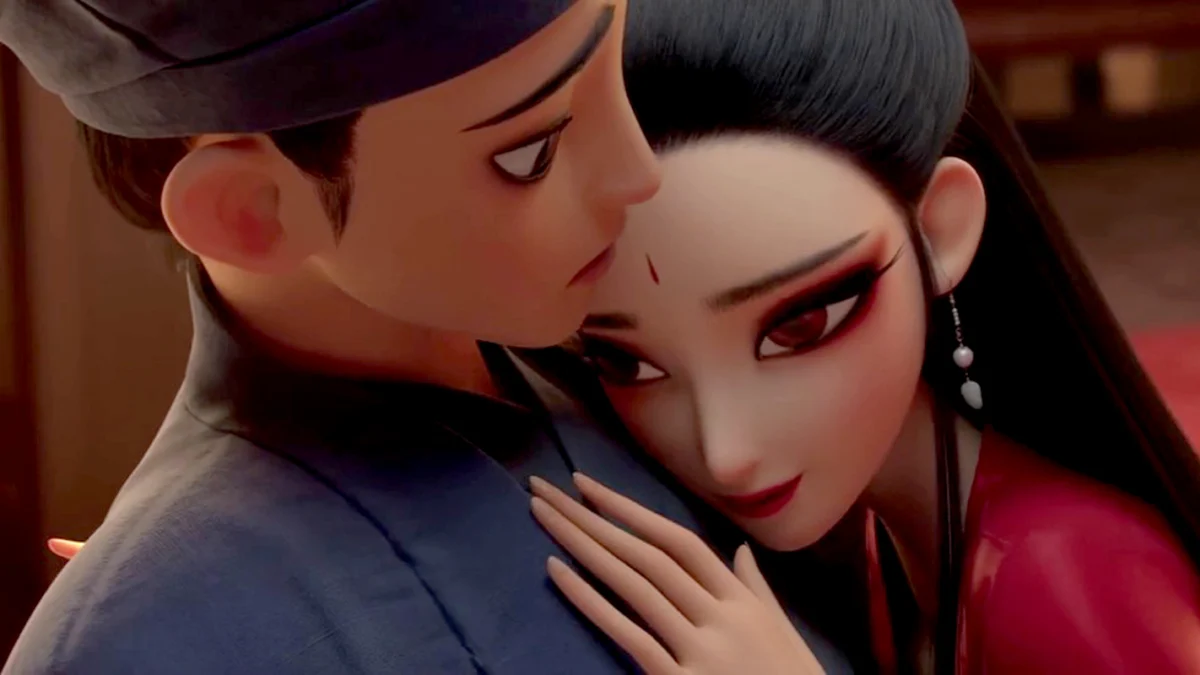
The portrayal of Nie Xiaoqian herself undergoes a significant transformation under Mao Qichao’s direction. Voiced by Zhang Huilin, Nie Xiaoqian is depicted as an eighteen-year-old orphan, a victim of unjust persecution and death, as chronicled in Pu Songling’s original work. However, Mao’s vision elevates her beyond a mere vengeful spirit. She is reimagined as a beautiful and ethereal fairy, a far cry from the tormented specter of earlier adaptations. The narrative establishes that she is under the control of Lao Lao, a formidable Tree Demon also known as Granny, who compels her to haunt Lanruo Temple. Crucially, in this rendition, Nie Xiaoqian is no longer characterized by weakness or helplessness. Instead, she is imbued with strength, intelligence, and an unwavering determination to break free from Lao Lao’s oppressive influence. This reframing of Nie Xiaoqian as an agent of her own destiny marks a significant departure, aligning with contemporary narratives that champion female empowerment.
Conversely, Ning Caichen, here renamed Ning Sheng and voiced by Bian Jiang, also experiences a notable evolution. Shedding his former occupation as a tax collector, Ning Sheng is now presented as a timid and physically frail scholar en route to the Imperial Court examinations. His fateful encounter with Nie Xiaoqian occurs during a solitary night at Lanruo Temple, where an immediate mutual attraction blossoms. Their burgeoning connection becomes the driving force of the narrative, culminating in Ning Sheng’s unwavering commitment to aid Nie Xiaoqian in her quest for resurrection by reaching the Forgotten River. This aspect of their journey lends the story elements of a road movie, emphasizing the development of their relationship and their shared pursuit of freedom. As is characteristic of many Chinese folk and fairy tales, the film underscores profound themes of human nature and the liberation of the oppressed, with a particular focus on the plight and agency of women within societal constraints.
Visual Spectacle: Animation and World-Building
The inherent advantages of animation are fully leveraged in Nie Xiaoqian, allowing for the unfettered depiction of highly imaginative fantasy sequences that would be challenging to realize in live-action productions. The visual aesthetic is vibrant and dynamic, characterized by bright, vivid colors, with a prominent use of red hues that create an energetic atmosphere rather than the somber tones often associated with ghost stories. Lanruo Temple, perched majestically on a mountainside, is reimagined as a gleaming, brightly illuminated mansion, a stark contrast to its traditional depiction. The filmmakers have meticulously crafted the visual representation of the Underworld, a realm teeming with a diverse array of monsters and spirits of varying forms and sizes. Among the standout character designs within this spectral landscape are the Judge from Hell and his two impish Black and White Guardians, distinguished by their exaggerated, full lips. The bustling main street of the Ghost Market is brought to life with a grand parade, featuring participants dancing dynamically upon moving clouds, underscoring the film’s commitment to creating a visually rich and immersive world.
The animation style is predominantly 3D, seamlessly integrating the characters into intricately detailed backgrounds. To effectively differentiate between various atmospheres and emotional tones, the film ingeniously incorporates 2D animation sequences, particularly during moments like the Soul Sealing Orb sequence. This stylistic choice evokes the sensation of a comic book leaping off the page, lending a unique and artistic dimension to the storytelling. This exquisite visual technique is highly effective and a welcome enhancement to the overall viewing experience. However, a minor critique within the otherwise stunning animation lies in the character design, specifically the exaggeratedly large eyes of the protagonists, most notably Nie Xiaoqian’s, which some viewers might find deviate from a naturalistic appearance.
Supporting Characters and Their Transformed Roles
The character of Yan Chixia, the seasoned ghostbuster, makes a welcome return, albeit with a significant reinterpretation. Voiced by Chen Zhangtaikang, he is presented as a somewhat clumsy young man who exhibits roguish behavior and is prone to tantrums. While he retains his penchant for gambling and drinking, he is no longer the stoic Taoist of past portrayals. Despite these personality shifts, he remains a highly skilled exorcist, equipped with a formidable weapon box capable of launching daggers and talismans. His consistent presence at crucial moments to assist Ning Sheng highlights his enduring role as a protector and ally. Granny Lao Lao, voiced by Lin Lan, also undergoes a profound transformation. From her origin as a malevolent demon, she evolves into a nurturing, maternal figure with a fiercely protective instinct towards Nie Xiaoqian. In a surprising turn, she actively assists Nie Xiaoqian in achieving her ultimate goals, demonstrating a significant narrative pivot from antagonist to benevolent guardian.
Critical Reception and Thematic Resonance
Nie Xiaoqian has been lauded as a refreshing and thoughtfully crafted adaptation, demonstrating ambition in its reimagining of the source material. The film’s success can be attributed, in part, to its likable protagonists and the captivating 2D animated sequences that contribute to an engaging visual experience. The inclusion of an end-credits theme song, performed by the legendary Leslie Cheung, further enhances the film’s appeal, adding a layer of nostalgic resonance for long-time fans of the story and its previous interpretations. The film’s thematic exploration of human nature and the struggle for freedom, particularly for marginalized individuals, is a testament to its enduring relevance. The narrative’s emphasis on Nie Xiaoqian’s agency and her quest for self-determination speaks to contemporary concerns about empowerment and breaking free from oppressive forces.
The production history, commencing in 2017, suggests a lengthy and meticulous development process, indicative of Chengdu Enlight Animation and Mao Qichao’s commitment to realizing a distinct vision. The strategic use of animation allows for a level of visual storytelling that transcends the limitations of live-action, enabling the creation of fantastical landscapes and dynamic action sequences. The film’s success in balancing a faithful nod to Pu Songling’s literary legacy with innovative narrative choices and visual artistry positions it as a noteworthy addition to the landscape of Chinese animated cinema. The global appeal of Strange Stories from a Chinese Studio suggests that this new interpretation of Nie Xiaoqian’s tale has the potential to reach a wide international audience, further cementing the character’s status as a cultural icon.
Broader Implications and Industry Context
The release of Nie Xiaoqian arrives at a time when the Chinese animation industry is experiencing significant growth and international recognition. Productions like this demonstrate a growing confidence in original storytelling and a willingness to experiment with established narratives. The film’s success could encourage further investment in high-quality animated features that draw from China’s rich literary heritage, offering a unique cultural perspective to global audiences. The blend of traditional folklore with modern storytelling techniques and advanced animation technology employed in Nie Xiaoqian serves as a model for future productions aiming to capture both domestic and international markets. The film’s reinterpretation of classic characters and its expansion into new narrative territories highlight the evolving nature of storytelling and the potential for creative reinvention within established literary frameworks. As the industry continues to mature, films like Nie Xiaoqian are crucial in demonstrating the artistic and commercial viability of Chinese animation on the world stage. The careful attention to visual detail, character development, and thematic depth underscores a commitment to producing works that are not only entertaining but also culturally significant.