




A controversial nude painting, reportedly a reproduction that once adorned the notorious New York City townhouse of convicted sex offender Jeffrey Epstein, briefly appeared for sale on eBay, fetching an ambitious asking price of $25,000 before its listing was abruptly removed. The incident, which unfolded on May 7, 2026, marks another chapter in the ongoing public fascination and ethical quandaries surrounding the liquidation of Epstein’s extensive estate and the commodification of artifacts associated with his heinous crimes. The artwork, described as a "lewd depiction of a woman," was said to have hung prominently over Epstein’s desk, a detail that adds a layer of disturbing context to its brief emergence on the public market.
The Appearance and Details of the Listing
The online auction house listing, titled "Jeffrey Epstein’s Desk Art," quickly garnered attention, primarily due to its direct association with the disgraced financier. According to reports from the New York Post, the painting is a giclee reproduction of Kees Van Dongen’s "Femme Fatale," a significant detail considering the original’s considerable value. The seller explicitly stated in the now-scrubbed listing, "You already know why you’re here. This is the giclee reproduction of Kees Van Dongen’s Femme Fatale that hung above Jeffrey Epstein’s desk at his Manhattan mansion. Not a rumor. Federal investigators photographed it." This claim, if verifiable, lends a degree of official provenance to the item, suggesting its presence in Epstein’s inner sanctum was documented during the federal investigation into his sex trafficking operations.
The listing further detailed the artwork’s dimensions, stating it was approximately 4×4 feet. It also highlighted a curious aspect of Epstein’s collecting habits: "Epstein hung a fake and called it a day. Very on brand." This observation alludes to the financier’s reputation for cultivating an image of wealth and sophistication, sometimes through deceptive means. Another detail emphasized the quality of the frame, noting, "The frame is an Eli Wilner. Same framers used by The White House. You’re welcome. Make it yours. Hang it above YOUR desk. Bold choice." The mention of Eli Wilner, a renowned framing company known for its work with prestigious institutions and collectors, suggests an attempt to elevate the perceived value and authenticity of the piece, despite the artwork itself being a reproduction. The asking price of $25,000 for a giclee reproduction, albeit one with such a notorious backstory, sparked considerable debate regarding the ethics of such sales and the market for "dark collectibles."
Provenance: From Estate Auction to eBay

The seller reportedly acquired the painting from a New Jersey auction, which was part of the broader liquidation process of Jeffrey Epstein’s estate. Following Epstein’s death by suicide in August 2019 while awaiting trial on federal sex trafficking charges, his vast and complex estate entered a protracted legal battle to assess assets, settle debts, and establish a compensation fund for his numerous victims. The sale of his personal belongings, real estate, and other assets has been a continuous process, overseen by executors and courts, aimed at generating funds for the Epstein Victims’ Compensation Program.
Epstein’s properties, including his infamous Upper East Side townhouse at 9 East 71st Street in Manhattan, his Palm Beach mansion, and his private islands, were all subject to forfeiture and sale. The contents of these properties, ranging from furniture and artwork to personal effects, have been gradually auctioned off. These auctions have often been met with a mix of public curiosity and ethical scrutiny, as each item sold carries the indelible stain of its former owner’s crimes. The painting’s journey from Epstein’s private residence, through a regional auction, and then onto a global platform like eBay, highlights the complex chain of custody for such controversial items and the varied motivations of those who seek to profit from them.
Background: The Estate of Jeffrey Epstein and Victim Compensation
Jeffrey Epstein was a wealthy American financier who cultivated a powerful network of influential acquaintances, including politicians, academics, and celebrities. His opulent lifestyle and extensive properties served as backdrops for his systematic sexual abuse and trafficking of underage girls. His 2019 arrest and subsequent death ignited a global scandal, leading to widespread investigations into his enablers and associates.
The liquidation of Epstein’s estate has been a critical component of seeking justice for his victims. Valued at over $600 million at the time of his death, the estate included significant real estate holdings, private jets, art collections, and financial investments. The primary objective of selling these assets has been to fund the Epstein Victims’ Compensation Program, which was established in June 2020. This independent program aimed to provide a non-judicial avenue for victims to receive restitution for the harm they suffered. By the end of its operational period, the fund reportedly paid out over $120 million to more than 150 individuals, a testament to the scale of Epstein’s crimes and the ongoing efforts to address their aftermath. The sale of personal items, even reproductions like the "Femme Fatale," directly contributes to these restitution efforts, albeit often through a circuitous and ethically charged path.
Artistic Context: Kees Van Dongen and the "Femme Fatale"

The painting at the center of this eBay listing is a reproduction of a work by Kees Van Dongen (1877–1968), a Dutch-French painter who was a prominent member of the Fauvist movement. Fauvism, characterized by bold, non-naturalistic colors and expressive brushwork, emerged in the early 20th century. Van Dongen was renowned for his portraits of women, often depicting them with a sensual and exotic allure. His subjects frequently included dancers, actresses, and society women, capturing the bohemian spirit and burgeoning modernity of his era.
The theme of the "Femme Fatale" – a seductive woman who leads men into dangerous situations – is a recurring motif in art and literature, particularly popular during the late 19th and early 20th centuries. Van Dongen’s interpretations often emphasized the alluring yet potentially perilous nature of female beauty. An original work by Van Dongen depicting this theme can command millions at auction. For instance, a notable work by the artist sold for $5.9 million in 2004, underscoring the significant value of his authentic pieces.
Epstein’s choice to display a reproduction, rather than an original, of such a symbolically charged painting over his desk is telling. The seller’s comment, "Very on brand," hints at Epstein’s known predilections and his alleged manipulation of women. The artwork, regardless of its authenticity as an original, served as a decorative element in a space where, according to federal investigators, much of his illicit activity was orchestrated. The presence of a "Femme Fatale" reproduction, particularly one documented by law enforcement, imbues it with a chilling historical resonance that transcends its artistic merit.
The Ethics of Commodifying Infamy
The sale of items belonging to notorious figures like Jeffrey Epstein consistently ignites fierce ethical debates. On one hand, the liquidation of assets is a necessary legal step to compensate victims and settle an estate. On the other hand, the public sale of personal effects, especially those with such direct ties to horrific crimes, raises questions about profiting from tragedy and the potential for glorifying or sensationalizing a criminal’s legacy.
Victim advocates often express concern that the allure of such items for collectors can inadvertently trivialize the suffering of those affected by the crimes. While the funds generated from these sales may contribute to victim compensation, the process itself can be a painful reminder of the trauma endured. The market for "dark collectibles" – items associated with criminals, historical atrocities, or infamous events – is a niche but persistent segment of the collectibles world. Buyers may be motivated by a morbid curiosity, a desire for a tangible piece of history, or the potential for investment in items with unique provenance.
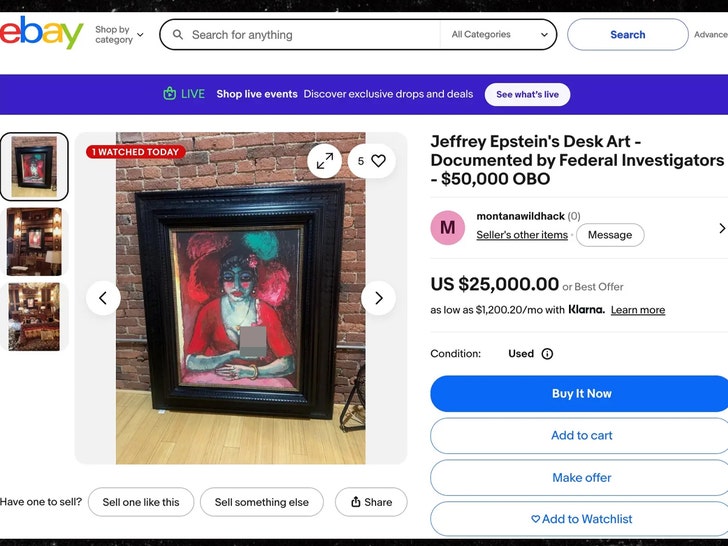
eBay’s decision to scrub the listing, while not officially explained, likely stems from a combination of factors. Online marketplaces typically have policies against selling items that promote hatred, violence, or exploit human suffering. While the painting itself is not inherently offensive as a piece of art, its direct association with Epstein and the potentially "lewd" nature described could have triggered content violations or a preemptive removal to avoid public backlash and reputational damage. The platform may also consider the highly sensitive nature of the item and the ongoing public discourse surrounding Epstein’s crimes.
Timeline and Broader Implications
The chronology of Epstein’s estate disposition began immediately after his death in August 2019. Investigations into his vast network and assets commenced, leading to the eventual freezing of his holdings. The Victims’ Compensation Program was established in mid-2020, with asset sales continuing throughout 2020, 2021, and subsequent years. Major properties, such as his NYC townhouse and Palm Beach mansion, were sold for tens of millions of dollars. The continuous flow of smaller items, like the "Femme Fatale" reproduction, appearing at regional auctions and then online, indicates the meticulous and protracted nature of liquidating such a complex estate. The May 2026 eBay listing is a relatively recent development in this ongoing process, highlighting that even years after his death, new fragments of Epstein’s world continue to surface.
The incident underscores several broader implications. Firstly, it reflects the enduring public and media fascination with Jeffrey Epstein and the dark secrets of his world. Every item, every detail that emerges, reignites discussions about his crimes, his powerful connections, and the failures of the justice system. Secondly, it illustrates the complex challenges faced by legal entities in managing the estates of notorious criminals. Balancing the imperative to compensate victims with the ethical considerations of asset sales, and navigating the public’s morbid curiosity, is a delicate act. Finally, the rapid appearance and disappearance of the listing on a global platform like eBay serves as a reminder of the pervasive reach of online commerce and the constant need for platforms to monitor and regulate content, especially when it touches upon sensitive and morally charged subjects.
The "Femme Fatale" painting, though a reproduction, carries a weight far beyond its artistic value. It represents a tangible link to a man whose actions caused immense suffering, and its brief journey through the online marketplace serves as a stark reminder of the lingering shadows cast by Jeffrey Epstein’s legacy. The $25,000 asking price, while seemingly high for a replica, speaks to the potent, albeit disturbing, value placed on artifacts connected to infamy, ensuring that the conversation around Epstein and his victims continues to evolve even as his physical possessions are dispersed.