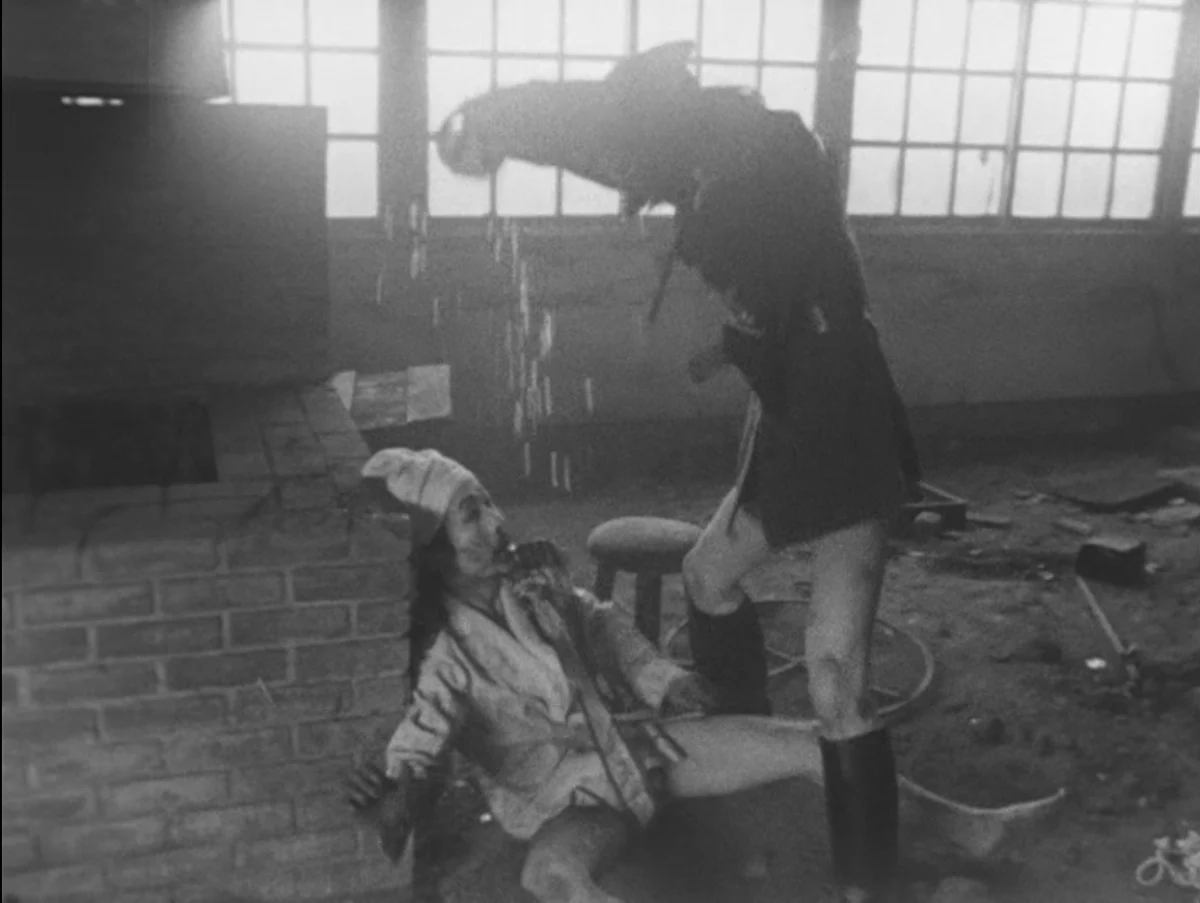
A chilling exploration of aggression and voyeurism, Shuji Terayama’s 1971 short film, "The War of Jan-Ken-Pon," transforms the simple children’s game of rock-paper-scissors into a stark, black-and-white allegory for the cyclical nature of violence and the perverse allure of conflict. This 12-minute experimental piece, a hallmark of Terayama’s provocative early work, dissects the inherent power dynamics and potential for cruelty embedded within seemingly innocent pastimes. The film’s core revolves around a Japanese variation of the game, known as "Janken Sensou" or "Jan-Ken War," where the familiar hand gestures are imbued with militaristic nomenclature: "warship" (fist), "sinking" (flat hand), and "explosion" (index finger extended). This linguistic subversion immediately sets the stage for a deconstruction of martial impulses disguised as play.
Genesis of a Provocation: Terayama and the Art Theatre Guild
"The War of Jan-Ken-Pon" emerged from a fertile period for Japanese experimental cinema, particularly within the orbit of the Art Theatre Guild (ATG). Founded in 1961, ATG became a crucial incubator for avant-garde filmmakers, offering a platform for directors like Terayama, Nagisa Oshima, and Katsuwo Suzuki to challenge cinematic conventions and explore controversial themes. These films often eschewed traditional narrative structures in favor of visual experimentation, symbolic imagery, and a keen critique of Japanese society, politics, and cultural norms. Terayama, known for his multidisciplinary approach encompassing poetry, theater, and film, consistently pushed boundaries, and "Jan-Ken-Pon" exemplifies his ability to distill complex societal anxieties into potent, distilled cinematic statements. The film’s production in 1971 places it within a broader context of global cultural shifts, including anti-war sentiments and a growing awareness of media’s role in shaping public perception of conflict.
A Descent into Absurdity: The Mechanics of the "War"
The film opens with a disquieting scene: two protagonists, clad in what initially appears to be militaristic attire, are engaged in the Jan-Ken game while walking through what seems to be a post-apocalyptic landscape, possibly the ruins of a building. The soundtrack is dominated by marching music, further enhancing the martial atmosphere. However, a closer examination reveals Terayama’s signature satirical touch: the characters are attired in only their upper garments, with their lower halves exposed in their underwear. This juxtaposition of military formality with blatant vulnerability immediately signals the absurdity at play. Their movements grow increasingly rapid and intense, culminating in a sudden cut to them seated on makeshift chairs. The first victory of the game is declared, with the man in black emerging as the victor. The immediate implication is that the winner is granted the prerogative to inflict punishment upon the loser.
As the narrative progresses, the audio landscape shifts dramatically. The cacophony of marching music recedes, replaced by an unsettling quietude punctuated only by soft, ambient melodies and the chirping of a bird. This sonic alteration creates a sense of isolation and heightened focus on the unfolding events. Concurrently, the visual composition suggests the presence of an unseen audience. The two men’s seemingly innocuous contest begins a descent into a disturbing cycle of domination, abuse, and humiliation. The militaristic lexicon of the game – warship, sinking, explosion – becomes increasingly resonant, highlighting the underlying absurdity of applying martial terminology to a children’s game, and by extension, to the very concept of warfare. A chilling sonic element is introduced: a speech, reminiscent of Adolf Hitler’s pronouncements, begins to overlay the scene, accompanied by a resurgence of martial music. This auditory juxtaposition is deliberate and deeply unsettling, linking the game’s escalating cruelty to historical instances of brutal authoritarianism and propaganda. The punishments administered to the loser become progressively more severe and bizarre, ranging from forced acts of childish degradation, such as biting a shoe, to overt physical humiliation.
The Spectacle of Cruelty: Performance and Voyeurism
The film’s structure deliberately blurs the lines between a game, a ritual, and a performance. The presence of observers, glimpsed through a window, transforms the escalating violence into a spectacle, consumed from a safe, detached distance. This element of spectatorship is crucial to Terayama’s critique, reflecting how real-world conflicts are often viewed and processed as entertainment by those not directly involved. The narrative culminates in a profound sense of darkness, where the initial jest of the game has curdled into something deeply disturbing. The two men continue to play Jan-Ken-Pon, but the rules have become indistinguishable from the brutal logic of war. The surrounding spectatorship underscores the ease with which cruelty can be normalized and consumed as entertainment, a commentary that remains acutely relevant in the age of mass media and digital voyeurism.
Cinematic Techniques: Crafting the Absurdist Vision
Shuji Terayama masterfully employs cinematic techniques to amplify the film’s unsettling message. The repetitive musical structure, punctuated by increasingly crude and appalling actions, functions as a farcical yet deeply critical commentary on the consequences of "playing at war." His assertion that individuals, and by extension nations, can observe conflict from afar as mere spectacle is pointed, even as his presentation remains firmly rooted in the avant-garde.
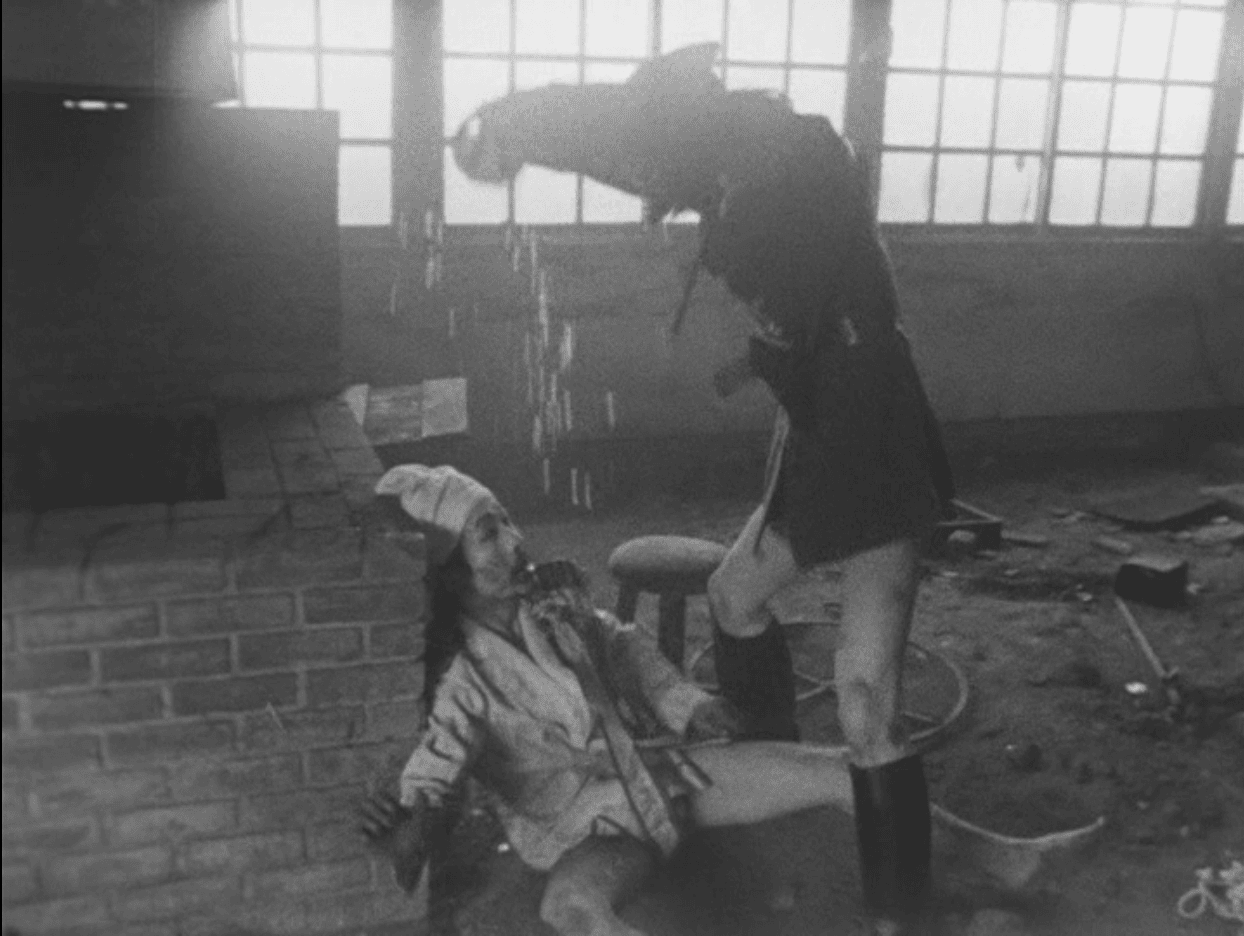
The performances of Mitsufumi Hashimoto and Salvador Tari are central to the film’s success. While seemingly improvisational, their exaggerated, almost clownish demeanor perfectly aligns with the film’s overall absurdist aesthetic. They embody caricatures, evoking the exaggerated physicality and emotional expressions of silent-era cinema, a stylistic choice that enhances the film’s timeless and universal commentary on human behavior. The deliberate absence of dialogue is a key element in this approach, allowing the visual and sonic elements to carry the weight of the narrative and its underlying themes.
Hajime Sawatari’s cinematography is instrumental in capturing the film’s unsettling intimacy and absurdity. The camera work often moves in close proximity to the protagonists, immersing the viewer in their escalating conflict. This dynamic camerawork, coupled with Takase Usui’s sharp and often disorienting editing, contributes significantly to the overall dizzying and disorienting effect of the production, mirroring the psychological impact of the game’s descent into violence.
Legacy and Impact: A Timeless Warning
"The War of Jan-Ken-Pon" is a film that pulsates with energy, provocation, and undeniable style. It stands as a memorable testament to the distinctive vision of Shuji Terayama and the boundary-pushing spirit of Art Theatre Guild productions. The film’s enduring power lies in its ability to transform a simple children’s game into a profound and disturbing examination of human aggression, the seductive nature of power, and the chilling phenomenon of voyeurism.
The film’s implications extend far beyond its runtime. By deconstructing a universally recognized game, Terayama exposes the inherent potential for conflict and cruelty that can lie dormant within seemingly benign social interactions. The militaristic renaming of the game’s elements serves as a stark reminder of how language can be weaponized to normalize and even glorify violence. The presence of the observing audience is a potent symbol of societal detachment from the realities of conflict, a phenomenon that continues to be amplified by modern media consumption.
In an era where news cycles are saturated with images and narratives of war and violence, "The War of Jan-Ken-Pon" offers a prescient and unflinching critique. It prompts viewers to consider their own roles as spectators, the ways in which they consume narratives of conflict, and the ease with which suffering can be reduced to mere spectacle. The film’s avant-garde approach, while potentially challenging for some viewers, is precisely what allows it to bypass conventional narrative expectations and deliver its potent, uncomfortable message with visceral impact. Its enduring relevance speaks to the cyclical nature of human conflict and the perpetual need to critically examine the forces that drive it, even in its most seemingly innocent manifestations. The film’s legacy is that of a potent artistic warning, urging us to remain vigilant against the allure of violence and the desensitization that can accompany its perpetual performance.