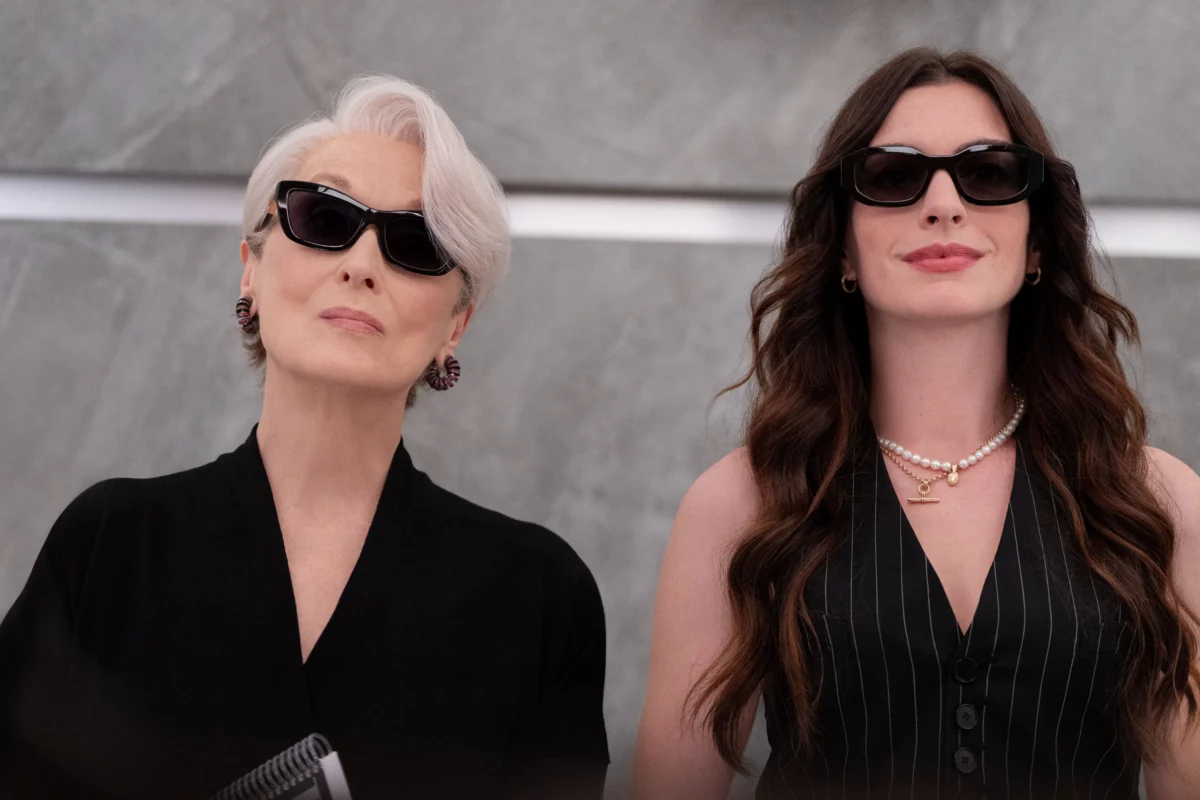
The ambitious undertaking of producing a sequel to a cult-status film after a two-decade hiatus has proven to be a resounding commercial success, as evidenced by the global performance of The Devil Wears Prada 2. Since its international release on April 29, the film has solidified its position as a box office heavyweight, generating $77 million in United States theaters and an additional $157 million across international markets. While the financial metrics underscore the enduring appeal of the franchise, the film’s arrival has ignited a complex discourse regarding its artistic merit, the preservation of its legacy, and a specific technical controversy involving the Italian localization of the production.
The Global Commercial Impact and Contextual Background
The success of The Devil Wears Prada 2 comes twenty years after the original 2006 film redefined the "fashion dramedy" genre. The first installment, based on Lauren Weisberger’s novel, was not only a commercial hit—grossing $326 million on a $35 million budget—but also a cultural touchstone that garnered two Academy Award nominations. The sequel’s ability to draw $234 million in its opening weeks reflects a rare cinematic phenomenon where nostalgia intersects with modern market demand.
In the United States, the film benefited from a strategic marketing campaign that leveraged the iconic status of its lead characters, Miranda Priestly and Andy Sachs. However, the international market, which accounts for approximately 67% of the film’s total revenue, remains the primary driver of its success. Among these international territories, Italy stands out as a unique case study, where the film’s reception has been complicated by a fierce debate regarding the country’s historic dubbing industry.
The Continuity of Voice: The Italian Localization Controversy
In Italy, the release of The Devil Wears Prada 2 has shifted public attention from the screen to the recording booth. The controversy centers on the decision to retain the original Italian voice cast from the 2006 film. This choice was intended as a tribute to continuity, ensuring that the characters sounded exactly as the Italian public remembered them from two decades ago.
The returning cast includes:
- Connie Bismuto: Providing the voice for Anne Hathaway (Andy Sachs).
- Francesca Manicone: Dubbing Emily Blunt (Emily Charlton).
- Gabriele Lavia: Returning as the voice of Stanley Tucci (Nigel).
- Maria Pia Di Meo: The legendary voice actress reprising her role as Meryl Streep (Miranda Priestly).
While the return of these industry veterans was initially celebrated by purists, the actual theatrical experience has led to significant criticism. The core of the argument involves the physiological reality of aging and its impact on vocal performance. Viewers and critics have noted a perceived "disconnect" between the visual appearance of the Hollywood stars and the auditory experience provided by the veteran dubbers.
The Case of Maria Pia Di Meo and the Challenges of Vocal Aging
Maria Pia Di Meo is widely regarded as a titan of Italian dubbing. Born in 1939, her career spans over seven decades, during which she has become the definitive Italian voice for icons such as Jane Fonda, Julie Andrews, Mia Farrow, and Barbra Streisand. For the Italian audience, Di Meo is Meryl Streep; her expressive range and familiar cadence have accompanied Streep’s performances in Italy for the majority of the actress’s career.
However, the sequel has brought to light the difficulties of bridging an age gap that has grown more pronounced over time. Di Meo, at 87 years old, is voicing a character played by Meryl Streep, who is currently 76. While an 11-year difference might seem manageable, critics argue that the "vocal weight" of an 87-year-old voice does not always align with the sharp, energetic, and commanding persona of Miranda Priestly. This has led to observations that the character’s signature biting dialogue occasionally loses its edge, replaced by a timbre that betrays the passage of time.
Similar concerns have been raised regarding Gabriele Lavia’s dubbing of Stanley Tucci. Critics have suggested that Lavia’s performance in the sequel sounds "forced," lacking the effortless wit and rhythmic delivery that characterized Nigel in the original film. This highlights a broader issue within the localization industry: the balance between honoring legendary talent and ensuring the technical suitability of a voice for a specific role.
Linguistic Adaptation and the Modern Audience
Beyond the age of the performers, the debate has expanded to include the quality of the Italian script adaptation. Modern audiences, increasingly accustomed to consuming media in its original English via streaming platforms, have become more sensitive to translation inaccuracies.
Two specific instances in the film have drawn scrutiny:
- Professional Terminology: When Andy Sachs (Hathaway) identifies herself as a "features editor" at Runway, the literal translation in the Italian dub has been criticized for failing to convey the specific weight of the role within a magazine hierarchy. In the Italian media landscape, such titles often require more nuanced adaptation to be fully understood by the general public.
- Cultural Colloquialisms: A line delivered by Miranda’s second assistant—"I have to pee, I drank a venti"—has highlighted the divide between American corporate culture and the Italian consumer experience. While Starbucks has expanded into Italy in recent years, the specific terminology of a "venti" coffee is not yet a universal cultural shorthand in the country. To a native Italian speaker in a traditional cinema setting, such references can feel jarring or confusing when translated literally.
These issues suggest that the Italian dubbing system may be struggling to keep pace with the "speed and specificity" of contemporary content. The rapid turnaround required for global releases often leaves little room for the deep cultural localization that was once a hallmark of the Italian industry.
Chronology of a Twenty-Year Legacy
To understand the weight of these criticisms, one must look at the timeline of the franchise’s development:
- June 2006: The original film is released, becoming an instant classic and cementing the status of the Italian voice cast.
- 2006–2024: The original film remains a staple of Italian television broadcasts, further ingraining the voices of Di Meo and Lavia into the public consciousness.
- 2023: Production of the sequel is fast-tracked following successful negotiations with the original lead cast.
- Early 2024: Localization begins in Italy, with the decision made to prioritize "vocal continuity" by rehiring the 2006 cast.
- April 29, 2024: The film premieres globally. Within 48 hours, social media platforms and film forums in Italy become battlegrounds for the "dubbing debate."
The Industry Perspective: Dubbing vs. Subtitling in Italy
The controversy in Italy is particularly significant because the nation has historically been one of the world’s strongest proponents of dubbing. This tradition dates back to the 1930s and was reinforced by legislative measures that favored localized content. Unlike Northern European markets, where subtitling is the norm and English proficiency is generally higher, the Italian public overwhelmingly prefers to watch films in their native language at the cinema.
However, the rise of streaming services like Netflix, Disney+, and Amazon Prime Video has shifted the paradigm. Younger generations of Italians are increasingly choosing to watch films in the original language (VO) with subtitles. This shift has created a dual-market reality: a traditional audience that demands high-quality dubbing and a modern audience that is more critical of localization efforts.
The "frenetic pace" mentioned by industry insiders refers to the shrinking window between a film’s completion and its global release. In the past, dubbing directors had months to refine a script and record performances. Today, that window is often reduced to weeks, leading to what some describe as a decline in the "artisan quality" of the work.
Analysis of Implications for Future Global Releases
The Devil Wears Prada 2 serves as a cautionary tale for studios managing long-running franchises. The decision to maintain continuity is often seen as the "safe" choice, but as this case demonstrates, it carries inherent risks when the time gap between installments is substantial.
For the Italian dubbing industry, this debate may signal a turning point. There is an increasing call for:
- Selective Recasting: Recognizing when a voice actor’s biological age no longer aligns with the character’s visual age, regardless of their historical connection to the role.
- Localized Adaptation: Moving away from literal translations toward "transcreation," where cultural references (like Starbucks sizes) are replaced with local equivalents that maintain the intended comedic or dramatic effect.
- Investment in Quality: Slowing down the localization process to ensure that the final product meets the high standards expected by an audience that now has easy access to the original English version for comparison.
Conclusion
While The Devil Wears Prada 2 continues to dominate the box office, its legacy in markets like Italy will likely be defined by the debate it has sparked. The film has proven that while a brand can remain timeless, the human elements behind its localization are subject to the inevitable passage of time. As the industry moves forward, the challenge will be to balance the respect due to the legends of dubbing with the evolving expectations of a globalized, digitally-connected audience. The $234 million generated so far ensures that the franchise remains a success, but the "Miranda Priestly of voices" may finally be facing a world that moves faster than even she can dictate.