



The eagerly anticipated Netflix series Legends is set to premiere on May 7th, promising viewers a gripping, true-story-inspired plunge into the treacherous world of 1990s British crime. The six-episode thriller chronicles the extraordinary mission of five ordinary customs officers who bravely infiltrated some of Britain’s most dangerous drug gangs, operating under the immense pressure of a nation grappling with a burgeoning heroin epidemic. Creator and writer Neil Forsyth, alongside director Brady Hood, have recently offered unprecedented insights into the series’ compelling origins, its intricate character development, and their meticulous recreation of the vibrant yet chaotic landscape of 1990s Britain. Their revelations underscore the immense stakes and personal sacrifices inherent in the covert battle against organized crime during a pivotal decade.
The Unseen War: Britain’s 1990s Drug Crisis and the Genesis of "Legends"
The backdrop for Legends is a Britain teetering on the brink of recession in the early 1990s, simultaneously battling a pervasive heroin epidemic that had taken root across its cities and towns. The social fabric was under strain, and the government, under then-Prime Minister Margaret Thatcher, was escalating its war on drugs. Direct pressure from Downing Street on the Home Office demanded innovative and effective strategies to stem the tide of illicit narcotics flooding the country. Her Majesty’s Customs and Excise, the frontline defense against smuggling, found itself needing to adopt increasingly unconventional methods to combat sophisticated criminal enterprises.
In this climate of urgency and limited resources, a bold and unprecedented tactic emerged: deep undercover infiltration. Instead of merely intercepting shipments, the decision was made to embed officers directly within the criminal networks. This marked a significant shift in operational strategy, moving beyond traditional surveillance and interdiction to proactive disruption from within. As Neil Forsyth elaborated, "Resources were very limited, so they had to be extremely inventive and creative. They would use vehicles that had been impounded, and jewellery that had been seized, for example; constantly working in this sort of ‘Boy’s Own’ way to solve a great international problem. They went the extra mile and made huge sacrifices, fired up by the very worthy cause of stopping heroin coming into Britain." This spirit of ingenuity, born out of necessity, forms the bedrock of the series’ narrative, highlighting the extraordinary measures taken by ordinary individuals.
The scale of the heroin crisis in the UK during the late 1980s and early 1990s was profound. The drug, often cheaper and more readily available than alternatives, contributed to a significant rise in addiction rates, particularly in economically depressed areas. Cities like Liverpool, Manchester, and London became key hubs for drug trafficking, with powerful, often ruthless, organized crime syndicates establishing sophisticated supply chains. Law enforcement agencies, including Customs and the police, faced an uphill battle against an adversary that was well-funded, adaptable, and deeply entrenched. The societal implications were far-reaching, encompassing public health crises, increased petty crime, and a profound sense of insecurity within communities.
Crafting a "Legend": The Art of Undercover Identity
Central to the series, and indeed to the very concept of undercover work, is the term "legend." Forsyth meticulously clarified its meaning: "When you go undercover, you create a false identity, and that false identity is called your ‘legend’. You’re either in legend or you’re out of legend, which sounds very simple, but as our characters find out, when those lines get blurred, things become very dangerous." This simple definition belies a complex and psychologically demanding reality. Creating a believable "legend" requires not just a fabricated backstory but an entirely new persona, complete with mannerisms, habits, and a convincing network of fabricated relationships. The success of an operation hinges entirely on the integrity of this constructed identity.

For the customs officers portrayed in Legends, this meant shedding their true selves and immersing themselves in the dangerous, unpredictable world of drug traffickers. The challenge was not merely to act the part, but to live it, often for extended periods, far from the support and safety of their normal lives. The constant vigilance, the fear of exposure, and the moral compromises inherent in befriending criminals, all contribute to the intense psychological pressure experienced by undercover operatives. The blurred lines Forsyth refers to are not just about maintaining a cover; they are about the erosion of the self, the potential for the "legend" to consume the true identity, leading to profound internal conflict and long-term trauma.
To ensure the series’ authenticity, Forsyth embarked on an extensive research journey. He spent months conducting interviews with the real individuals involved in these operations, delving into their experiences, their triumphs, and their struggles. He also trawled through countless newspaper archives and court transcripts, piecing together the fragmented reality of these covert missions. "The more I listened, the more extraordinary the tale revealed itself to be," he shared. "When you’re writing something across six episodes, you look for complexity and surprise, and this story delivered both." This meticulous approach to research highlights the creators’ commitment to honoring the true story while shaping it into a compelling dramatic narrative.
The Human Cost: Psychological Toll and Complex Characters
The heart of Legends lies not just in the thrilling operations but in the nuanced portrayal of its characters, particularly the lead undercover officer, Guy Stanton, played by Tom Burke. Forsyth described Guy as "an introspective character; sort of a natural loner, which ultimately helps him in what he sets out to do as a Legend. He’s extremely capable physically… And he’s very clever and quick-witted, which is another vital quality to this work." Initially a "painfully bored" traditional Customs Officer, Guy finds an unexpected purpose, and perhaps even a dangerous thrill, in the high-stakes world of undercover infiltration.
Director Brady Hood was particularly struck by Burke’s ability to convey the intricate balance of Guy’s dual existence. "What I found very interesting were the nuances and intricacies he brought to the dialect and the physicality of switching between the real Guy, and the legend," Hood remarked. The performance, he noted, captures the ever-present danger of the character losing himself within the false identity. "With Guy there’s always that feeling that he’s enjoying it enough, but if he starts to enjoy it too much, he could break what he already has." This observation speaks to the profound psychological tightrope walked by undercover agents – the need to be convincing without becoming the very person they are pretending to be.
The ensemble cast further enriches the narrative, providing a spectrum of motivations and experiences within the undercover unit. Hayley Squires portrays Kate, an officer who, as Forsyth points out, represents the working-class individuals who had witnessed firsthand the devastating impact of the drug trade on their communities. Her "lovely dry humour" adds another layer of realism to the team dynamics. These characters, drawn from different backgrounds, are united by a common purpose, but each brings their own vulnerabilities and strengths to the perilous mission.
Crucially, Legends eschews simplistic portrayals of good versus evil. Forsyth emphasized a commitment to nuanced characterization, even for those on the wrong side of the law. Mylonas, a long-standing informer straddling the criminal underworld and law enforcement, exemplifies this complexity. Hood also highlighted Johnny Harris’s portrayal of Eddie, an enforcer for the drug lord Carter. Eddie, described as Carter’s "pit-bull," faces one of the series’ "strongest moral dilemmas," bringing "great heart" to the show. This approach ensures that the antagonists are not merely two-dimensional villains but individuals with their own motivations, loyalties, and internal struggles, further blurring the moral landscape and elevating the drama. The exploration of these grey areas is vital to understanding the true complexity of criminal justice and the human element within it.
Bringing the Past to Life: Creative Vision and Production
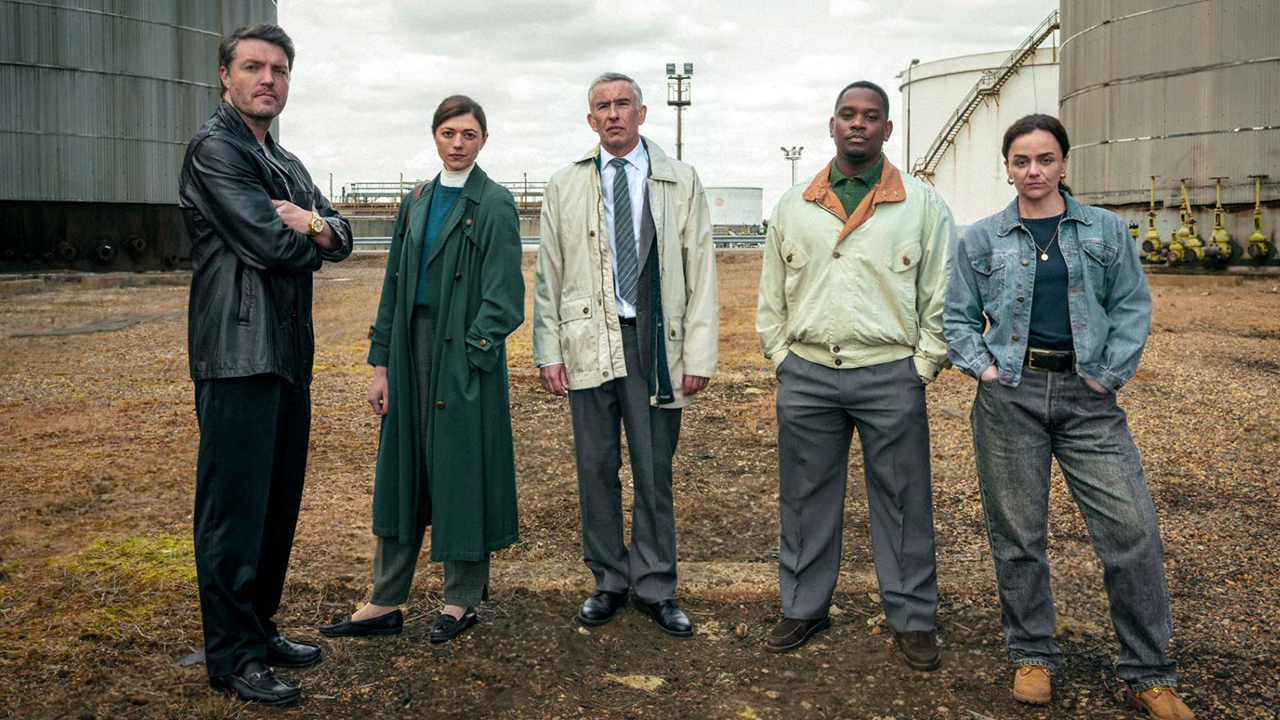
The visual and aesthetic direction of Legends was a key consideration for director Brady Hood, who was determined to avoid the pitfalls of stereotypical historical drama. Instead of a nostalgic, sepia-toned rendition of the 1990s, Hood aimed for an immersive and immediate experience, one that would convey the raw energy and danger of the era. "I didn’t want to look back at the ‘90s through a sepia lens," Hood explained. "From what I recall of the ‘90s, it was vibrant and exciting; tracksuits and pills and dance music. I wanted to capture that exuberant nature… costumes that were almost ugly, but kind of cool." This commitment to a "cinematic naturalism" ensures that the period setting feels authentic and alive, rather than a mere historical backdrop.
The production’s reliance on practical locations was integral to achieving this sense of realism. Hood believed that shooting in real-world environments would heighten the show’s authenticity and tension. "There’s something very powerful in the fact that the bakers around the corner may have been a drug den round the back, without us knowing," he posited. "It was all kind of hidden within the world we lived in, and that’s what makes it more dangerous and more tense. It’s right in the middle of the city or in the middle of the town." This approach grounds the extraordinary events in the familiar, making the infiltration feel more insidious and pervasive.
To maintain the high-octane tension inherent in undercover work, Hood and his director of photography adopted a dynamic camera style. "We never had the camera in the room before they entered; it goes in with them, so we feel the tension of the moment, as they’re stepping into the lion’s den, playing their legends," Hood elaborated. This technique immerses the viewer directly into the characters’ experiences, mirroring their constant state of heightened alert. The camera movement reinforces the narrative pace: "The characters don’t get a break; when you’re infiltrating, you don’t get to step back and slow down." This visual language is designed to keep the audience on the edge of their seats, experiencing the unrelenting pressure alongside the undercover team.
A Timeless Narrative: Purpose and Peril
Beyond the thrilling premise and period detail, Legends ultimately delves into universal themes of purpose, identity, and the extraordinary feats of ordinary people. As Hood beautifully summarized, "It is slightly unbelievable, that five customs officers who were very much under-resourced and under-prepared infiltrated the biggest drug gangs in the UK. I love that the five protagonists who are vessels into this world are like you and I. They’re ordinary people, put into extraordinary circumstances." This core message resonates deeply, highlighting the human capacity for courage and sacrifice in the face of daunting challenges.
The series serves as a powerful reminder of the hidden battles fought by law enforcement, often with little recognition, against formidable criminal organizations. It offers a glimpse into the complex ethical landscapes of undercover work, where moral lines are frequently blurred, and the psychological toll can be immense. For audiences, Legends is not just a crime drama; it is a historical reflection on a significant period in Britain’s fight against drugs, a character study of individuals pushed to their limits, and a testament to the often-unseen heroes who risked everything for a cause they believed in.
The implications of such true stories being brought to the screen are significant. They not only entertain but also educate, providing valuable historical context and fostering a deeper understanding of the complexities of law enforcement and the criminal justice system. The series is poised to spark conversations about the efficacy of different policing methods, the lasting impact of drug epidemics, and the personal sacrifices made by those on the front lines. As Legends prepares for its global debut, it stands as a compelling narrative that promises to captivate audiences with its blend of historical accuracy, psychological depth, and high-stakes drama. It is a story of an era, a mission, and the individuals who became legends in their own right.