

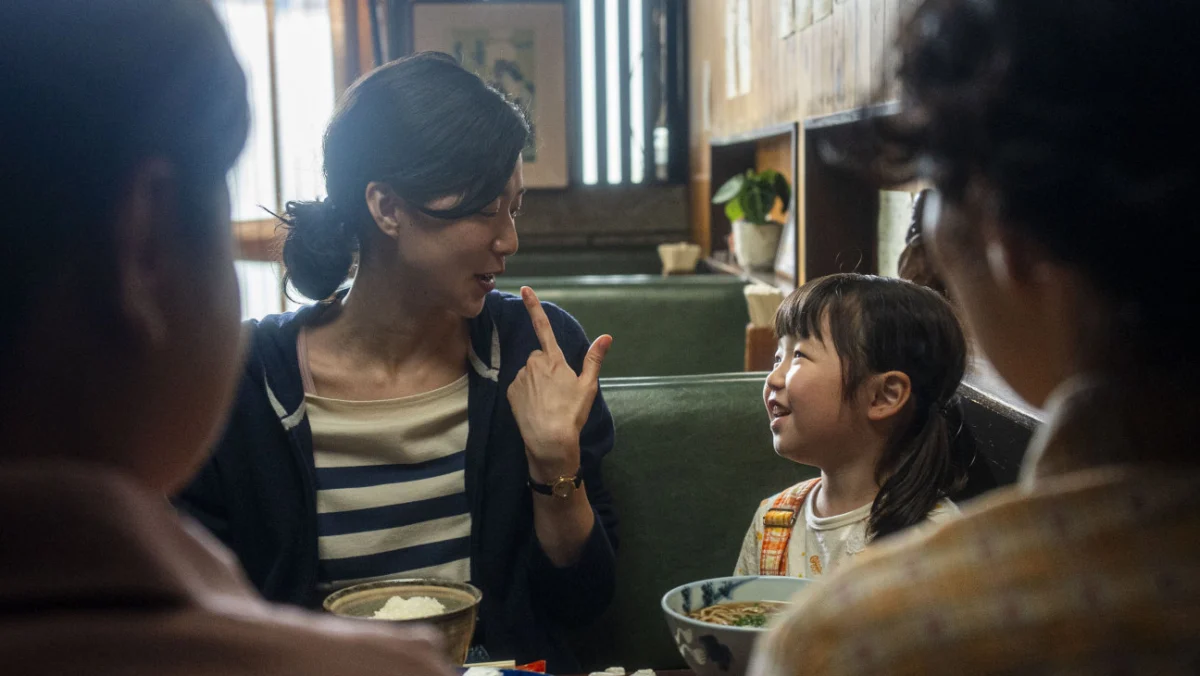
Udine, Italy – The 28th edition of the Far East Film Festival (FEFF), a prominent European gateway to Asian cinema, concluded on Friday night in the northern Italian city of Udine, bestowing its most coveted audience accolade, the Golden Mulberry, upon Kimura Taichi’s poignant Japanese drama, Fujiko. The festival, which ran from April 25 to May 3, 2026, drew a record number of attendees and showcased the remarkable diversity and artistic vitality emanating from Asia’s thriving film industries. The awards ceremony marked the culmination of nine days of immersive cinematic experiences, critical discussions, and cultural exchange, solidifying FEFF’s reputation as a vital platform for Eastern filmmaking in the West.
A Golden Triumph for Fujiko: Reflecting Japan’s Social Shifts
Fujiko, Kimura Taichi’s sophomore feature, captivated the hearts of the Udine audience with its delicate yet powerful narrative. Set against the backdrop of Japan in the 1970s and 1980s, the film masterfully navigates the complexities of a middle-aged single mother’s journey as she strives for independence and self-actualization within a society grappling with the nascent, and often challenging, concept of women’s liberation. The "tender" designation, often associated with Kimura’s work, underscores the film’s empathetic approach to its characters and their struggles, resonating deeply with contemporary audiences still confronting similar themes of gender equality and personal freedom.
The film’s success at FEFF is a testament to its universal appeal, despite its specific historical and cultural setting. The period of the 1970s and 1980s in Japan was a time of significant social evolution, where traditional gender roles were slowly being questioned amidst rapid economic growth and increasing Western influence. Fujiko offers a nuanced portrayal of this era, highlighting the quiet resilience required by women to forge their own paths in a patriarchal society. The film’s ensemble cast delivers compelling performances, with Yuki Katayama, Lily Franky, Tsuyoshi Ujiki, Keiko Takeshita, Kayoko Kishimoto, and Issey Ogata bringing the story to life with remarkable depth and authenticity. Lily Franky, a celebrated figure in Japanese cinema, particularly known for his roles in films like Shoplifters, adds considerable gravitas to the cast, while Yuki Katayama’s central performance as the eponymous Fujiko is widely praised for its nuanced depiction of strength and vulnerability.
Beyond its audience appeal, Fujiko also earned critical recognition, sharing FEFF’s prestigious Black Dragon critics prize with the hard-hitting South Korean documentary, The Seoul Guardians. This dual recognition underscores the film’s artistic merit and its ability to engage both the emotional and intellectual faculties of its viewers, prompting reflection on historical struggles that continue to echo in modern society. For director Kimura Taichi, this award marks a significant milestone in his burgeoning career, suggesting a promising trajectory for a filmmaker adept at crafting emotionally resonant and socially relevant narratives. His ability to fuse the intimate personal story with broader societal currents is a hallmark that critics have begun to identify as his signature.
The Roar of Reality: The Seoul Guardians‘ Powerful Documentary Impact
Claiming the Silver Mulberry, FEFF’s second most coveted audience award, was the searing South Korean documentary, The Seoul Guardians. Directed by the collaborative trio of Kim Jong-woo, Kim Shin-wan, and Cho Chul-young, the film plunges viewers into the surreal and tumultuous events of December 3, 2024. On this fateful day, the streets of Seoul erupted in mass protests following the stunning declaration of martial law by the embattled President Yoon Suk Yeol. The documentary serves as a powerful, immersive chronicle of this pivotal moment in South Korean history, capturing the raw emotion, collective resolve, and unexpected uplift that emerged amidst profound political crisis.
The Seoul Guardians has garnered widespread critical acclaim for its unflinching and immersive retelling of one of the most bizarre yet inspiring episodes in recent South Korean memory. The film’s directors employed a combination of on-the-ground footage, citizen journalism, and interviews to reconstruct the timeline and emotional landscape of the protests, offering an intimate perspective on the public’s immediate reaction to the unprecedented governmental decree. The documentary’s strength lies in its ability to transport the audience directly into the heart of the protests, making the historical events feel immediate and profoundly personal. Critics lauded its journalistic integrity and its success in documenting a critical moment of democratic resistance, highlighting the power of collective action in the face of authoritarian measures. The film not only captures the gravity of the situation but also celebrates the spirit of resilience and unity that defined the public’s response.
The political backdrop to The Seoul Guardians is crucial to understanding its resonance. President Yoon Suk Yeol, who assumed office in 2022, had faced increasing public discontent and political challenges leading up to the martial law declaration. Issues such as economic stagnation, perceived erosion of democratic norms, and various social policies had fueled widespread disillusionment, creating a volatile political climate. The documentary serves as an important historical document, providing crucial context to the political tensions that had been simmering for months, ultimately culminating in the dramatic events of December 3, 2024. Its shared Black Dragon critics prize with Fujiko underscores the festival’s commitment to recognizing both the crafted narratives of fiction and the urgent, unvarnished truths of documentary filmmaking. Furthermore, The Seoul Guardians received a special mention for the White Mulberry prize, awarded for the best debut film, further cementing its status as a significant new voice in documentary cinema.
A Pantheon of Talent: Lifetime and Outstanding Achievement Awards
Beyond the competitive categories, FEFF also paid homage to cinematic legends who have indelibly shaped Asian and global cinema. The Golden Mulberry Award for Lifetime Achievement was jointly presented to two titans of the industry: legendary Japanese actor Koji Yakusho and the hugely influential Hong Kong filmmaker and martial arts choreographer Yuen Woo-ping.
Koji Yakusho’s career spans over four decades, during which he has become one of Japan’s most revered and versatile actors. Known for his captivating performances in films such as Shall We Dance?, Babel, and the critically acclaimed Perfect Days, Yakusho possesses an extraordinary range, effortlessly transitioning between intense dramatic roles, comedic turns, and stoic portrayals. His ability to convey profound emotion with subtle gestures has earned him international recognition and numerous awards, making him a true icon of contemporary Japanese cinema. The lifetime achievement award is a fitting tribute to his enduring legacy and consistent excellence.
Yuen Woo-ping, often hailed as the "King of Kung Fu choreography," has revolutionized martial arts filmmaking with his innovative and breathtaking action sequences. His work as a director and choreographer has influenced generations of filmmakers worldwide. From his early directorial triumphs like Drunken Master (starring Jackie Chan) to his globally recognized choreography in Hollywood blockbusters such as The Matrix trilogy and Crouching Tiger, Hidden Dragon, Yuen Woo-ping has consistently pushed the boundaries of cinematic combat. His influence extends far beyond Hong Kong, establishing a global standard for martial arts cinema and earning him a place among the most innovative action directors in history.
Further celebrating excellence, Chinese actress Fan Bingbing received the Golden Mulberry for Outstanding Achievement. Fan Bingbing is a global superstar, celebrated for her charisma, striking presence, and extensive filmography. With roles in blockbusters like X-Men: Days of Future Past and numerous acclaimed Chinese productions, she has become a powerful ambassador for Chinese cinema on the international stage. Her award at FEFF recognizes not only her acting prowess but also her significant impact on the industry and her status as a cultural icon.
Diverse Voices: The Crystal Mulberry and Other Accolades
The Crystal Mulberry, FEFF’s third most coveted audience award, reflected the festival’s commitment to showcasing a broad spectrum of Asian filmmaking, being unexpectedly shared among four distinct films. This rare four-way tie underscored the high quality and varied appeal of the festival’s selections. The recipients were: Blades of the Guardians: Wind Rises in the Desert by the legendary Yuen Woo-ping, a testament to his continued directorial prowess in the martial arts genre; Chung Ji-young’s introspective South Korean drama My Name; Bui Thac Chuyen’s thought-provoking Vietnamese feature Tunnels: Sun in the Dark; and Chang Hang-jun’s compelling South Korean thriller The King’s Warden. This diverse group of winners highlighted the rich tapestry of storytelling traditions and cinematic styles present across Asia.
In other competitive categories, the jury-decided White Mulberry prize, dedicated to recognizing the best debut film, was awarded to Unidentified Murder by the Hong Kong directorial duo Kwok Ka-hei and Jack Lee. This recognition signals the emergence of promising new talent from Hong Kong cinema, a testament to the region’s continuous contribution to film. As previously noted, The Seoul Guardians received a special mention in this category, further acknowledging its impact despite its documentary format.
The Mulberry for Best Screenplay award went to Bui Thac Chuyen’s Tunnels: Sun in the Dark, indicating the film’s narrative strength and intricate writing. A special mention for best screenplay was also given to Anthony Chen’s We Are All Strangers, a Singaporean production, highlighting the exceptional literary quality present in the festival’s programming. These awards not only celebrate individual achievements but also emphasize the importance of strong narrative foundations in cinematic art.
FEFF’s Enduring Legacy and Growing Influence
The 28th Far East Film Festival marked another triumphant chapter in its history, demonstrating its growing prominence as a premier international event for Asian cinema. Founded in 1999, FEFF has, over nearly three decades, meticulously cultivated a reputation for curating an exceptional selection of films, ranging from commercial blockbusters to independent art-house productions. Its mission has always been to bridge cultural divides, introducing European audiences to the vibrant and diverse cinematic landscapes of East and Southeast Asia. Udine, a city rich in history and culture, provides an ideal backdrop for this cultural exchange, transforming into a bustling hub for filmmakers, critics, industry professionals, and cinephiles during the festival.
According to FEFF organizers, the 2026 edition was a resounding success, featuring a robust program of 75 films. This extensive lineup included an impressive eight world premieres, 18 international premieres, 21 European premieres, and 20 Italian premieres, showcasing fresh and compelling narratives from 12 countries. Such a high number of premieres underscores FEFF’s significant role in launching new works onto the global stage, providing crucial exposure for emerging talents and established masters alike. The festival reported a notable uptick in visitors compared to the previous year, with approximately 70,000 people attending the various screenings, masterclasses, and related events. This increased attendance figure is a clear indicator of the burgeoning interest in Asian cinema across Europe and the festival’s continued success in attracting a broad and engaged audience.
Sabrina Baracetti, President of FEFF, encapsulated the spirit of the festival in her closing remarks. "We had superstars of Asian cinema and we had blockbusters. We had films that celebrate the diversity of talent the region continues to produce, and we had full houses all festival long," Baracetti stated. "Tonight’s winners once again reflect the strength of Asian cinema, and our dedication to celebrating and promoting these filmmakers will continue." Her comments highlight the festival’s dual commitment to showcasing both critically acclaimed artistry and commercially successful films, ensuring a comprehensive representation of Asian film culture. The vibrant energy and packed screenings throughout the festival served as a powerful affirmation of the universal appeal of these stories and the talent behind them.
Looking Ahead: The 29th Edition and Hong Kong Focus
As the curtains fell on the 28th edition, organizers wasted no time in looking to the future, announcing the dates for the 29th Far East Film Festival, which will take place from April 23 to May 1, 2027. In a highly anticipated announcement, it was revealed that the country in focus for the next edition will be Hong Kong. This special emphasis promises a deep dive into the rich and dynamic cinematic history of Hong Kong, a region celebrated for its unique blend of martial arts epics, gritty crime thrillers, romantic melodramas, and groundbreaking independent cinema.
The choice of Hong Kong as the country in focus is particularly significant. Hong Kong cinema has long held a revered status globally, influencing filmmakers from Hollywood to Europe with its distinctive style and innovative storytelling. From the golden age of the 1980s and 90s, featuring iconic figures like Wong Kar-wai, John Woo, and Stephen Chow, to its contemporary landscape grappling with new political and social realities, Hong Kong continues to produce compelling and culturally resonant films. The 29th FEFF is expected to feature a comprehensive retrospective alongside new releases, providing audiences with a nuanced understanding of Hong Kong’s past glories and its evolving cinematic identity. This focus will undoubtedly generate immense excitement among cinephiles and industry professionals, offering a unique opportunity to explore the enduring legacy and future directions of this influential film culture.
Broader Implications and Cultural Impact
The success of the 28th Far East Film Festival, particularly the strong showing of films like Fujiko and The Seoul Guardians, underscores the growing global appetite for diverse narratives and perspectives. FEFF plays a critical role in fostering cross-cultural understanding, presenting films that not only entertain but also provoke thought and spark dialogue on universal themes. The festival’s ability to attract such a large and diverse audience speaks volumes about the increasing accessibility and appeal of Asian cinema beyond its traditional markets.
The awards, from the audience-driven Golden and Silver Mulberries to the critics’ Black Dragon and the White Mulberry for debut films, reflect a robust and discerning appreciation for cinematic excellence in all its forms. The recognition of both a tender Japanese drama exploring historical social change and a powerful South Korean documentary capturing contemporary political upheaval highlights the breadth of storytelling that Asian filmmakers are bringing to the world. These films serve as cultural mirrors, reflecting the social, political, and historical currents of their respective nations, while simultaneously offering universal insights into the human condition.
Moreover, the lifetime achievement awards to Koji Yakusho and Yuen Woo-ping, alongside the outstanding achievement award for Fan Bingbing, reinforce the profound and lasting impact that Asian artists have had on the global film landscape. Their careers represent not just individual accomplishments but also the collective journey of Asian cinema to achieve international recognition and influence. As FEFF looks towards its 29th edition with a focus on Hong Kong, it continues its vital mission of championing Asian storytelling, ensuring that these powerful voices resonate far beyond their geographical origins, fostering a deeper appreciation for the rich tapestry of world cinema. The festival remains a beacon for cultural exchange, an annual celebration where East meets West through the universal language of film.