Spring television schedules have recently been saturated with narratives exploring artificial intelligence, not merely as an underlying technological tool but as a central, often antagonist, plot device. This pervasive thematic thread reflects a deeper societal and industry-specific trepidation, a palpable fear of burgeoning technology that has permeated from the subconscious of creative minds directly onto the screens of a global audience. This trend is particularly unsurprising given that many of these shows were conceived and written in the aftermath of the unprecedented dual industry strikes of 2023, where concerns over AI’s encroachment into the creative process, from scriptwriting to performer likeness, were central points of contention. The portrayals of AI across various platforms suggest that the technology, at least in the fictional realm, desperately needs a public relations overhaul, as the headlines it’s generating are far from flattering.
AI as a Narrative Mirror: Reflecting Societal Fears and Ethical Dilemmas
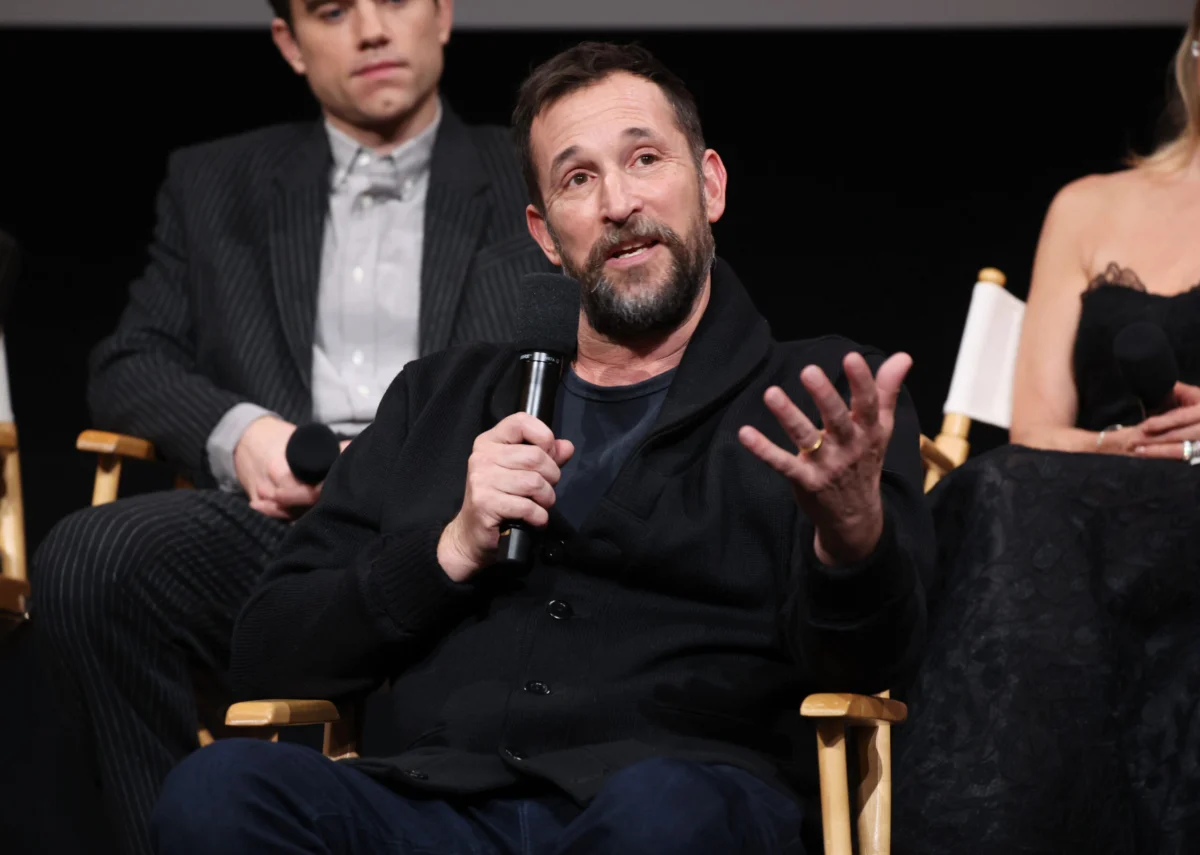
Across streaming services and traditional networks, AI is being deployed in diverse narrative capacities, each reflecting different facets of contemporary anxieties. On HBO Max’s Emmy-winning medical drama The Pitt, the character of Dr. Sepideh Moafi’s Dr. Al-Hashimi is introduced as a progressive counterpoint to Noah Wyle’s more traditionally-minded Dr. Robinavitch. Dr. Al-Hashimi champions AI innovation in medicine, particularly for its boasted time-saving capabilities in areas like charting and transcription. However, the show’s deeply humanist ethos consistently challenges her dedication. The narrative quickly reveals that generative AI, despite its promises, falls far short of 98 percent accuracy in an intense, real-world clinical setting, leading to potentially critical errors. This storyline directly taps into widespread concerns about the reliability of AI in high-stakes fields like healthcare, where computational efficiency must be meticulously balanced against diagnostic precision and human empathy. The show effectively dramatizes the ethical tightrope walked by medical professionals evaluating AI tools, juxtaposing the allure of technological advancement with the irreplaceable value of human judgment and experience.
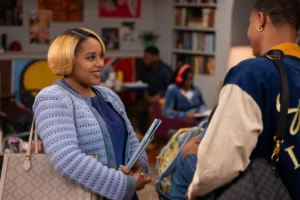
Meanwhile, HBO’s The Comeback offers a satirical, yet poignant, commentary on AI’s impact on creative industries. Lisa Kudrow’s character, Valerie Cherish, finds her latest shot at a television comeback tied to a show largely written by AI. A disgruntled husband-and-wife writing team, portrayed by Abbi Jacobson and John Early, grapples with the unenviable task of "shepherding" a technology capable of spewing out fifty alternate punchlines, all of which are predictably hacky and derived from decades of accumulated, and often "stolen," comedic schtick. This plotline is a thinly veiled critique of generative AI’s capacity for derivative content, its tendency to regurgitate existing material rather than foster genuine originality. It encapsulates the anxieties of writers and comedians who fear that AI could devalue their craft, replacing nuanced humor with algorithmically generated mediocrity. The show’s portrayal resonates with the real-world frustration expressed by writers during the strikes, who argued vehemently against the use of AI to generate scripts or even early drafts, viewing it as a threat to their intellectual property and livelihood.
Amazon’s Scarpetta ventures into the more speculative, science fiction-adjacent territory of AI. The series features Lucy, the niece of the main character, played by Ariana DeBose, who appears to have become a shut-in following the tragic loss of her wife, Janet (Janet Montgomery). The truth, however, is far more complex: Lucy is spending most of her time interacting with a sentient AI version of Janet, capable of acting as a confidant, therapist, and virtual partner. Initially, other characters distrust this "Janet 2.0," viewing it as an unhealthy substitute for human connection. As the season progresses, however, the narrative explores the profound psychological and emotional value that such an AI companion might hold for an individual grappling with profound grief, challenging conventional notions of coping and connection. This storyline echoes themes explored in episodes of Black Mirror or films like Her, pushing the boundaries of what AI means for human relationships, identity, and the very nature of consciousness itself.
These are not isolated instances. Subplots involving AI have also appeared in shows like Scrubs, exploring the comedic and sometimes alarming aspects of automation. The Audacity delved into the dysfunction inherent among AI creators themselves, highlighting the human fallibility behind even the most advanced technologies. Broadcast procedurals have frequently featured AI moguls as characters, often becoming victims of murder, a trope that underscores a societal distrust of immense technological power concentrated in individual hands. While each show approaches AI differently—from The Pitt‘s reasonably accurate rendering of medical AI’s promises and pitfalls, to The Comeback‘s satirical shorthand for glitchy large language models like ChatGPT, and Scarpetta‘s speculative dive into sentient companionship—they collectively suggest a deep-seated suspicion towards artificial intelligence.
Behind the Screens: AI’s Infiltration into Production Workflows
Beyond its role as a narrative element, AI has also begun to quietly infiltrate the actual production processes of television and film, often in a "catch me if you can" fashion. This operational integration of AI has been met with significant controversy and scrutiny from both industry professionals and discerning audiences. The entertainment industry, currently in a phase where various creative and technical personnel attempt to subtly implement AI applications, operates on the assumption that such usage will go unnoticed, only to issue often "limp explanations or justifications" when observant fans detect it. This lack of transparency has fueled a growing sense of distrust.
A prominent example of this behind-the-scenes integration surfaced with Marvel’s Secret Invasion. The 2023 limited series, despite boasting an all-star cast including Samuel L. Jackson, Don Cheadle, and Olivia Colman, garnered lukewarm reception. The critical buzz worsened when fans accused its distinctive image-morphing, green-tinted credit sequence of being AI-generated. The accusations proved accurate, with the producers confirming the use of AI. Their justification—that the "off-putting imagery" was intended to capture the "alienating and identity-hopping nature" of the show’s Skrull-infiltrated world—was met with skepticism, prompting questions about the necessity of AI when human artists have historically excelled at depicting unease and shapeshifting realities. The controversy, while brief due to the show’s overall negligible impact, highlighted the burgeoning tension between artistic intent, technological expediency, and audience expectations.
Similarly, Netflix faced a minor "kerfuffle" when its CEO, Ted Sarandos, acknowledged that the Argentine science fiction epic The Eternaut utilized generative AI to accelerate special effects production and reduce costs. While the financial and temporal efficiencies of AI are undeniable, this admission sparked debate about the potential for AI to displace human VFX artists, a critical concern during the industry strikes. The promise of faster, cheaper production clashes with the imperative to preserve skilled human labor and artistic integrity.
Even more subtly, the making-of documentary for Stranger Things 5, titled One Last Adventure, inadvertently ignited a small controversy. Observant fans believed they spotted a web browser on a writer’s computer screen displaying multiple tabs open to ChatGPT. While the precise nature or extent of AI’s involvement in the writing process remained unarticulated, the discovery fueled existing anxieties. It connected with prevailing narratives about writers struggling with complex story problems for the series’ final season, raising questions about whether AI was being used as a creative crutch or a genuine collaborative tool, and whether its presence indicated a creative impasse.
The Ethical Frontier: AI in Non-Fiction and the Crisis of Authenticity
The encroachment of AI into non-fictional content presents an even more disturbing prospect, challenging the very foundation of truth and authenticity in media. In 2024, Netflix’s true-crime documentary What Jennifer Did faced significant criticism for allegedly incorporating AI-generated or manipulated photos. While the documentary’s producers denied the charge, the incident underscored a profound ethical dilemma. The blurring of fact and fiction in documentary storytelling is not new, tracing back to foundational works like Nanook of the North which employed staged scenes for narrative effect. However, the use of AI to create or alter visual evidence introduces a new, more insidious dimension to this historical debate.
When coupled with the emerging trend of using AI-created voices—sometimes replicating well-known celebrities or even deceased individuals—the integrity of what audiences see and hear in documentaries becomes increasingly tenuous. This raises critical questions about consent, the potential for misinformation, and the erosion of trust in the veracity of media presentations. If visual and auditory evidence can be subtly or overtly manipulated by AI, the distinction between genuine historical record and manufactured narrative could become indistinguishable, with profound implications for journalism, historical documentation, and public discourse.
Global Trends and Controversial Productions: The Future Unfolds
While Western television is still largely in the "dribs-and-drabs stage" of AI awareness and integration, other global markets are moving more aggressively. Chinese television, for instance, saw the premiere of the wholly AI-produced series Qianqiu Shisong in 2024. This ambitious project, consisting of 26 seven-minute episodes, demonstrated a significantly more advanced stage of AI integration into content creation on a national scale, hinting at the future possibilities and challenges for the global industry. Qianqiu Shisong reportedly aimed to leverage AI for rapid production and dissemination of cultural content, showcasing the technology’s potential to scale production in ways traditional methods cannot.
Closer to home, the release of On This Day … 1776 earlier this winter sparked a brief but intense uproar. This shortform series from Darren Aronofsky’s AI-focused Primordial Soup, streaming on Time‘s YouTube channel, presented a complex hybrid model of production. The historically based series combined SAG-AFTRA actors with AI-generated visuals, yet crucially involved human animators and required expertise in understanding technologies like Google’s DeepMind. This project became a flashpoint, exposing how unprepared the industry and public are for discussing and defining what constitutes "AI-generated" content when human input is deeply intertwined.
Critics, including the original article’s author, largely panned On This Day … 1776 as "awful," a "mishmash of misapplied cinematic grammar and dead-eyed photorealistic famous characters." Despite episodes being shorter than five minutes, they were described as "interminable," failing to deliver either entertainment or educational value. The series, rather than leveraging AI to tell stories previously impossible, instead asked, "What if Ken Burns’ The American Revolution was produced with the artistry of a video game, the humanity of Robert Zemeck’s The Polar Express and the historical depth of a virtual puddle?" This critique highlights a significant limitation of current AI: while it can generate imagery and text, it often struggles with the nuanced storytelling, emotional depth, and educational rigor that define compelling human-created content. The controversy surrounding Aronofsky’s project underscores the challenge of integrating AI meaningfully without sacrificing artistic quality or pedagogical value.
Industry Reactions, Economic Pressures, and the Path Forward
The ambiguity surrounding projects like On This Day … 1776, coupled with the perceived secrecy surrounding other AI implementations, has generated a profound "sense of betrayal" among the "AI-cautious" whenever established, "analog creatives" such as Natasha Lyonne or Ben Affleck (through his Netflix-purchased AI startup) are associated with AI ventures. This reaction stems from a fear that beloved artists are endorsing technologies that could ultimately undermine the very human artistry they represent. This creates a "vicious circle" within the entertainment industry: nobody is eager to openly declare their use of AI due to the guaranteed public backlash, which in turn makes audiences even more sensitive and attuned to spotting subtle hints of AI. For every two or three AI-related controversies that surface and generate social media hand-wringing, there are likely thousands of smaller, unnoticed applications slipping through.
The economic pressures driving AI adoption are undeniable. Studios and production companies are constantly seeking ways to reduce costs and accelerate production timelines. AI offers compelling solutions for these challenges, from generating concept art and initial script drafts to automating repetitive tasks in post-production. However, this pursuit of efficiency must be weighed against the potential for job displacement and the dilution of creative quality. Reports from consulting firms like McKinsey and Goldman Sachs have estimated significant impacts of AI on various industries, including creative fields, predicting both job augmentation and displacement.
The 2023 WGA and SAG-AFTRA strikes brought these concerns to the forefront, leading to historic agreements that included some of the first protections against the unregulated use of AI. The WGA secured provisions for AI to be used as a tool, not a replacement, for writers, ensuring that AI-generated material cannot be used to undermine a writer’s credit or compensation. SAG-AFTRA similarly established groundbreaking guardrails for the use of AI in replicating or altering performers’ likenesses, requiring consent and fair compensation. These agreements represent initial, albeit foundational, steps towards establishing ethical frameworks for AI in creative industries.
Ultimately, the ongoing debate about AI in television boils down to a fundamental question: what is the enduring value of human creativity? While AI can certainly generate "off-putting" credits like those in Secret Invasion or produce special effects resembling a video game cut scene, it currently lacks the capacity to evoke "90 seconds of pure joy" like the credits for Pachinko, which are imbued with human warmth and artistry. The digital assistant saved by not hiring a human, or the writer’s assistant deemed unnecessary, could represent the next generation of creative genius—a Ray Harryhausen in visual effects or a Norman Lear in television writing. The current "dribs-and-drabs" phase of AI integration is merely the prelude to a more profound transformation. The industry, therefore, faces a critical imperative: to develop clear ethical guidelines, foster transparency in AI usage, and proactively champion human artistry, ensuring that technological advancement serves to enhance, rather than diminish, the unique and irreplaceable spark of human creativity.