

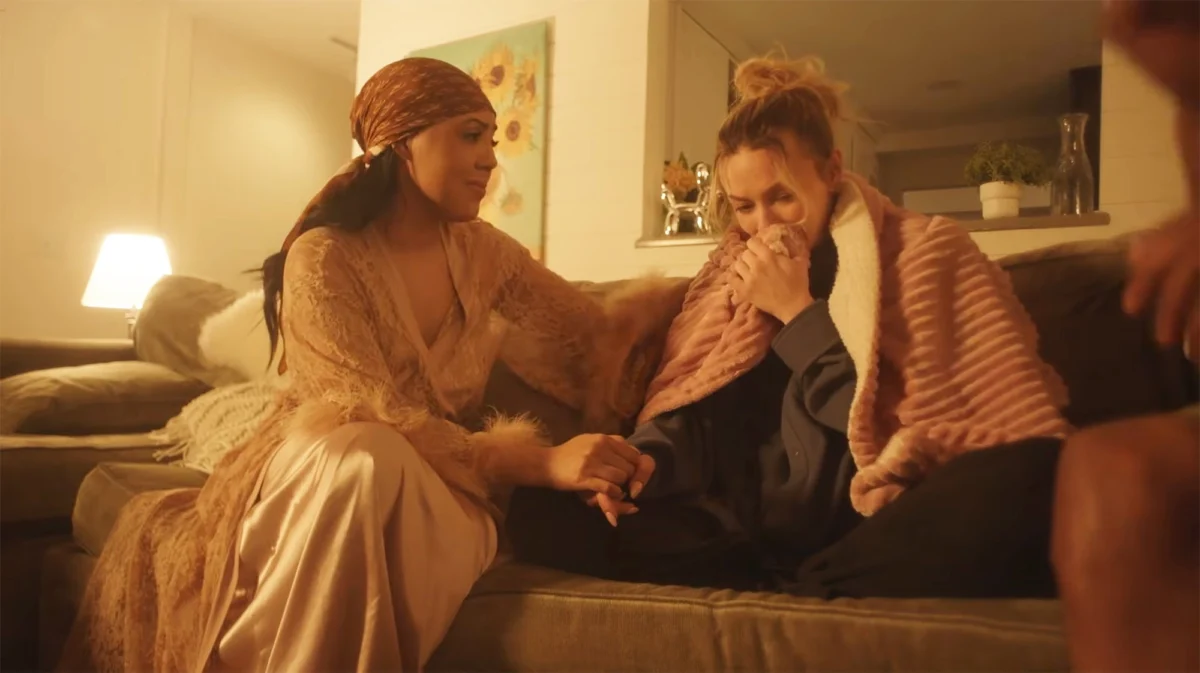
The burgeoning landscape of streaming content has seen a significant expansion in original productions, with platforms increasingly investing in genre-specific narratives designed to capture niche audiences. One such anticipated release is "Give Me Back My Baby," a psychological thriller from filmmaker Jhayla Mosley, for which Tubi released its official trailer on April 29, 2026. The film, which promises a chilling exploration of trust betrayed and obsession unleashed within the fraught context of a surrogacy arrangement, is slated for a direct-to-streaming debut on the free, ad-supported service Tubi on May 8, 2026. This strategic release underscores Tubi’s continued commitment to delivering compelling, high-tension thrillers to its rapidly growing subscriber base.
The newly unveiled trailer offers a disconcerting glimpse into the film’s central conflict: a seemingly idyllic surrogacy arrangement that quickly devolves into a terrifying ordeal. The narrative pivots around a couple who, in their earnest desire for a child, unknowingly invite a dark and possessive obsession into their lives through their chosen surrogate. The promotional material, including a striking poster featuring a woman with an intense, almost menacing gaze, hints at the psychological battle that will unfold. The trailer opens with an ominous question, "What makes her trustworthy?", immediately establishing a foundation of suspense and doubt that permeates the entire preview. This question is not merely rhetorical but serves as the narrative’s core, challenging both the characters and the audience to discern the true intentions behind seemingly benevolent actions. The film promises to tap into primal fears surrounding family, betrayal, and the profound vulnerabilities inherent in the surrogacy process, albeit in a dramatized, thriller context.
Thematic Depth: Exploring the Dark Side of Surrogacy
"Give Me Back My Baby" delves into a subgenre of thrillers that exploits the inherent emotional and physical complexities of surrogacy. While surrogacy is a legitimate and often joyous path to parenthood for many, the fictionalized portrayal in thrillers frequently exaggerates the potential for emotional manipulation, legal disputes, and psychological instability. This film appears to lean heavily into the latter, positioning the surrogate not as a benevolent figure, but as a source of malevolent intent and escalating obsession. The trailer suggests a classic "stranger in the house" or "uninvited guest" trope, but with a uniquely intimate twist given the surrogate’s biological connection to the unborn child.
The narrative’s power lies in its ability to tap into universal anxieties about trust, particularly when it comes to the most sacred aspects of life – family and childbirth. The decision to engage a surrogate involves an immense leap of faith, requiring prospective parents to place their deepest hopes and vulnerabilities in the hands of another. When this trust is violated, especially through malicious intent, the psychological impact can be devastating. Films in this vein often explore themes of maternal instinct, the ethical boundaries of reproductive technologies, and the dark corners of human possessiveness. "Give Me Back My Baby" is poised to capitalize on these anxieties, crafting a scenario where the promise of new life is overshadowed by a looming threat, making the stakes incredibly personal and profoundly terrifying. The film aims to not only entertain but also to provoke thought about the emotional landscape surrounding modern family building.
Jhayla Mosley’s Vision: A Director’s Ascendance in Genre Filmmaking
At the helm of "Give Me Back My Baby" is Jhayla Mosley, an emerging filmmaker known for her distinctive approach to dramatic and suspenseful narratives. Mosley’s creative journey as both an actress and a director provides her with a unique perspective on character development and emotional resonance, often allowing her to craft narratives that feel both authentic and intensely dramatic. Her previous directorial credits include "The Letter," "Surprise 2," "The Deceitful Wife 1 & 2," and "The Midas Code." This filmography suggests a consistent interest in domestic dramas, relationship complexities, and narratives imbued with an undercurrent of tension or moral ambiguity.

Mosley’s earlier works often explore themes of betrayal, deception, and the hidden motives that drive human behavior. "The Deceitful Wife" series, for instance, implies a focus on marital discord and the unraveling of trust within intimate relationships, a thematic thread that aligns closely with the premise of "Give Me Back My Baby." Her experience with crafting multi-part narratives or films with escalating stakes likely informs her ability to build suspense and maintain audience engagement over the course of a feature film. For "Give Me Back My Baby," Mosley not only directs but also penned the screenplay, working from a story conceived by Alison Rodriguez Jones. This dual role as writer and director grants her comprehensive creative control, ensuring that her specific vision for the thriller is fully realized, from script to screen. The collaboration with Alison Rodriguez Jones on the story further suggests a robust narrative foundation, built on a well-conceived premise before its development into a full screenplay.
A Look at the Ensemble Cast
The film features a diverse cast, including Bella Chadwick, Robyn Rose, Emory Lawrence, MW Carol, Qunicka Keaton, Hala Mourani, Leslie Mechigian, and Kamal Smith. While specific character roles for each actor have not been extensively detailed, the ensemble suggests a rich interplay of personalities crucial for a psychological thriller. In such narratives, the effectiveness of the suspense often hinges on the audience’s ability to empathize with the protagonists and to feel the mounting tension through the performances of the entire cast.
Bella Chadwick and Robyn Rose are likely to portray the central couple, grappling with the emotional turmoil and escalating danger. Their performances would need to convey both the initial hope and the subsequent terror as their dream of parenthood turns into a nightmare. Emory Lawrence, given the nature of the thriller, might embody the role of the increasingly erratic or menacing surrogate, a character requiring a delicate balance between outward normalcy and underlying instability. The success of such a role often lies in the actor’s ability to create a character who is initially perceived as sympathetic or trustworthy, only to reveal layers of darkness and obsession. The supporting cast members, including MW Carol, Qunicka Keaton, Hala Mourani, Leslie Mechigian, and Kamal Smith, will undoubtedly round out the narrative, potentially portraying friends, family, legal counsel, or other figures who become entangled in the couple’s predicament. The chemistry and tension among these actors will be paramount in delivering the film’s psychological punch.
Tubi’s Strategic Play in the AVOD Market
The decision by Tubi to release "Give Me Back My Baby" as an original production highlights the platform’s strategic positioning within the highly competitive streaming market. Tubi, a FOX Entertainment company, operates as a free, ad-supported video-on-demand (AVOD) service, distinguishing itself from subscription-based models (SVOD) like Netflix or Max. This model relies on advertising revenue, making content that attracts and retains viewers for extended periods particularly valuable. Tubi has experienced significant growth in recent years, largely due to its extensive library of licensed content and an increasing investment in original programming that often caters to specific genre preferences.
"Give Me Back My Baby" fits perfectly within Tubi’s established content strategy. The platform has found considerable success with genre films, particularly thrillers, horror, and dramas that often feature compelling, high-stakes narratives. These types of films are often cost-effective to produce compared to large-scale blockbusters, yet they consistently draw engaged audiences. Industry analysts often point to the high viewership retention rates for such genre content on AVOD platforms, as viewers are willing to sit through advertisements for compelling narratives that align with their specific tastes. By offering original films like "Give Me Back My Baby," Tubi aims to differentiate its content offering, provide unique value to its users, and further solidify its position as a go-to destination for accessible, high-quality genre entertainment. This move also allows Tubi to cultivate relationships with emerging filmmakers like Jhayla Mosley, fostering a diverse pipeline of content creators. The rapid turnaround from trailer release (April 29) to film premiere (May 8) is also characteristic of AVOD platforms, which often prioritize immediate content availability to capitalize on promotional buzz and user engagement.
The Enduring Appeal of Psychological Thrillers
The psychological thriller genre continues to be a perennial favorite among audiences, and "Give Me Back My Baby" is poised to contribute to its enduring appeal. The genre thrives on suspense, tension, and a deep dive into the human psyche, often exploring themes of paranoia, betrayal, and hidden dangers lurking beneath seemingly normal surfaces. What makes these stories so compelling is their ability to tap into universal fears: the loss of control, the vulnerability of trusting others, and the terrifying prospect of danger within one’s own home or family unit.

Films centered on domestic conflict, particularly those involving children or the desire for them, resonate profoundly because they touch upon fundamental aspects of human experience. The stakes are inherently high, as the threat often targets the very core of a character’s existence or happiness. "Give Me Back My Baby" harnesses this power by presenting a scenario where the very act of creating a family becomes a source of terror. The effectiveness of such thrillers often lies not in overt gore or jump scares, but in the gradual, insidious build-up of dread, the unsettling feeling that something is deeply wrong, and the constant questioning of reality and motives. Audiences are drawn to the puzzle-like nature of these narratives, attempting to predict twists and uncover the antagonist’s true intentions alongside the protagonists. The anticipation surrounding "Give Me Back My Baby" among genre enthusiasts will undoubtedly center on the film’s ability to deliver genuine suspense and unexpected narrative turns, a hallmark of successful domestic thrillers that leave a lasting psychological imprint.
Production and Release Chronology
The journey of "Give Me Back My Baby" from concept to screen involved a dedicated creative and production team. The film was produced by Jessica Bobe and Paris Jones, under the banners of Paris-Films and Silver Line Entertainment. These production companies are instrumental in bringing Jhayla Mosley’s vision to life, overseeing the myriad logistical and creative challenges inherent in film production. The collaboration between the director, writer, producers, and the various production entities underscores the complex, multi-faceted nature of modern filmmaking.
The chronology of its public introduction has been concise, reflecting current streaming distribution models. The official trailer was released on April 29, 2026, primarily through platforms like YouTube, serving as the initial public announcement of the film’s impending arrival. This strategic timing allows for a brief but intensive promotional window, generating buzz in the week leading up to its release. The film itself is scheduled to begin streaming on Tubi on May 8, 2026. This direct-to-streaming release without a theatrical window is common for many genre films and original productions on AVOD platforms, allowing for immediate access to a broad audience without the significant marketing and distribution costs associated with traditional cinema releases. The rapid deployment from trailer to full availability is a testament to the agility of streaming platforms and their ability to quickly respond to audience interest and market trends.
Broader Implications for Streaming Content and Filmmakers
The release of "Give Me Back My Baby" carries broader implications for the future of streaming content and for independent filmmakers. For platforms like Tubi, it signifies a continued push into original programming, not just as a means to fill content gaps, but as a core strategy to attract and retain viewers in a crowded market. As streaming services mature, the ability to offer unique, exclusive content becomes a crucial differentiator.
For filmmakers like Jhayla Mosley, AVOD platforms offer invaluable opportunities. They provide a viable distribution channel that might be more accessible than traditional theatrical releases, particularly for genre-specific films that may not fit neatly into mainstream studio slates. This democratizes filmmaking, allowing diverse voices and narratives to reach a wide audience. It also fosters a creative ecosystem where directors can hone their craft and build a loyal following without the immense pressures of box office performance. The success of films like "Give Me Back My Baby" on platforms like Tubi could further encourage investment in mid-budget, high-concept thrillers, solidifying a niche that caters to a significant, engaged demographic. This trend indicates a healthy, evolving landscape where quality storytelling, regardless of budget size, can find its audience and contribute to the rich tapestry of cinematic offerings available to viewers worldwide.
In conclusion, "Give Me Back My Baby" is positioned to be a notable entry in the psychological thriller genre for Tubi. With its compelling premise, the established directorial vision of Jhayla Mosley, and its strategic placement on a rapidly expanding AVOD platform, the film is poised to deliver a suspenseful and thought-provoking experience to audiences seeking intense domestic drama. Its release on May 8, 2026, will undoubtedly be watched closely by genre aficionados and industry observers alike, as it further illustrates the dynamic shifts in content creation and consumption in the digital age.