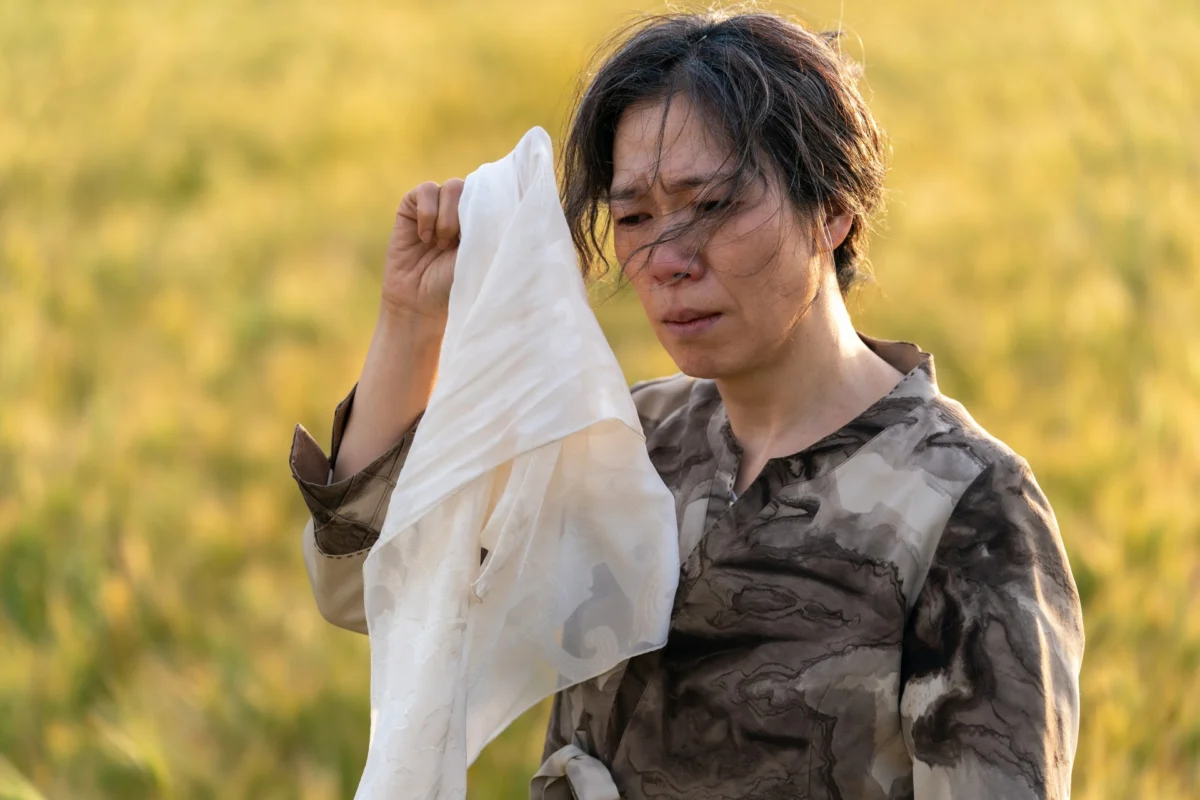
Directed by the seasoned Chung Ji-young, "My Name" has emerged as a compelling cinematic exploration of Korea’s deeply scarring modern history, a thematic thread consistently woven through the filmmaker’s distinguished career. Following acclaimed works such as "The Boys," "Black Money," and "Unbowed," this latest offering premiered in the esteemed Forum section of the Berlin International Film Festival, a testament to its artistic merit. The film is currently experiencing a robust box office run in South Korea, arriving on the heels of a notable resurgence of cinematic interest in the Jeju 4.3 Incident. This renewed focus is further exemplified by films like "Hallan," and "My Name" itself is also being showcased in Udine, indicating its international resonance.
The Genesis of Trauma: A Dual Narrative Unfolds on Jeju Island
The narrative of "My Name" is intricately set in 1998 on the picturesque yet historically burdened island of Jeju. At its core is Young-oak, an eighteen-year-old high school student grappling with profound discomfort over his name, which he perceives as distinctly feminine. This internal struggle is amplified within the hyper-masculine and rigidly hierarchical environment of his all-boys school, where such perceived vulnerability is met with hostility. The fragile social order of the school is further destabilized by the arrival of Kyung-tae, the son of a wealthy family. Kyung-tae masterfully manipulates his peers, igniting a spiral of escalating violence and power plays that ensnare the student body.
Concurrently, Young-oak’s mother, Jeong-sun, a ballet teacher, begins to experience inexplicable physical and psychological distress, particularly during the spring months. These episodes are marked by fragmented recollections and a pervasive sense of unease, as whispers of a long-repressed past start to surface under the care of her psychiatrist. The film artfully navigates these parallel narratives, demonstrating how individual struggles are deeply intertwined with collective historical trauma.
Unearthing the Past: The Jeju 4.3 Incident and its Lingering Shadows
The film’s thematic core is inextricably linked to the Jeju 4.3 Incident, a brutal period of mass killings and suppression that occurred on Jeju Island from April 3, 1948, to September 1954. This tragic event, a dark chapter in South Korean history, saw an estimated 30,000 people killed by government forces and right-wing militias. The incident was fueled by a complex interplay of post-World War II political divisions, the burgeoning Cold War, and local grievances. For decades, the truth of the massacre was suppressed by successive authoritarian regimes, leading to widespread denial and a profound sense of unresolved grief for the survivors and their families.
The resurgence of films addressing the Jeju 4.3 Incident reflects a broader societal reckoning with this suppressed history. In recent years, there has been a concerted effort to acknowledge and memorialize the victims, with official apologies and investigations shedding light on the atrocities. "My Name," by choosing this setting and thematic backdrop, contributes to this vital process of historical remembrance and healing.
A Tripartite Structure: Navigating Violence, Systemic Failure, and Repressed Memory
Director Chung Ji-young masterfully structures "My Name" across three interconnected narrative axes, each contributing to the film’s profound exploration of trauma and its enduring impact.
Axis One: The Escalation of Violence in a Boys’ School
This axis primarily focuses on Young-oak’s experience, particularly after he assumes a leadership role and Kyung-tae’s disruptive influence takes hold. Kyung-tae, akin to a nascent gang leader, fosters an environment where internal conflict and brutality become the norm, turning the group’s aggression inward. The film vividly depicts the pervasive atmosphere of bullying, coercion, and escalating physical confrontations, creating a palpable sense of angst that inexorably pushes towards widespread violence. Despite Young-oak’s inherent gentleness and well-intentioned efforts to mitigate the turmoil, he, along with the previous student leader Min-su, finds himself increasingly drawn into the vortex of violence, highlighting the systemic nature of such conflicts.
Axis Two: The Unraveling of Jeong-sun’s Trauma
Running parallel to the school narrative, this axis delves into Jeong-sun’s present-day struggles. Plagued by persistent mental distress and inexplicable anxiety, her fractured psyche is a direct consequence of deeply buried trauma. Her psychiatrist’s encouragement to confront her past becomes the catalyst for unlocking long-suppressed memories, initiating a journey toward understanding the roots of her suffering. This axis powerfully illustrates how historical atrocities can leave indelible marks on subsequent generations, manifesting in psychological wounds that span decades.
Axis Three: The Progressive Revelation of a Traumatized Past
This axis represents the film’s most accomplished aspect: the gradual unfolding of Jeong-sun’s past, moving backward from her more recent memories to her childhood. Through a series of progressive revelations, the film meticulously reconstructs the traumatic experiences that shaped her life. Chung Ji-young’s directorial acumen, coupled with Lee Gang-il’s astute editing, creates a seamless and deeply resonant connection between the past and the present. The manner in which these buried memories are unearthed and integrated into the ongoing narrative is a testament to the film’s sophisticated storytelling.
Echoes of History: Connecting Present Brutality to Past Atrocities
The film draws a potent parallel between the violence erupting within the school and the historical brutality of the Jeju 4.3 Incident. The internal conflicts among classmates, where innocent individuals become collateral damage, mirror the civil war elements of the 1948 massacre. The conflict between leftist sympathizers and anti-communist state forces during the incident finds a disturbing echo in the schoolyard rivalries and the destructive dynamics orchestrated by Kyung-tae.
The character of Kyung-tae, the instigator of this present-day violence, can be interpreted as a symbolic representation of the South Korean government and its military and police forces, which were instrumental in perpetrating the Jeju massacres. While this parallel is not explicitly stated, the narrative strongly suggests it. Furthermore, the film subtly connects Jeong-sun’s personal story to the broader implications of the Korean War and the division of the peninsula, underscoring the pervasive and long-lasting impact of these historical conflicts. The film also offers a poignant commentary on the Vietnam War and its subsequent consequences, adding another layer to its exploration of historical trauma.
Systemic Failures: The Absence of Authority and Parental Neglect
"My Name" offers a sharp critique of both the educational and parental structures within Korean society. The conspicuous absence of teachers, who appear largely oblivious to the escalating violence within the school, points to a systemic failure in safeguarding students. The presence of a single teacher who openly solicits bribes from parents in exchange for preferential treatment for their children is a particularly damning indictment of the compromised integrity of the education system.
Similarly, the film highlights the profound absence of parental figures in the lives of the young men, a recurring theme in many Korean narratives. This lack of guidance and support exacerbates the vulnerabilities of the students, leaving them susceptible to manipulation and violence. The film suggests that the societal breakdown and the inability to confront past traumas have created a vacuum that breeds further discord and suffering.
Cinematic Craftsmanship: Visual Storytelling and Emotional Resonance
While the film largely succeeds in its nuanced portrayal of trauma, there are moments, particularly within Jeong-sun’s narrative arc, where Chung Ji-young occasionally ventures into territory of overt sentimentality. The melodramatic elements become more pronounced as the film approaches its climax. However, these moments also give rise to some of the film’s most memorable scenes. The climactic wider fight sequence and the final dancing scene, which powerfully evoke the stylistic beginnings and endings of Bong Joon-ho’s "Mother," represent the apogee of the film’s artistic achievement.
Throughout these emotionally charged sequences, Kim Hyung-koo’s cinematography proves exceptionally impressive. His work contributes significantly to the film’s overall competent visual approach, particularly in his skillful differentiation and integration of the various timelines. The visual language of the film effectively underscores the psychological states of the characters and the temporal shifts, enhancing the immersive quality of the storytelling.
Performances: Anchoring the Emotional Core
The film is anchored by a series of strong performances that bring its complex characters to life. Yeom Hye-ran delivers an exceptional portrayal of Jeong-sun, embodying the internal struggle of a woman battling for her sanity while striving to maintain her role as a devoted mother. Shin Woo-bin offers a convincing performance as Young-oak, capturing the essence of a character who attempts to navigate a morally ambiguous world with inherent goodness, only to be gradually ensnared by the cycle of violence. Choi Jun-woo also delivers a solid performance as Min-su, a character who faces a similar predicament. Park Ju-bin emerges as a formidable antagonist as Kyung-tae, delivering a particularly memorable and impactful performance that etches his character into the viewer’s mind.
A Competent Synthesis: Bridging Mainstream and Independent Cinema
Despite minor criticisms regarding occasional over-dramatization and a few disconnected scenes, such as a brief glimpse into the characters’ future, "My Name" stands as a remarkably competent cinematic work. It successfully occupies a space between mainstream accessibility and independent sensibilities, maintaining a consistently high level of quality throughout its narrative trajectory. The film’s ability to weave together personal struggles with profound historical events, supported by strong performances and skilled direction, makes it a significant contribution to the ongoing dialogue surrounding South Korea’s complex past and its enduring impact on the present. The film’s commercial success in Korea and its international festival presence underscore its relevance and ability to resonate with audiences grappling with themes of memory, trauma, and historical reckoning.