



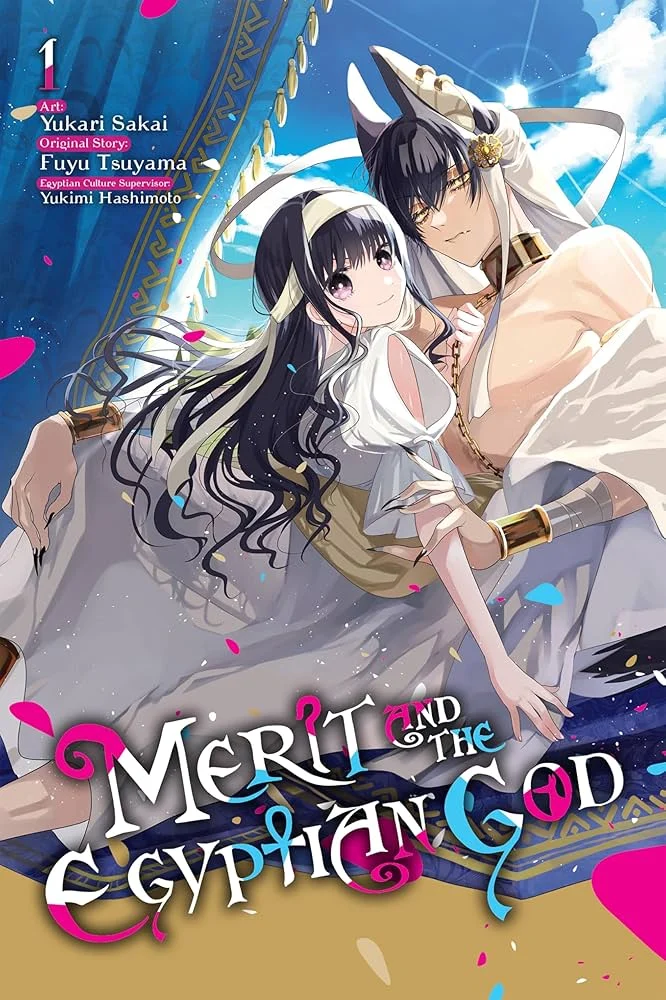
Hana to Yume, a prominent shoujo manga magazine renowned for its captivating fantasy and supernatural narratives, has recently unveiled "Merit and the Egyptian God," a compelling new series by Yukari Sakai, Fuyu Tsuyama, and Yukimi Hashimoto. This engaging title delves into the rich tapestry of Egyptian mythology, reimagining ancient deities and lore through the lens of a contemporary shoujo romance. The manga, which has garnered attention for its innovative premise and artistic execution, presents a fresh perspective on the afterlife and the complex relationships between mortals and gods.
The narrative centers on Merit, an ordinary girl who finds herself abruptly transported to the Underworld. Her disorientation is compounded by an immediate afterlife trial, a situation that tests her resilience and adaptability. In a moment of panic and attempted escape, she encounters Anubis, the jackal-headed god of the dead. However, this divine being is far from the majestic figure Merit might have anticipated. Instead, she discovers a god mired in apathy, a recluse who has largely abandoned his sacred duties. This neglect has not gone unnoticed by the pantheon, and Anubis finds himself under a curse that has bound him to a mortal form, a predicament that can only be resolved by the intervention of a living human. Recognizing Anubis as her sole path back to the realm of the living, Merit strikes a deal with the disillusioned deity. Her mission: to help the idle god rediscover his appreciation for humanity and, in doing so, break his curse and restore him to his divine status.
Fuyu Tsuyama, an author with extensive experience in the shoujo genre, crafts Merit as a protagonist who embodies the genre’s quintessential traits. Merit is portrayed as an unwavering optimist, a character who confronts adversity with remarkable tenacity and consistently seeks the brighter side of any situation. This makes her an aspirational figure for the series’ target demographic of teenage readers. Simultaneously, Merit serves as a foil to Anubis’s pervasive negativity. While Anubis harbors a cynical outlook on others and often on himself, Merit’s persistent optimism provides a stark contrast. Despite the gravity of her predicament, including near-fatal encounters with figures like Osiris, the King of the Underworld, Merit maintains her resolve to rectify Anubis’s curse. Her maturity, even when faced with divine temperaments, underscores her strong character.
The intricate world-building and mythological accuracy in "Merit and the Egyptian God" are significantly bolstered by Yukimi Hashimoto’s role as Egyptian Culture Supervisor. Hashimoto, a respected writer, illustrator, and researcher specializing in ancient Egypt, ensures that the series grounds its fantasy elements in historical and cultural context. This meticulous attention to detail is vividly reflected in Yukari Sakai’s artwork. The illustrations of the temple where the main characters reside are replete with subtle cultural nuances, further enhanced by shimmering, fantastical effects that imbue the scenes with an ethereal quality.
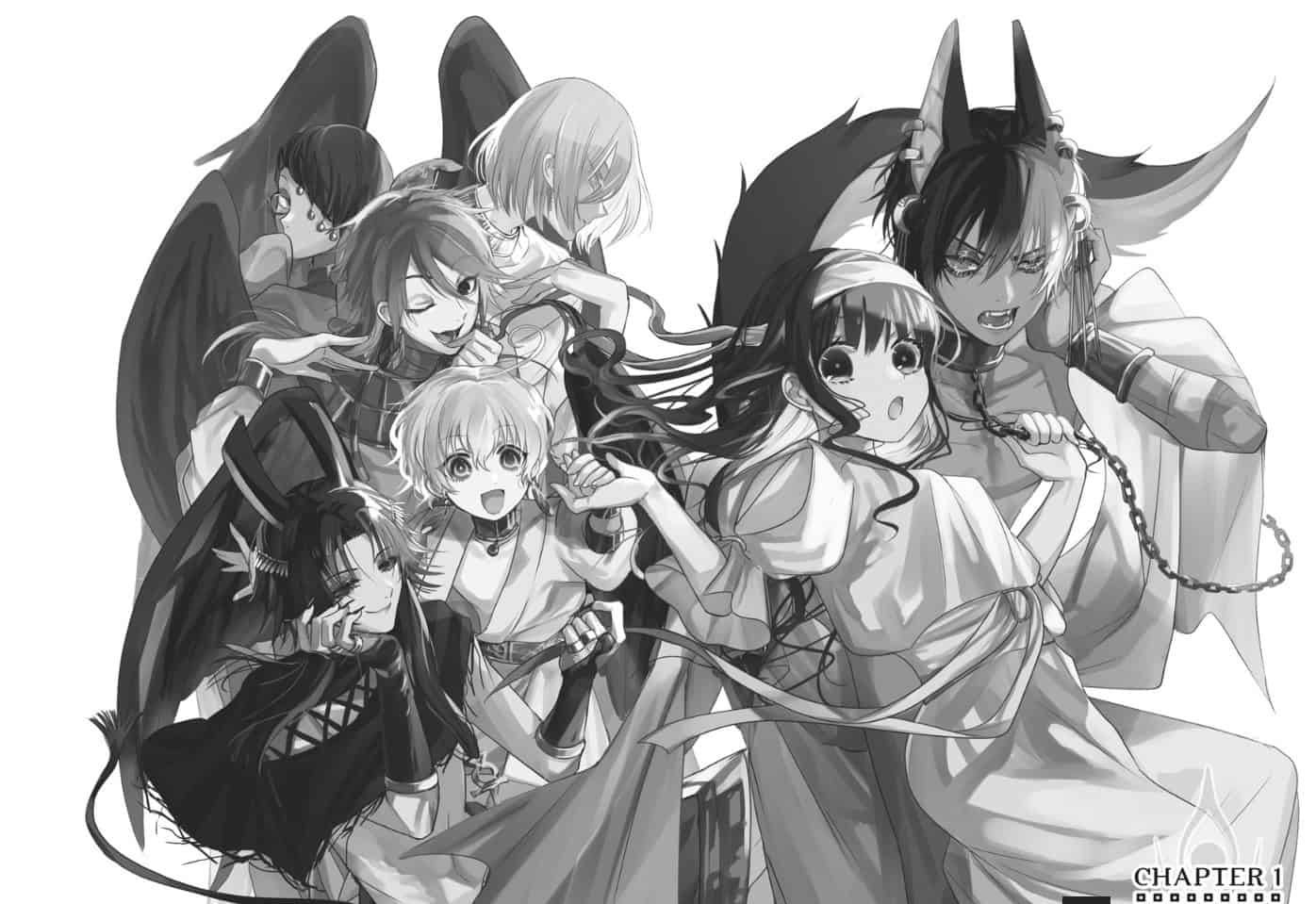
The character designs of the divine beings draw heavily from Egyptian iconography. Anubis, for instance, is depicted with his characteristic canine features, while Horus is presented with avian wings, reminiscent of his falcon-headed depiction. The gods are further adorned with headdresses and necklaces, accessories that in ancient Egypt signified royalty and divine authority. In contrast, Merit is consistently shown in simple, everyday attire, often with a plain headband, underscoring her status as a mortal amidst the otherworldly inhabitants of the Underworld. This visual dichotomy effectively communicates the power dynamics and the distinct realities of the characters’ origins.
However, the series faces a critique regarding the physical representation of its characters’ skin tones. The majority of the cast, including many human characters and some deities, are depicted with light, pale skin. The exception is Anubis in his original form as a black dog, and while other divine figures might have varied interpretations, the predominant portrayal of human characters leans towards a lighter complexion. This has led to observations of a potentially whitewashed aesthetic within the setting. While this aspect does not directly impede the narrative’s progression, critics suggest it could inadvertently perpetuate inaccurate perceptions of ancient Egyptian appearance for audiences unfamiliar with the culture. The historical record indicates a diverse population within ancient Egypt, with a spectrum of skin tones reflective of its geographical location and interactions with neighboring regions. The visual choices in "Merit and the Egyptian God," while perhaps unintentional, could reinforce a singular, often Eurocentric, visual stereotype.
Despite this reservation, "Merit and the Egyptian God" is lauded for its exploration of themes such as selflessness and optimism as forces capable of dismantling prejudice. The series successfully weaves fantasy and romantic comedy elements, making it a compelling read for shoujo manga aficionados. As the narrative unfolds and new characters are introduced, the potential for deeper interpersonal dynamics and mythological explorations grows. The developing relationships between Anubis and the broader pantheon, alongside Merit’s ongoing efforts to guide him, promise to be a central focus, building anticipation for future installments. The series is positioned as a significant contribution to the shoujo genre, offering a unique fusion of historical mythology with relatable character development and romantic intrigue.
The appeal of "Merit and the Egyptian God" extends beyond its central plot. The incorporation of Egyptian mythology offers an educational component, albeit fictionalized. Ancient Egyptian religion was a complex system of beliefs and practices that permeated every aspect of life, from daily rituals to grand funerary rites. Deities like Anubis played crucial roles in their cosmology, particularly concerning death, embalming, and the journey to the afterlife. Anubis was believed to preside over the weighing of the heart ceremony, a pivotal moment in determining a soul’s fate. The curse placed upon him in the manga can be interpreted as a narrative device to explore the human (or in this case, divine) struggle with responsibility and purpose, themes that resonate deeply across cultures and time periods.
The magazine Hana to Yume, published by Hakusensha, has a long-standing reputation for nurturing popular shoujo manga series, many of which have gone on to achieve international success and receive anime adaptations. Titles like "Fruits Basket," "Yona of the Dawn," and "Natsume’s Book of Friends" have all graced its pages, establishing a precedent for quality and engaging storytelling. "Merit and the Egyptian God" enters this esteemed lineage, aiming to capture a similar audience with its blend of charm, drama, and supernatural elements. The magazine’s editorial focus on fantasy and supernatural themes provides fertile ground for a series that reimagines ancient myths.
The collaborative effort behind "Merit and the Egyptian God" highlights the multifaceted nature of manga creation. Yukari Sakai’s artistic vision, Fuyu Tsuyama’s narrative prowess, and Yukimi Hashimoto’s scholarly input create a synergistic output. The success of such collaborations often hinges on the creators’ ability to balance their individual strengths while working towards a cohesive whole. In this instance, the fusion of myth, character-driven romance, and visual artistry appears to be a winning formula, attracting readers who are both fans of the shoujo genre and those with an interest in ancient history and mythology.
The introduction of the Underworld as a setting offers a unique stage for character development. In ancient Egyptian belief, the Duat, or Underworld, was a complex realm filled with trials, guardians, and deities. The concept of an afterlife judgment, as depicted with Merit’s trial, was central to their religious understanding. This allows the manga to explore themes of morality, consequence, and redemption in a fantastical context. Anubis’s role as a gatekeeper and judge, even in his cursed state, provides ample opportunity for dramatic tension and character growth. His apathy can be seen as a symbolic representation of spiritual stagnation, from which Merit’s optimistic intervention seeks to awaken him.
The romantic comedy aspect of the series, while not explicitly detailed in the initial premise, is a staple of the shoujo genre. The inherent power imbalance between a mortal girl and a fallen god, coupled with their forced proximity, creates a fertile ground for humorous misunderstandings, burgeoning affections, and dramatic confessions. The contrast between Merit’s earnestness and Anubis’s cynicism is a classic setup for romantic comedy, promising witty banter and endearing moments as they navigate their unusual partnership. The potential for this dynamic to evolve into a deeper romantic connection is a significant draw for the target audience.
Looking ahead, the series faces the challenge of maintaining both its mythological integrity and its shoujo appeal. As more of the Egyptian pantheon is introduced, the creators will need to ensure that these characters are not merely caricatures but are integrated meaningfully into the narrative. The exploration of Anubis’s past and the reasons for his curse could provide significant plot development, potentially delving into the intricate political and social structures of the divine realm. Furthermore, the series’ ability to address the critique regarding cultural representation will be important for its long-term reception and its capacity to foster a more nuanced understanding of ancient Egyptian culture.
In conclusion, "Merit and the Egyptian God" represents a noteworthy addition to the shoujo manga landscape. By drawing upon the rich wellspring of Egyptian mythology, Yukari Sakai, Fuyu Tsuyama, and Yukimi Hashimoto have crafted a narrative that is both familiar and refreshingly original. The series’ strengths lie in its compelling protagonist, its imaginative reimagining of ancient deities, and its engaging blend of fantasy and romance. While the artistic choices regarding character depiction warrant discussion, the manga’s thematic depth and its potential for continued narrative exploration position it as a series to watch within the popular Hana to Yume magazine. Its success will likely hinge on its ability to continue captivating readers with its charm, wit, and a well-balanced exploration of divine drama and human resilience.