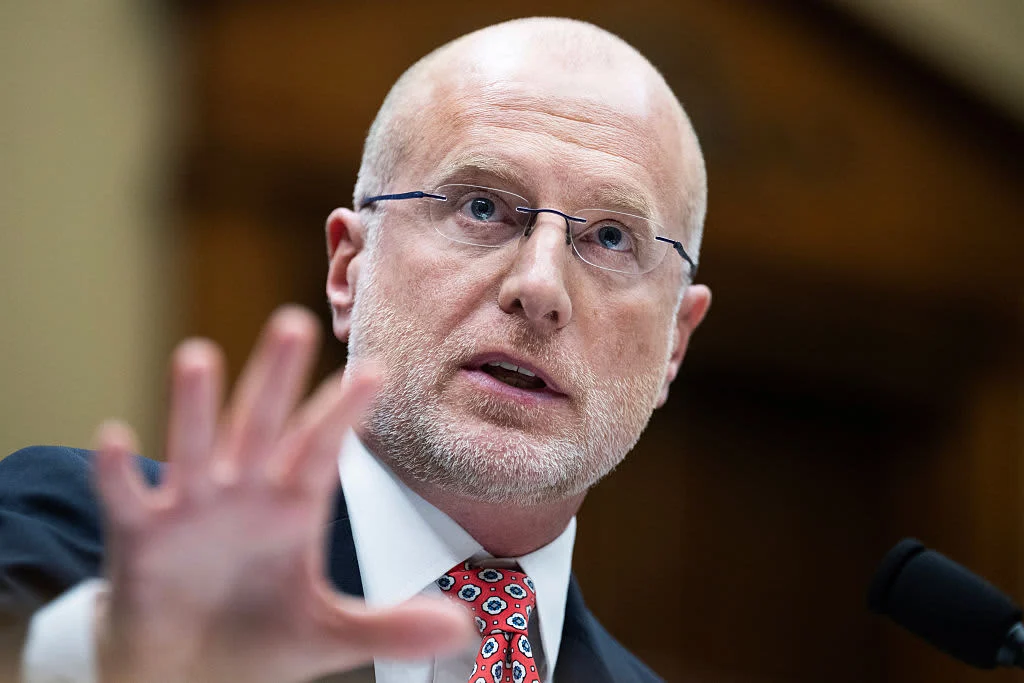


The visit of Vivek Ramaswamy to Montana State University on October 7, 2024, was intended to be a routine engagement for the former Republican presidential candidate. Speaking under the auspices of Turning Point USA, a prominent right-wing youth organization, Ramaswamy sought to solidify his standing as a leading intellectual voice within the modern conservative movement. For over an hour, he fielded questions on fiscal policy, government deregulation, and the dismantling of the "administrative state." However, as the event neared its conclusion, the dialogue shifted from policy to identity, exposing a deep-seated ideological friction within the Republican base.
Ramaswamy, a practicing Hindu of Indian descent, found himself confronted by two students who questioned his fundamental eligibility to lead a movement they defined through the lens of white Christian nationalism. One attendee asked why he appeared to be "masquerading as a Christian," asserting that "Christian voices should be the main voice of America." Another student was more explicit, suggesting that Ramaswamy’s cultural and religious background was inherently at odds with the preservation of American traditions. "If you are an Indian, a Hindu, coming from a different culture… what are you conserving?" the student asked. "You are bringing change."
This encounter was not an isolated incident but rather a microcosm of a burgeoning tension within the American right. Even as South Asians ascend to some of the highest echelons of Republican power and the Trump administration, they are increasingly finding themselves targeted by the very movement they seek to lead.
A Chronology of Rising Hostility
The hostility directed at Ramaswamy in Montana reflects a broader trend that has intensified since the 2024 election cycle. In the months leading up to the vote, and particularly in the wake of President Donald Trump’s victory, online spaces dominated by the "Make America Great Again" (MAGA) movement have seen a quantifiable surge in anti-Asian rhetoric.
In early 2024, veteran conservative commentator Ann Coulter told Ramaswamy during a podcast that she would not have voted for him specifically because he is "an Indian." While Ramaswamy initially dismissed the comment as a display of honesty he respected, the sentiment has since proliferated. By late 2024 and early 2025, the rhetoric moved from televised commentary to the digital fringes and eventually into mainstream Republican discourse.
In December 2024, Ramaswamy published an op-ed in the New York Times titled "Groyperism Isn’t Conservatism," addressing the slurs and "street-shitting" tropes frequently lobbed at him on social media platforms like X (formerly Twitter). He attributed the rise of this "Groyper" movement—a term for followers of white nationalist Nick Fuentes—to a reaction against "anti-white discrimination," effectively blaming progressive "woke" culture for the racism emerging from his own side of the aisle.
By January 2025, the tension reached a boiling point within the administration’s own advisory circles. Ramaswamy’s departure from the Department of Government Efficiency (DOGE) was reportedly expedited following a social media post where he discussed the H-1B visa program. Though he defended the program’s ability to attract "excellence," the post was met with a deluge of nativist vitriol from his own followers, illustrating a clear disconnect between the party’s intellectual leadership and its grassroots base.
The H-1B Visa and the Economic Nativism Shift
Central to the rising animosity toward South Asians in the Republican Party is the debate over the H-1B visa program. Historically, the GOP has been the party of business interests, often favoring high-skilled immigration to fill roles in technology and medicine. However, a new wave of economic nativism has reframed these immigrants not as "model minorities" but as a threat to "Heritage Americans."
In 2024, approximately 80,000 new H-1B petitions for Indian workers were approved. While these workers are essential to the American tech sector, they have become a lightning rod for criticism. Turning Point USA founder Charlie Kirk recently stated, "Perhaps no form of legal immigration has so displaced American workers as those from India. Enough already. We’re full."
This sentiment has translated into policy proposals at the state level. Texas Republican Party Chairman Abraham George, himself an Indian-born American citizen, has called for a ban on hiring H-1B workers within the state. Similarly, Governors Ron DeSantis of Florida and Greg Abbott of Texas have pledged to eliminate the use of H-1B visas in government and university hiring. This shift represents a fundamental departure from the Reagan-era "Big Tent" philosophy, moving toward a "Heritage American" framework that prioritizes ancestral and religious lineage over legal status or professional merit.
The Paradox of Representation in the Trump Administration
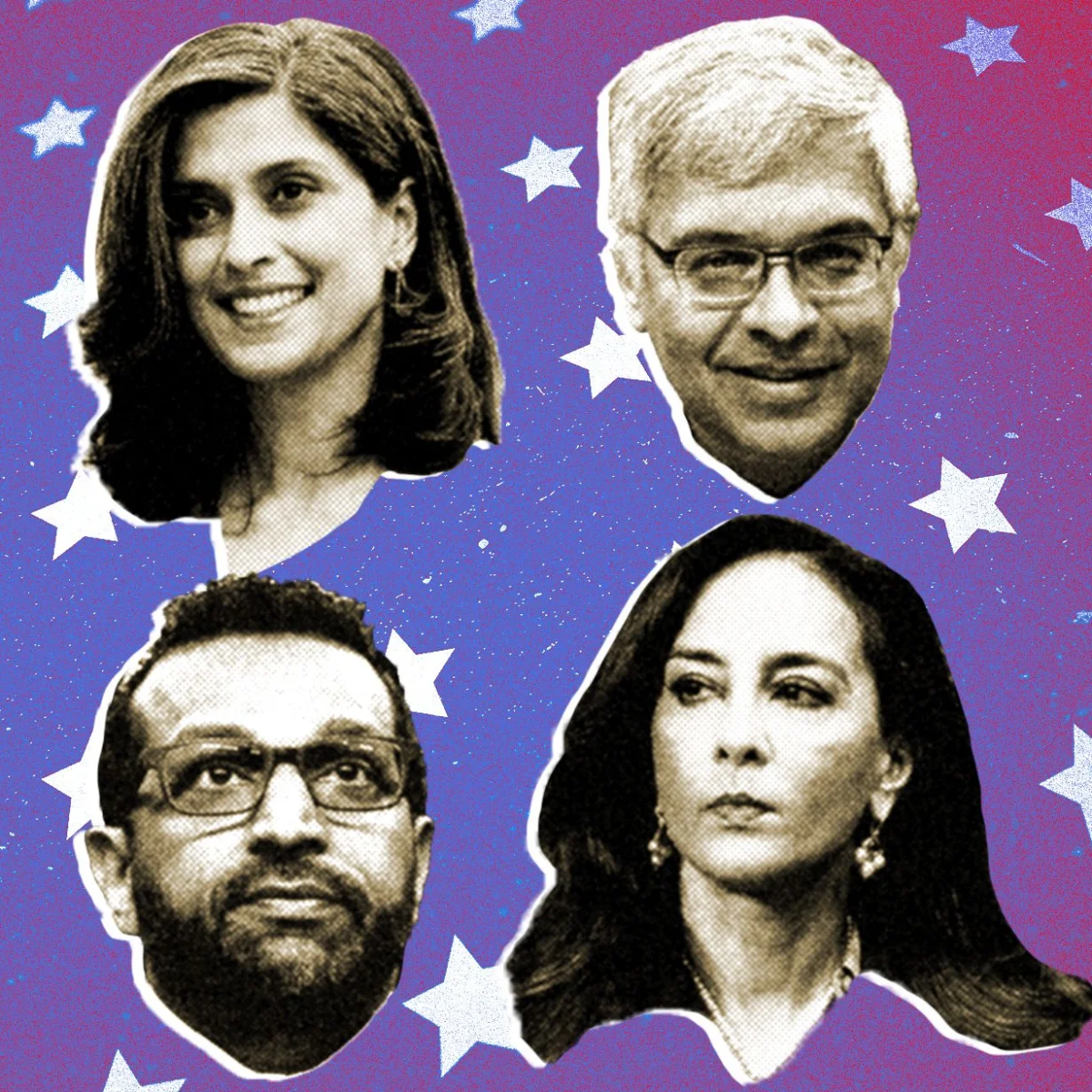
The current political landscape presents a striking paradox. The Trump administration features more South Asians in high-level positions than any previous Republican cabinet. This includes:
- Kash Patel: FBI Director
- Harmeet Dhillon: Assistant Attorney General for Civil Rights
- Kush Desai: White House Deputy Press Secretary
- Sriram Krishnan: White House AI Adviser
- Jay Bhattacharya: Director of the National Institutes of Health
- Usha Vance: Second Lady of the United States
Despite this representation, these officials serve an administration and a base that are increasingly vocal about their opposition to pluralism. Many of these figures find themselves in the awkward position of defending a movement that contains elements calling for their own marginalization.
Vice President JD Vance has navigated this tension with varying degrees of success. When his wife, Usha Vance, was targeted by Nick Fuentes and the Groypers, Vance was forceful, stating that his critics could "eat shit." However, at a Mississippi event in October 2024, Vance appeared to distance himself from his wife’s Hindu faith to appease a Christian audience, stating, "I believe in the Christian Gospel, and I hope eventually my wife comes to see it the same way."
Data and Demographic Realities
The statistical data regarding Indian Americans suggests that the Republican Party faces an uphill battle if it continues to alienate this demographic. According to Pew Research, Indian Americans are the highest-earning ethnic group in the United States and have historically high levels of education.
While the Trump campaign made significant efforts to court this "model minority" by emphasizing shared values of entrepreneurship and family, the results were mixed. In the 2024 election, the majority of Indian Americans still voted for the Democratic ticket. Furthermore, a February 2026 survey by the Carnegie Endowment for International Peace found that President Trump’s approval rating among Indian Americans sits at just 29 percent, significantly lower than his national average of approximately 35 percent.
Raqib Hameed Naik, executive director of the Center for the Study of Organized Hate, notes that many Indian Americans felt "duped" by the 2024 campaign’s rhetoric. "The campaign positioned itself as ‘pro-legal immigration’ but ‘anti-illegal immigration,’" Naik said. "Many took that as a guarantee of safety, but the rise in slurs and the push to end birthright citizenship—which is now before the Supreme Court—has shattered that illusion."
Theoretical Analysis: The "Comprador Class" and Identity
Scholars have sought to explain why South Asians continue to align with a movement that often displays open hostility toward them. Siddhartha Deb, an associate professor at The New School, suggests that these individuals may represent a "comprador class"—a term originally used to describe locals who facilitated foreign colonial interests for personal gain.
"A significant number of Indians wish to identify with the winners," Deb argues. "They seek to align themselves with material wealth, power, and the perceived strength of the MAGA movement, even if it requires a degree of self-abnegation or the tolerance of personal slurs."
This alignment is also complicated by the rise of the Hindu Right in India. There is a documented overlap between supporters of Narendra Modi’s BJP in India and the Republican Party in the U.S., both of which emphasize nationalistic pride and a return to "traditional" values. However, as the Montana State University incident showed, American nativism is often rooted in a specific brand of Christianity that does not always recognize Hinduism as a compatible ally.
Broader Impact and Implications for 2028
The treatment of figures like Vivek Ramaswamy and Dinesh D’Souza serves as a warning for the future of the Republican Party. D’Souza, a stalwart of conservative commentary since the 1980s, has recently found himself the target of the same "America First" mob he helped cultivate. After decrying the racism of the Groyper movement, D’Souza was met with a wave of "go back to India" comments on social media.
As the GOP looks toward the 2028 presidential cycle, it faces a fundamental identity crisis. The party must decide whether it will remain a coalition of ideological conservatives—regardless of race or religion—or if it will fully transition into a party of "heritage" identity.
If the current trend of anti-Indian rhetoric continues, the Republican Party risks losing one of the most affluent and influential immigrant groups in the country. For strategists like Anang Mittal, who recently resigned from his post under House Speaker Mike Johnson, the concern is that the party’s "purity tests" are becoming increasingly racialized. "Anyone who strays or doesn’t fit the ‘heritage’ mold will eventually be eaten alive," Mittal warned.
The outcome of this internal struggle will likely determine whether the Republican Party can sustain its 2024 coalition or if the "big tent" will finally collapse under the weight of its own nativist impulses. For South Asian conservatives, the question remains whether they are truly valued partners in a new American era, or merely temporary occupants in a house that does not intend to let them stay.