


The independent film industry is preparing for the April 8 release of Mermaid, the latest feature from director Tyler Cornack, distributed by Utopia. Following the critical curiosity surrounding his 2019 debut Butt Boy, Cornack returns with a narrative that seeks to dismantle and re-examine the "Florida Man" cultural trope through a lens of grounded absurdism. Starring Johnny Pemberton as Doug, a man struggling with addiction and isolation, the film introduces a supernatural catalyst—an injured, feral mermaid—into a hyper-realistic depiction of the Florida coastline. By eschewing the polished aesthetics of traditional mermaid lore in favor of a visceral, animalistic portrayal, Cornack explores themes of loneliness, the drug crisis, and the unique sociological landscape of his home state.
The Narrative Framework and Character Study
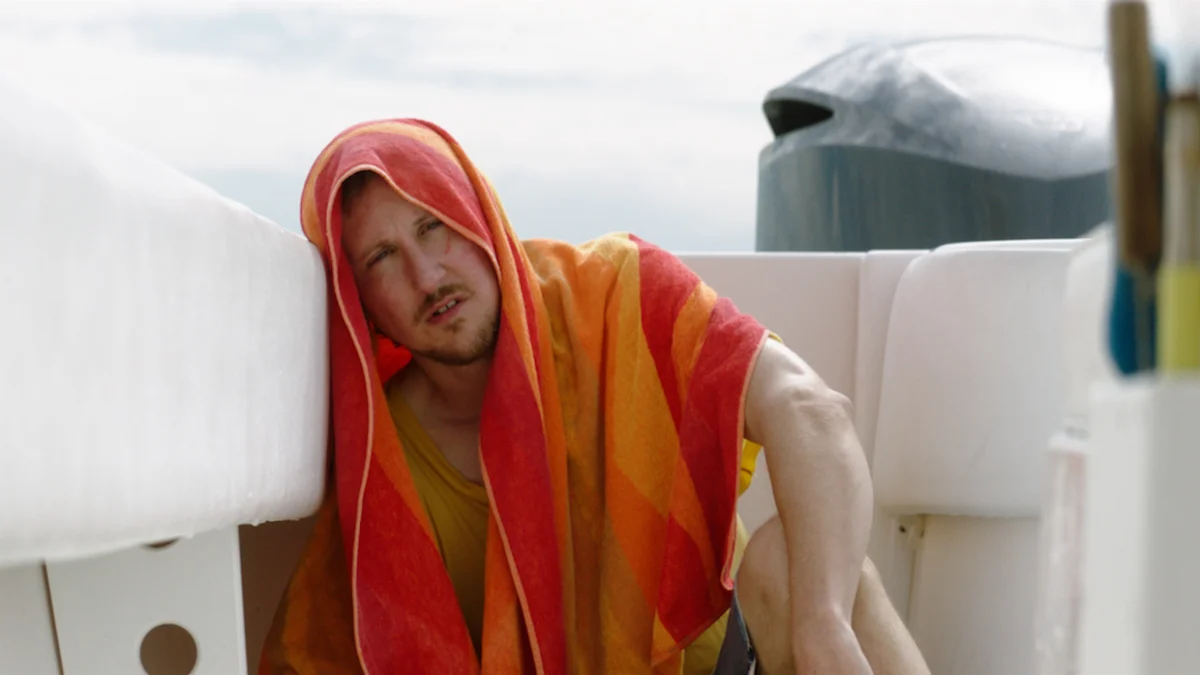
At the center of Mermaid is Doug, portrayed by Johnny Pemberton, an actor largely known for his comedic roles in projects such as Superstore and the 21 Jump Street franchise. In this iteration, Pemberton inhabits a character at his lowest psychological ebb. The story begins with Doug contemplating suicide, a narrative choice that immediately establishes the film’s somber undercurrent despite its fantastical premise. The discovery of an injured mermaid on the beach serves not as a whimsical escape, but as a burdensome responsibility that forces Doug to interact with the world he has long avoided.
Cornack’s approach to the protagonist avoids the "lovable loser" stereotype often found in independent comedies. Instead, Doug is presented as a man whose poor decision-making is a direct consequence of long-term isolation and the lack of a social safety net. The director’s decision to cast Pemberton was a calculated effort to humanize a character who might otherwise be dismissed as a "deadbeat." By utilizing Pemberton’s inherent likability and idiosyncratic mannerisms, the film creates a tension between the character’s grim circumstances and his desperate attempt to protect a creature as displaced as himself.
Deconstructing the Florida Man Phenomenon
The film serves as an interrogation of the "Florida Man" myth, an internet-driven phenomenon that gained global prominence around 2013. This trope, fueled by Florida’s robust "Sunshine Law" which makes public records and arrest affidavits easily accessible to the media, often reduces complex human tragedies to punchlines. Cornack, who grew up in Florida, utilizes the setting of his childhood beach town to provide a more nuanced backdrop for these "unhinged" narratives.
Florida’s unique subcultures—ranging from gated suburban communities to the "beach bum" culture of sun-weathered storytellers at local bars—inform the film’s atmosphere. Cornack highlights the "energy" of these coastal towns, where the line between reality and the bizarre is frequently blurred. By placing a mermaid in this environment, the film suggests that the strangest elements of the Florida Man stories are not the events themselves, but the human desperation that precedes them.
Technical Execution and Creature Design
One of the most significant departures Mermaid makes from genre conventions is its depiction of the titular creature. Eschewing the romanticized versions seen in Disney’s The Little Mermaid or Ron Howard’s Splash, Cornack’s mermaid is a feral animal. The design process for the creature was fraught with production challenges, according to the director. Following a breakdown in communication with a previous design team, the final creature was constructed in a mere 10 days by Mark Villalobos of Villalobos Studios and Heather Mages.
The resulting practical effect emphasizes the "gnarliness" of the sea creature, aligning more closely with the aesthetic of Guillermo del Toro’s The Shape of Water, but with a more predatory, unrefined edge. This feral quality is essential to the film’s naturalistic tone; the creature does not speak or offer magical solutions. It is an animal that requires water and care, serving as a mirror to Doug’s own basic needs for survival and purpose.

Chronology of Production and Release
The development of Mermaid followed the cult success of Butt Boy, which established Cornack’s signature style of "serious absurdity." The production of Mermaid was a deeply personal endeavor for the filmmaker, utilizing locations from his youth. The house used in the film belonged to the aunt of the executive producer, and the beach scenes were filmed on the same shores where Cornack spent his childhood.
The timeline of the project reflects the high-pressure environment of low-budget independent filmmaking:
- Pre-Production: Four months were spent on initial creature concepts that were eventually scrapped.
- Principal Photography: Shooting began in Florida while the new makeup effects team was still building the mermaid suit.
- Post-Production: The editing phase was used to balance the film’s tonal "wire walk," alternating between takes that were "too silly" and those that were "too straight" to find a cohesive naturalism.
- Distribution: Utopia, a distribution company known for championing "filmmaker-first" projects and unconventional narratives, acquired the film for an April 8 release.
Contextualizing the "Naturalistic Absurdist" Tone
A hallmark of Cornack’s work is the juxtaposition of high-concept, often ridiculous premises with a somber, cinematic execution. In Mermaid, this is exemplified by a pivotal scene involving a children’s birthday party. The sequence, which involves a mermaid projectile-vomiting "black bile" in slow motion, is shot with the intensity of a war film.
This stylistic choice—treating a grotesque or absurd moment with total gravity—creates what Cornack describes as a "new way of making the audience laugh." By avoiding the "wink at the camera" irony prevalent in many modern comedies, the film forces the viewer to engage with the absurdity as a lived reality for the characters. This approach aligns Cornack with other contemporary filmmakers who utilize "elevated genre" techniques to explore psychological trauma and social isolation.
Broader Implications and Industry Analysis
The release of Mermaid comes at a time when independent cinema is increasingly looking toward "grounded surrealism" to attract audiences fatigued by traditional genre tropes. The film’s focus on the Florida drug crisis also adds a layer of social commentary. According to data from the Centers for Disease Control and Prevention (CDC), Florida has consistently reported high rates of drug overdose deaths, a reality that Cornack integrates into Doug’s backstory. By framing the mermaid as a "fish out of water" alongside a man who is a social pariah, the film comments on the lack of empathy afforded to those struggling with addiction.
Industry analysts suggest that the partnership with Utopia is a strategic move to capture the "cult film" market. Utopia has previously found success with films that defy easy categorization, such as Shiva Baby and We’re All Going to the World’s Fair. Mermaid is expected to resonate with viewers who appreciate the "New Weird" movement in cinema—a genre that blends elements of horror, fantasy, and literary fiction to explore the anxieties of modern life.
Conclusion and Future Outlook
Mermaid stands as a testament to the creative resilience of independent filmmakers working with limited resources. Through a combination of nostalgic location scouting, high-pressure practical effects work, and a commitment to a singular tonal vision, Tyler Cornack has created a film that is both a "love letter to Florida" and a dark critique of the myths we project onto others.
As the film moves toward its April 8 release, it serves as a case study in how to subvert long-standing cinematic archetypes. By stripping the mermaid of its beauty and the "Florida Man" of his status as a punchline, Cornack delivers a narrative that is as human as it is bizarre. The film’s success will likely be measured not just by its box office or streaming numbers, but by its ability to linger in the cultural consciousness as a uniquely unhinged exploration of the American fringe.