
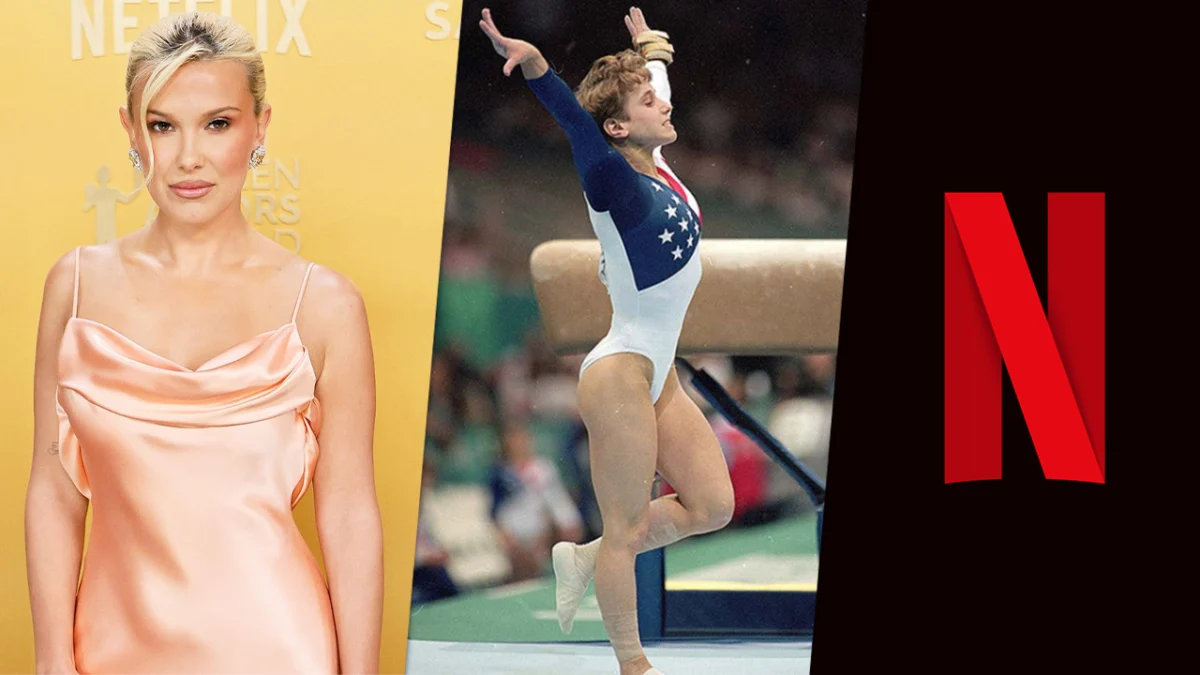
The highly anticipated Kerri Strug biopic, Perfect, has been officially canceled by Netflix following the departure of its lead star and producer, Millie Bobby Brown, citing creative differences. This abrupt halt marks the end of a project that promised to bring the inspiring story of the Olympic gymnast to a global audience, starring one of Netflix’s most prominent talents. The film, which had been in various stages of development for several years, was set to chronicle Strug’s iconic gold medal-winning vault at the 1996 Atlanta Olympics, performed heroically on an injured ankle.
The Genesis and Initial Promise of Perfect
Perfect was conceived as an original biographical sports drama for the streaming giant, initially generating considerable buzz due to its compelling subject matter and the attachment of a rising star. The narrative was slated to adapt Kerri Strug’s memoir, "Landing on My Feet: A Diary of Dreams," offering an intimate look into the pressures, dedication, and ultimate triumph of an elite athlete. The screenplay was penned by Ronnie Sandahl, known for his work on sports dramas, and notably, Millie Bobby Brown herself was also credited in the writing process, indicating a deep personal investment in the project.
Gia Coppola, acclaimed for her distinctive directorial vision in films like Palo Alto and Mainstream, was originally attached to direct, bringing a promising artistic sensibility to the project. Beyond her starring role, Brown was also set to produce under her PMCA Banner, signaling her increasing influence and ambition in Hollywood. The production team was robust, with Nik Power producing through Riverstone Pictures, Thomas Benski via Magna Films, and a roster of other listed producers including Jeremy Baxter, Marisa Clifford, Deepak Nayar, Ronnie Sandahl, and the multi-hyphenate Olivia Wilde. This collection of talent suggested a significant investment and a strong commitment to bringing Strug’s story to life with depth and authenticity.
The project had previously seen a different iteration, with reports from 2021 indicating that Thomasin McKenzie, recognized for her roles in Jojo Rabbit and Last Night in Soho, was initially considered for the role of Kerri Strug. However, that version of the project was put on hold, eventually paving the way for Millie Bobby Brown to take over the package, signifying a significant shift in creative direction and star power. Brown’s involvement, given her global appeal through Stranger Things and other Netflix features, elevated Perfect to a tentpole status within the streamer’s upcoming film slate.
The Unraveling: Creative Differences and Dual Departures

The news of Perfect‘s cancellation broke via a report from Deadline, which cited sources indicating that Millie Bobby Brown had officially exited the project. The primary reason provided for her departure was "creative differences with producers," a phrase often used in Hollywood to encompass a range of disagreements, from script changes and character portrayals to overall thematic direction or budget disputes. While vague, such a declaration typically points to fundamental disagreements that cannot be reconciled, leading a key talent to step away.
Compounding Brown’s exit, it was also revealed that director Gia Coppola had recently departed the project as well. The simultaneous departure of both the lead star and the director, especially over "creative differences," represents a critical blow to any film’s viability. In such scenarios, the creative vision becomes fractured, and the momentum necessary to move a major production forward is lost. Representatives for both Netflix and Millie Bobby Brown declined to comment on her departure, a standard practice in the industry when sensitive internal matters lead to project cancellations. This lack of official comment, while unsurprising, further underscores the nature of the disagreements that led to the film’s demise.
The planned production timeline had been set, with Production Weekly issue 1495 reporting that filming for Perfect was scheduled to commence on June 8, 2026, and conclude on July 29, 2026. These dates now stand as a stark reminder of a project that will never see the light of day in its intended form. With both the central figure and the directorial vision gone, the logistical and creative challenges of restarting the project from scratch proved insurmountable for Netflix, leading to its complete shelving.
Kerri Strug’s Enduring Legacy: The Story That Captivated a Nation
The heart of Perfect lay in the extraordinary true story of Kerri Strug. A retired gymnast from Tucson, Arizona, Strug is an Olympic medalist who proudly represented the United States at the 1992 Barcelona and 1996 Atlanta Olympic Games. Her name is inextricably linked with one of the most indelible moments in sports history: the 1996 Atlanta Olympics. As a crucial member of "the Magnificent Seven," the legendary U.S. women’s gymnastics team, Strug faced an agonizing decision that captured the world’s attention.
During the team final, with the gold medal hanging in the balance against a formidable Russian team, Strug severely injured her ankle on her first vault attempt. Despite excruciating pain, and under immense pressure from her coach, Béla Károlyi, she bravely performed a second vault. She stuck the landing on one foot, securing the necessary score for Team USA to win its first-ever Olympic team gold medal in women’s gymnastics. The iconic image of Károlyi carrying a tearful, injured Strug to the medal podium remains a powerful symbol of courage, resilience, and unwavering national pride.
Strug’s act of defiance against physical limitation resonated deeply with audiences, transcending the world of sports to become a cultural touchstone. Her story embodies themes of perseverance, sacrifice, and the pursuit of perfection, making it a natural fit for a biographical drama. The emotional weight and historical significance of this event have long made it ripe for cinematic adaptation, and the prospect of Millie Bobby Brown, known for her ability to convey vulnerability and strength, portraying such a figure was a key draw for many fans and industry observers.

Millie Bobby Brown’s Strategic Partnership with Netflix
The cancellation of Perfect comes despite Millie Bobby Brown’s deeply entrenched and highly successful relationship with Netflix. Brown has become one of the streamer’s most valuable assets, a global star whose presence guarantees significant viewership. Her breakout role as Eleven in the critically acclaimed and record-breaking series Stranger Things cemented her status, with the series finale having aired in December, drawing massive audiences worldwide.
Beyond Stranger Things, Brown has headlined several other major Netflix projects, demonstrating her versatility and box-office appeal. These include the fantasy adventure Damsel, which performed strongly, and The Electric State, a big-budget sci-fi film directed by the Russo Brothers. Her consistent collaboration with Netflix underscores a strategic partnership that extends far beyond a single project.
Looking ahead, Brown’s slate of upcoming projects with Netflix remains robust, indicating that the cancellation of Perfect is likely an isolated incident rather than a broader weakening of their relationship. Her confirmed future endeavors include Enola Holmes 3, a continuation of her successful detective franchise (set to debut this year); Just Picture It, a new project scheduled to begin filming in September 2025; A Time Lost; and an adaptation of her debut novel, Nineteen Steps. This extensive pipeline highlights Netflix’s continued investment in Brown as a marquee talent capable of leading diverse projects. The streaming giant’s strategy often involves cultivating exclusive relationships with bankable stars, and Brown clearly falls into this category, making the shelving of Perfect all the more notable as an internal creative impasse.
The Intricacies of "Creative Differences" in Hollywood
The phrase "creative differences" is a ubiquitous yet often opaque explanation for talent departures and project cancellations in the entertainment industry. While it can refer to minor disagreements over a scene or a line of dialogue, in high-stakes productions like Perfect, it typically signifies fundamental clashes over the artistic direction, thematic interpretation, or character development that are irreconcilable. For a biopic, these differences can be particularly acute, as the creative team grapples with the responsibility of accurately and respectfully portraying a real person’s life while also crafting a compelling cinematic narrative.
In the context of Perfect, with both the lead actress (who was also a co-writer and producer) and the director exiting, it suggests a profound divergence in vision. Millie Bobby Brown’s involvement as a writer and producer implies she had a significant stake in the story’s interpretation. Whether the disagreement stemmed from the tone, the portrayal of Strug’s coach Béla Károlyi, the emphasis on certain aspects of her life, or even the overall message the film intended to convey, such a fracture at the top often leaves a project without a cohesive artistic compass. These types of disputes are not uncommon, especially when multiple strong creative voices are involved, and they can be exacerbated by the commercial pressures of a major studio like Netflix, which has its own expectations for audience appeal and narrative execution.

Broader Implications for Netflix’s Content Strategy and Biopics
The cancellation of Perfect offers a glimpse into the complex and often volatile world of film production, even for a dominant player like Netflix. The streamer has invested heavily in original content, including numerous biopics and sports dramas, seeking to capitalize on compelling true stories. While some, like The Queen’s Gambit (though a fictional sports drama) or Maestro, have achieved critical acclaim and viewership success, others face significant hurdles. Biopics, in particular, come with unique challenges, including securing life rights, navigating the sensitivities of real individuals, and balancing factual accuracy with dramatic license.
Netflix’s approach to content has evolved, with an increasing focus on efficiency and subscriber retention. While they are known for greenlighting a vast array of projects, they are also not shy about canceling those that don’t meet internal expectations, whether due to creative stagnation, budgetary concerns, or lack of a clear path to production. The shelving of Perfect underscores that even projects with major star power and compelling narratives are not immune to these internal assessments.
For Millie Bobby Brown, while a setback for this particular project, her extensive ongoing deal with Netflix suggests a strong continued partnership. The company appears committed to her as a star, willing to absorb the loss on Perfect in favor of maintaining their relationship for other, potentially more successful, ventures. This pragmatic approach highlights Netflix’s long-term strategic view of talent management.
The Future of the Kerri Strug Story on Screen
With Perfect now officially shelved by Netflix, the question arises whether Kerri Strug’s inspiring story will ever make it to the silver screen. While this specific iteration with Millie Bobby Brown and Gia Coppola is "permanently shelved," the narrative itself remains as powerful and cinematically appealing as ever. It is plausible that another production company or studio could acquire the rights to Strug’s memoir, or develop an original screenplay based on her life, and attempt to bring it to fruition with a new creative team.
However, such a resurrection would likely require a significant overhaul, including a new director, a new lead actress, and a fresh approach to the script, moving past the "creative differences" that plagued this Netflix version. The market for inspirational sports biopics remains robust, and Strug’s story, with its themes of national pride, personal sacrifice, and extraordinary resilience, possesses timeless appeal. For now, however, fans eager to see Strug’s iconic moment re-enacted on screen will have to wait, as the Perfect vision remains an unfulfilled dream. The cancellation serves as a powerful reminder of the delicate balance required to bring complex true stories to cinematic life, where even the most promising combinations of talent and material can falter under the weight of creative discord.