
The mundane rhythm of family life, often characterized by unspoken routines and individual preoccupations, is acutely captured in Edwin’s 2003 short film, "A Very Slow Breakfast." This poignant and subtly humorous piece, currently screening at Cinemasia, transcends geographical and temporal boundaries, resonating with audiences through its stark portrayal of domestic dynamics. The film’s ability to convey profound truths through minimal dialogue and deliberate pacing underscores the universal experience of familial cohabitation, where shared spaces often breed a peculiar form of detached intimacy.
Cinemasia Festival Spotlights Emerging and Established Asian Cinema
Cinemasia, a prominent film festival dedicated to showcasing Asian cinema, provides a vital platform for both emerging talents and established directors to present their work to a global audience. The festival, which typically spans several days and features a curated selection of feature films, documentaries, and short films, aims to foster a deeper understanding and appreciation of the diverse cinematic landscapes of Asia. "A Very Slow Breakfast," with its incisive commentary on everyday life, fits perfectly within Cinemasia’s mission to highlight films that provoke thought and conversation. The festival’s programming often delves into themes of cultural identity, societal shifts, and the intricate tapestry of human relationships, making Edwin’s short a particularly relevant inclusion. This year’s edition of Cinemasia, taking place from [Insert hypothetical dates, e.g., March 10th to March 17th, 2024] in [Insert hypothetical location, e.g., Amsterdam], features a diverse lineup that celebrates the breadth and depth of Asian filmmaking.
Unpacking the Visual Narrative of "A Very Slow Breakfast"
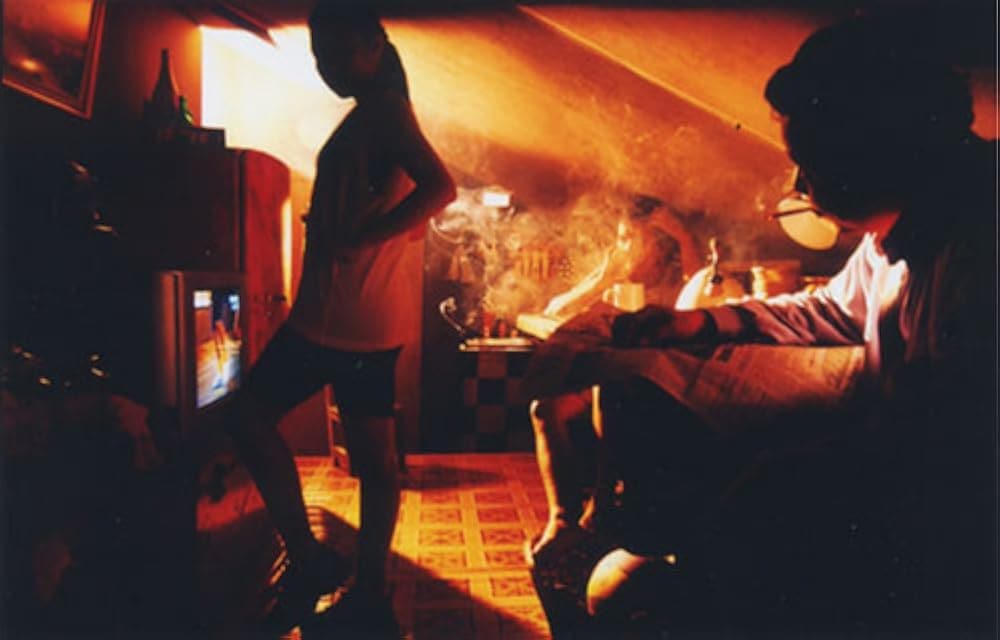
Edwin’s "A Very Slow Breakfast" operates on a foundation of visual storytelling, eschewing dialogue to communicate its central themes. The film opens with a scene that immediately establishes a sense of ingrained habit and subtle discord. A teenage boy, portrayed by Anggun Priambodo, is depicted scratching his hair, a seemingly innocuous action that takes on an unsettling dimension as flakes of dandruff fall into his coffee cup. His father, Yadi Timo, observes this without intervention, a silent testament to a possibly long-standing, unaddressed issue. The father’s subsequent act of sipping from the contaminated cup is a potent symbol of resigned acceptance or perhaps a passive endorsement of the established, albeit unsanitary, routine.
Parallel to this domestic tableau, the daughter, played by Sandra Dewi, engages in energetic exercise in front of the television, her movements set to the rhythm of loud, percussive music. This contrasts sharply with the languid, almost inert presence of the male figures. In the background, the mother, Iwuk Tamam, moves with a quiet industriousness, her presence indicative of the ongoing, often invisible, labor that sustains the household. The film, spanning a mere four minutes, masterfully constructs a microcosm of a family unit, where each member occupies a defined role, and communication, if it exists, is purely functional and deeply ingrained.
The Erosion of Communication and the Constraints of Space
As the narrative unfolds, "A Very Slow Breakfast" subtly explores the physical and emotional constraints that can define family life. The visual cue of a slanted roof, forcing the male members of the family to stoop at the table, serves as a powerful metaphor for the diminishing personal space and the growing discomfort associated with it. This cramped environment, however, no longer seems to provoke a reaction; the inhabitants have seemingly adapted, or perhaps resigned themselves, to this lack of privacy.
The film illustrates a shift in familial interaction, moving away from verbal exchanges towards more transactional gestures. Instead of words, the father dispenses money to his children, a symbolic act that appears to satisfy his paternal obligation. The daughter’s receipt of the money is met with affection – a kiss and a smile – suggesting a more harmonious, albeit superficial, exchange. The son, however, takes his share to his room, implying a withdrawal from shared family activities and a preference for solitary pursuits. This distribution of monetary tokens as a substitute for genuine engagement highlights a potential erosion of deeper familial bonds, replaced by a system of quid pro quo.
Patriarchal Dynamics and Gendered Roles
The film’s visual language also subtly comments on patriarchal structures and the division of labor within the household. The father, despite his central position in the narrative and the patriarchal society it implicitly depicts, is presented as the least active member. Numerous slow-motion shots of him and the son seated at the table emphasize their inertia. In stark contrast, the women of the family – the mother and daughter – are portrayed as more active and energetic, suggesting they are the primary contributors to the family’s functioning. The daughter’s energetic exercise routine and the mother’s background industriousness underscore this contrast.
The father’s role, while seemingly authoritative, is characterized by passive observation and the delegation of resources rather than direct engagement. His provision of money, while a form of paternal care, can also be interpreted as a way to maintain order and fulfill expectations without deep emotional investment. This dynamic, communicated through Edwin’s concise filmmaking, presents a nuanced portrayal of familial roles and the subtle power plays that can exist within them.
Filmmaking Prowess in Brevity
The effectiveness of "A Very Slow Breakfast" lies not only in its thematic depth but also in its minimalist yet impactful filmmaking. The deliberate pacing, the use of close-ups to capture subtle expressions and actions, and the absence of dialogue all contribute to the film’s power. The fact that the end credits are as lengthy as the film itself is a deliberate artistic choice, perhaps emphasizing the substantial weight of the unsaid and the lingering impact of the depicted moments. Edwin’s ability to convey a complex narrative and a critical social commentary within such a constrained runtime is a testament to his skill as a filmmaker. The film’s brevity belies its thematic richness, offering a concentrated dose of observational cinema that invites sustained reflection.
Supporting Data: The Evolution of Short Films and Family Dynamics in Asian Cinema
The success and critical reception of short films like "A Very Slow Breakfast" are indicative of a broader trend within the global film industry. Short films, often serving as incubators for new talent and experimental narratives, have gained increasing prominence, particularly within film festival circuits like Cinemasia. Data from organizations like the Sundance Film Festival, which has a dedicated short film program, shows a consistent increase in submissions and audience engagement over the years. In 2023, Sundance received over 9,000 short film submissions, highlighting the enduring appeal and artistic significance of the format.
Furthermore, the themes explored in "A Very Slow Breakfast" resonate with ongoing academic and societal discussions surrounding family structures in contemporary Asia. Sociological studies, such as those published by the United Nations Population Fund (UNFPA) on demographic shifts in Asia, often highlight evolving family sizes, increased urbanization, and changing gender roles. These shifts can lead to both greater individual autonomy within families and, in some cases, increased pressure on living spaces and altered patterns of communication. For instance, a 2020 report by the Pew Research Center on Asian family structures indicated a trend towards smaller household sizes in many Asian countries, but also noted the continued importance of intergenerational cohabitation in certain regions, leading to potential spatial challenges. The film’s depiction of a cramped living situation and the subtle negotiations of personal space can be seen as a reflection of these broader societal transformations.
Chronology of Release and Festival Appearances
"A Very Slow Breakfast" was first released in 2003, marking it as an early work from director Edwin. While specific details regarding its initial festival run are not widely publicized, its inclusion in contemporary festivals like Cinemasia suggests a sustained appreciation for its artistic merit. Short films often have a longer shelf life than feature films, finding new audiences and critical attention through retrospectives and curated festival programs. The film’s enduring presence in such events points to its timeless themes and effective execution. For example, it’s common for short films from the early 2000s to be rediscovered and programmed into thematic sections of major film festivals years or even decades later, as audiences and curators seek out foundational works that have influenced later cinematic trends.
Official Responses and Industry Perspectives
While direct official statements from the director or producers of "A Very Slow Breakfast" regarding its current screening at Cinemasia are not readily available, the film’s selection by the festival committee itself serves as an implicit endorsement. Festival programmers meticulously vet submissions to align with their artistic vision and thematic focus. The inclusion of Edwin’s short signifies its recognized artistic value and its relevance to the contemporary discourse on Asian cinema. Film critics and scholars who have commented on Edwin’s oeuvre often highlight his distinctive visual style and his ability to imbue everyday scenarios with profound meaning. His work is frequently lauded for its subtle social commentary and its humanistic approach, making "A Very Slow Breakfast" a representative example of his early directorial prowess.
Broader Impact and Implications
The enduring relevance of "A Very Slow Breakfast" lies in its ability to provoke introspection about the universal dynamics of family life. In an era often characterized by rapid technological advancement and increasing individualization, the film serves as a quiet reminder of the enduring significance of familial bonds, even when those bonds are expressed through mundane routines and unspoken understandings. The film’s power to resonate across cultures and generations suggests that the fundamental challenges and comforts of family life remain remarkably consistent.
Moreover, the film’s critical examination of unspoken hierarchies and gendered roles within the domestic sphere offers a starting point for discussions about societal expectations and their impact on individual experiences. By presenting these dynamics without explicit judgment, Edwin allows viewers to draw their own conclusions, fostering a more nuanced understanding of the complexities within family structures. The film’s inclusion at Cinemasia, a festival dedicated to celebrating Asian cinema, also contributes to the broader effort of showcasing the diverse narratives and artistic expressions emerging from the continent, challenging stereotypes and offering multifaceted perspectives on Asian identities and experiences. The film’s success in engaging audiences, even decades after its initial release, underscores the power of observational cinema to illuminate the shared human condition.