

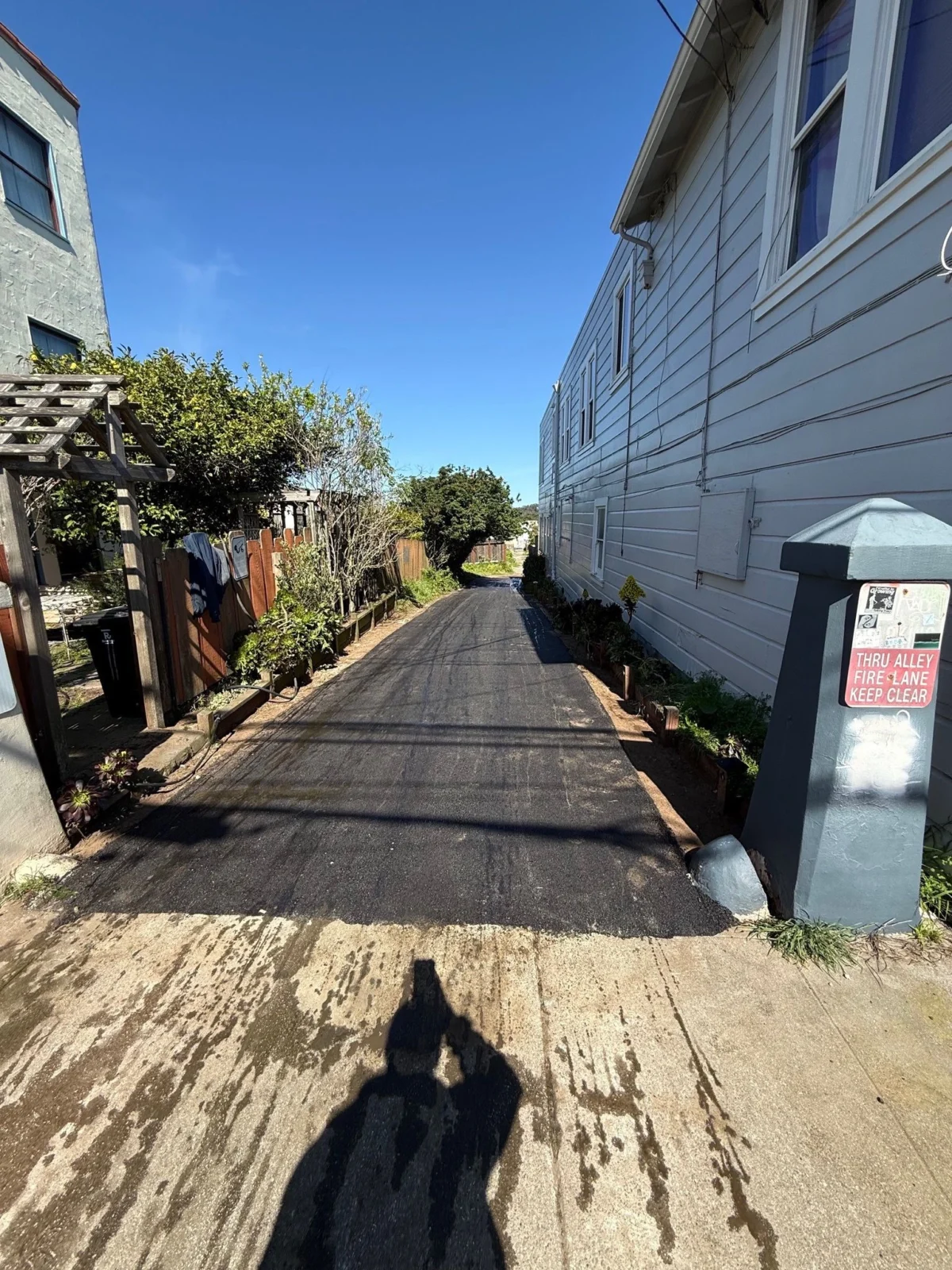
The San Francisco real estate market, long characterized by its astronomical prices and competitive bidding wars, recently became the backdrop for an unusual narrative involving a $25,000 clerical error and a subsequent tech-driven artistic intervention. What began as a cautionary tale of a real estate auction gone wrong has evolved into a high-profile collaborative art project known as Paint a Street. This initiative, spearheaded by a trio of local software engineers, aims to transform a non-developable dirt easement into a permanent digital-to-physical mural, funded by an auction that has already seen bids exceeding $100,000.
The catalyst for this transformation occurred last year when JJ Hollingsworth and her husband participated in a San Francisco city auction. Starting with a bid of just $1, the couple ultimately paid $25,000 for what they believed was a parcel of developable land adjacent to their residence in the Sunset District. However, upon finalizing the purchase, they discovered the property was an 82-foot-long dirt alleyway, classified as an easement. Under local zoning and property laws, the land was entirely unbuildable, leaving the couple with a significant financial loss and a mounting liability. Hollingsworth described the experience as a source of immense stress, noting that the inability to insure the narrow strip of land created a persistent legal and financial shadow over their household.
The Auction of "Sliver" Parcels in San Francisco
The incident highlights a peculiar aspect of urban property management. In San Francisco, the Office of the Treasurer and Tax Collector periodically auctions properties that have fallen into tax delinquency for five years or more. While these auctions often feature residential or commercial buildings, they also include "sliver" parcels—remnant pieces of land, such as alleys, stairways, or narrow strips between lots, that were never properly incorporated into surrounding deeds.
Speculators occasionally target these parcels in hopes of selling them to adjacent homeowners at a premium. In Hollingsworth’s case, the purchase was unintentional, driven by the belief that the land held development potential. The realization that the $25,000 investment yielded only a dirt path with no utility or resale value turned the situation into a local media sensation, eventually catching the attention of San Francisco’s technology community.
The Transition: From Private Liability to Public Project
Following a report on the couple’s predicament in the San Francisco Standard, the property was purchased for $26,000 by a group of three software developers: Patrick Hultquist, Theo Bleier, and Riley Walz. The trio, colloquially referred to as "tech pranksters" due to their history of unconventional digital projects, sought to relieve Hollingsworth of the liability while utilizing the space for a community-oriented experiment.
The background of the new owners suggests a penchant for blending digital interfaces with real-world applications. Riley Walz, a recent employee at OpenAI, is known for creating Jmail, a searchable, Gmail-style repository of the Jeffrey Epstein files. The group has also organized "Pursuit," a citywide scavenger hunt in San Francisco that utilizes mobile technology to engage residents with the urban environment. Their acquisition of the alleyway was not a traditional real estate investment but rather the procurement of a physical canvas for a digital age.
Paint a Street: A Digital-Physical Hybrid
The project, officially titled "Paint a Street," was unveiled via a public announcement and a dedicated website. The concept allows internet users to submit digital drawings that will be compiled into a massive collage. Each submission is restricted to a low-resolution format, resulting in a pixelated aesthetic reminiscent of early internet art. These 6-by-6-inch squares will be arranged in a grid and eventually applied to the 80-foot length of the now-paved alleyway.
To manage the layout, the organizers implemented a democratic ranking system. Users can upvote or downvote specific art pieces, with the top 1,280 submissions earning a permanent spot on the pavement. This gamified approach to urban design mirrors previous social experiments in the digital sphere, most notably Reddit’s r/place. Launched as an April Fools’ Day project in 2017, r/place allowed millions of users to edit a single pixel on a massive digital canvas, resulting in a chaotic but representative snapshot of internet culture. Paint a Street seeks to replicate this collaborative spirit in a physical, permanent location.
Funding and the $100,000 Naming Auction
While the initial purchase and the $10,000 paving costs were covered by the developers, the long-term viability and installation of the mural required additional capital. To fund the project, the team launched a public auction for the naming rights of the street. In an unexpected turn of events, the bidding for the right to name the 82-foot alleyway surged past $100,000 within the first hour of the auction’s launch.
This financial windfall ensures that the project can move forward with high-quality materials. Rather than using traditional paint, which is susceptible to weathering and erosion, the collage will be rendered as a durable, industrial-grade sidewalk decal. The auction and the art submission period are scheduled to conclude on Tuesday, April 7, at 1:00 PM PT. The highest bidder will effectively leave a permanent mark on the San Francisco city map, while the contributing artists will see their digital work immortalized in the Sunset District.
Moderation and Technical Challenges
The transition from a digital canvas to a physical street in a residential neighborhood presents significant logistical and social challenges. The organizers have had to address concerns regarding the content of the submissions. In any anonymous online forum, there is a risk of inappropriate or offensive imagery. To mitigate this, the "Paint a Street" team has deployed an AI-driven content moderation program designed to flag explicit content. Flagged images undergo a manual review process to ensure they meet community standards.
However, the organizers acknowledge the limitations of moderation in a collaborative environment. Patrick Hultquist noted that while individual squares are monitored, it is difficult to prevent "emergent" imagery—large-scale patterns formed by multiple users coordinating their submissions. This tension between total creative freedom and the responsibilities of property ownership is a central theme of the project.
Community and Expert Reactions
The project has elicited a range of responses from the local community. For the neighborhood’s residents, the transformation of a neglected dirt path into a paved art installation is largely seen as a positive development. Stanton Glantz, a retired professor living near the alley, characterized the project as a manifestation of "San Francisco weirdness," a term often used to describe the city’s long history of counter-culture and eccentric public art.
For JJ Hollingsworth, the sale represents the resolution of a significant personal crisis. Initially skeptical of the offer, she sought legal counsel to ensure the transaction was legitimate and not a sophisticated prank. Her lawyer, who is also a songwriter, verified the funds and the intent of the buyers. Hollingsworth expressed relief that the land would be used to foster community engagement rather than remaining a source of private anxiety. She plans to celebrate the conclusion of the saga with a concert at her home, symbolizing a peaceful end to a tumultuous real estate journey.
Broader Implications for Urban Development
The "Paint a Street" project serves as a case study for the intersection of technology, crowdsourcing, and urban planning. It represents a shift away from top-down municipal design toward a more decentralized, participatory model. By utilizing blockchain-like voting mechanics and viral marketing, the organizers have managed to turn a liability into a potential tourist attraction and a significant financial asset.
Furthermore, the project highlights the evolving role of "tech pranksters" in urban environments. As San Francisco continues to grapple with its identity as a global tech hub, interventions like these demonstrate how digital skills can be applied to physical spaces to create communal value. While the long-term durability of the sidewalk decal remains to be seen, the project has already succeeded in redefining the value of a "useless" piece of land.
As the April 7 deadline approaches, the eyes of both the tech community and San Francisco residents remain on the 82-foot alley. The final result will be a physical manifestation of the internet’s collective consciousness—a tapestry of memes, drawings, and digital artifacts that will pave a path once thought to be a $25,000 mistake. Whether it becomes a lasting landmark or a fleeting curiosity, Paint a Street has already secured its place in the history of San Francisco’s unique real estate lore.