


The rapid integration of generative artificial intelligence into the global economy has created a distinct demographic divide, with recent data suggesting that men are embracing the technology at a significantly higher rate than women. According to the fifth annual CNBC SurveyMonkey Women at Work survey, a widening gender gap in AI enthusiasm and usage could have profound implications for career advancement and long-term economic equality. While men are increasingly viewing AI as a critical tool for professional survival, a substantial portion of the female workforce remains skeptical, with many viewing the use of such technology as a form of "cheating" rather than a legitimate productivity aid.
The survey, which polled 6,330 individuals between February 10 and February 16, 2026, arrives just over three years after the public launch of OpenAI’s ChatGPT sparked a global obsession with large language models (LLMs). Since that pivot point in late 2022, the landscape of work has been fundamentally altered by the introduction of AI-generated imagery, sophisticated coding agents, and automated video production services. However, the data indicates that the benefits of these advancements are not being distributed equally across gender lines.
The Psychological Divide: Collaboration versus Skepticism
At the heart of the AI gender gap lies a fundamental difference in how the technology is perceived within a professional context. The SurveyMonkey data reveals that 69% of men view AI as a "valuable assistant and collaborator," whereas only 61% of women share this sentiment. This eight-percentage-point gap highlights a broader trend of male workers integrating AI into their daily workflows as a standard operating procedure.
More striking is the moral or ethical weight women appear to place on the use of these tools. Half of the women surveyed (50%) expressed the belief that using AI at work "feels like cheating." In contrast, only 43% of men felt the same way. This psychological barrier suggests that women may be holding themselves to different standards of "originality" or "effort," which could inadvertently hinder their ability to keep pace with the efficiency gains offered by generative tools.
This sentiment is particularly concerning to career experts who argue that the perception of AI as a shortcut rather than a skill could lead to a self-imposed disadvantage. If women avoid these tools out of a sense of professional integrity, they may find themselves working longer hours to produce the same output that their male counterparts generate in minutes using AI-assisted workflows.
Disparities in Usage and the Rise of the Power User
The disparity in perception translates directly into measurable differences in workplace behavior. According to the survey, 64% of women report that they "never" use AI in their current roles, compared to 55% of men. While both figures suggest that a majority of the workforce has yet to fully adopt the technology, the gap is most pronounced among "power users"—those who utilize AI multiple times per day.
The survey found that 14% of men are AI power users, whereas only 9% of women fall into this category. This five-point difference is significant because early adopters often set the pace for innovation within their departments. As companies begin to reward employees who can demonstrate high levels of AI proficiency, those who are not using the tools daily risk falling behind in performance metrics and promotional cycles.
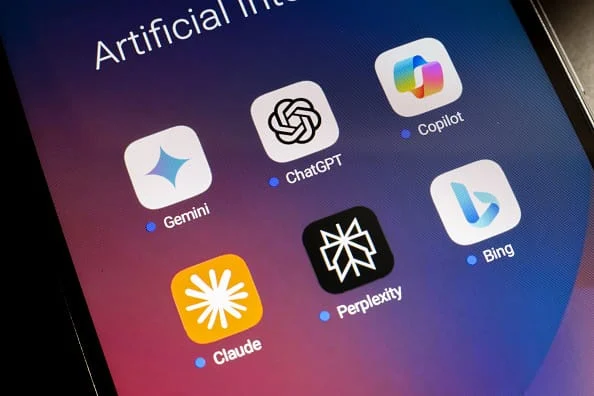
This trend is occurring against a backdrop of rapid technical evolution. Since the 2022 boom, tools like Microsoft Copilot, Google Gemini, and Claude by Anthropic have moved beyond simple text generation. They are now capable of complex data analysis, autonomous software development, and strategic planning. As these tools become more specialized, the "usage gap" between men and women could translate into a "skills gap" that is much harder to bridge.
A Timeline of the AI Revolution and Market Shifts
The current gender divide is a byproduct of an incredibly fast-paced technological cycle. To understand the stakes, one must look at the chronology of the AI boom:
- November 2022: OpenAI releases ChatGPT, bringing generative AI into the mainstream and triggering an arms race among tech giants.
- 2023-2024: Integration phase. Microsoft embeds Copilot into the Office suite; Google launches Gemini (formerly Bard); and startups like Perplexity and Anthropic gain massive valuations.
- 2025: The "Agentic" Shift. AI moves from being a chatbot to an "agent" capable of performing tasks autonomously, such as coding entire applications or managing complex logistics.
- 2026: Consolidation and Corporate Mandates. Major institutions, led by the financial sector, begin mandating AI usage for internal efficiency, leading to the current state observed in the SurveyMonkey data.
This rapid progression has caused significant volatility in the financial markets. Wall Street has increasingly bet that AI will displace much of the traditional enterprise software stack. This explains why many legacy software stocks have struggled over the past year; investors are shifting capital toward companies that are either building AI infrastructure or successfully pivoting to AI-first models. For employees, this means the software they have spent years mastering may soon be obsolete, replaced by natural language interfaces that require a completely different set of competencies.

Corporate Reactions and the Push for Retraining
The urgency of AI adoption is echoed at the highest levels of corporate leadership. Jamie Dimon, CEO of JPMorgan Chase, has been one of the most vocal proponents of the technology. In his address at the bank’s 2026 investor day, Dimon described AI as "critical to our company’s future success." He revealed that nearly two-thirds of JPMorgan’s workforce now utilizes an internal large language model to assist with everything from equity research to customer service.
Dimon’s stance is pragmatic but stern: AI will inevitably eliminate certain roles. However, he emphasized that the solution is not to resist the technology but to lean into retraining. "Companies are better off retraining people," Dimon noted, suggesting that the burden of adaptation lies both with the institution and the individual.
However, the survey data suggests that men and women are responding differently to this call for retraining. Interestingly, despite using AI more frequently, men are more likely to admit they need more help. Some 59% of men in the survey stated they need more training on how to use AI at work, compared to a lower percentage of women. This suggests a "confidence-competence paradox" where men are more aware of what they don’t know because they are actively engaging with the tools.
The FOMO Factor and Career Advancement
Fear of missing out, or FOMO, is also playing a role in driving adoption. The survey found that 39% of men express a fear of being left behind if they do not embrace AI, compared to 35% of women. Perhaps more telling is the finding that 42% of women "strongly disagree" with the notion that failing to embrace AI will result in them missing out at work. Among men, this figure was lower, at 36%.
This lack of urgency among a large segment of the female workforce could have long-term consequences for gender parity in management. Sheryl Sandberg, founder of LeanIn.Org and former Chief Operating Officer of Meta, has warned that the AI gap could exacerbate existing inequalities. In a recent interview, Sandberg highlighted that AI will be most challenging for those who do not know how to use the tools.
"We know that AI is going to be challenging for jobs, and it’s going to be the most challenging for the people that don’t know how to use those tools," Sandberg stated. She pointed out that if men are using AI more frequently early in their careers, they may secure promotions to manager-level positions more quickly. This would widen the "broken rung" on the corporate ladder—the initial step from entry-level to manager where women already face significant hurdles.
Economic Implications and the Broader Impact
If the gender gap in AI usage persists, the economic ramifications could be severe. A workforce where one demographic is significantly more proficient in the primary productivity tool of the era is a workforce that will see a widening wage gap. Furthermore, as AI becomes the standard for high-value work, those who view it as "cheating" may find themselves relegated to lower-value tasks that are more susceptible to automation or outsourcing.
The broader impact also extends to the quality of the technology itself. If women are less involved in the daily use and refinement of AI tools, their perspectives and needs may not be reflected in the next generation of software. This could lead to a feedback loop where AI tools become increasingly tailored to the workflows and preferences of male users, further alienating female professionals.
Sandberg’s warning is clear: "We are going to see disproportionate impacts, and that would be a real shame for our companies and bad for our economy."
Conclusion: The Path Toward AI Equity
The findings of the 5th annual SurveyMonkey Women at Work survey serve as a wake-up call for both corporate leaders and individual professionals. While the AI craze has brought about unprecedented opportunities for efficiency, it has also introduced a new fault line in the workplace. To prevent a regression in gender equality, companies must ensure that AI training is not only available but actively encouraged for all employees.
For women, the challenge lies in shifting the perception of AI from a "shortcut" to a "skill." As the enterprise software stack continues to evolve and as leaders like Jamie Dimon integrate AI into the core of global finance, proficiency in these tools will likely become as fundamental as literacy or basic computing. The goal for the modern workforce is to ensure that the AI revolution acts as a catalyst for progress rather than a barrier to entry.