

A Legacy of Cinematic Discovery
Since its inception, New Directors/New Films (ND/NF) has maintained a reputation for being ahead of the curve in the international festival circuit. The festival’s historical roster reads like a "who’s who" of world cinema. In its formative years, the program introduced New York audiences to the early works of Wim Wenders, Theo Angelopoulos, Chantal Akerman, and Steven Spielberg. More recently, the festival has been credited with providing early exposure to visionary directors such as Yorgos Lanthimos, Ryûsuke Hamaguchi, and Laura Poitras.
The selection process for the 55th edition followed the festival’s rigorous methodology, with programmers sourcing titles from major international film festivals including Berlin, Cannes, Venice, Locarno, Sundance, and Busan. The 2026 slate emphasizes a shift toward hybrid storytelling—films that blur the lines between documentary and fiction—while maintaining a strong commitment to microbudget auteurism and experimental narratives.
The 2026 Feature Highlights: From Microbudgets to Global Narratives
Among the most anticipated entries in the 2026 lineup is Erupcja, directed by Pete Ohs. The film has garnered significant media attention due to the screen debut of British pop sensation Charli XCX. Ohs, known for his highly collaborative and minimalist production model, serves as his own cinematographer, sound recordist, and editor. Filmed in Warsaw, Erupcja explores the reconnection between a tourist and an old friend, utilizing a freewheeling narrative style that emphasizes the chemistry between Charli XCX and co-star Lena Góra. Industry analysts note that the inclusion of a high-profile musician in a microbudget independent film reflects a growing trend of established artists seeking out experimental creative outlets outside the traditional studio system.
In contrast to the urban energy of Erupcja, Jaume Claret Muxart’s Strange River offers a lyrical exploration of youth and family dynamics. Premiering originally at the Venice Film Festival, the Catalan production follows a family on a cycling holiday along the Danube. The narrative is noted for its subversion of traditional coming-of-age tropes; rather than focusing on the conflict of a queer protagonist’s "coming out," it presents a supportive family unit, allowing the film to transition into a more abstract exploration of erotic realization and narrative liberation.
Exploring Diaspora and Cultural Identity
The 2026 program places a significant focus on films that examine the complexities of the immigrant experience and the weight of cultural heritage. Tenzin Phuntsog’s Next Life provides a meditative look at a Tibetan-American family in Northern California grappling with the patriarch’s terminal illness. The film is deeply rooted in the rituals of Tibetan Buddhism and was shot within the director’s own family home, using non-professional actors to enhance its sense of lived reality. Analysts suggest Next Life represents a growing body of work within the festival that uses "slow cinema" techniques to explore spiritual themes and the bureaucratic hurdles faced by displaced populations.
Similarly, Sanju Surendran’s If on a Winter’s Night tackles the socio-political challenges of the modern era. The film follows a Malayali couple who move from Kerala to Delhi, only to find their creative and personal aspirations stifled by economic hardship and the rising tide of nationalistic ideologies. By highlighting the linguistic and cultural alienation of non-Hindu residents in Delhi, Surendran provides a stark critique of contemporary social structures in India.
Aesthetic Innovation and Urban Alienation
The festival’s commitment to formal experimentation is evident in Yuiga Danzuka’s Brand New Landscape and Clemente Castor’s Cold Metal. Danzuka’s debut feature employs a rigorous visual language to depict a broken family in Tokyo, drawing comparisons to the works of Michelangelo Antonioni and Edward Yang. The film’s focus on architecture and urban design serves as a metaphor for the emotional distance between an estranged father and his adult children.
Clemente Castor’s Cold Metal, which arrived at ND/NF following its screening at FIDMarseille, pushes the boundaries of narrative cohesion. Set in the Iztapalapa suburb of Mexico City, the film utilizes a mixture of film stocks, non-linear editing, and off-kilter sound design to tell the story of two brothers. By blending documentary-style observations with supernatural elements, Castor challenges the audience to find meaning within a deliberately fragmented cinematic structure.

The Rise of the Hybrid Documentary
Two of the most critically acclaimed selections in the 55th edition are Vladlena Sandu’s Memory and Jason Jacobs and Devon Delmar’s Variations on a Theme. Both films are classified as hybrid documentaries, using fictional techniques to interrogate historical and political realities.
Memory serves as a cinematic autobiography for Sandu, who reconstructs her childhood in war-torn Chechnya. The film employs a dual-channel narrative approach: an adult narrator provides a dispassionate account of the conflict, while the visual elements depict the events through a "candy-colored" and fantastical lens, representing a child’s perception of trauma. This juxtaposition of family photos, news footage, and stylized tableaus offers a unique perspective on the psychological impact of war.
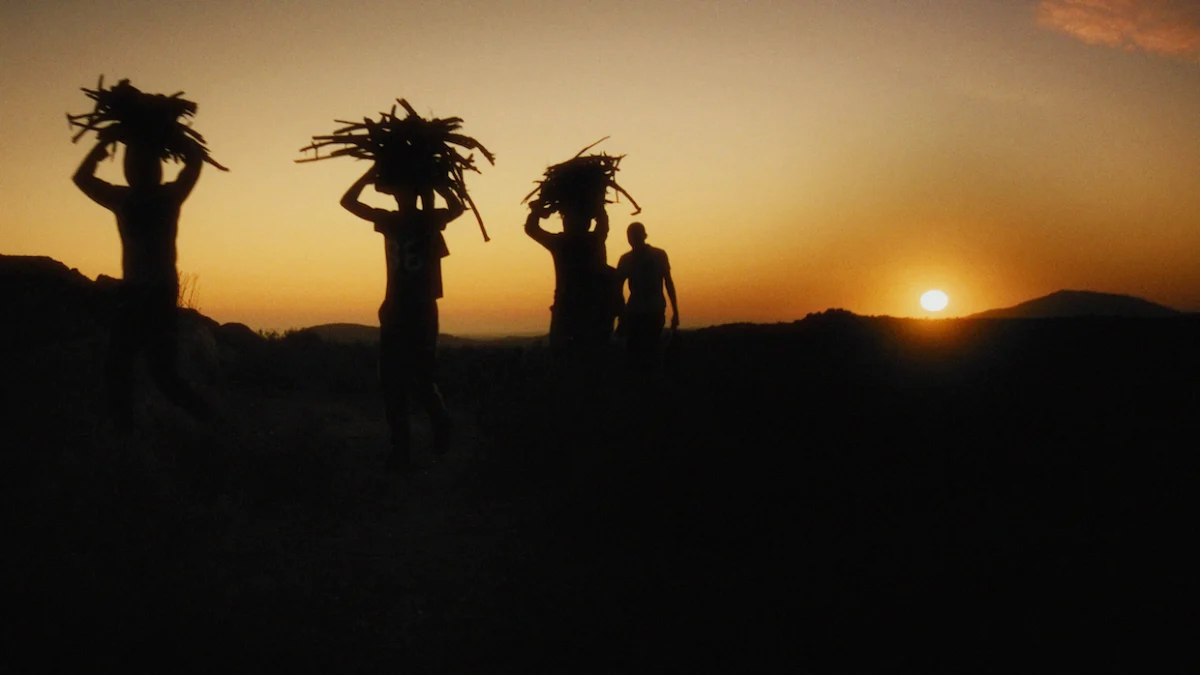
Variations on a Theme, the winner of the top prize at the Rotterdam International Film Festival, examines the lingering effects of colonial-era injustices in South Africa. The film centers on Hettie Farmer, a goat herder whose father was denied the land and cash reparations given to white veterans after World War II. Directors Jacobs and Delmar collaborated with local villagers to create a tapestry of interconnected stories. The film’s structuring device—repeating wide-frame compositions over five days—reflects the cyclical nature of the villagers’ struggle for justice and the enduring strength of their community bonds.
Official Perspectives and Curatorial Goals
Curators from Film at Lincoln Center and MoMA have emphasized that the 2026 selection aims to highlight "films that take risks." In internal communications and press releases leading up to the event, the programming committee noted that while not every film in the lineup seeks to be a traditional "masterpiece," every selection is a "worthwhile experiment" that challenges the boundaries of the medium.
"The 55th edition of New Directors/New Films is a testament to the resilience of independent cinema," a spokesperson for the festival stated. "In an era of rapid technological change and shifting distribution models, these filmmakers remind us that the core of cinema remains the human perspective—whether that is captured through a microbudget lens in Warsaw or a landscape-driven narrative in rural South Africa."
Broader Impact and Industry Implications
The success of films at ND/NF often dictates the trajectory of independent cinema for the following year. Distributors and talent scouts frequent the festival to identify the next generation of "A-list" auteurs. The 2026 slate, with its heavy emphasis on international co-productions and hybrid forms, suggests that the future of the industry may lie in decentralized, collaborative filmmaking models rather than traditional studio-backed projects.
Furthermore, the inclusion of films like Erupcja suggests a narrowing gap between "pop culture" and "high art" cinema. By integrating global icons into experimental formats, the festival is expanding its reach to younger, digitally native audiences who may not have previously engaged with avant-garde film.
As the festival concludes on April 19, the industry will be watching closely to see which of these 34 directors will follow in the footsteps of Wenders and Spielberg. For the filmmakers involved, the 55th New Directors/New Films is more than just a screening series; it is a validation of their artistic ambition and a gateway to the global stage.