

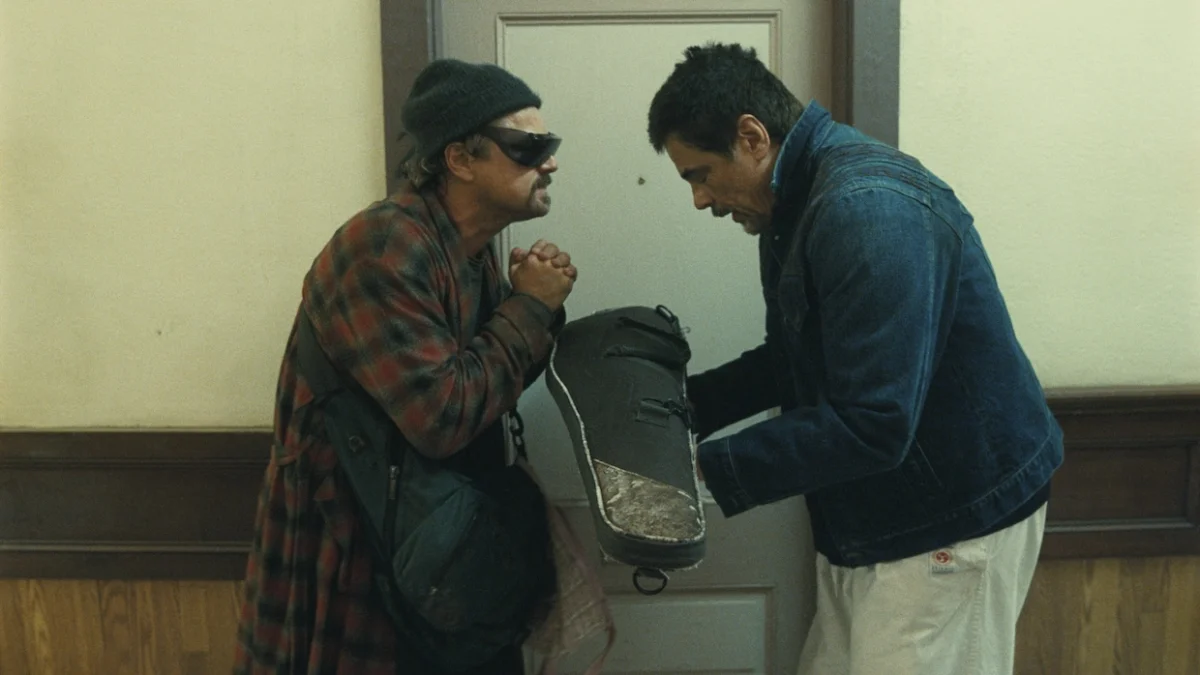
The film industry witnessed a definitive shift in the cinematic landscape during the most recent Academy Awards ceremony, as veteran auteur Paul Thomas Anderson finally secured his first Oscar win. After a career spanning ten feature films and decades of critical acclaim, Anderson emerged as the night’s most significant victor, claiming three personal trophies in a single evening. His latest opus, One Battle After Another, proved to be an unstoppable force, securing a total of six Academy Awards, including the prestigious titles of Best Picture and Best Director. The film’s sweep also extended to Best Supporting Actor, Best Adapted Screenplay, Best Film Editing, and Best Casting, cementing its place in the annals of Hollywood history.
Anderson’s ascent to the podium for the night’s top prize was shared with producer Sara Murphy. In a moment of historical reflection, Anderson utilized his acceptance speech to pay homage to the cinematic giants of the past, specifically citing the five Best Picture nominees from exactly 50 years prior: Barry Lyndon, Dog Day Afternoon, Jaws, Nashville, and One Flew Over the Cuckoo’s Nest. His remarks underscored a philosophy of artistic equality, suggesting that the "best" film is often a matter of the collective mood of the era rather than a measurable metric of quality. Critics and historians noted that the influence of these 1970s masterpieces was palpable throughout the ten films competing for the top prize this year, suggesting a resurgence of character-driven, auteur-led storytelling in the studio system.
The Statistical Paradox of Sinners and Warner Bros Dominance
While the night belonged to Anderson in terms of major category wins, the statistical narrative was heavily shaped by Ryan Coogler’s Sinners. Entering the ceremony with a record-breaking 16 nominations, the film faced high expectations but ultimately converted four of those nods into wins. Despite missing out on the top prizes of Best Picture and Best Director, Sinners dominated the technical and writing sectors. Ludwig Göransson secured his third Oscar for Original Score, further establishing himself as the premier composer of his generation. Coogler himself took home the Oscar for Original Screenplay, a testament to the film’s narrative depth.
The most significant historical milestone of the evening occurred when Autumn Durald Arkapaw was announced as the winner for Best Cinematography for her work on Sinners. This victory marked the first time in the Academy’s nearly century-long history that a woman has won in this category. The win follows years of industry-wide discussion regarding the lack of representation in the camera department and is expected to serve as a catalyst for greater diversity in technical leadership roles.
Overall, the ceremony was a triumphant night for Warner Bros. The studio managed to secure a staggering 11 Oscars across its three primary contenders, a feat that highlights its current dominance in the prestige film market. This concentration of wins within a single legacy studio contrasts with the fragmented distribution of awards seen in recent years, signaling a potential return to the "Big Studio" era of the mid-20th century.
Acting Categories and the Narrative of Career Longevity
The acting categories provided a blend of expected victories and emotional milestones. Michael B. Jordan, a first-time nominee, secured the Best Actor trophy for his performance in Sinners. The win followed a successful run through the precursor awards, including a pivotal victory at the Screen Actors Guild (SAG) Awards. At 39, Jordan was described by peers as a "veteran" of the industry, having transitioned from a prominent child actor to a leading man and director. His win was contested in one of the most competitive fields in recent memory, edging out heavyweights such as Timothée Chalamet, Leonardo DiCaprio, and Wagner Moura. The standing ovation Jordan received from the Dolby Theatre audience indicated a deep well of industry goodwill for his career trajectory.
In the Best Actress category, Jessie Buckley’s win for Hamnet was widely anticipated by pundits. Buckley’s performance in the Chloe Zhao-directed film had been the frontrunner throughout the awards season. This victory marks a significant achievement for Zhao as well; the director has now successfully guided two different women to Best Actress Oscars (following Frances McDormand’s win for Nomadland), a rare feat that underscores her skill in performance-driven storytelling.
The night’s early momentum was established by Amy Madigan’s win for Best Supporting Actress in the horror-thriller Weapons. Madigan, an industry legend whose career has spanned decades, delivered a performance that many compared to Ruth Gordon’s iconic turn in Rosemary’s Baby. Her acceptance speech was noted for its levity and lack of pretension, as she joked about her speech preparation while performing mundane tasks. This "upset" victory in a genre film was seen as a refreshing departure from traditional Oscar bait.
Meanwhile, Sean Penn secured his third Academy Award, winning Best Supporting Actor for One Battle After Another. Penn, who previously won Best Actor for Milk and Mystic River, did not attend the ceremony. His absence and subsequent win—achieved with minimal traditional campaigning—have sparked discussions among awards strategists. Industry analysts suggest that Penn’s success might embolden other high-profile stars to bypass the rigorous and often exhausting "campaign trail" in future seasons, relying instead on the strength of the performance itself.

The Streaming Landscape and Technical Achievements
Despite the dominance of traditional studios, Netflix maintained a respectable presence by sweeping several craft categories. The streamer’s production of Frankenstein secured three wins for Costume Design, Makeup and Hairstyling, and Production Design. Additionally, the animated hit KPop Demon Hunters took home two awards for Best Animated Feature and Best Original Song ("Golden").
The short film categories produced one of the night’s rare ties. In the Live Action Short category, The Singers shared the Oscar with Two People Exchanging Saliva, a result that surprised many and disrupted traditional Oscar betting pools. Netflix also claimed victory in the Documentary Short category, though it faced a significant loss in the Documentary Feature category.
The Documentary Feature prize went to Mr. Nobody Against Putin, an outcome that many insiders attributed to the current geopolitical climate. While The Perfect Neighbor had been the critical favorite, the anti-war sentiment among European Academy members and the documentary branch appears to have propelled Mr. Nobody Against Putin to the top. This political undercurrent was further amplified later in the evening when presenter Javier Bardem deviated from his script to call for an end to global conflicts and the liberation of Palestine, a statement that was met with significant applause from the attendees.
In other technical categories, the racing drama F1 won Best Sound, while James Cameron’s Avatar: Fire and Ash took home the Oscar for Best Visual Effects. The latter was presented by Sigourney Weaver, providing a nostalgic moment for fans of the franchise. The International Feature Oscar was awarded to Sentimental Value, emerging victorious from a highly competitive field that included four separate entries from the distributor NEON.
Production Analysis and the Broadcast Experience
While the awards themselves were largely well-received, the television broadcast of the ceremony faced significant criticism. Hosted by Conan O’Brien, the show opened with a high-energy sequence featuring O’Brien in "Aunt Gladys" drag being pursued by a group of children through parodies of Best Picture nominees. However, the energy of the opening did not sustain throughout the night.
The broadcast was plagued by technical malfunctions, including bizarre camera angles that often obscured the presenters and sound issues that marred the "In Memoriam" segment. This tribute, featuring Billy Crystal, Rachel McAdams, and Barbra Streisand, was intended to be the emotional centerpiece of the evening. Streisand’s performance of "The Way We Were" was notably impacted by audio distortions, leading many to speculate that the telecast would fail to secure Emmy nominations for production quality.
Further criticism was directed at the show’s producers for the handling of the Best Original Song nominees. Only two of the five nominated songs were performed live: "Golden" from KPop Demon Hunters and "I Lied to You" from Sinners. The remaining three nominees were relegated to a QR code on the screen, a move that was widely viewed as a slight against the songwriters and a poor attempt to shorten the broadcast’s runtime.
Future Implications for the Film Industry
The results of this year’s Academy Awards suggest a bifurcated industry. On one hand, the sweep by Paul Thomas Anderson indicates a continued reverence for the "prestige auteur," while the record-breaking nominations for Sinners highlight the growing power of blockbuster filmmaking that maintains high artistic standards.
The historic win for Autumn Durald Arkapaw is expected to have long-term effects on hiring practices within the industry, potentially opening doors for more female cinematographers in big-budget productions. Furthermore, the success of Warner Bros. may encourage other legacy studios to reinvest in mid-to-large-budget adult dramas, a genre that has struggled in the era of streaming dominance.
As the curtains close on this awards season, the discourse surrounding the winners and the production of the ceremony itself is expected to continue for weeks. However, the industry’s focus is already shifting toward the upcoming festival circuit, where the contenders for the next cycle are already beginning to emerge. The narrative of this year—defined by long-overdue recognition for masters like Anderson and historic breakthroughs for new voices—sets a high bar for the seasons to come.