
Historical Context and the Legacy of Frankenstein
The cultural roots of Gyllenhaal’s project trace back to 1818, with the publication of Mary Shelley’s Frankenstein; or, The Modern Prometheus. Shelley, the daughter of feminist pioneer Mary Wollstonecraft and political philosopher William Godwin, drafted the novel during a period of intense personal and maternal anguish. Historians have long noted that the story of the "undead" or the "constructed human" has been deeply intertwined with feminine experiences of biological expectation and social alienation.
In 1935, James Whale’s Bride of Frankenstein introduced Elsa Lanchester as the titular character. Despite having less than five minutes of screen time, Lanchester’s portrayal—defined by her gravity-defying hair and piercing screams—became a permanent fixture in the horror pantheon. Gyllenhaal’s The Bride! is explicitly positioned as a response to this brief appearance, aiming to give the silent monster a voice and a narrative that extends beyond her utility to the male characters of Victor Frankenstein and his creation.
A Timeline of the Modern "Undead" Revival
The release of The Bride! occurs during a notable micro-revival of interest in the feminine undead. Within the last three years, several high-profile and independent projects have explored similar themes:
- 2023: Yorgos Lanthimos released Poor Things, a surrealist coming-of-age tale inspired by the Frankenstein myth. The film received widespread critical acclaim and won four Academy Awards, including Best Actress for Emma Stone.
- 2023: Zelda Williams directed Lisa Frankenstein, written by Diablo Cody. This film utilized a 1980s aesthetic to explore teen angst through a gothic rom-com lens.
- Summer 2024: Tina Romero, daughter of legendary horror director George A. Romero, premiered Queens of the Dead, a queer-coded zombie film set in a Brooklyn nightclub.
- March 2025: Grace Glowicki’s Dead Lover is scheduled for limited U.S. theatrical release, offering a "raunchily gothic" subversion of Shelley’s original script.
- 2025/2026: Guillermo del Toro’s big-budget Frankenstein adaptation for Netflix, featuring Mia Goth as Elizabeth Lavenza, further cements the industry’s renewed interest in the source material.
Narrative Structure and Plot Development
The Bride! employs a complex, multi-layered narrative that begins with a metatextual framing device. Jessie Buckley portrays a version of Mary Shelley who speaks to the audience from a void, claiming ownership over the story before her spirit possesses the body of Ida, a 1930s mob moll.
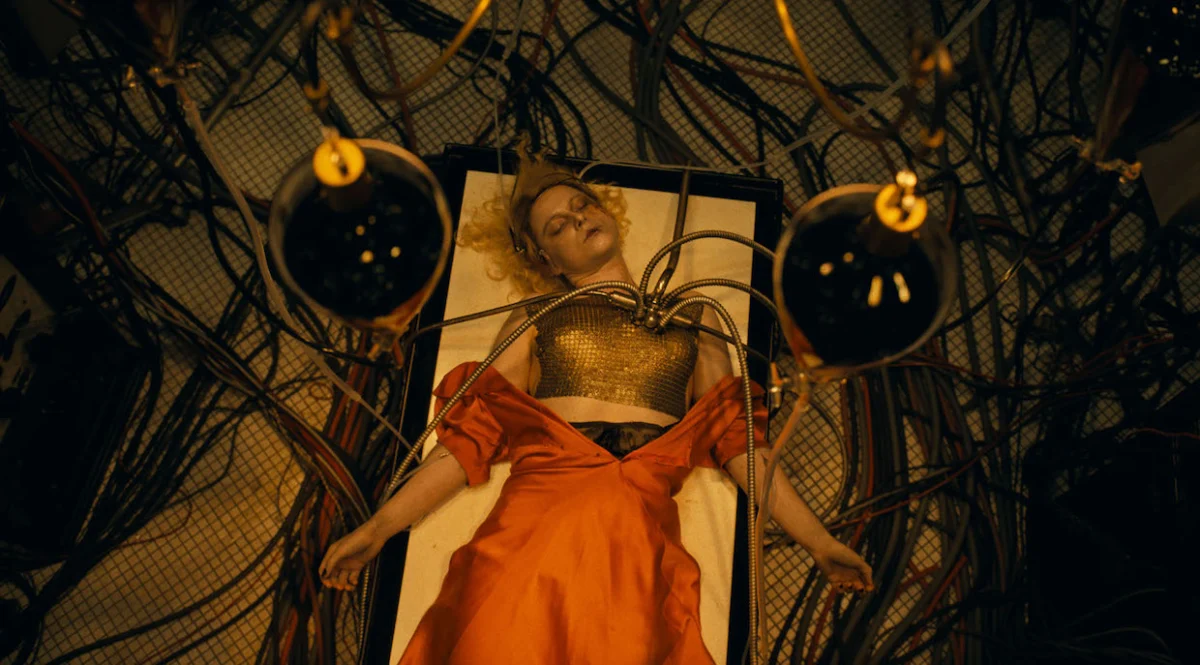
Following Ida’s murder at the hands of organized crime figures, she is resurrected by a scientist (Annette Bening) at the behest of Frankenstein’s Monster (Christian Bale). The film then pivots into a genre-bending "Bonnie and Clyde" style odyssey. As Ida/The Bride navigates her new existence, the plot branches into several distinct subplots:
- The Romantic Arc: A central focus on the relationship between Bale’s Monster and Buckley’s Bride as they navigate their shared status as outcasts.
- The Crime Drama: A subplot involving a musical actor (Jake Gyllenhaal) and the underworld figures responsible for Ida’s initial death.
- The Procedural Element: Penélope Cruz portrays a female police officer in a role described as a "Coens-esque" detective story, charting her own rise to power within a male-dominated precinct.
- The Revolutionary Thread: The film introduces a "Riot Grrrl" style movement of marginalized women, echoing the punk-rock aesthetics of the 1980 film Times Square.
Production Design and Technical Execution
Gyllenhaal’s production team utilized a sleek, high-contrast aesthetic to bridge the gap between 1930s noir and modern punk. The character design for The Bride is particularly striking, featuring a signature visual of black ink splattered across the corner of her mouth—a symbolic representation of the "overflowing" narrative and the character’s refusal to be contained.
The film’s technical crew includes several collaborators from the Joker (2019) and Joker: Folie à Deux (2024) productions. The cinematography and musical score are designed to create an immersive, atmospheric experience that emphasizes the "mall-goth" sensibilities of the director’s vision. This sleek production value contrasts with the "stitched-together" nature of the plot, which critics have noted mirrors the physical construction of the protagonist.

Statements from the Director and Cast
During the film’s U.S. premiere, Maggie Gyllenhaal addressed the thematic core of the project, stating, "There’s a little monster in all of us." She explained that her motivation for the film stemmed from a desire to explore the "feminist rage" inherent in the source material and her frustration with the historical silence of female monsters on screen.
Lead actress Jessie Buckley has described the role as a dual challenge, requiring her to balance the "Jack Sparrow-ish" affectation of a possessed soul with the raw vulnerability of a woman discovering her own agency for the first time. Christian Bale’s portrayal of the Monster is reportedly more melancholic and romantic than previous iterations, focusing on the character’s desire for companionship and domesticity.
Critical Analysis and Industry Implications
Industry analysts suggest that The Bride! represents a significant risk for its studio, given its "overstuffed" narrative and unconventional blending of genres. Early reviews have characterized the film as a "wildly uneven" but "good-hearted" sophomore effort. While some critics have lauded its creative ambition and inventive production design, others have pointed to the underdeveloped nature of its numerous subplots, particularly the "Riot Grrrl" revolution and the possession narrative, which occasionally vanish for long stretches of the two-hour-and-seven-minute runtime.
The film’s performance at the box office is being closely watched as an indicator of the commercial viability of "maximalist" feminist horror. Following the success of Poor Things, there is an established appetite for revisionist gothic tales, yet the "narrative muddle" of The Bride! may present a hurdle for mainstream audiences. However, the film’s unique aesthetic and cult-friendly themes suggest it may find a dedicated long-term following in the home media and streaming markets.
Theoretical Framework: Agency and the Monstrous Feminine
The film’s thematic exploration is supported by contemporary scholarship on horror. In the 2021 study Women and Other Monsters, author Jess Zimmerman argues that "women and monsters have a lot in common… they are both outcasts; alienated, derided and feared by society." Gyllenhaal’s film attempts to transition the female zombie from a figure of "abject passivity" to one of "active resistance."
Historically, zombie cinema—from Frankenhooker (1990) to Life After Beth (2014)—has utilized the resurrected female body to critique systemic misogyny. These characters are often "built" to satisfy male desires, only to prove "untameable" and "rotting" in ways that defy male control. The Bride! gestures toward these ideas, positioning the protagonist’s amnesia and subsequent self-discovery as a metaphor for breaking free from patriarchal scripts.
Conclusion
The Bride! stands as a testament to Maggie Gyllenhaal’s ambitious directorial voice. By synthesizing two centuries of literary and cinematic history, the film attempts to provide a definitive, if chaotic, platform for the "monstrous feminine." While its narrative sutures may be visible, its commitment to exploring the complexities of female agency through the lens of the undead ensures its place in the ongoing dialogue surrounding gender and genre in modern Hollywood. Whether it achieves blockbuster status or settles into the realm of a "cult classic," the film’s vibrant production and earnest intent mark it as a bold experiment in revisionist storytelling.