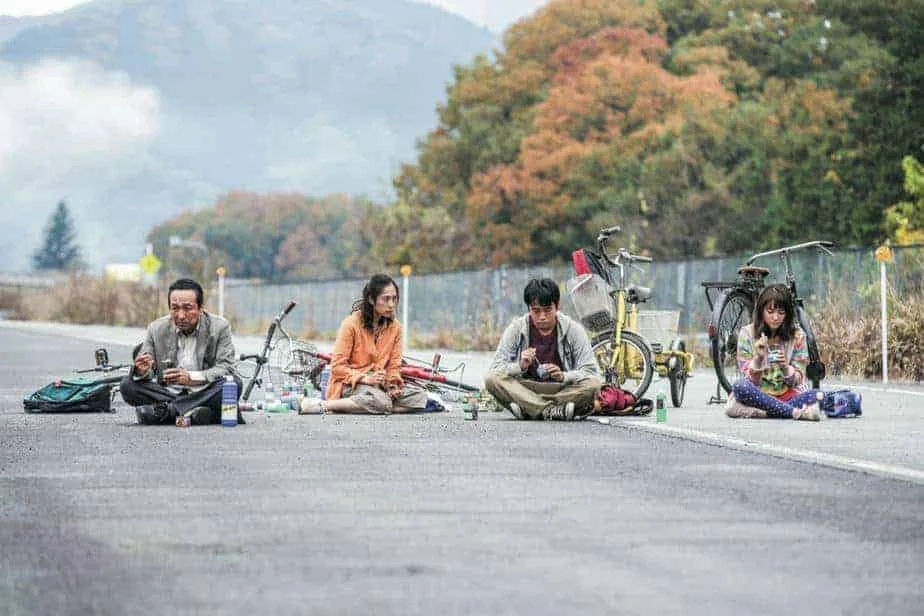
In an era defined by its profound reliance on technological infrastructure, the Japanese film "Survival Family" presents a compelling and thought-provoking narrative that probes the very foundations of the modern family unit when confronted with an unprecedented societal blackout. Directed by Shinobu Yaguchi, known for his critically acclaimed works such as "Waterboys" and "Swing Girls," this film ventures into a starkly plausible future where a catastrophic, nationwide power outage plunges civilization into disarray. The story centers on a family of four, thrust into a desperate quest for survival as the familiar conveniences of their technologically saturated lives vanish overnight, leaving them to confront not only the chaotic landscape of a society in crisis but also the dormant dynamics within their own relationships.
The premise of "Survival Family" is rooted in a chillingly relatable scenario: a complete and seemingly unending cessation of electrical power. This event is not merely a plot device; it serves as a catalyst that strips away the artifice of modern living, forcing individuals to confront fundamental needs and interpersonal connections. The film’s central family, previously engrossed in the distractions and monetary pursuits that characterize contemporary existence, finds themselves disoriented and vulnerable. Their journey outward from their now-impotent home is a visceral exploration of how quickly societal norms can fracture and how deeply ingrained dependencies can be. The narrative cleverly contrasts the external struggle against a backdrop of widespread desperation with the internal struggle for the family to rediscover their roles and reaffirm their bonds, roles that had been diminished by the constant hum of technology and the pursuit of material wealth.
A World Plunged into Darkness: Production Design and Scale
The sheer ambition and meticulous execution in crafting a world devoid of power are central to the film’s immersive quality. The production design team has undertaken a monumental task, meticulously depicting various locales, which in their accustomed state would be vibrant hubs of activity, now rendered eerily silent and desolate by the pervasive darkness. This commitment to world-building imbues every scene with a palpable sense of realism, creating a surreal experience for the audience. The visual narrative effectively conveys the magnitude of the disruption, transforming familiar urban landscapes into ghost towns.
Furthermore, the extensive use of extras populating the littered streets and abandoned thoroughfares contributes significantly to the film’s epic scope. These individuals, depicted in their own states of distress and resourcefulness, create a powerful impression of a society grappling with a crisis of monumental proportions. The visual density achieved through these crowd scenes amplifies the feeling of a civilization unraveled, underscoring the widespread impact of the blackout. It is this meticulous attention to visual detail that elevates "Survival Family" beyond a simple domestic drama, positioning it as a grand-scale disaster film that resonates with a global audience increasingly aware of the fragility of our interconnected systems.
The Intimate Heart of a Global Crisis: Familial Dynamics
Despite the vastness of the apocalyptic backdrop, the brilliance of "Survival Family" lies in its focused approach on the internal drama of a single family. This allows the film to maintain a grounded and relatable experience for the viewer, as the narrative predominantly unfolds through their interactions and evolving relationships. The film masterfully balances the aesthetic grandeur of a disaster film with the emotional depth and soul of independent cinema. The heartwarming drama that emerges from the family’s struggles provides a poignant counterpoint to the external chaos, creating a seamless and engaging cinematic experience that captures the best of both genres.
The narrative arc of the family’s journey is intricately woven with their rediscovery of each other. The loss of external validation and the conveniences of modern life forces them to re-evaluate their individual contributions and collective strength. This inward turn, away from the superficial distractions of the outside world, allows for a profound exploration of familial resilience. The film posits that in the face of societal breakdown, the most enduring and essential structures are those forged within the family unit.
A Director’s Vision: Cinematography and Location Work
Shinobu Yaguchi’s directorial prowess is evident in his ability to create a world that is both awe-inspiring and deeply personal. The sheer scale of the world he constructs for the audience is immense, yet the atmosphere is profoundly shaped by the film’s exceptional cinematography and inspired location work. These elements work in perfect synergy, showcasing a perfectionist’s eye for detail and a keen understanding of how to translate a narrative of survival into a visually compelling experience.
The harmonious collaboration between the visual elements is particularly apparent as the family navigates diverse environments, from the chaotic, debris-strewn remnants of bustling towns to the vast, untamed expanse of sprawling fields and dense forests. The camera’s perspective is consistently attuned to the importance of the backdrop, seamlessly shifting between intimate close-ups that capture the emotional nuances of the family members and sweeping wide shots that emphasize the overwhelming scale of their predicament. This dynamic visual storytelling ensures that the audience remains immersed in both the personal journey of the family and the broader context of a world in collapse. The visual language employed by the film serves not only to depict the external environment but also to reflect the internal states of the characters, underscoring their isolation and their growing interdependence.
Casting and Character Development: The Pillars of Realism
The production is further bolstered by exceptional casting choices, where each family member contributes significantly to establishing a sense of realism and a shared history as a cohesive unit. However, it is the performances of Fumiyo Kohinata and Eri Fukatsu, portraying the parental figures, that provide the most profound depth and intrigue. The nationwide power outage fundamentally alters traditional gender roles and societal expectations, presenting a significant challenge to the established order.

In this new reality, the father’s traditional role as the primary breadwinner, a status often defined by his professional achievements and financial contributions, is relegated to a secondary concern. His lifelong accumulation of skills and his established position within the corporate world suddenly become less relevant in the immediate struggle for survival. Conversely, the mother’s social etiquette, her ability to connect with others, and her inherent bartering skills gain paramount importance. Her capacity for resourcefulness and her understanding of human interaction, previously perhaps undervalued in the context of a technologically driven economy, become critical assets.
This shift creates a compelling personal and emotional challenge for the father figure. The skills he meticulously honed throughout his career, which once defined his identity and his value within the family, now appear to be more of a hindrance than a help. His journey becomes a poignant exploration of self-worth and adaptability in the face of obsolescence. The film brilliantly portrays his struggle to find new validity and purpose within his family, a transition that elicits strong empathy from the viewer, who is compelled to cheer for his eventual rediscovery of his strength and his place. This character arc is a powerful commentary on the often-unseen contributions of individuals and the importance of recognizing diverse forms of strength.
The Unfolding Crisis: A Chronology of Disruption
While the film does not present a precise, date-stamped timeline of the blackout, it meticulously depicts the progression of societal breakdown through a series of escalating events and observations. The initial phase of the blackout is characterized by widespread confusion and a belief that the disruption will be temporary. News reports, initially a source of information, quickly devolve into speculation and then silence as communication networks fail.
Phase 1: The Sudden Silence (Initial Hours/Days)
- The Disappearance of Power: The narrative opens with the abrupt cessation of electricity, plunging homes and cities into darkness. Initial reactions are typically of surprise and mild inconvenience, with many assuming a localized or short-term issue.
- Failing Communication: Mobile phone networks become overloaded and then cease to function. Internet connectivity is lost. Traditional broadcast media, reliant on power, also become inaccessible.
- Urban Paralysis: Traffic lights fail, leading to chaos on the roads. Public transportation grinds to a halt. Businesses close, and everyday transactions become impossible.
Phase 2: The Growing Desperation (Days/Weeks)
- Resource Scarcity: As the blackout persists, essential supplies like food, water, and fuel begin to dwindle. Supermarkets are quickly emptied, and looting becomes a growing concern.
- Breakdown of Order: Law enforcement and emergency services, overwhelmed and lacking resources, struggle to maintain control. The film depicts scenes of growing unrest and individuals resorting to desperate measures.
- Migration and Displacement: Many people, unable to sustain themselves in urban centers, begin to migrate in search of safer locations or communities that might have alternative resources. This creates the "hordes of others" the family encounters.
Phase 3: The New Normal (Weeks/Months – Implied)
- Adaptation and Primitive Skills: Survivors are forced to adapt to a pre-industrial existence. The film highlights the importance of skills like bartering, foraging, and manual labor.
- Shifting Social Structures: Traditional hierarchies are challenged, and new forms of community and leadership emerge, often based on practical survival abilities.
- The Enduring Family Unit: The film emphasizes that amidst this profound societal collapse, the familial bond becomes one of the few reliable anchors, forcing individuals to confront their deepest fears and their most profound love.
Supporting Data and Societal Implications
The premise of "Survival Family" resonates with real-world concerns about societal vulnerability to infrastructure failures. Studies on the impact of prolonged power outages consistently highlight the cascading effects on various sectors:
- Economic Impact: A prolonged nationwide blackout would have catastrophic economic consequences. According to the U.S. Department of Energy, a widespread, long-duration power outage could cost the U.S. economy upwards of $700 billion per week in lost economic activity. This underscores the financial fragility exposed by such an event.
- Public Health Risks: Without electricity, refrigeration fails, leading to food spoilage and increased risk of foodborne illnesses. Hospitals, reliant on backup generators, would face immense challenges in providing critical care. Access to clean water would also be severely compromised as water treatment and pumping stations would cease to function.
- Social Unrest: Historical and simulated disaster scenarios suggest that prolonged periods without essential services can lead to significant social unrest, panic, and a breakdown of law and order. The film’s depiction of desperate individuals seeking resources is a plausible outcome.
- Technological Dependency: The film serves as a stark reminder of our collective dependence on technology. A report by the Pew Research Center has indicated that a significant majority of Americans rely heavily on their smartphones for daily communication and information, highlighting the vulnerability of our communication infrastructure.
Official Responses and Broader Impact
While "Survival Family" is a fictional narrative, its themes echo concerns raised by government agencies and disaster preparedness organizations worldwide. These bodies often conduct drills and develop contingency plans for large-scale disasters, including infrastructure failures. Their messaging typically emphasizes the importance of individual and community preparedness, including stockpiling emergency supplies, developing communication plans, and understanding basic survival skills.
The film’s "audience award winner" status at the Asian Pop-Up Cinema festival underscores its broad appeal and its success in resonating with diverse audiences. This recognition suggests that the film’s exploration of universal human themes—resilience, family, and the search for meaning in adversity—transcends cultural boundaries.
Conclusion: A Testament to Human Resilience
"Survival Family" stands as a competent family drama and a meticulously constructed disaster film, artfully sprinkled with moments of humor that provide necessary levity. The resulting experience is highly enjoyable and profoundly thought-provoking. Shinobu Yaguchi’s unwavering attention to detail is palpable in every frame, and his vision is powerfully realized through a perfectly chosen cast. The film is more than just an entertainment piece; it is a celebration of the enduring strength and fundamental importance of family in the face of overwhelming challenges. It reminds us that even when the lights go out, the connections that bind us can illuminate the path forward, offering hope and a profound sense of purpose in a world irrevocably changed. The film’s success lies in its ability to balance the grand spectacle of societal collapse with the intimate, relatable struggles of a single family striving to survive and, more importantly, to thrive together.