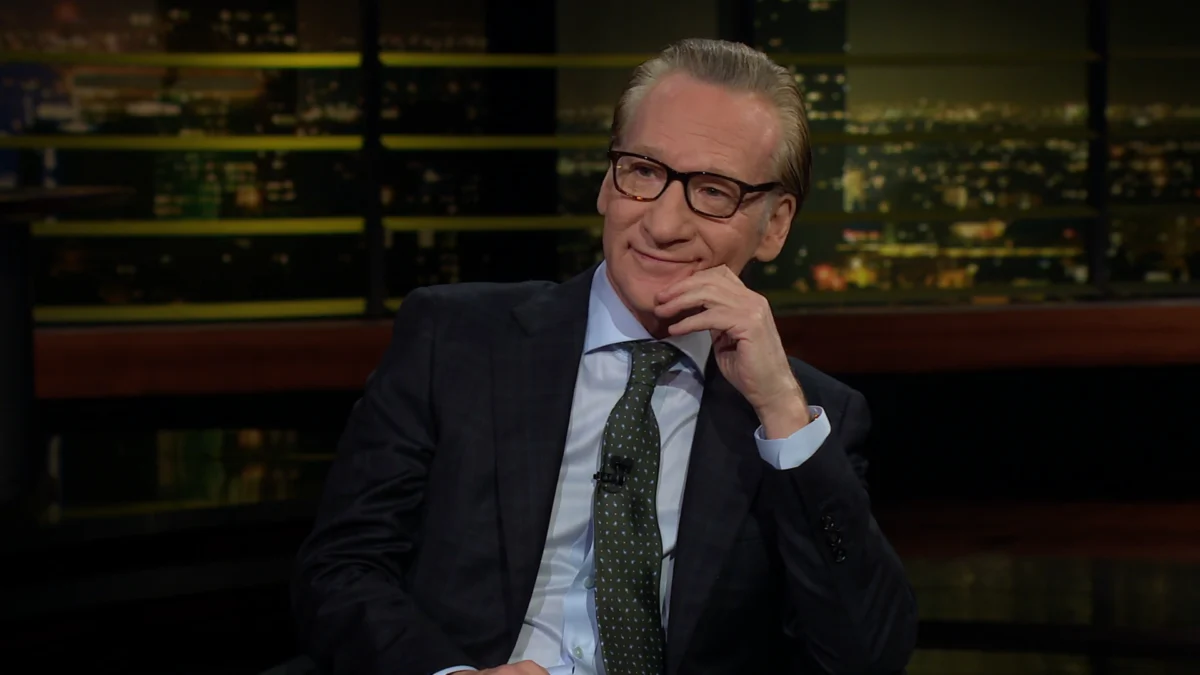
The John F. Kennedy Center for the Performing Arts has officially confirmed that veteran comedian and political commentator Bill Maher will be honored with the 27th Mark Twain Prize for American Humor, ending a week of intense speculation and extraordinary denials from the White House communications team. The prestigious award, which recognizes individuals who have made a profound impact on American society in the tradition of Mark Twain, is scheduled to be presented to Maher at a ceremony on June 28, with the event later streaming on Netflix. This announcement brings a definitive resolution to a highly unusual public spat that saw the executive branch directly contradicting reports of a major cultural accolade.
The saga surrounding Maher’s selection for the Mark Twain Prize began to unfold with a report from The Atlantic last week, which cited multiple sources indicating that Maher had been chosen and offered the award. However, the report also highlighted potential complications arising from Maher’s long-standing and often acrimonious relationship with President Donald Trump, whose administration holds oversight of the Kennedy Center. The prospect of Maher, a vocal and often scathing critic of the former president, receiving such a national honor under these circumstances immediately raised eyebrows and fueled anticipation of a potential political intervention.
Indeed, the White House communications apparatus swiftly moved to discredit The Atlantic‘s reporting. White House press secretary Karoline Leavitt unequivocally stated, "This is fake news. Bill Maher will NOT be getting this award." Her sentiment was echoed by White House communications director Steven Cheung, who added with equal certainty, "Literally FAKE NEWS." These forceful denials created a bizarre and unprecedented situation, as the White House appeared to be directly weighing in on the conferment of a cultural award, suggesting either a lack of internal communication or a deliberate attempt to block the recognition. The subsequent official confirmation from the Kennedy Center has since rendered these initial White House statements demonstrably false, leaving unanswered questions about the internal dynamics that led to such a public and high-stakes reversal.
A Legacy of American Humor: The Mark Twain Prize
Established in 1998 by the John F. Kennedy Center for the Performing Arts, the Mark Twain Prize for American Humor is considered one of the nation’s foremost accolades for comedic achievement. Named after Samuel Langhorne Clemens, better known by his pen name Mark Twain, the prize seeks to honor individuals whose work mirrors Twain’s indelible contributions to American culture through satire, social commentary, and a unique comedic voice. Twain himself was a master of observation, wit, and incisive criticism, often using humor to expose societal hypocrisies and provoke thought. The prize is awarded annually to a living American who has "had an impact on American society in the same vein as Mark Twain."
Past recipients of the Mark Twain Prize form an illustrious roster of comedic legends, underscoring its significant stature within the entertainment industry. The inaugural award was presented to Richard Pryor in 1998, followed by others such as Jonathan Winters (1999), Carl Reiner (2000), Whoopi Goldberg (2001), Bob Newhart (2002), and Lily Tomlin (2003). Subsequent honorees have included George Carlin (2008), Tina Fey (2010), Ellen DeGeneres (2012), Carol Burnett (2013), Bill Murray (2016), David Letterman (2017), Julia Louis-Dreyfus (2018), Dave Chappelle (2019), and most recently, Adam Sandler (2023). These artists represent a diverse spectrum of comedic styles and platforms, from stand-up and sketch comedy to television and film, all united by their profound influence on the American comedic landscape. The selection of Bill Maher places him squarely within this pantheon, recognizing his decades-long career as a satirist, political commentator, and host. Roma Daravi, the Kennedy Center’s Vice President of Public Relations, lauded Maher for "influencing American discourse — one politically incorrect joke at a time," a statement that succinctly captures the essence of his distinctive style and impact.
Maher’s Response: Humor as Defiance
On Friday night’s episode of Real Time With Bill Maher on HBO Max, the veteran host wasted no time in addressing the week’s tumultuous news, weaving the controversy into the opening minutes of his monologue. Acknowledging the "lot of back and forth" about whether he would indeed receive the prize, Maher leaned into the absurdity of the situation with characteristic wit. "We have reached a compromise," he joked. "The compromise is that I am going to get it and then I’m going to give it to [President Donald Trump]. Everybody’s happy. I just want things to work out." This satirical olive branch, dripping with irony, perfectly encapsulated the surreal nature of the events.
Maher directly addressed the White House denials, stating simply that he wanted to express his gratitude and was "not looking for a fight." He even claimed not to be angry at Trump for the perceived interference, framing their relationship as a complex, long-running game. "Me and the president, we have a complicated relationship that goes back to the orangutan lawsuit," Maher quipped, immediately referencing a bizarre legal skirmish from over a decade ago.
The "orangutan lawsuit" dates back to 2013, following an appearance by Maher on The Tonight Show With Jay Leno. During the segment, Maher challenged Trump to provide a copy of his birth certificate to prove he wasn’t the "spawn of his mother having sex with an orangutan." This provocative jibe was a direct echo of Trump’s own public demands for then-President Barack Obama’s birth certificate, part of the "birther" conspiracy theory Trump famously propagated. In response, Trump, then a real estate mogul and reality TV star, filed a $5 million lawsuit against Maher, claiming breach of contract for Maher’s alleged failure to pay a "charitable contribution" if Trump provided the birth certificate. Trump later withdrew the suit, but the incident cemented a deeply personal and often venomous rivalry between the two public figures. Maher’s invocation of this history highlights the depth of their antagonistic relationship, providing crucial context for the recent White House pushback against his award.
"This has been going on a long time, so him trying to block me from getting it — I respect the move. I respect the move. Keep the game going, baby, OK, I’m all about engagement. Disengagement gets you nothing. You got to engage," Maher declared, signaling his willingness to continue the sparring match with the former president. He then turned his attention to Trump’s recent insults lobbed at him via Truth Social, where Trump had branded him a "highly overrated LIGHTWEIGHT" and a "complete waste of time" following a White House dinner. Maher humorously invited Trump to "Get it off your chest, big man, OK, I’m totally fine with that."
In a particularly defiant and comedic flourish, Maher expressed pride in Trump’s latest insults, revealing that he had compiled a long list of them, which he brought with him to the White House. A split screen then displayed an image of a sheet of paper bearing the White House logo, adorned with a litany of Trump’s past criticisms of Maher. He proceeded to read many of them aloud, transforming what were intended as slights into a unique and powerful acceptance speech. "So I would just like to say as a low ratings lightweight and a rather dumb guy and a pathetic, bloated sleaze bag, a dummy, a terrible student, a nervous, failing comedian and someone who was sick, insane, very sad, totally shot in, a crazy maniac, I am honored to accept the Mark Twain Prize. Thank you very much," he recited. He then extended a direct, albeit sarcastic, invitation to Trump: "I will be there, Don, and I hope you will be too. I mean, the place is named after you now, you really should show up. You could show up. You could thank me in person for being one of the few people on the lunatic left who’s glad you hit Iran and is hoping we win that one." This final jab, touching on a complex geopolitical issue with characteristic Maheresque irreverence, underscored his consistent willingness to challenge conventional wisdom and provoke his audience, regardless of political affiliation.
Broader Implications: Satire, Politics, and Cultural Institutions
The controversy surrounding Bill Maher’s Mark Twain Prize transcends a mere celebrity feud; it raises important questions about the intersection of political power, artistic freedom, and the independence of national cultural institutions. The unprecedented intervention by White House communications officials to dismiss reports of the award, only to be contradicted by the Kennedy Center days later, suggests a tension that is rarely seen in American public life.
The Kennedy Center, while a private non-profit organization, operates under a federal charter and is the nation’s living memorial to President John F. Kennedy. Its board of trustees includes presidential appointees, giving the executive branch a nominal connection. However, the selection process for awards like the Mark Twain Prize is typically insulated from political influence, relying on committees of artists, critics, and cultural leaders. The White House’s "fake news" claim could be interpreted in several ways: a genuine miscommunication, an attempt to gauge public reaction, or a direct, albeit ultimately unsuccessful, effort to exert pressure on the Kennedy Center to reverse its decision. That the Center proceeded with the announcement despite the White House’s public denials reaffirms its commitment to independent artistic judgment and its mission to honor significant American cultural figures regardless of their political leanings or critics.
Maher’s career, spanning over three decades, has been defined by his commitment to unvarnished, often provocative political and social commentary. From his groundbreaking show Politically Incorrect to his current Real Time, he has consistently challenged sacred cows on both the left and the right, making him a divisive figure but also one highly respected for his intellectual rigor and refusal to conform. His "politically incorrect" brand of humor, as noted by the Kennedy Center, aligns with Mark Twain’s own tradition of using satire to hold a mirror up to society, even when the reflection is uncomfortable. The award, especially given the political drama preceding it, serves as a powerful validation of the role of satire and political humor in a democratic society – to question, to critique, and to provoke thought, often through discomfort.
This incident also highlights the increasing politicization of culture in contemporary America. Awards, once seen as purely artistic or cultural distinctions, are now often viewed through a partisan lens, becoming battlegrounds for ideological clashes. The spectacle of the White House denying a cultural award to a comedian known for his sharp political commentary underscores a broader trend where every aspect of public life, including entertainment, is scrutinized for its political alignment.
In the end, Bill Maher’s receipt of the Mark Twain Prize is not just an acknowledgment of his comedic talent, but a testament to the enduring power of free speech and the resilience of cultural institutions in the face of political pressure. His acceptance speech, delivered with a unique blend of defiance and self-deprecating humor, will undoubtedly be remembered as one of the most memorable in the prize’s history, perfectly encapsulating the complex, often contentious, but ultimately vibrant landscape of American public discourse. The ceremony in June promises to be an event watched not just by fans of comedy, but by those interested in the delicate balance between politics, media, and the arts.