
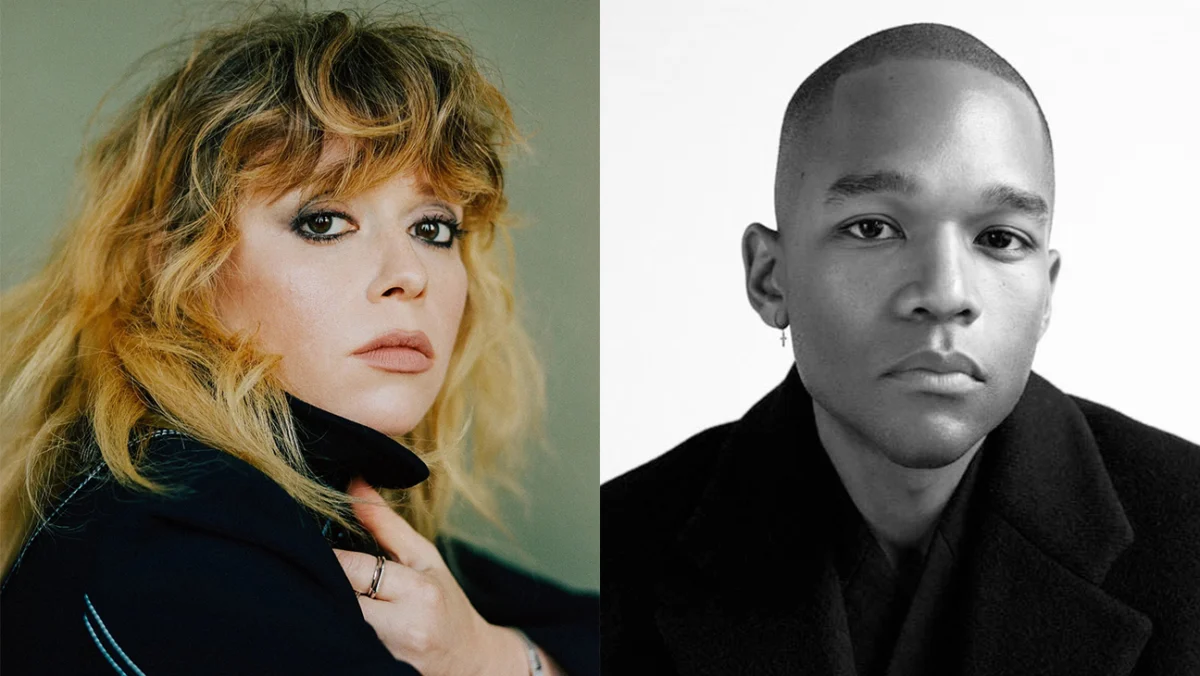
A significant creative alliance is forming for Natasha Lyonne’s upcoming feature film project, Bambo, as acclaimed fashion guru Carlos Nazario steps into the role of costume designer. This collaboration marks Nazario’s highly anticipated debut in the realm of feature film production, bringing his distinctive eye for style and narrative to Lyonne’s vision. The announcement underscores a growing trend of top-tier fashion talent transitioning into cinematic roles, promising a visually rich and meticulously crafted aesthetic for the 1980s-set drama.
A New Creative Alliance for ‘Bambo’
Natasha Lyonne, celebrated for her distinctive acting prowess and increasingly recognized for her directorial acumen, is at the helm of Bambo, a project she is directing from her own script. The film is poised to immerse audiences in the vibrant, tumultuous landscape of the 1980s, tracing the ambitious yet often misguided journey of a Brooklyn-born boxing promoter. This central character, driven by the elusive dream of becoming the next Don King, navigates a world of high stakes and moral ambiguity. His young daughter is unwillingly swept into this "hurly burly ride of tax evasion, cocaine, race cars, lost dreams and heartbreak," as described in initial reports, making the film a poignant exploration of ambition, family, and the darker side of the American dream. Actress Joey King is currently in discussions for the pivotal role of the daughter, a character whose experiences will likely anchor the emotional core of the narrative.
The involvement of Carlos Nazario as costume designer is particularly noteworthy. Nazario, currently serving as contributing style director at Vogue under editor Chloé Malle, has an illustrious career in the fashion industry, having shaped the images of countless celebrities and graced the covers of numerous high-profile publications. His transition to film costume design for Bambo signals not only a personal career evolution but also a strategic move that could significantly elevate the film’s visual identity, especially given its specific period setting. Lyonne is producing Bambo through her Animal Pictures banner, alongside Craig Mazin for Word Games, Jason Weinberg, and Sarah Sarandos. Filming is slated to commence this summer, building anticipation for what promises to be a unique cinematic offering.
Carlos Nazario’s Ascent in the Fashion World and Cinematic Debut
Carlos Nazario has long been revered as an influential image maker within the global fashion landscape. His career trajectory is a testament to his profound impact and versatile talent, having seamlessly navigated various facets of the industry, from editorial styling to high-profile red-carpet engagements. Prior to his current distinguished role at Vogue, Nazario held the position of style director at large for Harper’s Bazaar, a tenure he concluded in January with a memorable final shoot styling supermodel Kaia Gerber. His resume boasts collaborations with some of the world’s most acclaimed fashion photographers and editors, contributing to covers for prestigious publications such as Italian Vogue, The New York Times style magazine T, i-D, M Le Monde, L’uomo Vogue, and W. Furthermore, his foundational experiences include stints at iconic fashion houses and magazines, including Marc Jacobs, W magazine, Katie Grand’s Love, and a significant tenure as fashion director at Hood by Air, where he contributed to the brand’s boundary-pushing aesthetic.
Nazario’s reputation as a visionary stylist is underscored by his work with an impressive roster of A-list celebrities, including Rihanna, Kim Kardashian, Kendrick Lamar, Kendall Jenner, Bella Hadid, Miley Cyrus, Solange, Zoe Kravitz, and Naomi Campbell, among others. He possesses a unique ability to craft compelling narratives through clothing, transforming individuals into iconic figures through his sartorial choices. A significant milestone in his career was becoming the first Black stylist to style a cover for American Vogue, a groundbreaking achievement that cemented his status as a trailblazer. His return to Vogue under Chloé Malle’s leadership was marked by styling Rosalía for a cover, a moment he described as "truly full circle." More recently, he demonstrated his exceptional range by styling Doja Cat in a striking menswear look for a subsequent cover, further showcasing his mastery across diverse aesthetics. Beyond the realm of celebrity and high fashion, Nazario also styled U.S. Representative Alexandria Ocasio-Cortez for the cover of Vanity Fair, selecting a powerful look by a Black designer from her district, highlighting his commitment to meaningful representation and storytelling through fashion.
His transition to film as a costume designer for Bambo is a natural, albeit challenging, evolution. The fashion and film industries have historically shared a symbiotic relationship, with designers frequently influencing cinematic aesthetics and films, in turn, dictating fashion trends. However, the specific demands of costume design — requiring not just aesthetic vision but also historical accuracy, character psychology, and practical considerations for narrative continuity — present a distinct set of challenges. Industry observers suggest Nazario’s profound understanding of visual storytelling, developed through years of crafting compelling fashion narratives, will be an invaluable asset in translating the film’s 1980s setting and complex character arcs into tangible, impactful costume choices. His established track record of blending high fashion with authentic cultural representation positions him uniquely to bring a nuanced and distinctive visual language to Lyonne’s period piece.
The Cinematic Vision of ‘Bambo’: Capturing the 1980s Underbelly
Bambo‘s narrative promises a gritty, authentic portrayal of the 1980s, an era characterized by stark contrasts: economic boom alongside burgeoning urban decay, glamorous excess intertwined with stark social realities. The film’s synopsis — detailing a father’s failed Don King aspirations, intertwined with "tax evasion, cocaine, race cars, lost dreams and heartbreak" — paints a vivid picture of a world ripe for detailed visual exploration. This specific milieu, particularly the boxing subculture of Brooklyn in the 1980s, offers a rich tapestry of sartorial possibilities, far beyond generic period stereotypes.
The 1980s were a fascinating decade for fashion, marked by bold statements, power dressing, athletic wear, and the emergence of distinct subcultures. From the sharp suits and opulent accessories of aspiring moguls and promoters to the casual sportswear and street styles of Brooklyn neighborhoods, and the more flamboyant expressions associated with the drug trade and high-stakes racing, the era presented a kaleidoscope of aesthetics. Carlos Nazario’s task will be to navigate this complex visual landscape, ensuring that the costumes not only accurately reflect the period but also serve as crucial extensions of character and plot. For instance, the father’s attempts to emulate Don King would manifest in specific choices of attire — perhaps gaudy jewelry, ostentatious fabrics, and power suits that betray a striving for status rather than inherent success. The daughter’s clothing, in contrast, might reflect her innocence, her adaptation to her father’s chaotic world, or her own burgeoning sense of identity amidst the "hurly burly."
A skilled costume designer doesn’t merely dress actors; they build worlds and convey subtext. For Bambo, Nazario’s expertise in creating impactful imagery will be crucial in differentiating the various social strata and emotional states of the characters. He will need to strike a delicate balance between historical accuracy and narrative functionality, using clothing to illuminate character arcs, underscore thematic elements, and enhance the overall immersive quality of the 1980s setting. His past work, which often involves a sophisticated blend of street style and high fashion, suggests he is uniquely equipped to capture the often-gritty glamour and aspirational desperation inherent in Bambo‘s premise.
Natasha Lyonne’s Evolving Directorial Landscape
Natasha Lyonne’s career has undergone a remarkable evolution, transitioning from a beloved child actor and indie film darling to a celebrated television star and, more recently, a burgeoning force behind the camera. Her distinctive voice, characterized by a unique blend of wit, existential introspection, and a slightly retro, often gritty aesthetic, has resonated deeply with audiences and critics alike. This artistic sensibility, prominently displayed in her Golden Globe-nominated performance and executive producing role in Poker Face, as well as her acclaimed work on Russian Doll, positions her as a director with a clear and compelling vision.
Bambo is not Lyonne’s first foray into feature film directing. Last year, she announced her feature debut with Uncanny Valley, an ambitious AI film produced by Asteria Film Co., a hybrid AI studio she co-founded with Bryn Mooser. Uncanny Valley is described as being set in the world of immersive video games, blending live-action and game elements, and centering on a teenage girl unmoored by a hugely popular AR video game in a parallel present. Lyonne is co-writing this feature with Brit Marling and futurist and veteran tech executive Jaron Lanier, indicating her interest in exploring cutting-edge narrative forms and technologies. The fact that Bambo is her second announced feature directorial project underscores her serious commitment to expanding her creative footprint beyond acting, cementing her status as a multifaceted filmmaker.
Lyonne’s production company, Animal Pictures, co-founded with Maya Rudolph, reflects her dedication to fostering unique and artist-driven projects. The company’s output, including Russian Doll, often showcases a penchant for unconventional narratives and distinct visual styles, aligning perfectly with the potential of Bambo. Beyond her directorial aspirations, Lyonne maintains a robust acting and producing schedule, further demonstrating her pervasive influence in the industry. On deck for 2026, she has roles in HBO’s Euphoria, Taika Waititi’s adaptation of Kazuo Ishiguro’s Klara and the Sun, and the Netflix comedy Roommates for Adam Sandler’s Happy Madison Productions. She is also attached to star in and produce the horror comedy Basketful of Heads. Furthermore, she is collaborating with Matt Berry to co-create and star in Sky’s retro comedy Force & Majeure. This extensive slate highlights Lyonne’s creative momentum and her ability to juggle diverse roles, all while cultivating a unique artistic brand that promises exciting developments for Bambo.
The Importance of Costume Design in Period Dramas
In period dramas, costume design transcends mere aesthetic choice; it becomes a critical component of world-building, character development, and historical authenticity. The costumes serve as visual anchors, grounding the narrative in a specific time and place, and providing immediate clues about a character’s social status, personality, aspirations, and emotional state. For a film like Bambo, set in the distinctive milieu of 1980s Brooklyn boxing culture, the role of costume design is paramount.
The challenge for a costume designer in a period piece, especially one set in a relatively recent past like the 1980s, is to avoid caricature while capturing the essence of the era. This requires meticulous research into historical fashion trends, cultural shifts, and the specific styles prevalent in the film’s geographic and social setting. For Bambo, Nazario will need to delve into the fashion of boxing promoters, their families, the local community members, and the wider cultural influences of the decade, from sportswear to nascent hip-hop aesthetics, and the ubiquitous power suits. The goal is to create costumes that feel lived-in and authentic, rather than simply a collection of era-appropriate garments.
Carlos Nazario’s background in editorial styling, where he frequently crafts entire narratives and moods through clothing, makes him exceptionally well-suited for this task. His ability to blend high fashion with street sensibilities, and to create visually striking looks that tell a story, will be invaluable. He possesses the discerning eye needed to differentiate between the aspirational glamour of the 1980s and its grittier realities, translating these nuances into costume choices that deepen the audience’s understanding of the characters and their world. His work will not only define the visual tone of Bambo but also play a crucial role in conveying the film’s thematic explorations of ambition, disillusionment, and the complex tapestry of an American family chasing an elusive dream.
A Collaborative Powerhouse: Production Team and Industry Implications
The production team behind Bambo is itself a formidable assembly of talent, promising a project of significant artistic merit. Craig Mazin, known for his critically acclaimed work on HBO’s Chernobyl and The Last of Us, is producing through his Word Games banner. Mazin’s involvement adds a layer of prestige and storytelling rigor, given his track record of crafting compelling, character-driven narratives with profound thematic depth. His collaboration with Lyonne, a director with a distinct voice, suggests a shared commitment to quality and originality. Jason Weinberg and Sarah Sarandos also join the producing team, further bolstering the project’s experienced leadership.
This convergence of talent — Lyonne’s unique directorial vision and narrative flair, Nazario’s unparalleled aesthetic sensibility, and Mazin’s proven storytelling acumen — positions Bambo as a potentially distinctive entry in the independent film landscape. The project’s blend of a specific historical setting, a gritty family drama, and the involvement of a fashion luminary promises a film that is both visually striking and emotionally resonant.
The move by Carlos Nazario into feature film costume design also signals a broader industry trend. As the lines between fashion, art, and cinema continue to blur, collaborations between high-profile fashion creatives and filmmakers are becoming more common. These cross-pollinations often result in films that push visual boundaries and offer fresh perspectives on storytelling through design. For Bambo, Nazario’s involvement is not just a stylistic choice but a statement about the film’s commitment to visual excellence and its ambition to create a memorable and authentic portrayal of the 1980s. As filming gears up for the summer, the industry will be keenly watching how this unique creative alliance translates into the highly anticipated cinematic world of Bambo. The fusion of Lyonne’s incisive storytelling with Nazario’s groundbreaking visual artistry holds the promise of a film that will not only entertain but also make a significant cultural and aesthetic impact.