


The international film community is entering a definitive three-week window that will determine the outcome of the 97th Academy Awards, following a British Academy Film Awards (BAFTA) ceremony defined by both historic milestones and significant broadcast controversy. As the industry moves toward the final stretch of the 2024–2025 awards circuit, the period between the opening of Oscar voting on February 26 and its conclusion on March 5 represents the final opportunity for studios to solidify momentum. This critical juncture is punctuated by two of the most statistically significant precursors in the industry: the Producers Guild of America (PGA) Awards on February 28 and the Actor Awards (formerly the SAG Awards) on March 1.
While the BAFTAs have historically served as a bellwether for Academy success, the recent ceremony in London has introduced a series of statistical anomalies and public relations challenges that have complicated the forecast for the major categories. The dominance of the war epic One Battle After Another and the record-breaking nominations for Ryan Coogler’s Sinners have set the stage for a highly competitive Best Picture race, even as the narrative is currently shared with a televised incident involving Tourette syndrome advocate John Davidson and the subsequent editorial decisions made by the BBC.
The BAFTA Results and Statistical Deviations
The British Academy of Film and Television Arts presented a clear preference for One Battle After Another, which emerged as the evening’s most decorated film. The production secured six awards, including the high-profile categories of Best Picture, Best Director, and Best Adapted Screenplay. It also dominated the technical fields, winning for Best Cinematography and Best Editing. These wins align the film with traditional Oscar-frontrunner trajectories, particularly in the technical branches where BAFTA and Academy voters frequently overlap.
However, the acting categories provided several upsets that have disrupted the "lock" status of several Hollywood favorites. Robert Aramayo secured the Best Actor trophy for his performance in the narrative film I Swear. Aramayo’s victory was notable for its exclusion of several high-profile Academy nominees, including Timothée Chalamet, Leonardo DiCaprio, Ethan Hawke, and Michael B. Jordan. This result suggests a potential lack of consensus within the European voting bloc, which may or may not translate to the American Academy.
In the Supporting Actor category, Sean Penn’s win for One Battle After Another added another layer of unpredictability. Penn, who was not in attendance to accept the award, surpassed several contenders who had previously been considered leaders in the category. Conversely, the Supporting Actress category saw Wunmi Mosaku win her second major trophy of the season for her role in Sinners. Having already secured a Gotham Award, Mosaku’s victory over Teyana Taylor—who remains a frontrunner for the Oscar—indicates that the race for Supporting Actress remains one of the most fluid of the season.
Chronology of the BAFTA Broadcast Controversy
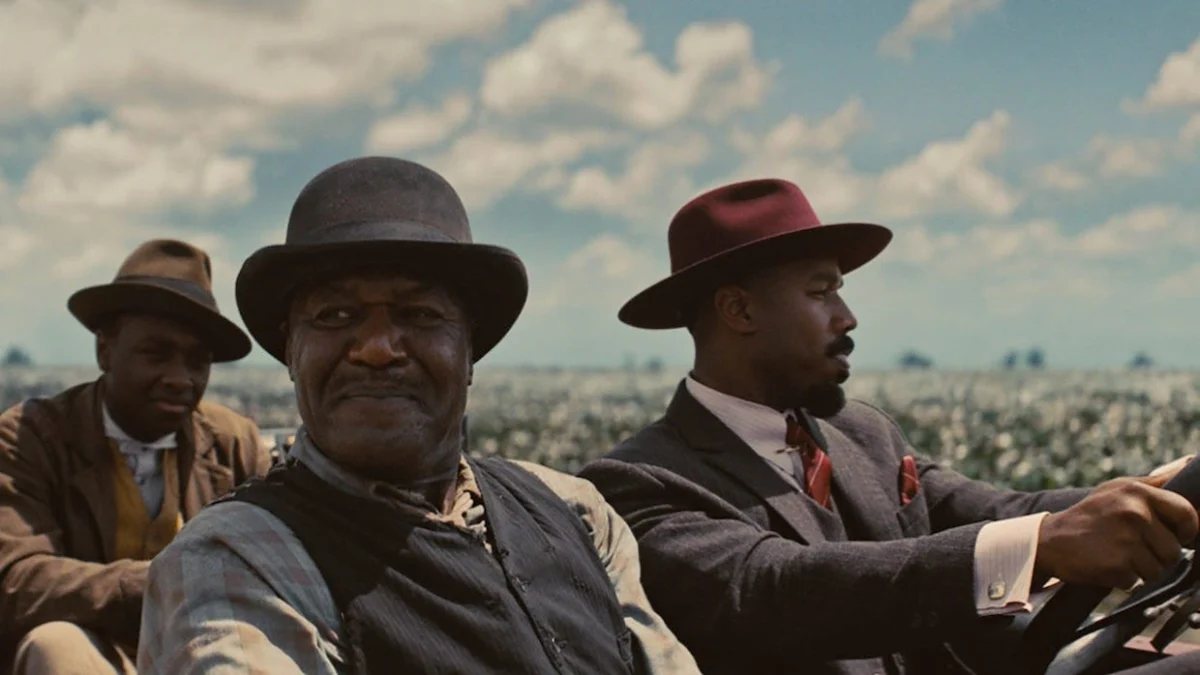
The prestige of the ceremony was significantly impacted by an incident during the presentation of the night’s first award. Michael B. Jordan and Delroy Lindo, stars of the 16-time Oscar-nominated film Sinners, were on stage when John Davidson, a guest in the audience and the subject of the film I Swear, shouted a racial slur.
Davidson, a prominent Scottish advocate for Tourette syndrome awareness, became a public figure in the United Kingdom following the 1989 documentary John’s Not Mad, which chronicled his life with severe vocal tics. His presence at the BAFTAs was intended to celebrate the narrative adaptation of his life story. The nature of the incident, involving a neurological condition, created a complex and unsettling environment for both the presenters and the attendees.
The subsequent handling of the event by the BBC has drawn sharp criticism from industry analysts and advocacy groups. Although the ceremony was recorded and aired on a two-hour delay, the BBC made the editorial decision to include the slur in the final broadcast. This decision was met with immediate backlash, particularly when contrasted with the network’s decision to edit the acceptance speech of Akinola Davies Jr. Davies Jr., winning for Outstanding Debut by a British Writer, Director, or Producer for My Brother’s Shadow, had his speech truncated, specifically removing his concluding remark, "free Palestine."
The disparity between the network’s decision to broadcast a racial slur while censoring a political statement has sparked a wider debate regarding editorial standards and the responsibilities of public broadcasters during live-to-tape events. Representatives for the BAFTA organization and the BBC have faced calls for transparency regarding the decision-making process in the editing suite.

The Sinners Milestone and Technical Frontrunners
Despite the controversy, Ryan Coogler’s Sinners achieved a landmark victory, with Coogler becoming the first Black filmmaker to win the BAFTA for Best Original Screenplay. This win is viewed as a significant boost for the film’s Academy prospects, where it leads the field with 16 nominations. The film also secured a win for Ludwig Göransson’s score, further cementing its status as a technical and creative powerhouse.
In the craft categories, Guillermo del Toro’s Frankenstein appears to be consolidating its lead. The film won three BAFTAs for Best Costume Design, Best Makeup and Hairstyling, and Best Production Design. Historically, a sweep of these three categories at the BAFTAs is a near-certain indicator of success at the Academy Awards, suggesting that del Toro’s passion project has successfully captured the "below-the-line" voting bloc.
Meanwhile, the British drama Hamnet utilized its domestic advantage to win Best British Film. Lead actress Jessie Buckley also secured a win, reinforcing her position as the most stable contender in the Best Actress race. Industry analysts currently view Buckley as the only acting nominee who can be considered a "lock" for the Oscar, given her consistent performance across various precursor ceremonies.
The Significance of the PGA and Actor Awards
As the industry shifts its focus back to Los Angeles, the upcoming Producers Guild of America (PGA) Awards on February 28 are expected to provide the most accurate forecast for Best Picture. Since its inception in 1989, the PGA has used the same preferential balloting system as the Academy. This alignment has resulted in the PGA correctly predicting the Best Picture winner in all but 10 instances. The most recent divergence occurred in 2020, when the PGA selected 1917 while the Academy chose Parasite.
For One Battle After Another, a PGA win would solidify its status as the definitive frontrunner. However, if Sinners—which has shown broad support across all Academy branches—secures the PGA trophy, it would signal a late-season shift in momentum that could lead to a historic win on Oscar night.
The Actor Awards on March 1 will provide the final clarity for the four acting categories. The Screen Actors Guild (SAG-AFTRA) represents the largest voting bloc within the Academy, making their preferences highly influential. However, recent years have shown an increasing number of discrepancies. Last year, Timothée Chalamet and Demi Moore won SAG Awards but failed to secure Oscars, and the year prior, Lily Gladstone’s SAG win did not translate to an Academy Award, which went to Emma Stone.
The exclusion of non-English performances from the SAG nominations this year, such as Stellan Skarsgård’s turn in Sentimental Value, means that the Actor Awards may not fully reflect the international diversity of the Academy’s voting body. This leaves a window of opportunity for "upset" winners like Sean Penn or Robert Aramayo to maintain their momentum heading into the final week.
Broader Implications and Industry Impact
The 2024–2025 awards season is proving to be one of the most unpredictable in recent history. The combination of unexpected BAFTA winners and the fallout from the broadcast controversy has created a narrative of uncertainty. For the Academy, the challenge will be to maintain focus on the cinematic achievements of the year while navigating the social and political sensitivities highlighted by the London ceremony.
The record 16 nominations for Sinners suggest a deep-seated respect for Ryan Coogler’s work across the technical, acting, and writing branches. Some analysts suggest that the unfortunate incident at the BAFTAs may inadvertently rally support for the film’s cast and crew, as the industry looks to distance itself from the controversy.
Ultimately, the "home stretch" of the Oscar race is no longer a coronation for a single film. The data suggests a split between the critical favorites and the industry veterans. With final voting opening in mere days, the results of the PGA and Actor Awards will be the final data points in a season that has redefined the traditional path to Oscar glory. The game remains open, and as the industry has learned from the BAFTAs, the most significant moments often happen when the cameras are already rolling.