

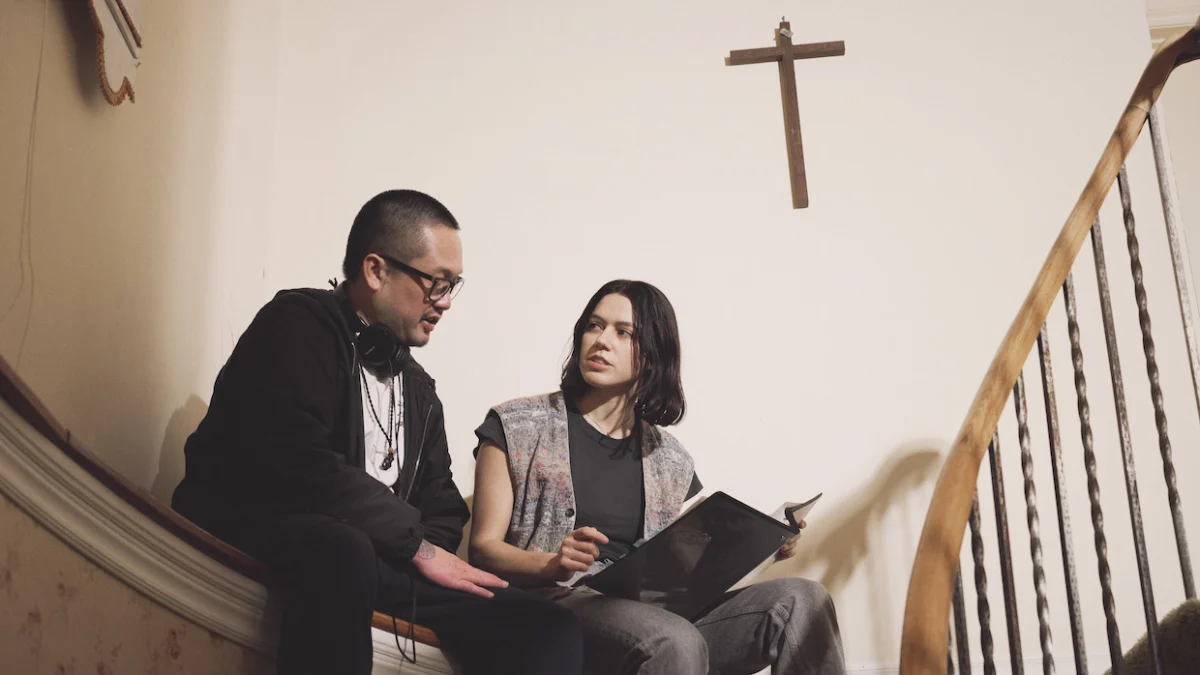
The landscape of contemporary independent horror has been significantly altered by the arrival of Undertone, a low-budget psychological thriller that has transitioned from a niche festival darling to a commercial juggernaut. Directed by Ian Tuason and distributed by A24, the film represents a sophisticated evolution of the "found footage" genre, pivoting instead toward "found audio" to explore themes of terminal illness, filial duty, and ancient folklore. Since its debut, the film has not only recouped its modest $500,000 production budget several times over but has also established Tuason as a formidable new voice in genre filmmaking, bridging the gap between immersive digital media and traditional cinematic storytelling.
From VR Pioneer to Feature Film Success
Ian Tuason’s path to the helm of an A24 production was paved through years of experimentation in the nascent field of 360-degree virtual reality (VR) horror. Long before Undertone entered production, Tuason was a recognized innovator on YouTube and the international festival circuit. His early short films, including Continuity Problems (2009) and Close Up (2011), were among the first to explore how digital artifacts and non-linear editing could enhance the horror experience. These works eventually led to his screening at the Marché du Film’s NEXT Pavilion in Cannes, a venue dedicated to the future of cinema technology.
Tuason’s breakthrough in the immersive space came with 3:00am, a 360-degree live-action horror short that garnered over 9 million views on YouTube. This project was instrumental in refining his understanding of spatial storytelling—the art of using sound and visual cues to guide a viewer’s attention in a 3D environment. It is this specific technical background that Tuason leveraged for Undertone. By applying the principles of immersive VR to the surround-sound capabilities of modern movie theaters, Tuason created a "3D soundscape" designed to envelop the audience, making the auditory experience as central to the narrative as the visual composition.
Narrative Structure and the Found Audio Gimmick
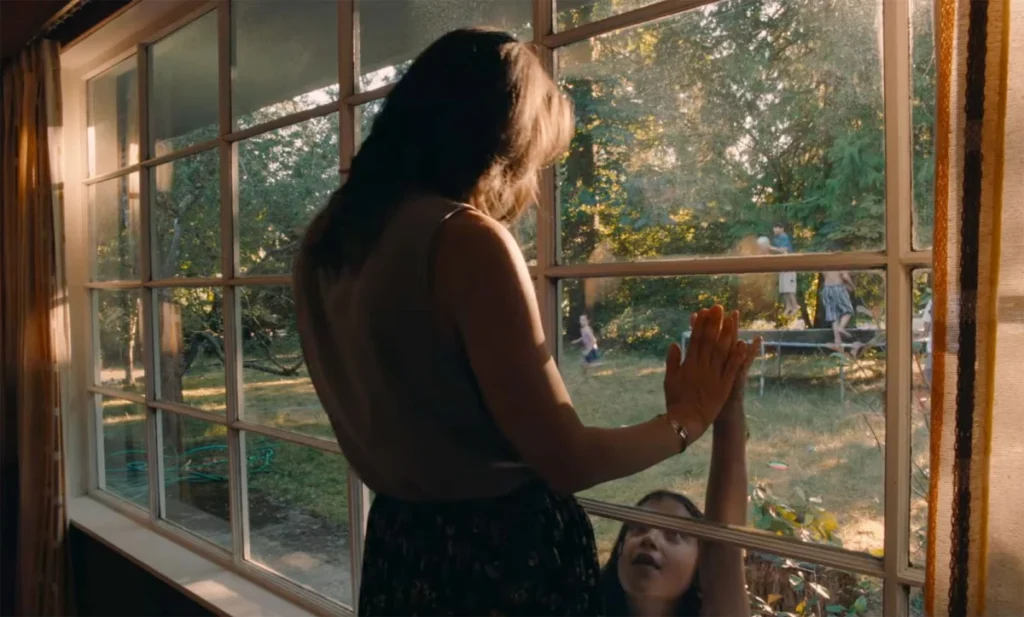
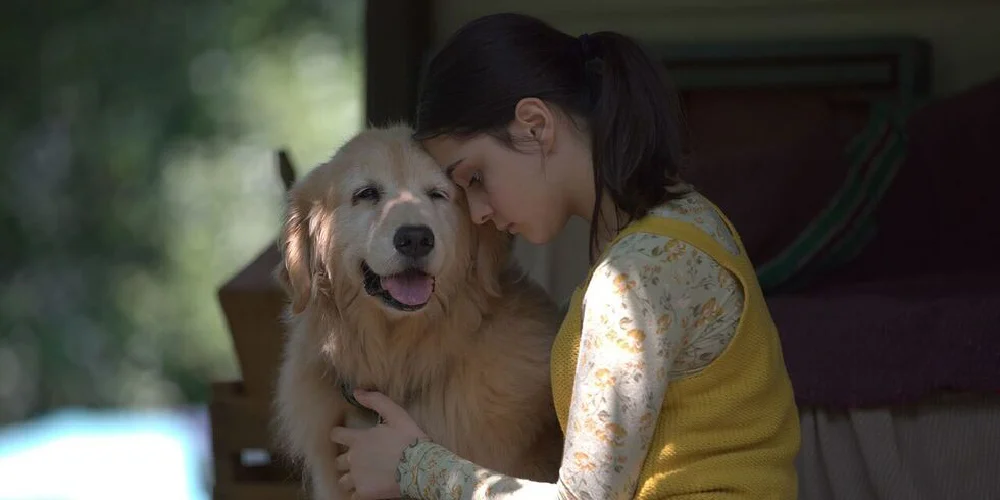
Undertone centers on Evy, portrayed by Nina Kiri, a young woman who has returned to her childhood home to provide palliative care for her comatose mother. To escape the crushing weight of her daily reality, Evy co-hosts a paranormal-themed podcast titled The Undertone with her best friend, Justin (Adam DiMarco). The dynamic between the two leads is a classic "skeptic versus believer" trope: Justin occupies the role of the obsessive investigator, while Evy remains grounded in rationalism—at least initially.
The plot is set in motion when the duo receives an anonymous email containing an eerie audio recording. The file purportedly captures the paranormal experiences of a couple, Jessa and Mike, who believe they are being hunted by Abyzou. In Near Eastern and Jewish folklore, Abyzou is a female demon blamed for miscarriages and infant mortality, often depicted as a figure driven by jealousy of the maternal bond.
While Justin is hesitant to engage with the material, Evy insists on recording their live reactions to the audio for their audience, dismissing the recording as a sophisticated hoax. However, the boundary between the digital file and Evy’s physical reality begins to erode. The film utilizes the "found audio" format to create a claustrophobic atmosphere, as the sounds from the recording—and the entities they represent—begin to manifest in Evy’s home.
Production Realism and Personal Resonance
One of the most striking aspects of Undertone is its use of a single location, which lends the film an intense, stage-like intimacy. This choice was driven by both budgetary constraints and a deeply personal connection: the film was shot entirely in the house where Tuason’s own parents passed away. Tuason has been candid about the fact that he, like his protagonist Evy, served as a primary caregiver for both of his parents during their battles with cancer.
This autobiographical element provided a layer of authenticity that resonated with the cast and crew. Production designer Mercedes Coyle was tasked with refitting the family home to reflect a stifling, overtly Catholic atmosphere. The set was filled with religious iconography, including a multitude of crucifixes and statues of the Virgin Mary, which serve as both thematic symbols of faith and catalysts for the film’s supernatural occurrences.

Tuason’s return to the house for the shoot marked the first time he had lived there since his parents’ deaths. During production, the crew reportedly experienced unexplained phenomena, such as lights flickering in patterns that mirrored the script. While Tuason remains somewhat stoic regarding these occurrences, he has noted that the process of filming in a space defined by personal loss was a form of "therapeutic" confrontation, allowing him to process his grief through the lens of horror.
Technical Innovation: The Power of Sound Design
The critical and commercial success of Undertone is largely attributed to its innovative sound design. Tuason’s philosophy—that what an audience imagines is scarier than what they see—is the driving force behind the film’s tension. The audio team utilized advanced spatial mixing to ensure that every creak, whisper, and distorted frequency feels as though it is occurring within the theater itself.
A recurring motif in the film is the analysis of nursery rhymes played in reverse. The film explores the "backmasking" theory, suggesting that innocent melodies like "Baa Baa Black Sheep" contain hidden, sinister messages when processed backward. This focus on the "undertone"—the hidden frequency beneath the surface—serves as a metaphor for the repressed trauma and hidden fears that Evy faces while caring for her dying mother. By making the audio the primary source of horror, Tuason taps into a primal fear of the unseen, a technique that harkens back to the minimalist effectiveness of films like The Blair Witch Project and Paranormal Activity.
Box Office Performance and Industry Impact
The financial trajectory of Undertone has been a point of discussion among industry analysts. Produced for an estimated $500,000, the film demonstrated immediate commercial viability by grossing $1 million during its Thursday night previews alone. Following a high-profile premiere at Montreal’s Fantasia International Film Festival and a successful screening at Sundance, the film has since amassed a domestic box office total of $9 million.
This 18-to-1 return on investment (ROI) highlights a continuing trend in the film industry: the high profitability of "elevated horror" distributed by boutique labels like A24. By combining genre-specific thrills with high-concept themes and artistic direction, films like Undertone are able to capture both the dedicated horror fanbase and a more general "prestige" cinema audience.
Comparative Box Office Data (Selected A24 Horror)
| Film | Budget | Domestic Gross (Est.) | Multiplier |
|---|---|---|---|
| Undertone | $500,000 | $9,000,000 | 18x |
| Talk to Me | $4,500,000 | $48,000,000 | 10.6x |
| The Witch | $4,000,000 | $25,000,000 | 6.2x |
Broader Implications and Future Prospects
The success of Undertone has served as a significant catalyst for Ian Tuason’s career. In December, it was officially announced that Tuason would direct the eighth installment of the Paranormal Activity franchise. This appointment is viewed as a natural fit, given his mastery of the found-footage aesthetic and his stated admiration for the original 2007 film’s use of sound and minimalism.
However, Tuason has expressed a desire to avoid being pigeonholed as a "horror-only" director. His long-term creative roadmap involves a gradual transition into the science-fiction genre. He has teased several upcoming projects that will blend horror elements with sci-fi concepts before eventually moving into pure science fiction.
The industry’s reaction to Tuason’s rise suggests a growing appetite for filmmakers who can bridge the gap between digital-first content (like VR and YouTube) and traditional theatrical experiences. As streaming platforms and theaters continue to compete for audience attention, the ability to create "eventized" audio-visual experiences—where the sound system of a theater becomes a necessary component of the story—may become a key survival strategy for the medium.
Undertone stands as a testament to the power of personal storytelling disguised as genre entertainment. By rooting the supernatural horror of Abyzou in the very real, very painful experience of end-of-life care, Tuason has created a film that lingers in the mind long after the sound fades. Its success confirms that even in an age of high-budget spectacles, a compelling idea, a haunted house, and a well-placed whisper can still command the global stage.