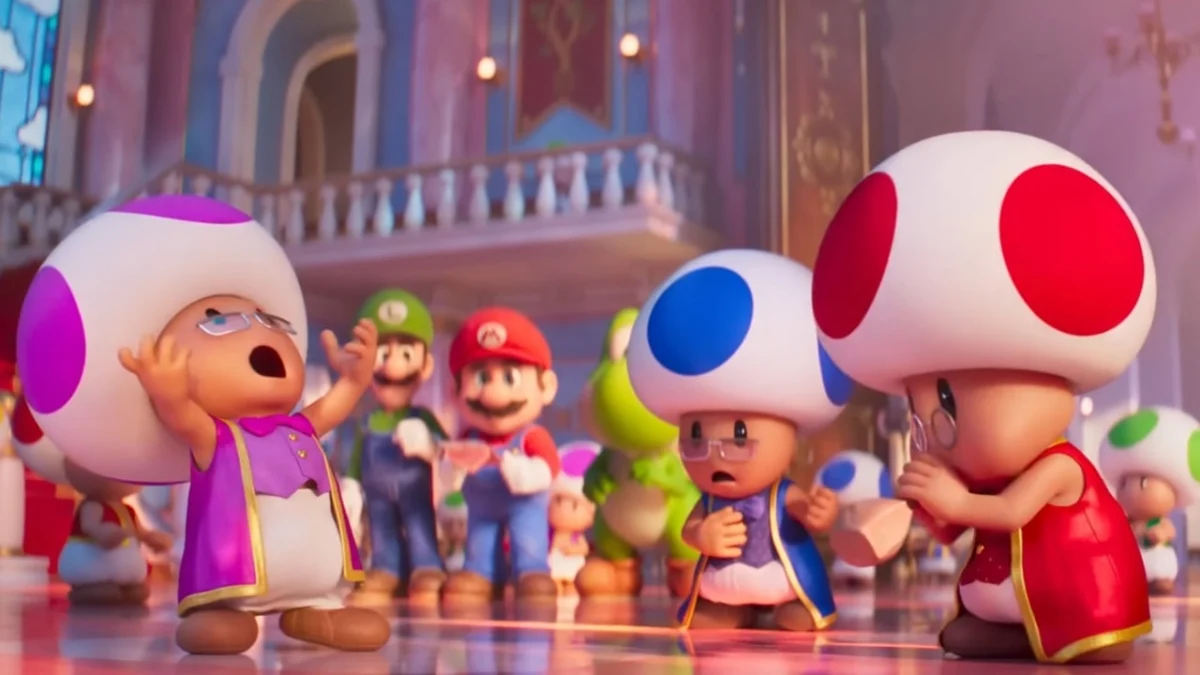
The Super Mario Galaxy Movie is currently entering its final and most aggressive phase of global marketing as Nintendo and Universal Pictures prepare for the film’s theatrical debut on April 1, 2026. Following the unprecedented success of the 2023 predecessor, which grossed over $1.36 billion at the global box office, the production partners have shifted their strategy toward a more expansive "multiverse" approach, integrating a wider array of Nintendo’s intellectual properties into the Mario cinematic framework. The latest promotional materials have confirmed that the upcoming sequel will not only explore the gravity-defying locales of the Super Mario Galaxy video game series but will also serve as a gateway for other iconic franchises, most notably Pikmin.
Strategic Character Reveals and the Pikmin Cameo
The marketing trajectory for The Super Mario Galaxy Movie has been defined by a meticulous "breadcrumbing" technique, wherein small but significant details are released to sustain fan engagement across digital platforms. On March 17, 2026, a new promotional spot was released via social media, specifically designed to highlight high-definition character "close-ups." While the montage featured familiar faces and comedic beats intended for general audiences, frame-by-frame analysis by the online community revealed a significant inclusion: the appearance of Pikmin.
The inclusion of the Pikmin—small, plant-like creatures from the eponymous real-time strategy series created by Shigeru Miyamoto—marks a significant departure from the more contained narrative of the first film. Analysts suggest that the "Galaxy" setting provides a logical narrative vacuum for such crossovers, as the protagonist’s journey through various planetoids allows for encounters with extraterrestrial or exotic species. While it remains unconfirmed if the Pikmin will serve a structural role in the plot or merely appear as a background Easter egg, their presence indicates Nintendo’s intent to build a cohesive cinematic universe similar to the interconnected models utilized by major comic book franchises.
In addition to the Pikmin, the promotional spot featured other deep-cut references to Nintendo’s extensive catalog. This includes the Moai-inspired Tostarenans from Super Mario Odyssey, suggesting that the film will bridge the gap between various generations of Mario titles. By layering these references, Universal and Illumination are targeting a dual demographic: the "super-fan" who values lore accuracy and the "casual viewer" who is drawn to the high-fidelity animation and slapstick humor.
Cast Additions and the Return of Classic Antagonists
The Super Mario Galaxy Movie has gradually expanded its voice cast to include both returning stars and new industry heavyweights. One of the most significant confirmations involves the character of Wart, a villain who has not seen a major appearance in the core Mario gaming franchise for decades. During a recent trailer premiere, it was confirmed that veteran actor Luis Guzmán would provide the voice for Wart, signaling a move toward incorporating characters from the 1988 title Super Mario Bros. 2.
Industry insiders suggest that the inclusion of Wart, alongside the previously established presence of Bowser and the Kong family, indicates a more complex antagonist structure. The 2023 film focused primarily on the conflict between the Mushroom Kingdom and the Koopa Troop, but the sequel appears to be broadening the stakes. The narrative is expected to center on the cosmic character Rosalina and the Lumas, characters who debuted in the 2007 Super Mario Galaxy Wii game. This shift to a cosmic scale allows the production team to experiment with visual physics and more ambitious set pieces that were not possible in the terrestrial setting of the first movie.
A Data-Driven Look at Box Office Projections
As the release date of April 1 approaches, financial analysts have begun releasing preliminary tracking data for the film’s opening weekend. Currently, The Super Mario Galaxy Movie is eyeing a massive $160 million five-day opening in the United States. This projection places the film in a position to potentially outperform its predecessor, which held the record for the highest-grossing opening for a video game adaptation.
Several factors contribute to these optimistic forecasts:
- Brand Momentum: The first film established a high level of trust with audiences, particularly families and nostalgic adults.
- The "Spring Break" Window: By releasing on the first of April, the film captures the lucrative spring break demographic in North America.
- Global Market Expansion: With the continued growth of Super Nintendo World theme parks in Japan, Hollywood, and the upcoming Orlando location, the synergy between the film and the physical attractions is expected to drive higher ticket sales.
International markets are also expected to show strong performance, particularly in Japan and Europe, where Nintendo’s brand loyalty is exceptionally high. Conservative estimates suggest that the film could reach the $1 billion mark within its first month of release, provided that critical reception aligns with the high production values displayed in the trailers.
The Evolution of the Nintendo-Illumination Partnership
The production of The Super Mario Galaxy Movie represents a deepening of the relationship between Nintendo Co., Ltd. and Illumination, the animation studio under the Universal Pictures umbrella. Following the 2023 film, both companies formed a joint venture to oversee future cinematic adaptations. This partnership is characterized by Nintendo’s hands-on approach to creative direction, with Shigeru Miyamoto serving as a lead producer to ensure brand integrity.
From a technical standpoint, the sequel has reportedly utilized new rendering techniques to capture the unique aesthetics of space. The "Galaxy" aesthetic requires a different approach to lighting and character movement compared to the "Mushroom Kingdom" aesthetic. Illumination’s technical teams have worked to translate the spherical gravity mechanics of the video games into a cinematic experience that feels immersive for the audience. This technical ambition is part of a broader strategy to position Nintendo as a major player in the theatrical space, rivaling established animation giants like Disney and DreamWorks.
Historical Context: From Video Game to Silver Screen
To understand the significance of The Super Mario Galaxy Movie, one must look at the legacy of the source material. Released in 2007 for the Nintendo Wii, Super Mario Galaxy is widely considered one of the greatest video games of all time, noted for its innovation in 3D platforming and its emotional narrative involving Rosalina and the Comet Observatory. By choosing this specific era of Mario history for the sequel, Nintendo is tapping into a specific well of nostalgia for the "Wii Generation."
Chronologically, the development of this sequel followed a rapid timeline:
- April 2023: Release of The Super Mario Bros. Movie.
- Mid-2024: Official announcement of the sequel and the "Galaxy" theme during a Nintendo Direct.
- 2025: Gradual reveal of the voice cast and the inclusion of the Kongs.
- March 2026: Final marketing blitz, including the Pikmin reveal and the social media "close-up" campaign.
- April 1, 2026: Scheduled worldwide theatrical release.
This timeline reflects a highly efficient production cycle, likely made possible by the foundational work completed during the development of the first film. Assets, character models, and the core animation pipeline were already in place, allowing the creators to focus on expanding the scope of the world.
Broader Implications for the Nintendo Cinematic Universe
The appearance of Pikmin in a Mario-centric film is the strongest evidence to date that Nintendo is pursuing a "Nintendo Cinematic Universe" (NCU). While the company has been traditionally protective of its individual brands, the success of crossover titles like Super Smash Bros. has proven that audiences respond positively to the intersection of these worlds.
The strategic implications of this are twofold. First, it allows Nintendo to test the cinematic viability of smaller franchises like Pikmin or Star Fox within the safety of a guaranteed Mario blockbuster. If the Pikmin cameo generates enough positive sentiment, it could pave the way for a standalone Pikmin animated feature or series. Second, it creates a "platform" for marketing future games. With the "Summer of Mario" branding, Nintendo is not just selling a movie; it is selling an entire ecosystem of software and hardware.
As the industry moves toward the release, the focus remains on whether the film can balance its heavy reliance on fan service with a narrative that appeals to a general audience. The 2023 film was criticized by some for being a "checklist of references," but its financial success suggested that the audience’s appetite for such references was vast. The Super Mario Galaxy Movie appears to be doubling down on this philosophy, betting that the combination of cosmic adventure, beloved characters, and unexpected cameos will secure its place as the definitive cinematic event of the year.
With only two weeks remaining until the premiere, the momentum behind The Super Mario Galaxy Movie shows no signs of slowing. As fans analyze every frame of the new social media spots and analysts adjust their box office targets upward, the film stands as a testament to the enduring power of Nintendo’s characters and the successful transition of video game culture into the mainstream of global entertainment.