



A Decade of Documentation: The Chronology of Israa’s Journey
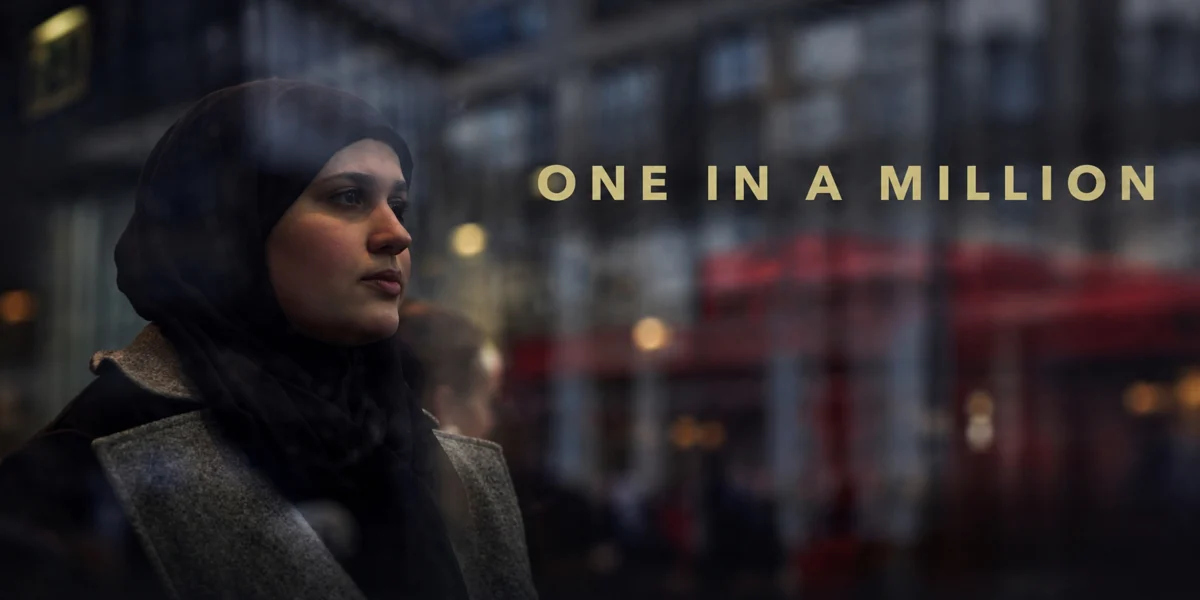
The production of One In A Million represents an extraordinary commitment to long-form observational filmmaking. Unlike traditional documentaries that rely on retrospective interviews, the film captures the visceral, day-to-day reality of Israa’s life as it unfolded between 2016 and 2026.
The narrative trajectory begins in Syria, capturing the initial upheaval that forced millions to flee their homes. The film tracks the perilous journey across international borders, documenting the physical and psychological toll of exile. As the narrative shifts to Germany, the focus transitions from survival to the complexities of integration—learning a new language, navigating foreign bureaucratic systems, and reconciling the loss of one’s cultural heritage with the necessity of adapting to a new social fabric. By embedding themselves in Israa’s life for a full decade, directors Itab Azzam and Jack MacInnes have bypassed the superficial "crisis-reporting" often associated with migrant narratives, instead providing a nuanced portrait of a human life in transition.
Contextualizing the Global Refugee Crisis
To understand the significance of One In A Million, one must look at the data surrounding the displacement of Syrian citizens over the last decade. According to the United Nations High Commissioner for Refugees (UNHCR), the Syrian conflict has resulted in one of the largest displacement crises in history. Since 2011, more than 6.8 million Syrians have been forced to flee their country, with an additional 6.7 million people internally displaced within Syria.
Germany, the destination depicted in the documentary, has been at the forefront of the European response to this influx. In 2015 and 2016, Germany saw a historic arrival of asylum seekers, a moment that fundamentally shifted the country’s demographic and political landscape. The film captures the "long tail" of these arrivals—the period long after the headlines fade, when the actual work of assimilation, employment, and trauma recovery occurs. This context elevates the film from a singular story to a case study in modern migration.
Filmmaking Methodology and Artistic Vision
The collaboration between directors Itab Azzam and Jack MacInnes and their subject, Israa, is defined by an unusual level of trust. In interviews, the filmmakers have noted that the primary challenge was not just capturing the events, but maintaining a consistent narrative thread over ten years of shifting circumstances.
The documentary utilizes a cinéma vérité style, allowing the audience to witness intimate moments of frustration, joy, and existential contemplation. This methodology minimizes the presence of the camera, effectively removing the barrier between the viewer and the subject. The resulting footage offers a rare, longitudinal look at how trauma evolves over time. Where many documentaries on the refugee experience end at the point of arrival in a host country, One In A Million continues, addressing the "second-order" challenges of exile: the identity crisis, the struggle for education, and the search for belonging in a society that is often indifferent or skeptical of newcomers.
Critical Reception and Industry Impact
The film’s success at the 2026 Sundance Film Festival is indicative of a broader industry shift toward documentaries that prioritize deep, character-driven narratives over fast-paced investigative pieces. The Audience Award, in particular, suggests that the film’s message resonates deeply with contemporary viewers who are increasingly seeking human-centric stories amidst a polarized global discourse on immigration.

Industry analysts note that the partnership with PBS Distribution is a strategic move, ensuring that the film reaches a wide audience beyond the festival circuit. By making the documentary accessible through public media channels, the distributors are positioning it as an educational tool for schools, policy forums, and community groups interested in the realities of the Syrian diaspora.
Broader Implications for Non-Fiction Cinema
The implications of One In A Million are twofold. First, it sets a new benchmark for "long-form" documentary storytelling. The patience required to film for ten years requires both financial stability and a unique artistic vision, signaling a potential trend in documentary production where studios may be more willing to invest in multi-year projects that promise greater emotional depth.
Second, the film serves as a potent response to the dehumanization of refugees in political rhetoric. By providing a ten-year longitudinal study of a single individual, the film makes the abstract statistics of the refugee crisis tangible. It forces a confrontation with the reality that the "refugee crisis" is not a temporary event to be managed, but a series of individual lives being reshaped in real-time.
Perspectives from the Creative Team
In discussions surrounding the film’s release, the creative team has emphasized that the documentary was never intended to be a political manifesto, but rather a document of human resilience. Israa herself has spoken about the difficulty of having her most vulnerable years recorded, yet she maintains that the process provided her with a sense of agency. For the directors, the project was an exercise in humility, requiring them to constantly adjust their narrative focus as Israa’s life took unexpected turns.
The collaborative effort behind the scenes—including the technical challenges of preserving digital footage over a decade—mirrors the themes of the film. Just as Israa has had to preserve her identity across borders, the filmmakers had to preserve the integrity of their footage across technological shifts and changing artistic sensibilities.
Conclusion: A Legacy of Resilience
As One In A Million moves into theatrical release, its impact is already being felt in the documentary community. It stands as a profound exploration of the cost of war, not just in terms of lives lost, but in the years required to reconstruct a sense of self.
For viewers, the film offers no easy answers to the complexities of global migration. Instead, it offers something more enduring: a testament to the endurance of the human spirit. Through the lens of the directors and the lived experience of Israa, the documentary ensures that the story of one young girl is preserved, studied, and felt, providing a necessary human lens through which to view one of the defining challenges of our time. By centering the subject as a collaborator rather than a victim, the film achieves a level of authenticity that marks it as a landmark in the genre of contemporary documentary filmmaking.