


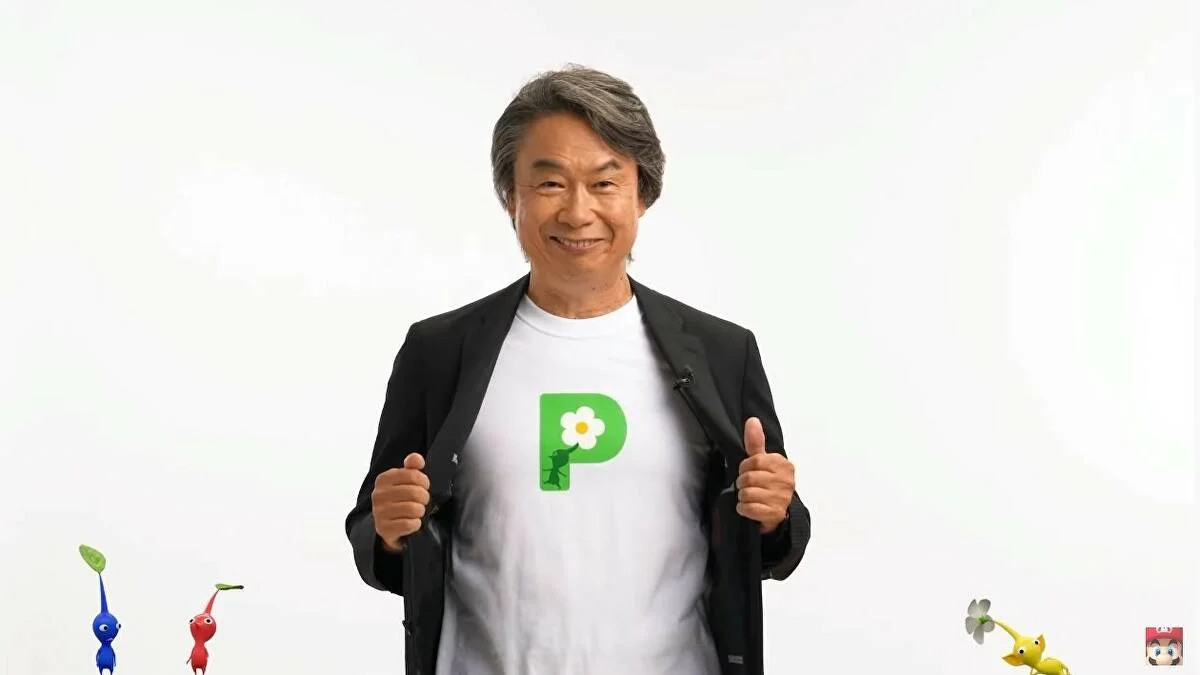
The landscape of video game development is currently undergoing a seismic shift as the industry grapples with the integration of generative artificial intelligence (AI). Amidst this technological transition, Shigeru Miyamoto, the legendary creative force behind Nintendo’s most iconic franchises—including Super Mario, The Legend of Zelda, and Donkey Kong—has offered a perspective that prioritizes the permanence of human intent over automated efficiency. His comments arrive at a pivotal moment, as he prepares to become the first video game developer to receive Japan’s prestigious Order of Culture, an honor bestowed by the Emperor of Japan in recognition of his monumental contributions to the nation’s cultural identity.
A Career Defined by Technological Evolution
To understand Miyamoto’s stance on AI, it is necessary to examine his historical relationship with emerging technology. Since joining Nintendo in 1977, Miyamoto has navigated several generational shifts in computing power. From the transition from simple arcade hardware to the 3D processing capabilities of the Nintendo 64, Miyamoto has consistently viewed tools as extensions of the creator rather than substitutes for the creative process.
During a recent press conference regarding his upcoming recognition, Miyamoto drew a parallel between the current AI boom and the past transition from analog tools like typewriters to digital word processors. He noted that as technical barriers to entry lowered, designers were finally able to move past the "labor" of creation—the manual execution of tasks—to focus on the higher-level conceptualization of game design. His argument suggests that if generative AI can absorb the heavy lifting of repetitive technical labor, it may paradoxically provide developers with more room to refine the "intent" behind their work.
The Philosophical Divide on AI Integration
Miyamoto’s perspective is grounded in a belief that true quality is derived from individual design intent—a quality he argues is absent in work produced via "copy and paste" methodologies. He warns that there is a significant danger in mistaking the efficiency of AI-generated assets for the quality of a creative product. If a developer finds satisfaction in the labor of production rather than the intellectual rigor of design, they risk creating content that is technically proficient but culturally hollow.
This philosophy stands in marked contrast to the current strategies adopted by many of Nintendo’s industry peers. While Nintendo has maintained a cautious, human-centric approach to development, other major entities are moving toward aggressive AI adoption. For instance, Square Enix CEO Takashi Kiryu has explicitly stated that the company intends to be "aggressive" in applying AI to both development processes and content creation. Similarly, major publishers including Sega, Capcom, and Epic Games have integrated generative tools into their workflows, often citing the need for increased efficiency in an era of ballooning development costs.
The Financial and Creative Stakes
The industry-wide debate over AI is not merely philosophical; it is deeply tied to the economics of modern game development. As of 2024, the cost of developing a "AAA" title has skyrocketed, with many high-profile projects requiring budgets exceeding $200 million and development cycles lasting upwards of five to seven years. Generative AI offers the tantalizing prospect of reducing these costs by automating the creation of background assets, dialogue, or environmental textures.
However, industry analysts point to the risk of "content bloat." Masahiro Sakurai, the acclaimed director of the Super Smash Bros. series, has been vocal about the potential negative externalities of this shift. Sakurai has suggested that an over-reliance on generative AI could lead to a market saturated with unoriginal, low-effort games. While AI can mimic the aesthetic output of a human designer, it currently lacks the ability to synthesize the unique, often idiosyncratic experiences that turn a game into a lasting cultural artifact.
Chronology of the AI Discourse in Gaming
- 2022: The public release of sophisticated generative models like DALL-E and ChatGPT triggers a broad debate across creative industries, including gaming.
- 2023: Major studios begin announcing dedicated AI research divisions. Xbox launches an internal initiative to explore how AI can assist in game ports and code optimization.
- Early 2024: Nintendo of America president Doug Bowser reaffirms the company’s commitment to the "human touch," emphasizing that the insights of developers remain the core differentiator for Nintendo’s software library.
- Late 2024: Shigeru Miyamoto is named a recipient of the Order of Culture, leading to a series of high-level discussions where he publicly addresses the limitations of AI in the creative process.
The "Human Touch" as a Market Differentiator
Nintendo’s strategy, as articulated by Miyamoto and supported by leadership, relies on the concept of the "human touch." This is not merely a sentimental stance; it is a calculated business strategy. Nintendo’s brand equity is built upon the unique "Nintendo magic"—a quality often attributed to the specific, collaborative creative intent of its design teams.
From a data-driven perspective, this differentiation has proven successful. While competitors focus on high-fidelity graphical output that can be increasingly automated, Nintendo has consistently prioritized game design, intuitive controls, and artistic direction—elements that rely heavily on human trial-and-error, playtesting, and iteration. By resisting the urge to fully automate the production cycle, Nintendo maintains a tighter control over the "soul" of its games, which in turn sustains high levels of consumer loyalty and longevity in their intellectual properties.
Broader Implications for the Workforce
The implications of AI for the wider gaming workforce remain a point of contention. While Miyamoto suggests that AI will allow humans to focus on "what is really important," critics within the industry argue that the initial phase of AI adoption is already displacing junior-level artists, writers, and QA testers.
If entry-level tasks are delegated to AI, the industry faces a potential "skills gap" where the next generation of designers loses the opportunity to learn the fundamentals of their craft through manual labor. Miyamoto’s assertion that there will "always be a role left for us to play" assumes a stable transition period, but the economic reality for mid-to-large studios may necessitate a faster, more disruptive implementation of these tools than the creative leadership might prefer.
Conclusion: The Future of Creative Intent
As Shigeru Miyamoto prepares to accept the Order of Culture, his words serve as a benchmark for the industry. He acknowledges that technology will continue to evolve, and that AI will inevitably handle more of the technical load. However, he remains steadfast in his belief that the core of game design—the expression of intent—cannot be programmed.
The coming decade will serve as a litmus test for this theory. As players are presented with an increasing volume of AI-assisted content, the market will likely undergo a period of recalibration. If Miyamoto is correct, the games that stand the test of time will not be those that utilized the most advanced generative tools, but those that demonstrated the most profound human insight. For now, Nintendo remains a holdout in a rapidly changing landscape, betting that the most valuable asset in the gaming industry is not the software that runs the machines, but the human mind that directs them.