


Long before Donald Trump transitioned from the boardroom and television studio to the Oval Office, his brand was inextricably linked with the mechanics of American media. As the swaggering, hyper-confident host of NBC’s breakout reality hit The Apprentice, which debuted during the 2003–2004 television season, Trump cultivated a public persona as an infallible billionaire executive. Although subsequent seasons suffered from a steady decline in television ratings, the image persisted. Political analysts have long argued that Trump’s 2016 presidential campaign was significantly propelled by his mastery of the news cycle, coupled with behind-the-scenes editing that transformed his unscripted, sprawling commentary into the archetype of the straight-talking, decisive businessman.
Yet, as the administration navigates its current term, the question haunting Washington and media circles alike is simple: Where has that television firepower gone?
Today, the administration’s efforts to bypass traditional mainstream media outlets in favor of state-backed, custom-built broadcast programming have largely sputtered. Rather than captivating millions of voters, attempts to merge government messaging with familiar television entertainment formats have encountered viewer indifference, administrative stumbles, and public backlash. This widening disconnect highlights a fundamental challenge for the modern executive branch: producing compelling political entertainment requires more than nostalgic branding; it requires professional media execution, which the current administration has repeatedly struggled to deliver.
The Shrinking Half-Life of Administration Media Strategy
The erosion of the administration’s media dominance is perhaps most visible in its daily communications operations. Press briefings, historically a high-stakes arena for executive communication, have devolved into operational liabilities. Katie Zacharia, Trump’s latest press secretary, lasted a mere five days in her high-profile role before being ousted. Her departure followed a disastrous on-camera performance during her inaugural press briefing just weeks ahead of crucial midterm elections—a public relations failure that underscored a broader institutional inability to manage live television environments effectively.
Simultaneously, Trump’s own off-the-cuff media appearances have frequently generated internal alarm rather than cohesive political momentum. Even among sympathetic audiences, unscripted remarks have trended toward the erratic. Instances of the president appearing to doze off during critical meetings, claiming that NATO arbitrarily transferred Greenland to the United States, or detailing private conversations at political rallies have dominated news cycles for all the wrong reasons. Rather than dictating the national narrative through sheer force of television personality, the administration has found itself perpetually on the defensive, struggling to maintain message discipline.
Reality TV Diplomacy: The SBA’s Million Dollar Pitch Competition
In an effort to circumvent hostile or critical news networks, the administration has increasingly turned to alternative, direct-to-consumer streaming formats designed to mimic popular commercial television. A prime example of this strategy occurred on a Tuesday afternoon, when the United States Small Business Administration (SBA) streamed an hour-long special titled the Million Dollar Pitch Competition.
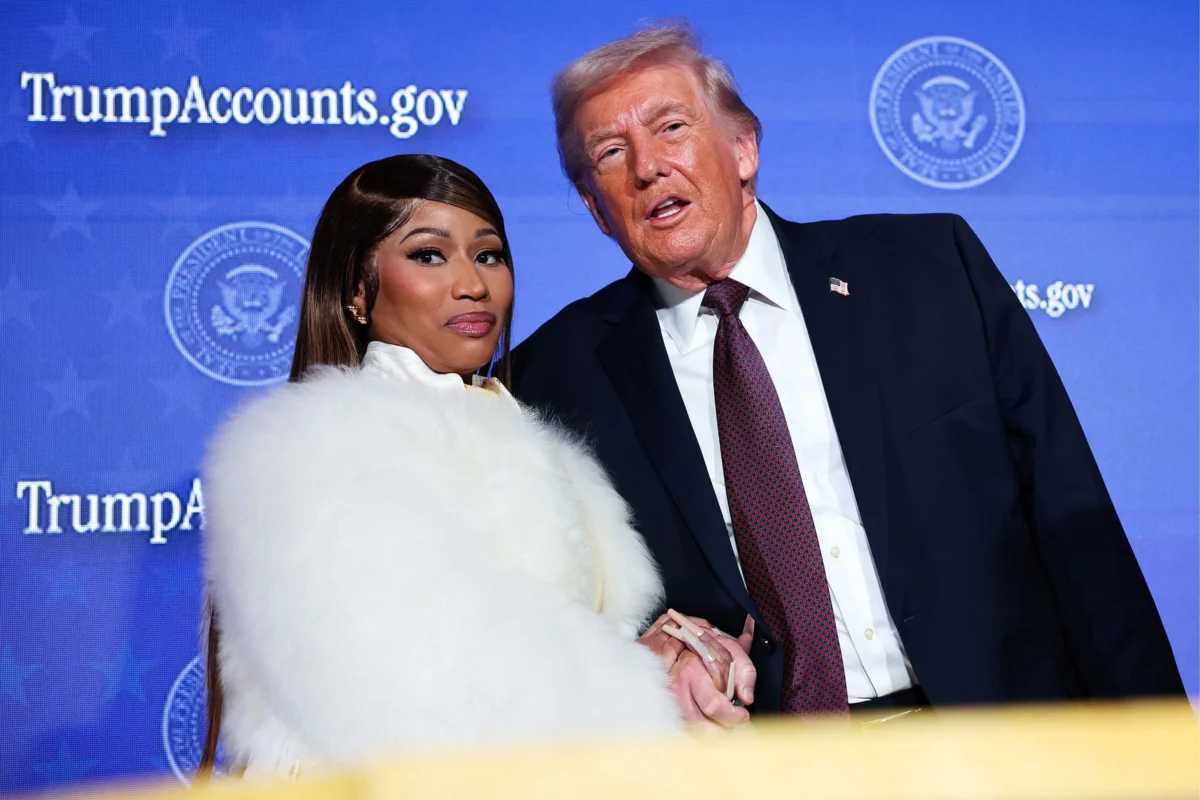
Modeled as a hybrid between ABC’s Shark Tank and Fox’s American Idol, the broadcast featured five independent business owners competing for a share of a $1 million cash prize funded by Clover Network, a fintech point-of-sale platform. Hosted by actor Dean Cain, the panel of celebrity judges featured property investor Grant Cardone, rapper Nicki Minaj, and Airbnb cofounder Joe Gebbia—though the broadcast notably omitted any mention of Gebbia’s concurrent policy work as a member of Elon Musk’s Department of Government Efficiency (DOGE).
Despite its commercial gloss, the broadcast was widely criticized as a heavy-handed, tone-deaf attempt to validate the administration’s economic talking points regarding domestic manufacturing and job growth. In one bizarre segment, Dr. Mehmet Oz, administrator of the Centers for Medicare and Medicaid Services, delivered an instructional segment directed at an animated strand of DNA, arguing that "America’s DNA is small business."
Furthermore, the judging criteria frequently sidelined economic fundamentals in favor of superficial theatricality. When Marshall Sasse, the owner and CEO of a Wyoming-based industrial pressure valve company, delivered a technically sound but subdued presentation, judge Nicki Minaj openly critiqued his lack of performative flair, asking whether he had access to "cowgirls" who could have added more dramatic punch to his pitch.
While Trump himself did not appear live on the stage, the production relied on pre-recorded Oval Office segments where participants met with the president. When the celebrity judges asked Trump for executive advice on selecting a winner, he offered a nostalgic nod to his past, remarking, "You know, it’s interesting, because with The Apprentice, I had a very good term that I used: ‘You’re fired.’"
Digital Indifference and Public Backlash
The audience metrics and subsequent public response to the Million Dollar Pitch Competition exposed the severe limitations of state-sponsored entertainment. A day after its broadcast, the official YouTube stream of the event had barely surpassed 60,000 views—a paltry sum for a federally funded production backed by high-profile celebrity judges.
On social media platforms, including Trump-friendly spaces on X (formerly Twitter), the reaction was decidedly hostile. Users flooded timelines with criticism, arguing that the White House was prioritizing superficial game shows over pressing kitchen-table economic concerns, such as soaring inflation and the rising cost of living. Several commentators drew unfavorable comparisons to dystopian narratives like The Hunger Games, suggesting that the spectacle reflected an administration deeply out of touch with working-class realities.
Similar digital ventures have met a comparable fate. Weeks after the White House rolled out a dedicated 24/7 "Trump TV" streaming channel—an initiative born out of the administration’s ongoing rhetorical war against mainstream news organizations—audience engagement remains negligible. Programming choices have leaned heavily into polarizing and grim imagery rather than accessible entertainment. Standard broadcast rotations have featured B-roll footage of border patrol vehicles driving alongside the U.S.–Mexico barrier, juxtaposed against raw testimonials from individuals recounting how their family members were allegedly victimized by undocumented migrants. Alternating with archival footage of Trump’s earlier congressional addresses, the channel functions less as a dynamic media alternative and more as an insular echo chamber.
Even specialized executive initiatives, such as Health Secretary Robert F. Kennedy Jr.’s YouTube series The Real Food Show, have experienced steady audience attrition since debuting in July. Designed as a populist cooking program where the health secretary pairs with celebrity chefs to promote affordable, healthy home recipes, the show has released only six episodes. Recent segments have featured recurring guest Dean Cain alongside former bodybuilder and actor Lou Ferrigno—casting choices that critics argue rely on television tropes and celebrity nostalgia from the previous century.
The Anomaly of UFC Freedom 250
If there is a singular data point that defies the broader narrative of MAGA media stagnation, it is UFC Freedom 250. Held in June, the high-profile mixed martial arts extravaganza was hosted on a temporary ring structure controversially constructed on the South Lawn of the White House.
Billed as a historic fusion of sports and executive pageantry, the event delivered record-breaking numbers for its exclusive streaming partner, Paramount+. An average of 7 million concurrent viewers tuned in, setting a live-event viewership record for the platform.
However, the financial and logistical realities behind the spectacle complicated the administration’s victory lap. Ultimate Fighting Championship executives revealed that the organization absorbed approximately $30 million in operational losses to pull off the White House event. Furthermore, while UFC CEO Dana White had publicly boasted that the broadcast would shatter traditional Super Bowl viewership records, the final tally fell significantly short of that ambitious benchmark.
Reflecting on the immense logistical hurdles and financial drain, White subsequently remarked that the organization "can’t afford" to stage a return engagement on the White House grounds. The event underscored a stark underlying truth: capturing a massive, engaged television audience requires the kind of capital expenditure and professional entertainment infrastructure that the federal government cannot easily replicate on its own.
Implications for Executive Communications
The struggles of the administration’s modern broadcasting experiments signal a pivotal shift in the relationship between political power and mass media. In the early 2000s, Mark Burnett and the production team behind The Apprentice could successfully synthesize hours of raw, chaotic footage into a cohesive narrative of corporate competence. Today, operating without the insulation of traditional Hollywood production studios or professional showrunners, the administration’s direct-to-consumer messaging lacks the polish required to capture the modern electorate’s attention.
As midterm elections approach, the failure of initiatives like the Million Dollar Pitch Competition and Trump TV suggests that nostalgia for reality television tropes cannot substitute for substantive policy engagement. When entertainment is weaponized directly by the state, audiences appear increasingly inclined to change the channel—leaving the White House searching for an audience that, for now, seems largely to have moved on.