



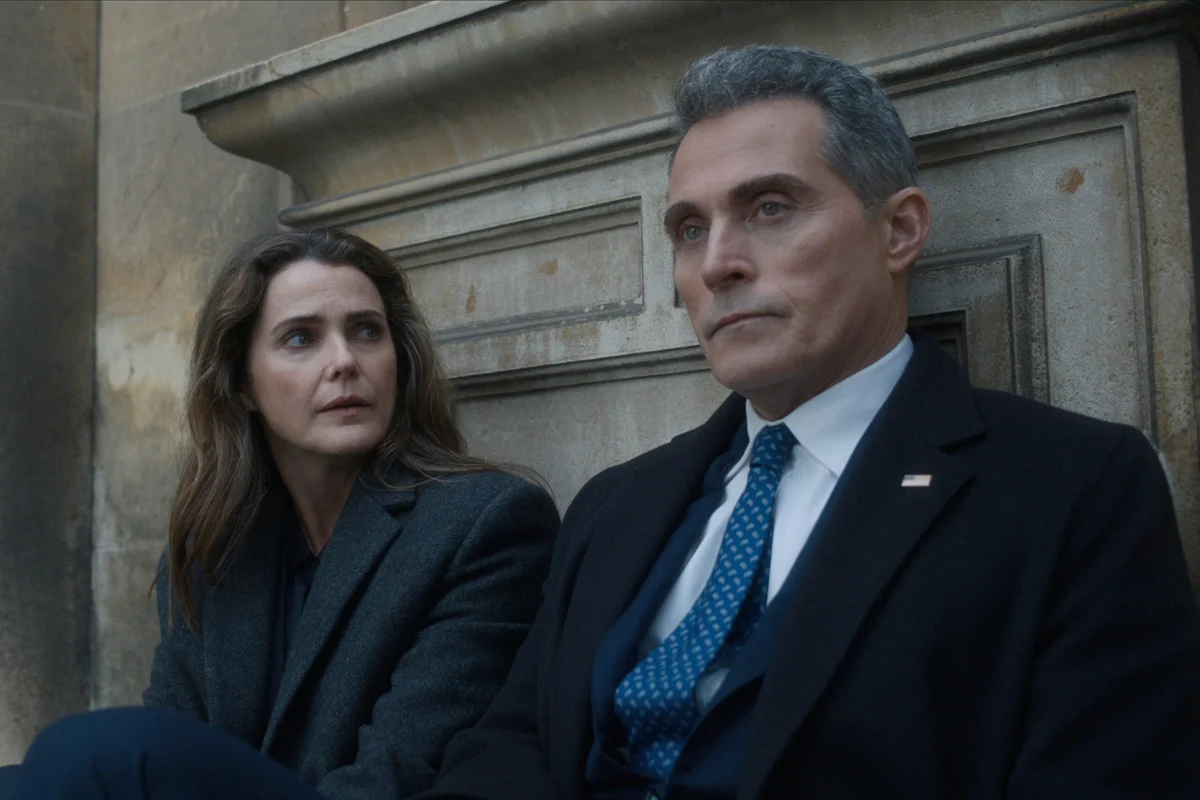
The highly anticipated fourth season of the Netflix political drama The Diplomat has officially premiered, marking a pivotal expansion of the series’ established narrative universe. Created by showrunner Debora Cahn, the series continues to explore the high-stakes environment of international relations, focusing on the volatile intersection of professional duty and personal integrity. Following the dramatic conclusion of the third season—which saw the central characters, Kate and Hal Wyler, embroiled in the acquisition of a nuclear weapon from a compromised Russian submarine—the new season shifts its focus toward the internal toll of statecraft and the degradation of individual moral boundaries.
A Chronology of Escalation: From London to the White House
The trajectory of the Wylers has been one of consistent, albeit turbulent, advancement. In the series’ inaugural season, Kate Wyler (Keri Russell) was introduced as a career diplomat suddenly thrust into the role of U.S. Ambassador to the United Kingdom, tasked with navigating the complexities of post-Brexit geopolitical instability. Alongside her husband, Hal Wyler (Rufus Sewell), a veteran diplomat with a penchant for maneuvering, the pair navigated a landscape defined by international espionage and crumbling alliances.
By the end of the third season, the narrative scope had broadened significantly. The introduction of President Grace Penn (Allison Janney), a formidable leader grappling with her own political legacy, transformed the series from a bilateral diplomatic drama into an exploration of the highest echelons of the American executive branch. The current season picks up immediately following the third season’s cliffhanger, which saw the Wylers and the White House embroiled in a high-risk gamble involving Russian nuclear assets. This event serves as the catalyst for the season’s central conflict: the loss of perceived normalcy and the beginning of a slide into systemic overreach.
The Moral Calculus of Global Leadership
At the heart of the fourth season is a shift in the show’s thematic exploration. While previous installments focused on the mechanics of crisis management, the current season interrogates the human cost of these decisions. Showrunner Debora Cahn has framed the season around the question of the "moral red line"—a boundary that she suggests is becoming increasingly permeable for the series’ primary characters.
Executive producer Janice Williams notes that this development is not instantaneous but cumulative. The concept of "overreach" is presented as a series of incremental decisions that, while individually manageable, aggregate into catastrophic shifts in policy and personal morality. This perspective is echoed by the cast, who characterize the fourth season as a deep dive into the psychological consequences of holding power.
The tension is most palpable in the changing dynamics of the Wyler marriage. With Hal now serving as the Vice President under President Penn, the professional parity between him and Kate has been disrupted. No longer operating in the shadows of diplomatic service, Hal is now a primary participant in executive decision-making. This transition has led to friction, as Kate observes what she perceives as a detrimental alignment between the President and her husband, fearing that their combined influence may lead to policy decisions that prioritize expediency over long-term stability.
Internal Dynamics and Executive Power
The evolution of the relationship between President Grace Penn and her husband, First Gentleman Todd Penn (Bradley Whitford), serves as a parallel to the Wylers’ struggles. The fourth season depicts a President in a state of self-doubt, a vulnerability she attempts to mask by doubling down on controversial policy stances. This reaction, according to actress Allison Janney, creates a vacuum of communication that threatens to isolate the President from her closest advisors and her family.
Bradley Whitford, who has transitioned to a series regular, emphasizes that the show’s strength lies in its refusal to adopt a cynical stance toward these complicated relationships. Unlike many political thrillers that lean into fatalism, The Diplomat seeks to balance the "lunacy of marriage" with the demands of public service. This focus is further explored through the evolving relationship between CIA station chief Eidra and her colleague Stuart, whose interpersonal growth serves as a grounding mechanism amidst the broader political chaos.
Analytical Implications: The G7 Summit and Beyond
The narrative arc of the fourth season is centered around the lead-up to a G7 summit, an event that serves as both a plot device and a thematic "guiding light." The summit represents the culmination of the season’s various diplomatic threads, testing the alliances and strategies developed over the preceding episodes.
From an analytical standpoint, the series highlights the friction between the traditional role of a diplomat—who acts as a mediator—and the reality of modern geopolitical power, which often demands aggressive action. The "gray area" described by Rufus Sewell reflects the reality of international politics, where choices are rarely between right and wrong, but rather between varying degrees of unfavorable outcomes. The show suggests that in such an environment, the "innocent" are often the first casualties, a reality that the characters are forced to confront as they ascend to positions of greater influence.
Industry Impact and Production Context
The production quality and narrative complexity of The Diplomat have solidified its place within the Netflix original programming hierarchy. The series’ success, evidenced by accolades including the 2026 Emmy win for Allison Janney, reflects a growing audience appetite for sophisticated, long-form political dramas that prioritize dialogue and character development over traditional action-oriented tropes.
Production insiders have noted the intensity of the filming process, particularly regarding the script’s reliance on detailed, multi-layered dialogue. Actor Ato Essandoh has characterized the viewing experience as requiring active engagement, warning that the intricate plotting does not lend itself to passive consumption. This sentiment reinforces the show’s reputation for density and structural complexity, characteristics that have become signatures of Debora Cahn’s writing style.
Looking Toward the Future
As the fourth season concludes, the status of the Wylers and the administration remains precarious. The final episodes of the season are reported to have left the cast and production team in a state of deliberation regarding the long-term future of the series. While the G7 summit resolves several immediate diplomatic crises, it introduces new, potentially more volatile challenges that suggest the current trajectory of the administration is unsustainable.
The series continues to operate under the assumption that the "chaos" of the political world is an inherent feature rather than a temporary state. For viewers, the fourth season offers a window into the machinery of government, not through the lens of pure idealism or pure corruption, but through the lens of individuals struggling to maintain their identity while navigating the most powerful institutions in the world.
As the narrative moves forward, the primary question remains: how much of one’s moral compass can be sacrificed in the name of the "greater good" before the individual—and the policies they enact—becomes unrecognizable? The fourth season of The Diplomat does not offer easy answers to this question, but it provides a compelling, fact-based examination of the cost of power, the complexities of modern marriage, and the fragility of the international order. With all eight episodes now available for streaming, the series continues its trajectory as a definitive voice in contemporary television drama, challenging its audience to consider the human cost of global leadership.