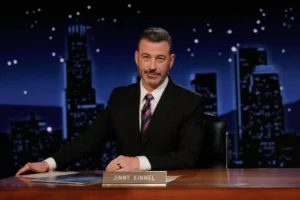
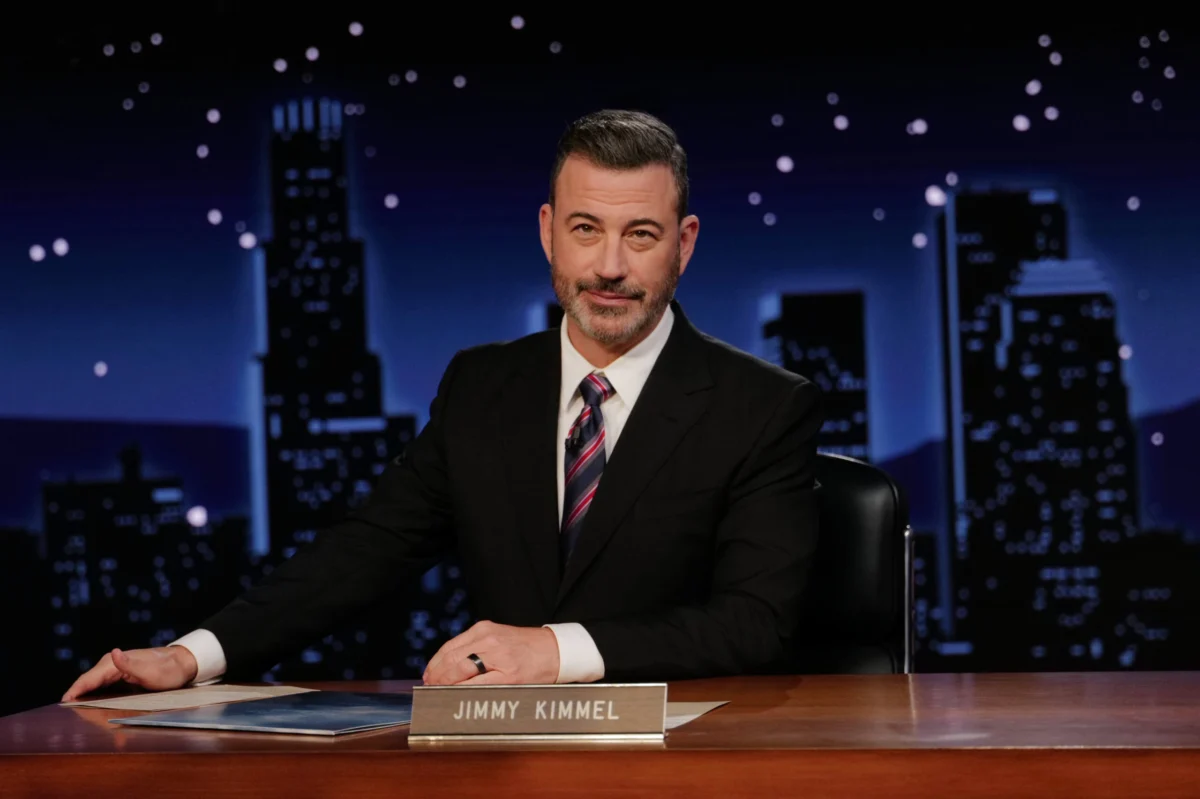
Late-night television host Jimmy Kimmel has announced a significant shift in his production strategy, opting to move a scheduled interview with Democratic U.S. Senate candidate James Talarico from the national ABC broadcast to a digital-only release on YouTube. This decision comes as Kimmel and the Walt Disney-owned network face mounting pressure from the Federal Communications Commission (FCC), which has signaled a more aggressive stance toward late-night talk shows regarding political content and equal-time regulations.
During his Wednesday night monologue, Kimmel expressed frustration regarding the regulatory environment, noting that the interview with Talarico—who is currently locked in a high-stakes race against Texas Attorney General Ken Paxton—would not air on television out of consideration for ABC’s local affiliates. The move highlights an escalating tension between the broadcast industry and federal regulators, raising questions about the future of political discourse on entertainment platforms.
The Regulatory Landscape and the Equal-Time Doctrine
At the center of the conflict is the FCC’s interpretation of the "bona fide" news exemption. Under the Communications Act of 1934, specifically Section 315, broadcasters are required to provide equal airtime to legally qualified candidates for public office. However, "bona fide news" programs are exempt from this requirement.
In January 2026, the FCC began questioning whether late-night talk shows, which traditionally blend comedy with cultural and political commentary, qualify as legitimate news programs. By narrowing the scope of this exemption, the agency effectively threatens to impose strict equal-time requirements on networks. Should late-night hosts be denied the exemption, they would be legally obligated to provide equal, free airtime to every political candidate who requests it—a logistical and financial impossibility for a show that relies on curated guests and tight production schedules.
The scrutiny appears to be part of a broader ideological shift within the agency. Industry analysts suggest that by questioning the status of these programs, the FCC is signaling a departure from the historical deference shown to talk shows, which have long occupied a gray area between variety entertainment and journalistic endeavor.
A Chronology of Escalating Tensions
The friction between ABC, its parent company Disney, and the current administration did not materialize in a vacuum. The relationship has soured over several high-profile incidents and regulatory maneuvers:
- September 2025: Following a controversial monologue regarding the death of political commentator Charlie Kirk, ABC faced a public backlash that resulted in a temporary suspension of "Jimmy Kimmel Live!" While the network characterized the hiatus as an internal decision, it served as a flashpoint for critics of the show’s political alignment.
- January 2026: The FCC formally signaled its intent to re-evaluate the status of late-night talk shows, specifically targeting programs that frequently host political candidates.
- April 2026: The FCC initiated an early renewal process for ABC-owned broadcast licenses, citing an investigation into the network’s diversity, equity, and inclusion (DEI) policies. Industry observers viewed this move as an unconventional use of regulatory power, noting that license renewals typically follow a standard, multi-year cycle.
- August 2026: Disney and ABC filed a lawsuit against the FCC, alleging that the commission’s actions constitute a "retaliatory campaign" aimed at silencing editorial voices critical of the administration. The suit specifically challenges the early license review, arguing that it violates First Amendment protections.
The Texas Senate Race Context
The specific interview in question features James Talarico, a Texas state representative currently challenging Attorney General Ken Paxton. The race is one of the most contentious in the country. Paxton, a staunch ally of President Donald Trump, has faced significant legal and political headwinds, including a high-profile impeachment trial in the Texas House of Representatives over corruption allegations, from which he was eventually acquitted by the state Senate.
Talarico’s campaign has gained traction in recent weeks, with some polling data showing him in a dead heat with, or slightly ahead of, Paxton. By hosting Talarico, Kimmel’s show is engaging directly with one of the most polarized political contests in the nation. Given the FCC’s recent posture, airing such an interview on a major network would likely trigger immediate demands for equal time from the Paxton campaign, potentially forcing the network to devote hours of airtime to political responses that would disrupt their scheduled programming.
Official Responses and Legal Implications
The FCC has remained largely silent on the specific allegations made by Kimmel, and a request for comment regarding the agency’s broader policy toward talk shows went unanswered. However, legal experts suggest that the agency’s current strategy could have profound implications for the broadcast industry.
"If the FCC successfully reclassifies these shows, it will effectively turn off the faucet for political interviews on late-night television," says Dr. Helena Vance, a media law scholar. "The legal burden of tracking every minor candidate in every local race would be too great for a network to manage. This isn’t just about Kimmel; it’s about whether the traditional broadcast model can continue to host political debate in an increasingly polarized regulatory environment."
For its part, Disney has maintained that its editorial decisions are protected by the First Amendment. In its August lawsuit, the company argued that the FCC is utilizing its administrative powers to exert pressure on content that the administration finds unfavorable. This legal battle is expected to reach the appellate courts, potentially setting a precedent for how much authority the FCC has over the editorial content of broadcast networks.
Broader Impact on Political Discourse
The move to shift the Talarico interview to YouTube is a strategic retreat that underscores the limitations of traditional media. By bypassing the FCC-regulated airwaves, Kimmel is attempting to maintain the show’s editorial integrity while avoiding the bureaucratic entanglements that could threaten the network’s broadcast licenses.
However, this transition to digital platforms highlights a growing "digital divide" in political speech. As traditional broadcast networks become more cautious due to regulatory fears, political candidates may find themselves increasingly reliant on social media and streaming services to reach audiences. While these platforms offer fewer regulatory hurdles, they also lack the massive, broad-spectrum reach of late-night network television, potentially narrowing the diversity of voters exposed to these candidates.
As the November election approaches, the tension between the FCC and ABC is likely to intensify. With both the network’s license renewal in question and a high-stakes legal battle underway, the case of "Jimmy Kimmel Live!" serves as a bellwether for the health of broadcast journalism. The outcome of this dispute will likely dictate the extent to which television networks can continue to serve as forums for political critique, or whether the fear of federal oversight will push such conversations into the unregulated, and often more insular, digital sphere.
As Kimmel noted in his broadcast, his current strategy is "the best we can do" until the electoral cycle concludes. For now, the audience will have to adjust to a new viewing pattern—one where the television serves as a venue for entertainment, and the digital screen becomes the primary location for the unfiltered political conversations that once defined the late-night genre.