

The acceleration of the conflict in Gaza since October 2023 has brought with it an unprecedented level of destruction directed at the region’s cultural and historical infrastructure. While the loss of human life remains the primary tragedy of the war, the systematic dismantling of libraries, museums, and archaeological sites has prompted a profound crisis of cultural identity. In response, a dedicated team of curators, historians, and technologists at the Palestinian Museum in the occupied West Bank town of Birzeit is racing against time to construct a digital bulwark—an "unlootable" archive designed to survive even if its physical counterparts are reduced to rubble.
The scale of the cultural loss is staggering. Within the first week of the current escalation, Israeli military operations resulted in the destruction of two art galleries, seven museums, and two primary archives in Gaza, alongside hundreds of archaeological sites. According to Amer Shomali, a prominent visual artist and the General Director of the Palestinian Museum, this is not a peripheral consequence of war but a deliberate "battle of erasure." Shomali estimates that approximately 80 percent of the Palestinian national collection is currently looted, destroyed, or held under Israeli control. This reality has transformed the museum’s mission from one of simple curation to one of urgent digital preservation.
The Landscape of Cultural Destruction in Gaza and the West Bank
The destruction in Gaza is part of a broader, decades-long pattern of cultural displacement that has intensified significantly over the last year. As of March 2026, UNESCO has verified damage to at least 164 cultural sites in Gaza since the outbreak of hostilities on October 7, 2023. These sites include 43 religious buildings, 106 buildings of historical and/or artistic interest, 11 repositories for movable cultural property (museums), and five archaeological sites. Among the most notable losses are the Great Omari Mosque, which stood for centuries as a symbol of Gaza’s multi-layered history, and the Central Archives of Gaza City, which contained thousands of historical documents dating back to the Ottoman period.
In the West Bank, the threat to heritage is characterized less by aerial bombardment and more by legislative and territorial encroachment. A 2025 report by the Applied Research Institute-Jerusalem (ARIJ) documented that at least 2,400 archaeological sites in the West Bank have been brought under Israeli control. Recent legislative moves in the Israeli Knesset have further alarmed preservationists; in mid-2026, lawmakers began advancing bills to place ancient sites in the occupied territories under the direct jurisdiction of the Israeli Ministry of Heritage. Critics, including Palestinian officials and Israeli human rights organizations, argue that this move constitutes a de facto annexation of cultural history, potentially stripping Palestinians of the right to manage and interpret their own heritage sites, such as the ancient city of Sebastiya near Nablus.
The Genesis of the "Unlootable Archive"
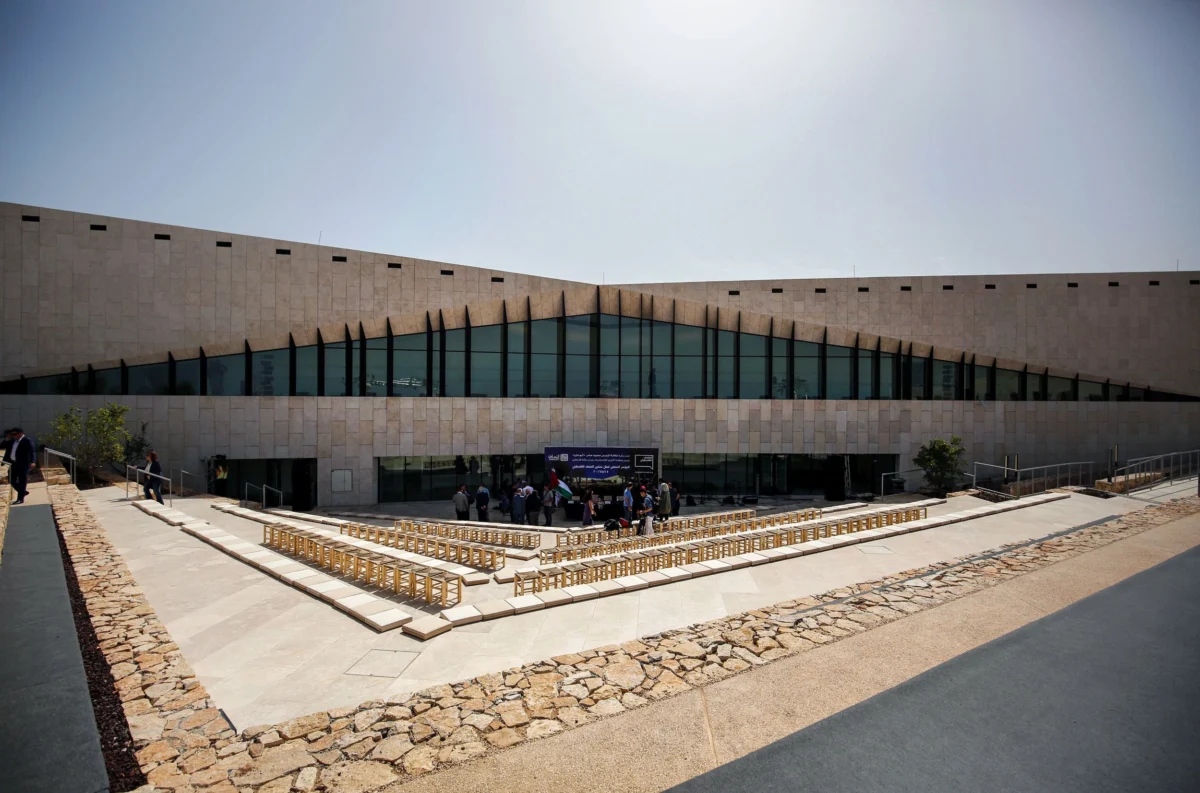
The Palestinian Museum, designed by the New York-based firm Heneghan Peng—the same architects behind the Grand Egyptian Museum—was built to be a physical sanctuary for heritage. Its gardens, filled with native flora, and its cascading terraces are a testament to the landscape. However, the physical reality of the West Bank, divided by military checkpoints and restricted movement, means that many Palestinians cannot access the museum. This physical isolation, coupled with the constant threat of confiscation or destruction, led Shomali and his team to pivot toward technology as a primary tool of resistance.

In 2018, the museum launched the Palestine Museum Digital Archive (PMDA). The project began with a grassroots approach: researchers went door-to-door in West Bank villages and towns, asking families for permission to scan their private collections. These items—faded photographs, land deeds, personal diaries, wedding invitations, and letters—form the granular history of a people whose state archives have often been seized or destroyed during successive waves of conflict in 1948, 1967, and beyond.
Today, the PMDA is an open-source platform containing over 500,000 digitized items. It functions as a decentralized repository of Palestinian memory, ensuring that even if the museum in Birzeit were to be targeted or shuttered, the records of the people would remain accessible to the global diaspora and future generations.
Technological Fortification and Global Distribution
The technical challenges of maintaining a digital archive in a conflict zone are immense. Mohammad Rabae, who oversees the digitization process, describes the delicate nature of the work. Some documents, such as a 19th-century Bible printed in Jerusalem or a 1930s Palestinian newspaper, are so brittle that they require specialized handling and climate-controlled environments before they can even be scanned. The goal, Rabae notes, is not just to create an image, but to preserve the historical evidence and dignity of the individuals represented in the records.
To ensure the archive’s survival, the museum has adopted a strategy of radical decentralization. The data is not stored on a single server but is mirrored across multiple locations worldwide. This distributed system is designed to withstand both physical destruction and digital warfare. Shomali reports that the museum’s website faces near-monthly cyberattacks intended to take the archive offline.
"We can’t protect it from being hacked," Shomali admits, "but we can protect it from disappearing." By maintaining various backups and re-initiating the site after each attack, the museum ensures that the digital memory of Palestine remains a permanent fixture of the internet. Furthermore, the team is now exploring the use of Artificial Intelligence, specifically bots capable of reading and translating Ottoman-era Arabic, to process the vast backlog of historical records more efficiently.
International Impact: The "Exhibition in a Box"
The PMDA is more than a passive storage facility; it is an active tool for cultural diplomacy and education. One of the museum’s most innovative initiatives is the "exhibition in a box" concept. This "Ikea-style" model allows anyone in the world to download high-resolution exhibition materials, print them, and stage a professional-grade exhibition on Palestinian history in their own community.

This democratized approach to curation has led to over 260 exhibitions across the globe, from San Francisco to Tokyo. In May 2026, artist and curator Leyya Mona Tawil utilized the archive’s music collections to create "My Name is Palestine" in San Francisco. The exhibition, which featured recordings and documents of Palestinian musical heritage, drew emotional responses from visitors, many of whom were moved to tears by the survival of these cultural artifacts.
Similarly, in Spain, curator Pablo Llorca spent months sifting through the digital archive to debut "To Tell My Story" in Madrid in October 2025. The exhibition has since traveled to 15 different locations across Spain, even garnering interest from the Spanish Ministry of Culture. These international collaborations demonstrate that while the physical sites may be under threat, the cultural narrative is being broadcast more widely than ever before.
Analysis: Memory as a Tool of Liberation
The creation of the digital archive represents a fundamental shift in how communities under threat approach the concept of a "national archive." Unlike traditional state-run institutions, which are often top-down and centralized, the PMDA is a "bottom-up" project. It relies on the contributions of ordinary citizens rather than government mandates, making it more resilient to political shifts and military occupation.
This effort aligns with a broader global movement toward digital heritage preservation in conflict zones. Similar projects have been undertaken in Syria, Iraq, and Ukraine, where digital "twins" of historical sites and digitized records serve as a safeguard against the total erasure of a nation’s history. For Palestinians, however, the stakes are uniquely high due to the lack of a sovereign state to protect these assets.
The archive serves two primary functions: preservation and reclamation. By digitizing documents that might otherwise be lost to the elements or military raids, the museum preserves the raw data of history. By making that data open-source, it allows Palestinians to reclaim the narrative of their own past, free from the interpretations of occupying powers.
As the museum continues to grow, funded by diaspora donations and partnerships with international institutions like the University of California and the Gerda Henkel Foundation, it stands as a testament to the durability of cultural memory. In the words of the late Palestinian poet Mahmoud Darwish, which Amer Shomali frequently cites: "We who are able to remember are able to liberate ourselves." Through the "unlootable archive," the Palestinian Museum is ensuring that even in the face of physical destruction, the memory of the land and its people remains indestructible.