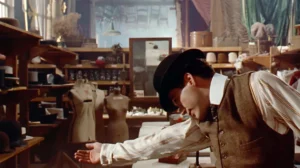
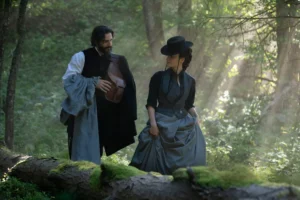
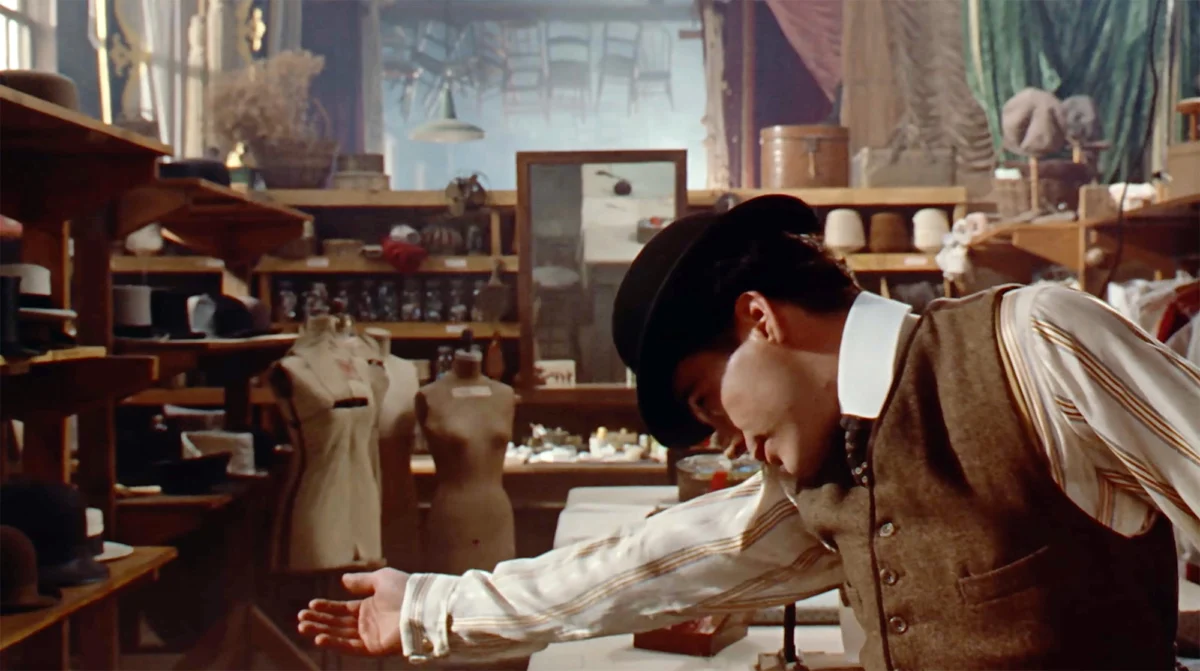
Studiocanal has officially released a new 4K restoration trailer for Richard Attenborough’s 1992 biographical drama Chaplin, putting a fresh spotlight on the film that fundamentally reshaped Robert Downey Jr.’s career. Based primarily on Charlie Chaplin’s autobiography and David Robinson’s biographical work Chaplin: His Life and Art, the sweeping cinematic portrait traces the complex, triumphant, and often tragic trajectory of one of cinema’s founding fathers. While the film initially underperformed at the commercial box office upon its winter 1992 theatrical release, decades of critical reassessment have elevated its status among cinephiles, culminating in this high-definition physical media re-release slated for the United Kingdom this autumn.
The newly unveiled preview highlights the film’s framing narrative, wherein an aging Charlie Chaplin collaborates with his editor on his autobiography, reflecting on a lifetime spent in front of and behind the camera. The story bridges the gap between his destitute, Victorian-era upbringing in the music halls of South London and his meteoric rise to global superstardom as the architect of the universally recognized "Little Tramp" persona. Alongside Downey Jr.’s celebrated lead portrayal, the film features a formidable ensemble cast including Sir Anthony Hopkins as editor George Hayden, Kevin Kline as silent-film icon Douglas Fairbanks, Dan Aykroyd, Penelope Ann Miller, David Duchovny, Moira Kelly, Marisa Tomei, and Geraldine Chaplin playing her own grandmother, Hannah Chaplin.

Chronology and Production History
The genesis of Richard Attenborough’s biographical epic dates back to the late 1980s, following the director’s critical successes with films such as Gandhi (1982) and Cry Freedom (1987). Attenborough spent years attempting to bring the definitive story of Charles Spencer Chaplin Jr. to the silver screen, navigating a labyrinth of complex estate rights, script revisions, and towering casting expectations.
The screenwriting duties were shared by a trio of prominent industry talents—William Boyd, Bryan Forbes, and William Goldman—working from a story conceived by Diana Hawkins. Principal photography demanded extensive physical and emotional commitment, particularly from its lead actor. Robert Downey Jr., then in his late twenties and working to establish himself as a premier dramatic actor following breakout roles in films like Less Than Zero, underwent rigorous physical training to master Chaplin’s distinct gait, pantomime routines, and violin playing.
Upon its wide release by TriStar Pictures in the United States and Columbia Pictures internationally in December 1992, the film faced an uphill battle at the commercial box office. Despite a substantial production budget and high-profile marketing campaigns, Chaplin grossed roughly $9.5 million domestically, failing to recoup its production costs during its initial theatrical run. Critics at the time offered mixed reviews; while widespread praise was universally directed toward Downey Jr.’s immersive performance and John Barry’s soaring, soul-stirring musical score, some reviewers criticized the overarching narrative structure for attempting to encapsulate a massive, tumultuous life within a traditional three-act biographical framework.

Awards, Accolades, and Critical Reassessment
Despite its early commercial shortcomings, Chaplin resonated strongly with academy voters and industry guilds. At the 65th Academy Awards held in March 1993, the film garnered three major nominations. Robert Downey Jr. secured his first career Academy Award nomination in the Best Actor category, competing against heavyweights such as Denzel Washington (Malcolm X) and eventual winner Al Pacino (Scent of a Woman). Additionally, the film received nominations for Best Art Direction (Stuart Craig and Chris A. Butler) and Best Original Score for legendary composer John Barry. While the film ultimately did not secure a competitive Oscar win, Downey’s nod validated his transition from a promising young star to a formidable dramatic actor capable of carrying an epic historical drama.
In the decades following its theatrical debut, Chaplin has undergone a significant critical reappraisal. Contemporary film historians and audiences have increasingly praised the production for its ambitious scope, meticulous set design, and the psychological depth brought to Chaplin’s turbulent personal life—including his political exile, controversies regarding his relationships, and his perfectionism on set. On modern film aggregator platforms like Letterboxd, the movie maintains a respectable average rating of 3.6 out of 5 stars, signaling a strong second wind among younger generations of film enthusiasts discovering historical cinema through physical media and streaming archives.
Technical Specifications and Release Details
Studiocanal’s newly minted 4K restoration breathes fresh life into cinematographer Sven Nykvist’s original framing and lighting choices, capturing the vivid contrast between the dreary, fog-choked streets of 19th-century London and the sun-drenched, opulent studio lots of early Hollywood. The restoration process involved scanning the original camera negatives at ultra-high resolution, followed by extensive digital cleanup to eliminate dust, scratches, and chemical degradation accumulated over the past three decades. Color grading was executed with strict adherence to contemporary standards while preserving the distinct cinematic texture of early 1990s film stocks.

The restoration will bypass a wide theatrical distribution window, instead focusing on a premium home video release. Fans and collectors can secure the 4K Ultra High Definition (UHD) Blu-ray edition, which hits shelves in the UK this November through major entertainment retailers such as HMV and Studiocanal’s direct consumer storefront. Special features accompanying the 4K release are anticipated to include archival behind-the-scenes featurettes, interviews with surviving cast and crew members, and analytical commentary on Chaplin’s enduring cinematic legacy.
Broader Implications and Industry Impact
The timing of Studiocanal’s 4K re-release aligns with a broader industry trend of rediscovering and preserving 1990s mid-budget prestige pictures that may have initially stumbled at the box office due to shifting audience demographics or unfavorable release windows. As major studios increasingly prioritize intellectual property and franchise blockbusters, boutique physical media labels play an essential role in archiving film history and offering retrospective contextualization for titles that defined transitional eras in Hollywood filmmaking.
Furthermore, the renewed focus on Chaplin serves as an instructive historical marker for Robert Downey Jr.’s legendary career longevity. Decades before his global cultural ubiquity as Tony Stark/Iron Man in the Marvel Cinematic Universe—and his subsequent Academy Award win for Christopher Nolan’s Oppenheimer—Downey’s tour-de-force performance as the Tramp demonstrated a rare level of transformative acting discipline. By returning the film to circulation in pristine 4K resolution, Studiocanal ensures that modern audiences can appreciate both the profound historical weight of Charlie Chaplin’s cinematic contributions and the early, defining triumph of one of Hollywood’s most enduring modern actors.